Introduction
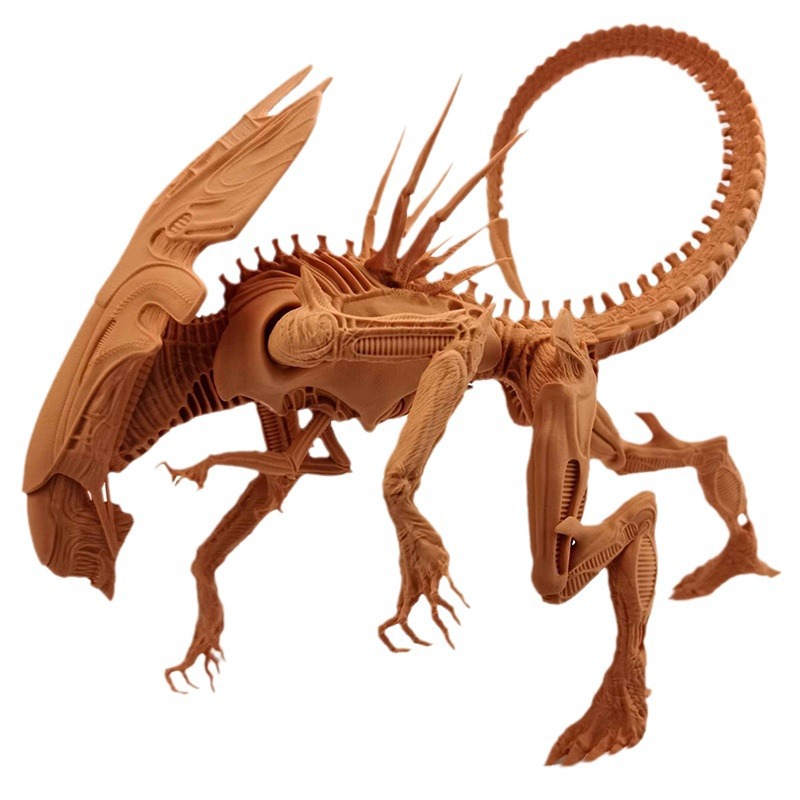
There is something magical about holding a tiny 3D printed animal in your hand. Maybe it is a flexi dragon that bends in your fingers. Or a realistic elephant that sits perfectly on your desk. The world of 3D printed animals has exploded in recent years. It draws in hobbyists, teachers, parents, and designers alike.
The best part? You do not need to be an expert. Animal models are some of the most forgiving and fun projects for beginners. They also push advanced users to master curved surfaces, multi-color prints, and moving parts.
In this guide, you will find everything you need. We cover where to get models, what types exist, which printing techniques work best, and how to use them in real life. Whether you want a cute figurine or a functional desk buddy, this article has you covered.
1. Where Can You Find the Best 3D Printed Animal Models?
Finding the right STL file is half the battle. The good news is that there are tons of free and paid sources out there.
1.1 Top Free STL Repositories
These sites are goldmines for free animal STL files. No credit card needed.
| Platform | Best For | File Count (Animals) | Cost |
|---|---|---|---|
| Thingiverse | Beginner-friendly models | 50,000+ | Free |
| Printables (Prusa) | High-quality community uploads | 30,000+ | Free |
| Cults3D | Artistic and unique designs | 20,000+ | Free & Paid |
| MyMiniFactory | Tabletop and detailed minis | 15,000+ | Free & Paid |
Pro tip: Start with Thingiverse or Printables. They have the largest animal model libraries and active communities. You can read comments to see if a model prints well before you download it.
1.2 Premium Marketplaces for Detail
If you want museum-quality detail, paid marketplaces deliver.
| Marketplace | Price Range | Best Feature |
|---|---|---|
| CGTrader | 5–50 | Professional sculpts |
| TurboSquid | 10–100 | Anatomically accurate models |
| Etsy (Digital) | 3–20 | Cute and stylized designs |
| Patreon (Creators) | 5–15/mo | Monthly new animal drops |
I once bought a hyper-realistic wolf head from CGTrader for $12. The detail on the fur was insane. It printed beautifully on my resin printer. That is the kind of quality you get from premium files.
1.3 How to Evaluate Model Quality
Not every STL is print-ready. Here is a quick checklist:
- Check the file size. Huge files (50MB+) usually mean high detail. But they also need more RAM.
- Read the comments. Look for photos from other printers.
- Check wall thickness. Models with walls thinner than 1.2mm often fail on FDM printers.
- Look for support-free designs. These save you tons of post-processing time.
2. What Types of 3D Printed Animals Can You Make?
The variety is wild. From tiny chibi figures to full-size functional sculptures, there is something for everyone.
2.1 Articulated and Flexi Animals
These are the crowd favorites. Flexi animals have printed hinges that let them bend and move.
Popular examples:
- Flexi whales that wave their tails
- Articulated dragons with moving wings
- Bendy cats that sit in funny poses
The secret? They use living hinges — thin sections of plastic that flex without breaking. These are perfect for FDM printers using PLA or TPU filament.
2.2 Realistic Sculptures
Want something that looks like it belongs in a museum? Realistic animal sculptures are the way to go.
Common choices:
- Lions and tigers in mid-roar
- Horses in full gallop
- Owls with feather-level detail
These models shine on SLA resin printers. The layer height can go as low as 0.025mm. That gives you smooth, almost hand-sculpted results.
2.3 Cute Stylized Figures
Chibi animals and cute cartoon versions are huge on social media. Think round eyes, big heads, and tiny bodies.
- Baby elephants with oversized ears
- Round penguins with stubby wings
- Smiling foxes with fluffy tails
These are beginner-friendly. They also make amazing gifts and decorations.
2.4 Functional Animal Designs
Animals are not just for looks. Here are functional 3D printed animal ideas:
| Design | Function | Print Material |
|---|---|---|
| Whale planter | Holds small succulents | PLA / PETG |
| Owl phone stand | Holds your phone at an angle | PLA |
| Elephant cable organizer | Wraps your charging cables | TPU |
| Dog bowl holder | Elevated pet feeder | PETG |
| Fish tape dispenser | Holds masking tape | PLA |
I printed an owl phone stand for my wife last Christmas. It cost me $0.50 in filament. She loved it more than any store-bought gift.
3. What Printing Techniques Work Best for Animal Models?
Not all printers are equal. The technique you choose changes everything about the final result.
3.1 FDM Basics for Animal Prints
FDM (Fused Deposition Modeling) is the most common method. It melts plastic filament layer by layer.
Key settings for animal models:
| Setting | Recommended Value | Why |
|---|---|---|
| Layer Height | 0.12 – 0.2mm | Balances detail and speed |
| Infill | 15 – 25% | Saves filament, still strong |
| Supports | Tree supports | Cleaner removal on curved shapes |
| Print Speed | 40 – 60mm/s | Slower = smoother curves |
Layer orientation matters a lot. For animal figures, print them standing up. This hides layer lines on the body and gives you cleaner details on the face.
3.2 SLA/Resin for High Detail
Resin printing is the king of detail. If you want smooth fur, sharp claws, or tiny eyes, go resin.
- Layer height: 0.025 – 0.05mm
- Best resins: Standard gray or water-washable for beginners
- Print time: 2 – 6 hours for most animal models
The downside? Resin is messy. You need gloves, ventilation, and an IPA wash station. But the results are worth it.
3.3 Multi-Material and Multi-Color
Want a rainbow parrot or a spotted dalmatian? Multi-color printing makes it happen.
Options:
- Filament swapping (manual or with AMS/MMU)
- Multi-resin prints using different colored resins
- Painting after print (easiest for beginners)
The Bambu Lab AMS system can swap up to 4 filament colors automatically. I printed a multi-color fox with it. The orange, white, and black came out perfectly aligned.
3.4 Post-Processing Tips
Printing is only half the job. Here is how to finish your animal models like a pro:
- Sand with 400 → 800 → 1200 grit sandpaper. Start coarse, finish fine.
- Fill gaps with CA glue or epoxy. Works great for resin prints.
- Prime before painting. Use a gray or white primer for best color.
- Airbrush for smooth gradients. Gives a professional finish on large sculptures.
4. How Can You Use 3D Printed Animals in Everyday Life?
Let us get practical. Here is how real people use 3D printed animals every day.
4.1 Educational Tools for Schools
Teachers love 3D printed animal models for biology class.
- Print a skull collection to teach anatomy
- Use flexi animals to show how joints work
- Create cell models shaped like animals for younger kids
A middle school teacher in Texas shared that her students remembered bone names 40% better after handling 3D printed skeletons. That is real data from a real classroom.
4.2 Personalized Gifts and Pet Portraits
Nothing beats a custom gift. Here is what works:
- 3D scan your dog and print a mini figure of them
- Create a cat-shaped jewelry holder
- Print a pet memorial with your animal's name engraved
Services like 3DPetFiles let you upload photos. They turn your pet into a printable 3D model. Prices start at $15.
4.3 Home Décor and Desk Accessories
3D printed animals make perfect desk buddies.
- A tiny dragon curled around your monitor
- A geometric low-poly deer on your bookshelf
- A whale planter with a real plant inside
These cost almost nothing to make. But they look like you bought them from a boutique shop.
4.4 Toys and Sensory Tools for Kids
Parents, this one is for you. 3D printed animal toys are safe, cheap, and customizable.
| Toy Type | Age Group | Material | Safety Note |
|---|---|---|---|
| Flexi dinosaurs | 3+ | TPU | BPA-free, bendy |
| Animal puzzles | 5+ | PLA | Non-toxic paint |
| Sensory figures | 2+ | PETG | Rounded edges, no choking |
Always sand sharp edges. And use non-toxic paint for anything kids might mouth.
5. What Are Some Pro Tips for Perfect Animal Prints?
After printing hundreds of animal models, I have learned a few hard lessons. Here are my top tips.
5.1 Avoid Common Pitfalls with Organic Shapes
Organic shapes are tricky. Here is what goes wrong:
| Problem | Cause | Fix |
|---|---|---|
| Visible layer lines | Layer height too high | Use 0.12mm or resin |
| Drooping ears/tails | No supports or bad angle | Add tree supports, rotate model |
| Warping on flat bases | First layer adhesion | Use brim, clean bed, lower temp |
| Stringy details (whiskers) | Retraction too low | Set retraction to 5–6mm |
5.2 Scaling Models Up or Down
Scaling is not just drag-and-drop. Here is what to watch for:
- Scaling up 200%? Wall thickness stays the same. Your model gets weak. Use a slicer to increase wall count instead.
- Scaling down 50%? Tiny details disappear. Increase resolution and reduce layer height.
- Best sweet spot: 80% to 150% of original size. Goes smooth 90% of the time.
5.3 Combining Parts into Assemblies
The coolest models are multi-part assemblies. Think a dragon with a removable wing or a hollow elephant.
Steps:
- Print each part separately with 0.2mm layer height
- Design alignment pins or tabs in your slicer
- Use super glue or epoxy to join parts
- Fill seams with filler putty for a clean look
I built a hollow elephant planter this way. It took 6 hours to print. But the final result looked like a $40 store product.
Conclusion
3D printed animals are one of the most rewarding projects you can tackle. Whether you are a total beginner or a seasoned maker, there is always something new to try. From free STL files on Thingiverse to multi-color resin sculptures, the options are endless.
The key is to start simple. Grab a cute flexi cat from Printables. Print it on your FDM machine. Then level up to realistic resin miniatures or functional animal designs.
The best part? Every print teaches you something new. And every animal you make brings a smile to someone's face.
So fire up your printer. The animal kingdom is waiting.
FAQ
What is the easiest 3D printed animal for beginners?
The flexi whale or flexi dragon is the easiest. They print without supports, use simple PLA filament, and take under 2 hours.
Can I 3D print my own pet?
Yes! Use a 3D scanning app or service like 3DPetFiles. They turn photos of your pet into a printable STL model.
What filament is best for animal figures?
PLA is best for beginners. It is easy to print and comes in tons of colors. TPU is best for flexi animals. PETG works best for functional pieces like planters.
How long does it take to print a detailed animal?
A small chibi figure takes 1–2 hours. A large realistic sculpture on a resin printer takes 4–8 hours. FDM prints of medium animals take 3–6 hours.
Are 3D printed animals safe for kids?
Yes, if you use PLA or TPU (both non-toxic). Always sand sharp edges. Use child-safe paint if you color them.
Where can I get free animal STL files?
Thingiverse, Printables, and MyMiniFactory have huge free libraries. Search "animal" or a specific species name.
Contact Yigu Technology for Custom Manufacturing
Need a custom 3D printed animal but do not have the time or equipment? Yigu Technology has you covered.
We specialize in custom 3D printing services for animals, figurines, prototypes, and functional designs. Whether you need a single personalized pet portrait or a batch of educational animal models, our team delivers high-quality results fast.
📩 Get a free quote today. Tell us what animal you want, and we will make it happen.
👉 Contact Yigu Technology for custom manufacturing.