Introduction
3D plastic printing has moved from factory floors to everyday business tools. Companies of all sizes now use additive manufacturing to make prototypes, produce parts, and create customized products.
But what exactly do 3D plastic printing services offer? And how can they benefit your specific application?
The idea is simple: you provide a digital design, and a service bureau prints it in plastic. No machines to buy. No materials to stock. No expertise to develop. Just results.
At Yigu technology, we've provided these services for years. We've seen how different industries use them—from quick prototypes to production runs. This guide explains what's available, why it matters, and how to choose what fits your needs.
What Is 3D Plastic Printing and How Does It Work?
The Basic Process
3D plastic printing—also called additive manufacturing—builds objects layer by layer from digital files. Instead of cutting away material like traditional machining, it adds material only where needed.
The process follows simple steps:
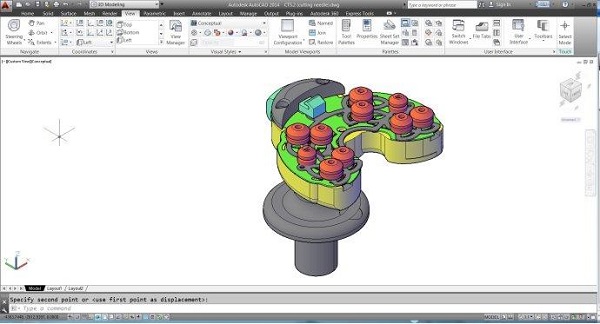
- Design: Create a 3D model using CAD software or from a 3D scan
- Prepare: Convert the file to a printable format (usually STL) and optimize for printing
- Print: The machine builds the object layer by layer
- Finish: Remove supports, sand, paint, or assemble as needed
The Main Printing Technologies
Different needs call for different technologies. Here are the three most common in 3D plastic printing services:
Fused Deposition Modeling (FDM)
- Extrudes heated plastic filament through a nozzle
- Most common, most affordable
- Good for prototypes, large parts, functional items
- Materials: PLA, ABS, PETG, TPU, nylon
Selective Laser Sintering (SLS)
- Uses a laser to fuse powdered plastic
- No supports needed—powder supports the part
- Strong, durable parts with complex geometry
- Materials: Nylon, glass-filled nylon, polycarbonate
Stereolithography (SLA)
- Cures liquid resin with UV light
- Highest detail, smoothest surfaces
- Ideal for jewelry, dental models, visual prototypes
- Materials: Standard resins, tough resins, castable resins
Why Use a Service Instead of Buying a Printer?
Good question. Here's when services make sense:
| Situation | Buy Printer | Use Service |
|---|---|---|
| You print daily | ✓ | |
| You need one part | ✓ | |
| You want to test the technology | ✓ | |
| You need multiple technologies | ✓ | |
| You have in-house expertise | ✓ | |
| You're just starting | ✓ | |
| Parts are very large | ✓ (access to industrial machines) | |
| You need production volumes | Depends | Depends |
For most businesses, starting with a service makes sense. Learn what works, then decide about buying equipment.
What Are the Key Benefits of 3D Plastic Printing Services?
Cost-Efficiency for Small Volumes
Traditional manufacturing hates small runs. Molds cost thousands. Setup takes weeks. You need volume to justify the expense.
3D printing changes this. No molds. No tooling. Print one part for roughly the same per-unit cost as printing one hundred.
For businesses needing:
- Prototypes before production
- Custom parts for specific clients
- Replacement parts for old equipment
- Small batch production (tens to hundreds)
Services deliver without the capital investment.
Real numbers: A custom injection mold might cost $5,000-20,000 and take 8 weeks. The same part printed in SLS nylon costs $50-200 and takes 3 days. For low volumes, the choice is clear.
Time-Saving and Rapid Prototyping
Speed matters in product development. Every day saved is a day ahead of competitors.
3D printing services turn designs into physical parts in days, not weeks:
- Upload file Monday
- Part in hand Wednesday
- Test, modify, reorder Friday
This rapid iteration changes how products develop. Instead of freezing design early, you refine continuously. Better products reach market faster.
Example: A medical device company needed to test ergonomics of a new surgical tool. They printed five iterations in two weeks—each tested with surgeons, modified based on feedback. Traditional machining would have taken two months for the first version alone.
Material Efficiency and Less Waste
Traditional machining starts with a block and cuts away. For complex parts, you might remove 90% of the material. That's 90% waste.
Additive manufacturing uses only the material that becomes the part. Waste drops to near zero.
For expensive materials, this matters. For the environment, it matters too. Less waste means less energy, less transport, less disposal.
Customization Without Cost Penalty
Making each part different traditionally costs more. Different programs, different setups, different tooling.
With 3D printing, customization is free. The printer reads a different file and makes a different part. No extra cost.
This enables:
- Patient-specific medical devices from CT scans
- Custom-fit products for individual customers
- Personalized consumer goods (engraved names, unique designs)
- Tailored ergonomics for tools and equipment
Complex Geometry Made Simple
Some shapes are impossible to machine. Internal channels, lattice structures, organic forms—traditional methods struggle or fail.
3D printing doesn't care. If you can model it, you can print it.
Applications:
- Lightweight parts with internal lattices
- Cooling channels following part contours
- Assembly consolidation (multiple parts into one)
- Organic designs impossible to machine
What Are the Main Applications Across Industries?
Industrial Design and Prototyping
This is where 3D printing started and where it remains essential.
Designers use printed prototypes to:
- Check fit with other components
- Test ergonomics in hand
- Evaluate appearance before production
- Communicate ideas to stakeholders
- Identify design flaws early
A prototype that takes days to print reveals problems that would cost months to fix later.
Aerospace and Automotive
Both industries push for lighter, stronger, more complex parts.
Aerospace applications:
- Brackets and structural components
- Ducting for air management
- Prototypes for wind tunnel testing
- Tooling for composite layup
Weight savings of 30-50% are common. Every gram saved reduces fuel burn.
Automotive applications:
- Functional prototypes for testing
- Custom parts for race vehicles
- Jigs and fixtures for assembly
- Low-volume production for specialty models
Real example: A race team needed lightweight air ducts for cooling brakes. Traditional fabrication would take weeks and cost thousands. Printed SLS nylon ducts worked in days for hundreds. Weight dropped 40%.
Medical and Dental
The medical field embraces 3D printing because customization saves lives.
Medical applications:
- Surgical guides positioned precisely from CT data
- Patient-specific implants matching anatomy exactly
- Prosthetics custom-fit to individuals
- Anatomical models for surgical planning
- Tissue scaffolds for regenerative medicine
Dental applications:
- Crowns and bridges from digital impressions
- Orthodontic aligners (like Invisalign)
- Dental models for treatment planning
- Surgical guides for implant placement
Impact: Custom implants show 20% lower complication rates compared to standard sizes. Patients recover faster, function better.
Consumer Goods and Electronics
Consumers want unique products. 3D printing delivers.
Applications:
- Custom phone cases with personal designs
- Eyewear frames tailored to face shape
- Fashion accessories impossible to mold
- Home decor personalized for customers
- Electronics enclosures for small-batch devices
Brands use 3D printing for limited editions, custom orders, and rapid response to trends.
Industrial Tooling
Manufacturing itself benefits from printed tools:
- Jigs and fixtures custom-designed for specific operations
- End-of-arm tooling for robots, lightweight and ergonomic
- Check fixtures for quality control
- Assembly aids that speed production
A custom jig printed overnight solves a production problem that would otherwise delay shipments for weeks.
What Technologies and Materials Are Available?
Technology Comparison
| Technology | Best For | Surface Finish | Strength | Cost |
|---|---|---|---|---|
| FDM | Prototypes, large parts, functional items | Layer lines visible | Good | Low |
| SLS | Durable parts, complex geometry, end-use | Slightly grainy | Excellent | Medium |
| SLA | High detail, smooth surfaces, visual models | Smooth as glass | Moderate | Medium-high |
Common Materials
PLA (Polylactic Acid)
- Biodegradable, from renewable sources
- Easy to print, minimal warping
- Good for prototypes, decorative items, educational models
- Not for high heat or heavy loads
ABS (Acrylonitrile Butadiene Styrene)
- Strong, durable, heat-resistant
- Common for functional parts, automotive, electronics
- Requires care to avoid warping
PETG
- Combines ease of PLA with strength of ABS
- Good chemical resistance
- Slightly flexible, durable
Nylon (PA)
- Strong, wear-resistant, durable
- Ideal for functional parts, gears, living hinges
- Available in glass-filled versions for extra stiffness
TPU (Thermoplastic Polyurethane)
- Flexible, rubber-like
- Gaskets, seals, soft-touch surfaces
- Shock-absorbing parts
Resins (for SLA)
- Standard: High detail, smooth finish
- Tough: Engineering properties for functional parts
- Castable: For jewelry investment casting
- Dental: Biocompatible for medical use
How Do You Choose the Right Service?
What to Look For
Technology availability: Do they offer the process you need—FDM, SLS, SLA, all three?
Material selection: Can they print in the material your application requires?
Quality certifications: For critical parts, look for ISO 9001 or industry-specific certifications.
Experience: Have they worked on similar projects? Ask for examples.
Turnaround time: How fast can they deliver? Some services offer 24-hour rush options.
Post-processing: Do they offer finishing—sanding, painting, assembly?
Design support: Can they help optimize your design for printing?
Questions to Ask
- What file formats do you accept?
- What's your typical turnaround?
- How do you handle design for manufacturability feedback?
- What post-processing options do you offer?
- Can you provide material certifications?
- What's your quality control process?
- Do you offer volume discounts?
Red Flags
- Vague about capabilities
- No sample photos of similar work
- Unwilling to discuss failures or limitations
- Prices that seem too good to be true (they usually are)
- No clear quality process
Yigu Technology's Perspective
At Yigu technology, we've provided 3D plastic printing services for clients across every industry. Here's what we've learned:
Start with the end in mind. Know what your part needs to do before choosing technology or material. A prototype for visual approval needs different properties than a production part.
Design for the process. Each technology has strengths and limitations. Designing with them in mind yields better parts, faster, at lower cost.
Test early, test often. Print a prototype before committing to production. It's cheap and fast. The cost of finding a problem after tooling is orders of magnitude higher.
Consider the whole lifecycle. How will the part be used? What environment? For how long? Material choice affects all of these.
Don't over-specify. Using SLS nylon when FDM PLA would work is wasting money. Match requirements to capabilities.
Our role is to guide clients through these decisions. We've seen what works and what doesn't. We help navigate trade-offs and deliver parts that perform.
Custom manufacturing means matching process to purpose. 3D plastic printing is one of our most versatile tools.
Conclusion
3D plastic printing services offer powerful benefits for businesses of all sizes:
- Cost-effective for small volumes and custom parts
- Time-saving for rapid prototyping and fast turnaround
- Material-efficient with minimal waste
- Customization-friendly without cost penalty
- Complex geometry capable for designs impossible to machine
Applications span industries:
- Industrial design for prototypes and iteration
- Aerospace and automotive for lightweight, complex parts
- Medical and dental for patient-specific devices
- Consumer goods for personalized products
- Industrial tooling for manufacturing aids
Technologies like FDM, SLS, and SLA each serve different needs. Materials from PLA to nylon to resins offer varied properties.
Choosing the right service means matching your requirements to their capabilities. Ask questions, check experience, and start with prototypes before scaling.
Whether you're developing a new product, producing small batches, or solving manufacturing problems, 3D plastic printing services put advanced manufacturing within reach—without the capital investment.
FAQ
What is the difference between FDM, SLS, and SLA 3D printing?
FDM melts plastic filament and extrudes it layer by layer—good for prototypes and functional parts, cost-effective. SLS uses a laser to fuse powdered nylon—excellent for durable, complex parts without supports. SLA cures liquid resin with UV light—best for high detail and smooth surfaces like jewelry or dental models. Each serves different needs.
Can 3D printed parts be as strong as traditionally manufactured parts?
Yes, especially with SLS nylon or advanced materials like glass-filled or carbon-filled composites. Parts can match or exceed injection-molded properties for many applications. Strength depends on material, design, and printing orientation. For non-critical loads, printed parts often outperform expectations.
Is 3D printing eco-friendly?
It can be. Additive manufacturing produces minimal waste compared to subtractive methods—only the material that becomes the part gets used. Some materials like PLA are biodegradable. However, many plastics aren't, and energy use varies. Overall, it's generally more efficient than traditional manufacturing for small volumes, less so for mass production.
What's the cheapest 3D printing technology?
FDM is the most affordable, with low material costs and widely available services. PLA filament runs $15-30 per kilogram. For simple prototypes and decorative items, it's the economical choice. For parts needing strength or detail, the higher cost of SLS or SLA often justifies itself through better performance.
How long does 3D printing take?
Depends on size, complexity, and technology. Small parts can print in under an hour. Medium prototypes might take 5-15 hours. Large, detailed parts can run 24-48 hours. Service bureaus often offer rush options for faster turnaround. Factor in shipping time if using remote services.
Can I get custom colors in 3D printed parts?
Yes. FDM offers wide color choices in filament. SLS nylon typically comes in natural (white/off-white) or black, but can be dyed. SLA resins come in various colors, and parts can be painted. For multi-color parts, some services offer full-color 3D printing using inkjet-like technology.
Contact Yigu Technology for Custom Manufacturing
Ready to use 3D plastic printing for your project? Yigu technology specializes in custom manufacturing with all major technologies and materials.
We help with:
- Design optimization for manufacturability
- Technology selection matching your requirements
- Material choice for performance and cost
- Printing on industrial equipment
- Post-processing to meet specifications
- Volume production from prototypes to small batches
Contact us to discuss your project. Tell us what you're making and what it needs to do. We'll recommend the best approach and deliver quality parts that perform.