Introduction
Additive manufacturing. 3D printing. These terms get used interchangeably, but the reality is more complex. There is not one single 3D printing technology. There are many. Each works differently. Each uses different materials. Each serves different purposes.
If you are looking to adopt additive manufacturing, understanding the options is essential. The wrong choice can mean weak parts, high costs, or failed projects. The right choice unlocks design freedom, speed, and performance.
In this guide, we will explore the main types of additive manufacturing. You will learn how each works, what materials they use, and where they excel. By the end, you will know which technology fits your needs.
What Is Fused Deposition Modeling (FDM)?
How It Works
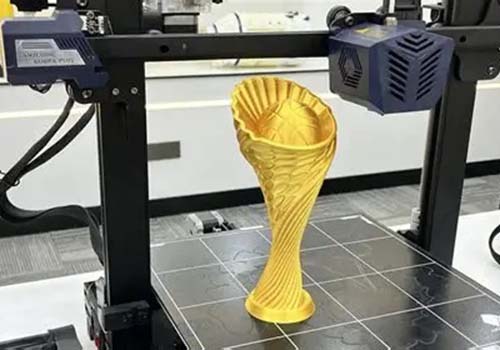
Fused Deposition Modeling (FDM) is the most common 3D printing technology. It works like a high-tech hot glue gun. A nozzle heats plastic filament until it melts. The printer moves the nozzle in X and Y directions, depositing the melted plastic layer by layer. The build platform lowers after each layer.
Key specifications:
- Layer height: 0.1–0.4 mm
- Build volume: From 100 mm to over 1,000 mm
- Accuracy: ±0.2–0.5 mm
Materials Used
| Material | Properties | Common Uses |
|---|---|---|
| PLA | Biodegradable, easy to print, low strength | Prototypes, decorative items |
| ABS | Tough, heat resistant, impact resistant | Functional prototypes, automotive |
| PETG | Strong, flexible, chemical resistant | Mechanical parts, containers |
| TPU | Flexible, rubber-like | Seals, grips, phone cases |
| Nylon | Strong, durable, slightly flexible | Gears, hinges, functional parts |
Applications
FDM is the go-to choice for prototyping, education, and low-cost manufacturing. A startup developing a new consumer product can print early prototypes overnight. A school can put FDM printers in classrooms to teach engineering concepts. A small business can print custom parts on demand without tooling costs.
Real-world example: An automotive repair shop needed a custom bracket to mount a sensor on a test vehicle. They designed the part in CAD and printed it in ABS using FDM. The part was ready in four hours and held the sensor securely through weeks of testing.
What Is Stereolithography (SLA)?
How It Works
Stereolithography (SLA) uses light to cure liquid resin. A UV laser traces the shape of each layer onto the surface of a vat of photosensitive resin. Where the laser hits, the resin solidifies. The build platform lowers slightly, and the next layer is cured on top.
Key specifications:
- Layer height: 0.025–0.15 mm
- Accuracy: ±0.05–0.1 mm
- Surface finish: Very smooth
Materials Used
| Resin Type | Properties | Common Uses |
|---|---|---|
| Standard | Good detail, moderate strength | Visual prototypes, models |
| Tough | Higher impact resistance | Functional prototypes |
| High-Temperature | Withstands 150–200°C | Heat-resistant parts |
| Flexible | Rubber-like, 100–300% elongation | Gaskets, hinges, soft-touch parts |
| Castable | Burns out cleanly | Jewelry patterns, investment casting |
Applications
SLA excels where detail matters. In jewelry, SLA prints intricate wax-like patterns for lost-wax casting. A designer can create filigree work that would be impossible to carve by hand. In dentistry, SLA produces accurate models for crowns, bridges, and surgical guides. In medical applications, SLA prints patient-specific surgical guides that improve precision.
Real-world example: A dental lab needed models for a complex implant case. SLA printed the models with ±0.05 mm accuracy. The surgeon used the models to pre-plan the procedure, reducing operating time by 30 percent.
What Is Selective Laser Sintering (SLS)?
How It Works
Selective Laser Sintering (SLS) uses a laser to fuse powder particles. A layer of fine powder is spread across the build platform. A laser sinters the powder where the part exists. The platform lowers, a new layer of powder is spread, and the process repeats. Unsintered powder acts as natural support for overhangs.
Key specifications:
- Layer height: 0.05–0.2 mm
- Accuracy: ±0.1–0.3 mm
- No support structures needed
Materials Used
| Material | Properties | Common Uses |
|---|---|---|
| Nylon (PA12) | Strong, durable, chemical resistant | Functional parts, gears, housings |
| Glass-filled Nylon | Increased stiffness, heat resistance | Structural components |
| TPU Powder | Flexible, rubber-like | Seals, footwear, soft-touch parts |
| Metal Powders | High strength, heat resistance | Aerospace, automotive, medical |
Applications
SLS is the choice for durable, functional parts. In automotive, SLS prints custom interior components like dashboard inserts and vent grilles. In aerospace, SLS produces lightweight brackets and ducting with complex geometries. In consumer products, SLS creates custom insoles and mid-soles with tailored cushioning.
Real-world example: A drone manufacturer needed a lightweight camera mount with integrated cable channels. SLS printed the part in glass-filled nylon. The part was 40 percent lighter than the machined aluminum version and eliminated separate cable clips.
What Is Selective Laser Melting (SLM) and Direct Metal Laser Sintering (DMLS)?
How It Works
Selective Laser Melting (SLM) and Direct Metal Laser Sintering (DMLS) are metal powder-bed fusion technologies. A high-power laser melts metal powder layer by layer. The process happens in an inert gas chamber to prevent oxidation. The result is fully dense metal parts.
Key specifications:
- Layer height: 0.02–0.05 mm
- Accuracy: ±0.05–0.1 mm
- Density: 99.5% or higher
Materials Used
| Material | Properties | Common Uses |
|---|---|---|
| Titanium (Ti-6Al-4V) | High strength-to-weight, biocompatible | Aerospace, medical implants |
| Aluminum (AlSi10Mg) | Lightweight, good thermal conductivity | Heat exchangers, automotive |
| Stainless Steel (17-4 PH, 316L) | Corrosion resistant, high strength | Industrial parts, tools |
| Inconel (718, 625) | High-temperature strength | Turbine blades, exhaust components |
Applications
Metal printing is used where performance matters most. In aerospace, it produces engine components with complex cooling channels. In medical, it creates custom titanium implants that match patient anatomy. In industrial, it manufactures high-strength tools and end-use parts.
Real-world example: A medical device company needed a custom titanium implant for a patient with a unique bone defect. SLM printed the implant in Ti-6Al-4V. The part matched the patient's anatomy exactly and was approved for surgical use.
What Is Electron Beam Melting (EBM)?
How It Works
Electron Beam Melting (EBM) is similar to SLM but uses an electron beam instead of a laser. The process operates in a high-vacuum environment. The electron beam melts metal powder layer by layer. The vacuum prevents oxidation and allows for higher build temperatures.
Key specifications:
- Layer height: 0.05–0.2 mm
- Build rate: 1,000–2,000 mm³/hour
- Vacuum environment: Prevents oxidation
Materials Used
| Material | Properties | Common Uses |
|---|---|---|
| Titanium (Ti-6Al-4V) | High strength-to-weight, biocompatible | Medical implants, aerospace |
| Stainless Steel | Strength, corrosion resistance | Industrial parts |
| Nickel-based Superalloys | High-temperature strength | Turbine blades, engine components |
Applications
EBM is especially suited for medical implants. The process can create porous structures that mimic natural bone, promoting osseointegration. In aerospace, EBM produces large, lightweight components like engine brackets and structural parts.
Real-world example: A manufacturer of hip implants uses EBM to produce porous titanium cups. The porous structure allows bone to grow into the implant, improving long-term stability.
What Is Binder Jetting?
How It Works
Binder Jetting works like a 3D printer for powder. A print head deposits a liquid binder onto a bed of powder. The binder holds the powder together to form each layer. After printing, the "green" part is sintered in a furnace to fuse the particles and remove the binder.
Key specifications:
- Layer height: 0.05–0.1 mm
- Shrinkage during sintering: 15–20%
- High build volume: Up to 800 x 500 x 400 mm
Materials Used
| Material | Properties | Common Uses |
|---|---|---|
| Stainless Steel | Strong, corrosion resistant | Industrial parts, tools |
| Nylon | Flexible, durable | Functional prototypes |
| Sand | High-temperature resistance | Molds, cores for casting |
Applications
Binder jetting is used for both metal and sand casting applications. For metal, it offers a cost-effective path to medium-volume production. For sand casting, it prints complex molds and cores that enable geometries impossible with traditional pattern-making.
Real-world example: A foundry needed a complex sand core for an engine block. Traditional core-making would have required multiple assemblies. Binder jetting printed the core as a single piece, reducing assembly time and improving casting quality.
How Do These Technologies Compare?
The table below summarizes the key differences.
| Technology | Materials | Accuracy | Speed | Equipment Cost | Best For |
|---|---|---|---|---|---|
| FDM | Plastics (PLA, ABS, Nylon) | Moderate | Moderate | Low | Prototyping, education |
| SLA | Resins | High | Slow | Moderate | High-detail parts, jewelry, dental |
| SLS | Nylon, TPU, metals | Moderate | Moderate | High | Functional parts, durable prototypes |
| SLM/DMLS | Metals (titanium, aluminum, steel) | High | Slow | Very high | Aerospace, medical, high-performance |
| EBM | Titanium, superalloys | High | Slow | Very high | Medical implants, aerospace |
| Binder Jetting | Metals, sand, nylon | Moderate | Fast (printing) | High | Medium-volume metal parts, casting molds |
Which Technology Should You Choose?
Ask These Questions
What material properties do you need?
If you need metal strength, choose SLM, EBM, or binder jetting. If you need durability with lower cost, choose SLS. If detail matters most, choose SLA.
What quantity do you need?
For one to ten parts, any technology works. For ten to one hundred, SLS or binder jetting become cost-effective. For hundreds, consider binder jetting or traditional manufacturing.
What is your budget?
FDM has the lowest equipment and material costs. SLA is moderate. SLS and metal printing require significant investment.
What surface finish do you need?
SLA produces the smoothest surfaces. FDM requires post-processing for smooth finishes. SLS has a slightly textured surface.
Yigu Technology’s View
At Yigu Technology, we work with all major additive manufacturing technologies. Our experience has taught us that there is no single "best" technology. There is only the right technology for your specific need.
Case Study: Choosing FDM for Rapid Iteration
A consumer electronics startup needed to test ergonomic handles for a new kitchen tool. They needed five iterations in two weeks. FDM in PLA gave them fast, low-cost prototypes. Each iteration cost under $10 and was ready overnight.
Case Study: Choosing SLS for Functional Parts
A drone manufacturer needed durable, lightweight camera mounts. FDM parts lacked strength. SLS in glass-filled nylon delivered parts that passed drop tests and weighed 40 percent less than machined aluminum.
Case Study: Choosing Metal Printing for Aerospace
An aerospace client needed a custom bracket with internal cooling channels. Machining would have required multiple parts and assembly. SLM printed the bracket as a single piece in titanium. The part passed all vibration and thermal tests.
Our Approach
We guide clients through the decision. We ask about the part's purpose, required strength, budget, and timeline. Then we recommend the technology that fits. Sometimes that means one technology. Sometimes it means combining multiple.
Conclusion
Additive manufacturing is not one technology. It is a family of technologies, each with its own strengths. FDM is the accessible entry point. SLA delivers unmatched detail. SLS produces durable functional parts. Metal printing enables high-performance applications.
The key is matching the technology to the need. Start with the material. Then consider the geometry, quantity, and budget. With the right choice, additive manufacturing unlocks design freedom and production efficiency that traditional methods cannot match.
FAQ
What is the difference between FDM and SLA?
FDM uses melted plastic filament and is best for larger, less detailed parts. SLA uses liquid resin cured by a laser and produces smoother, more detailed parts. FDM is generally lower cost. SLA offers higher precision.
Which additive manufacturing technology is best for metal parts?
SLM (Selective Laser Melting), DMLS (Direct Metal Laser Sintering), and EBM (Electron Beam Melting) are the primary technologies for metal. SLM and DMLS use lasers; EBM uses an electron beam in a vacuum. Binder jetting also produces metal parts but requires a separate sintering step.
How do I choose the right additive manufacturing technology for my project?
Start with the material you need. Then consider the required precision, part size, quantity, and budget. For prototypes, FDM or SLA often work. For functional plastic parts, SLS is a strong choice. For metal parts, SLM, EBM, or binder jetting may apply. Consulting with an experienced service provider like Yigu Technology can help narrow the options.
Contact Yigu Technology for Custom Manufacturing
Need help choosing the right additive manufacturing technology? Yigu Technology offers services across FDM, SLA, SLS, and metal printing. Our engineers help you select the best approach and guide you from design to finished part.
Contact us today to discuss your project. Whether you need a single prototype or production parts, we deliver quality and expertise.