Introduction
You've probably heard about 3D printing, but the term "SLS printing" might still sound mysterious. Walk into any advanced manufacturing facility, and you'll likely see these machines working quietly, building parts that would be impossible to create any other way. SLS stands for Selective Laser Sintering, and it's changing how companies produce everything from airplane components to custom medical devices. Unlike the plastic filament printers you might have seen in schools, SLS uses powdered materials and high-powered lasers to create incredibly strong, complex parts. In this article, we'll break down exactly what SLS printing means, how it works, and why it matters for modern manufacturing.
How Does SLS Printing Actually Work?
The Basic Principle Explained
Selective Laser Sintering builds objects from fine powders using heat and light. Think of it like baking a cake layer by layer, but instead of batter, you're using plastic or metal powder. A laser beam traces the shape of each layer, fusing powder particles together. When one layer finishes, fresh powder spreads over the top, and the process repeats until your object emerges from the powder bed.
The name tells you everything:
- Selective: The laser only hits specific areas, not the whole powder bed
- Laser: A focused light beam provides the energy
- Sintering: Powder particles fuse without fully melting (different from melting)
Key Components of an SLS System
Understanding the parts helps you appreciate how these machines work:
Laser Source: Most SLS printers use CO₂ lasers or fiber lasers. These generate intense beams that heat powder precisely. The laser power typically ranges from 30 to 200 watts, depending on the materials being processed. Higher power means faster printing but requires more careful control.
Powder Bed: This is the platform where printing happens. It lowers by exactly one layer thickness after each pass, usually 0.08 to 0.3 millimeters. The movement must be incredibly precise; even tiny errors compound over hundreds of layers.
Scanning System: Mirrors mounted on galvanometers (fast, precise motors) direct the laser beam across the powder surface. These systems move at speeds up to 10 meters per second, tracing complex patterns rapidly.
Powder Delivery: A reservoir holds fresh powder. A roller or blade spreads it evenly across the build area. The consistency of this powder layer directly affects print quality.
Heating Elements: Most SLS printers keep the powder bed at temperatures just below the material's melting point. This pre-heating reduces the laser energy needed and prevents warping.
The Layer-by-Layer Building Process
Let's walk through a typical SLS print job:
Step 1: Powder Preparation
The printer heats the entire powder bed to a temperature just below the material's melting point. For nylon, this might be around 160-180°C. This pre-heating reduces thermal stress and helps layers bond.
Step 2: First Layer Spreading
A roller spreads a thin layer of powder across the build platform. The thickness depends on your settings but typically ranges from 0.1 to 0.15mm for detailed parts.
Step 3: Laser Sintering
The laser scans the first cross-section of your part, following the digital blueprint. Wherever the laser hits, powder particles fuse together. The surrounding powder remains loose, acting as natural support for overhanging features.
Step 4: Platform Lowers
The build platform drops by exactly one layer height. Fresh powder spreads over the entire surface, covering both the sintered areas and loose powder.
Step 5: Repeat
Steps 3 and 4 repeat hundreds or thousands of times. Each new layer fuses to the one below it, gradually building your complete object.
Step 6: Cooling
After printing finishes, the entire powder block must cool slowly. Rushing this step causes warping. Cooling can take as long as the printing itself, sometimes 12-24 hours for large jobs.
Step 7: Extraction and Cleaning
Workers remove the printed parts from the powder bed. Compressed air or bead blasting cleans off loose powder. That excess powder gets recycled for future prints, with about 95% recovery rate for some materials.
What Makes SLS Different from Other 3D Printing?
SLS vs. FDM: The Filament Alternative
FDM (Fused Deposition Modeling) is what most people think of as 3D printing. It melts plastic filament and squeezes it through a nozzle. Here's how they compare:
| Feature | SLS Printing | FDM Printing |
|---|---|---|
| Materials | Powders (nylon, metals, ceramics) | Filaments (PLA, ABS, PETG) |
| Support Structures | Not needed; powder supports parts | Required for overhangs |
| Surface Finish | Slightly grainy, matte | Visible layer lines |
| Strength | Uniform in all directions | Weaker between layers |
| Part Complexity | Excellent for complex internal features | Limited by support removal |
| Equipment Cost | $10,000 - $500,000+ | $200 - $10,000 |
| Material Cost | $50 - $200 per kg | $20 - $80 per kg |
Real example: A company needed brackets with internal channels for cooling fluid. FDM couldn't create the channels without supports that would be impossible to remove. SLS printed them in one piece, powder supporting the channels naturally.
SLS vs. SLA: Resin vs. Powder
SLA (Stereolithography) uses liquid resin cured by UV light. The differences are significant:
Material State: SLA uses liquid photopolymer; SLS uses solid powder. This means SLA parts come out of a vat of liquid, while SLS parts emerge from powder. The powder in SLS acts as its own support, while SLA needs printed supports.
Surface Quality: SLA typically produces smoother surfaces right out of the printer. Layer lines are nearly invisible. SLS parts have a characteristic slightly grainy texture, like fine sandpaper. However, this texture can be an advantage for parts that need to be painted or bonded.
Mechanical Properties: SLS parts are generally tougher. The sintering process creates dense structures with strength in all directions. SLA resins tend to be more brittle, though engineering resins are improving. A nylon SLS part might withstand repeated flexing, while an SLA part might crack under the same stress.
Application Focus: SLA dominates jewelry, dental, and visual prototype markets where appearance matters most. SLS rules functional prototyping and end-use parts where strength and material properties matter.
What Materials Work in SLS Printing?
Engineering Plastics: The Workhorses
Nylon (Polyamide) is the most common SLS material. It comes in several formulations:
Nylon 12: The standard choice for most applications. It offers good strength, flexibility, and chemical resistance. Color is typically white or gray. Engineers use it for brackets, housings, and functional prototypes.
Nylon 11: More flexible than Nylon 12, with better impact resistance. It's the go-to for parts that must survive repeated bending or dropping.
Glass-filled Nylon: Adding glass fibers (typically 30-40%) increases stiffness and heat resistance. These materials feel more like engineering plastics. They're used for automotive under-hood components and structural parts.
Flame-retardant Nylon: Formulated to meet safety standards like UL94 V-0. Essential for electronics enclosures and aerospace interior parts.
Metal Powders: Industrial Strength
Metal SLS (sometimes called Direct Metal Laser Sintering or DMLS) creates fully dense metal parts:
Stainless Steel: The most common metal option. Parts are strong, corrosion-resistant, and can be machined or welded after printing. Used for tools, medical instruments, and functional prototypes.
Aluminum: Lightweight and strong with good thermal conductivity. Popular for aerospace brackets and heat exchangers.
Titanium: Exceptional strength-to-weight ratio and biocompatibility. Medical implants and high-performance aerospace parts dominate its use.
Tool Steel: Can be printed and heat-treated to create production-quality molds and dies.
Other Advanced Materials
Ceramics: Alumina and zirconia powders create heat-resistant, wear-resistant parts. Used in foundry applications and high-temperature environments.
Elastomers: Flexible materials that produce rubber-like parts. Great for gaskets, seals, and soft-touch components.
Composite Powders: Combinations like carbon fiber-filled nylon offer specialized properties for demanding applications.
Material Comparison Table
| Material | Strength | Flexibility | Heat Resistance | Cost | Typical Use |
|---|---|---|---|---|---|
| Nylon 12 | Medium | High | Medium | Low | General parts |
| Glass Nylon | High | Low | High | Medium | Structural parts |
| Stainless Steel | Very High | Very Low | Very High | High | Metal components |
| Aluminum | High | Very Low | High | High | Lightweight parts |
| TPU (Flexible) | Low | Very High | Low | Medium | Seals, grips |
Why Choose SLS Printing?
Design Freedom You Can't Get Elsewhere
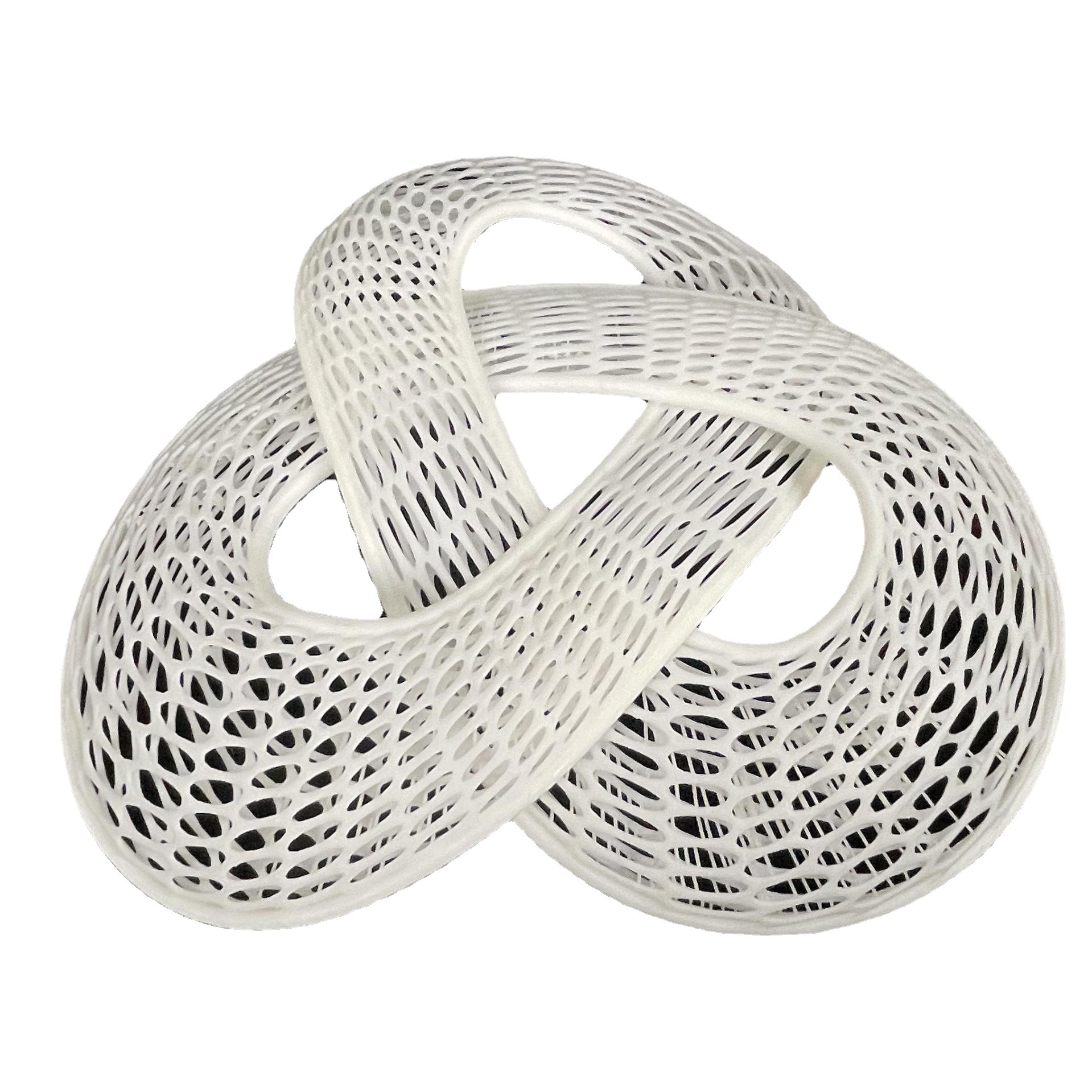
SLS liberates designers from traditional constraints. Because powder supports everything, you can create:
Internal channels: Coolant passages, air flow paths, or lightweighting cavities impossible to drill or mold
Interlocking parts: Assemblies printed as single pieces, with moving parts already in place
Organic shapes: Ergonomically optimized handles, biologically inspired structures, complex curves
One company printed a robotic hand with fully articulated fingers in a single job. Traditional manufacturing would require dozens of parts and assembly. SLS did it overnight.
Material Efficiency and Sustainability
Unused powder gets recycled. After printing, workers sift the loose powder to remove any partially sintered particles. Fresh powder mixes with the recovered material, typically at ratios around 50/50. This means material waste approaches zero, unlike machining where 90% of the original block might end up as chips.
For expensive materials like titanium, this efficiency matters enormously. A titanium part weighing 1kg might require 10kg of raw material if machined. SLS uses exactly the material in the part, plus minimal waste.
Strength You Can Trust
SLS parts are nearly isotropic, meaning they have similar strength in all directions. This contrasts with FDM, where layer bonding creates weak points. The sintering process creates continuous material throughout the part.
Tensile strength for nylon SLS parts typically reaches 45-50 MPa, comparable to injection-molded nylon. Metal parts achieve near-wrought properties after heat treatment.
No Support Structures Required
This single advantage changes everything. With FDM or SLA, supports mean:
- Extra material cost
- Additional print time
- Post-processing to remove them
- Surface damage where supports attached
- Design limitations to make supports removable
SLS eliminates all these concerns. The powder holds up overhangs, internal features, and delicate details perfectly.
What Are the Limitations?
Surface Finish Considerations
SLS parts have a characteristic slightly rough surface. The texture comes from partially melted powder particles adhering to surfaces. For many applications, this is acceptable or even desirable (it holds paint well). But for consumer products with aesthetic requirements, additional finishing steps may be needed.
Options for improving surface finish include:
- Media tumbling: Parts vibrate with abrasive media for several hours
- Vapor smoothing: Chemical exposure melts surface layer slightly
- Sanding and filling: Manual work for individual parts
- Coating: Primer and paint fill surface texture
Equipment Investment
Industrial SLS printers cost significantly more than desktop FDM machines. Entry-level systems start around $10,000-20,000, but production-ready machines run $50,000-500,000. The powder handling and recycling systems add complexity and cost.
For companies without this capital, service bureaus like Yigu Technology offer access without the investment. We handle the equipment, materials, and expertise, delivering finished parts on demand.
Build Volume Constraints
Most SLS printers have build volumes under 300mm x 300mm x 400mm. Larger parts must be split into pieces and assembled. While this works, it adds post-processing time and creates potential weak points at seams.
Powder Handling Challenges
Working with fine powders requires care. They can become airborne, creating inhalation risks. Some materials require inert gas atmospheres (nitrogen or argon) during printing to prevent oxidation or combustion. Proper ventilation and personal protective equipment matter.
Where Is SLS Printing Used?
Aerospace: Lightweighting and Complexity
Aircraft manufacturers love SLS for weight reduction. Every gram saved reduces fuel costs over the aircraft's life. SLS creates:
- Ducting with optimized flow paths
- Brackets with organic shapes minimizing material
- Cabin components customized for specific aircraft
Boeing has thousands of SLS parts flying on commercial aircraft. Each part meets strict flame-retardancy and strength requirements while saving weight.
Medical: Patient-Specific Solutions
SLS excels at creating custom medical devices:
- Surgical guides matching individual patient anatomy
- Prosthetic sockets fitted to residual limbs
- Implants with porous structures promoting bone growth
- Orthotics customized for foot structure
A patient needing a unique cranial implant can have it designed from CT scans and printed in biocompatible titanium within days.
Automotive: Production and Prototyping
Car makers use SLS throughout development and even for production:
- Functional prototypes for testing fit and performance
- Tooling like jigs and fixtures for assembly lines
- End-use parts for low-volume vehicles
- Customization for racing applications
Porsche offers SLS-printed bucket seats for its high-performance cars, allowing customer-specific sizing and styling.
Consumer Products: Customization at Scale
From hearing aids to eyewear, SLS enables mass customization. Millions of custom-fitted hearing aids ship annually, each SLS-printed from scans of individual ear canals. The process costs little more than standard production while providing perfect fit.
Conclusion
SLS printing represents a fundamental shift in manufacturing capability. By fusing powder with lasers, it creates parts impossible to make any other way. The technology offers design freedom, material efficiency, and production-ready strength. While equipment costs remain significant, service providers like Yigu Technology make SLS accessible for projects of any size. As materials expand and costs decrease, SLS will increasingly become a standard manufacturing process, not just a prototyping tool.
FAQs
How accurate is SLS printing?
Typical accuracy ranges from ±0.1 to 0.2mm for most parts. High-end machines can achieve tighter tolerances, especially in the X and Y axes. Factors affecting accuracy include powder particle size, laser calibration, and thermal effects during cooling.
Is SLS printing expensive?
Equipment costs are high, but per-part costs compare favorably to other methods for complex geometries. A small nylon part might cost $10-30 through a service bureau. Metal parts cost more due to material prices and slower printing. For production runs, SLS often beats machining for complex parts.
Can SLS print moving parts?
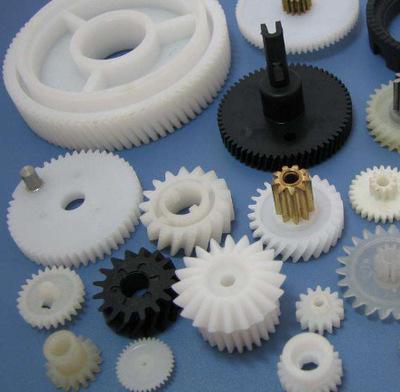
Yes! Assemblies with hinges, gears, or ball joints can print as single pieces. The powder supports moving elements during printing, and they break free after cleaning. This capability saves assembly time and ensures perfect fit.
What's the difference between SLS and DMLS?
They're essentially the same process with different names. SLS traditionally refers to plastic powders, while DMLS (Direct Metal Laser Sintering) specifically describes metal printing. Both use lasers to fuse powder, though metal requires higher temperatures and inert atmospheres.
How strong are SLS-printed parts?
Nylon SLS parts achieve 45-50 MPa tensile strength, comparable to injection-molded nylon. Metal parts reach near-wrought properties after heat treatment. Layer bonding strength approaches that of the base material, unlike FDM where layers create weak points.
Contact Yigu Technology for Custom Manufacturing
Ready to explore SLS printing for your next project? At Yigu Technology, we combine years of additive manufacturing expertise with industrial-grade equipment. Our team helps you select the right materials, optimize designs for printing, and deliver quality parts on schedule. Whether you need prototypes for testing or production runs of custom components, we provide professional service and competitive pricing. Contact us today to discuss your requirements. We'll guide you through the possibilities and show you how SLS printing can solve your manufacturing challenges.