Introduction
What if you could build parts that are as strong as metal but half the weight? What if you could create complex internal structures that traditional manufacturing cannot? What if you could waste almost no material in the process?
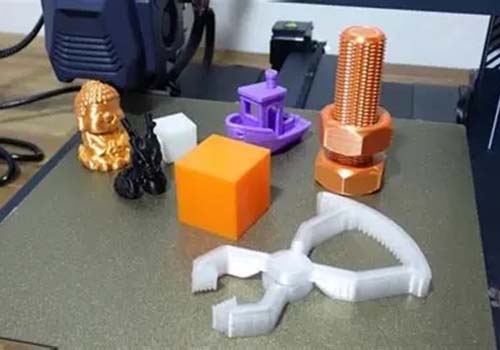
This is what additive manufacturing composites deliver. By combining 3D printing with composite materials—reinforcements like carbon fiber or glass fiber held together by a plastic or metal matrix—manufacturers can create parts with properties that exceed traditional materials.
The results are remarkable. Carbon fiber-reinforced parts can be 50 percent lighter than aluminum while matching its strength. Design freedom enables shapes that were previously impossible. Material waste drops from 90 percent to under 5 percent.
In this guide, we will explore what additive manufacturing composites are, how they work, and why industries from aerospace to healthcare are adopting them.
What Are Additive Manufacturing Composites?
Breaking Down the Terms
Additive manufacturing builds objects layer by layer from a digital file. Unlike subtractive manufacturing (cutting away material), it adds material only where needed.
Composites are materials made from two or more components with different properties. A reinforcement provides strength and stiffness. A matrix binds the reinforcement together.
When combined, you get additive manufacturing composites: 3D printed parts made from composite materials.
Key fact: The reinforcement can be short fibers (chopped, random orientation) or continuous fibers (long, aligned strands). Continuous fibers provide much higher strength but are more complex to print.
How Do Composites Work?
Think of reinforced concrete. The steel rebar provides strength. The concrete holds it in place. Composites work the same way:
| Component | Role | Example |
|---|---|---|
| Reinforcement | Adds strength, stiffness | Carbon fiber, glass fiber, ceramic particles |
| Matrix | Binds reinforcement, provides form | Thermoplastic (ABS, nylon), thermoset resin, metal |
Real-world example: A carbon fiber-reinforced plastic (CFRP) part uses carbon fibers for strength and a thermoplastic matrix for printability. The result is a part that is stiffer than aluminum and lighter than steel.
What Are the Key Types of Composite Materials?
| Composite Type | Reinforcement | Matrix | Key Properties | Applications |
|---|---|---|---|---|
| Carbon Fiber-Reinforced Polymers (CFRP) | Carbon fiber (short or continuous) | Thermoplastics, thermosets | High strength-to-weight, stiff | Aerospace, drone frames, sports equipment |
| Glass Fiber-Reinforced Polymers (GFRP) | Glass fiber | Thermoplastics, resins | Affordable, impact resistant, corrosion resistant | Automotive, marine, consumer goods |
| Metal Matrix Composites (MMC) | Ceramic fibers, metal particles | Metals (titanium, aluminum) | High temperature resistance, strong | Jet engine parts, industrial tooling |
| Natural Fiber Composites | Hemp, flax, bamboo | Biodegradable plastics | Eco-friendly, low cost, lightweight | Packaging, furniture, low-load parts |
Key fact: Continuous carbon fiber composites have a strength-to-weight ratio 2 times higher than aluminum and 5 times higher than steel.
Why Choose Additive Manufacturing Composites?
Superior Strength-to-Weight Ratio
This is the primary advantage. Lightweight, strong parts are critical where weight matters.
| Material | Strength-to-Weight Ratio (relative) |
|---|---|
| Steel | 1.0 (baseline) |
| Aluminum | 1.5–2.0 |
| CFRP (short fiber) | 2.5–3.5 |
| CFRP (continuous fiber) | 4.0–5.0 |
Real-world example: Boeing uses AM composites in the 787 Dreamliner. Overall weight reduction of 15 percent contributes to 20 percent lower fuel consumption compared to older aircraft.
Design Freedom
Traditional manufacturing imposes design constraints. Molds must open. Tools must reach. Additive manufacturing removes these limits.
What becomes possible:
- Internal channels – Cooling or fluid passages
- Lattice structures – Lightweight, high-strength internal patterns
- Organic shapes – Curves that follow natural stress paths
- Part consolidation – Replace assemblies with single printed components
Real-world example: Airbus prints continuous carbon fiber brackets for the A350. The brackets are 40 percent lighter than machined aluminum equivalents. Production time dropped from weeks to days.
Reduced Material Waste
Subtractive manufacturing wastes material. Machining a metal part can waste 70–90 percent of the raw material.
Additive manufacturing uses only what is needed. Waste is typically under 5 percent. Unused powder or filament can often be recycled.
Key fact: IKEA tested natural fiber AM composites for furniture parts. Material waste was reduced by 80 percent compared to traditional molding.
Faster Prototyping and Production
Traditional prototyping requires tooling. Molds take weeks. Machining takes days.
AM composites print directly from digital files. A prototype that took weeks now takes hours or days.
Real-world example: DJI, a drone manufacturer, used AM composites to prototype new drone frames. A CFRP frame printed in 2 days, compared to 4 weeks for a molded plastic frame. They tested 5 design iterations in the time previously required for one.
Where Are AM Composites Being Used?
Aerospace and Defense
Aerospace demands lightweight, high-strength parts. AM composites deliver.
Case Study: Lockheed Martin Orion
Fuel tanks for the Orion spacecraft are printed in carbon fiber-reinforced thermoplastic. The tanks are 25 percent lighter than metal versions and have 50 percent fewer parts. Fewer joints mean fewer potential leaks.
Case Study: UAV Components
Unmanned aerial vehicles use CFRP frames printed with AM composites. Weight reduction increases flight time. A study found that CFRP frames extended flight endurance by 20–30 percent compared to aluminum.
Automotive
Car manufacturers use AM composites for both prototyping and production.
Case Study: Ford F-150
Ford printed CFRP brackets for prototype F-150 trucks. The brackets were 30 percent lighter than metal versions while maintaining strength. This helped test design concepts without investing in expensive tooling.
Case Study: Tesla Model Y
Tesla uses glass fiber-reinforced AM composites for underbody shields. The shields protect the battery from debris. They are 10 percent lighter than traditional plastic shields. This contributes to the Model Y’s range—about 5 miles per charge improvement.
Healthcare
AM composites enable patient-specific medical devices.
Case Study: Dental Crowns
3D Systems prints dental crowns using ceramic fiber composites. The crowns match the patient’s tooth anatomy from a 3D scan. They are stronger than traditional porcelain crowns. Production time: hours, compared to weeks for lab-made crowns.
Case Study: Custom Implants
Hip implants printed with lattice structures mimic natural bone. A study in the Journal of Biomedical Materials Research found that these composite implants have a 30 percent higher success rate than traditional metal implants.
Case Study: Prosthetics
Open Bionics uses AM composites to make lightweight, durable prosthetic hands. Cost is a fraction of traditional metal prosthetics. The parts are customizable to each patient.
What Are the Challenges and How to Overcome Them?
High Material Costs
Carbon fiber filaments cost $50–$100 per kg, compared to $2–$5 per kg for standard PLA.
| Solution | How It Helps |
|---|---|
| Use glass fiber instead | Glass fiber costs 30–50% less than carbon fiber |
| Optimize designs with lattice structures | Reduce material use by up to 60% without losing strength |
| Use short-fiber composites for non-critical parts | Lower cost than continuous fiber |
Key fact: Lattice structures can reduce material use by 60 percent while maintaining structural integrity.
Inconsistent Part Quality
Defects like air bubbles or uneven fiber distribution weaken parts.
| Solution | How It Helps |
|---|---|
| Use printers with closed-loop monitoring | Sensors detect and correct issues in real time |
| Post-process with heat treatment | Eliminates air bubbles, improves fiber bonding |
| Calibrate regularly | Prevents nozzle wear and extrusion issues |
Real-world example: Stratasys FDM printers for composites have sensors that monitor filament flow. They adjust speed and temperature to prevent defects.
Limited Printer Compatibility
Composite fibers wear down standard nozzles. Short fibers can jam extruders.
| Solution | How It Helps |
|---|---|
| Use hardened steel or ruby nozzles | Resists wear from abrasive fibers |
| Choose printers designed for composites | Specialized extruders handle continuous fibers |
| Upgrade existing printers | Composite-compatible nozzles cost $20–$50 |
Real-world example: Markforged Onyx Pro uses a hardened steel nozzle and specialized extruder for continuous carbon fiber.
What Does the Future Hold?
Sustainable Composites
The market for sustainable AM composites is growing rapidly. Grand View Research projects 25 percent annual growth over the next five years.
Emerging materials:
- Recycled plastic matrices
- Natural fibers (hemp, flax, bamboo)
- Biodegradable thermoplastics
Multi-Material Printing
Printers will switch between different composite filaments mid-print. A single part could have:
- Rigid carbon fiber sections for structure
- Flexible glass fiber sections for movement
- Conductive sections for electronics
Key fact: Researchers at MIT are developing printers that can switch between multiple composite filaments in one print job.
Large-Scale Production
Current AM composites are used for small to medium parts. Future printers will produce larger components.
Case Study: GE Renewable Energy
GE is developing a printer for wind turbine blades up to 10 meters long. Glass fiber composites will print the blades in weeks rather than months. Material waste will drop by 70 percent.
Yigu Technology’s View
At Yigu Technology, we use additive manufacturing composites for custom parts across industries.
Case Study: Electronics Housing
A client needed a lightweight, durable housing for a portable electronic device. Traditional aluminum was heavy. Plastic lacked strength.
We printed the housing in glass fiber-reinforced nylon. The part was 25 percent lighter than aluminum and twice as stiff as unreinforced plastic. The client reduced production costs by optimizing material use.
Case Study: Drone Frame
A drone manufacturer needed a frame with high stiffness-to-weight ratio. We printed the frame in continuous carbon fiber composite. The frame was 40 percent lighter than the previous aluminum version. Flight time increased by 25 percent.
Our Approach
We select the right composite for the application:
- Continuous carbon fiber – Highest strength, aerospace, high-performance
- Short carbon fiber – Good strength, lower cost
- Glass fiber – Affordable, corrosion resistant
- Natural fiber – Eco-friendly, low-load applications
Conclusion
Additive manufacturing composites combine the best of both worlds: the design freedom of 3D printing and the performance of composite materials. The result is parts that are stronger, lighter, and more efficient than traditional manufacturing can produce.
The technology is already transforming industries. Aerospace uses it for lightweight components. Automotive uses it for fuel-efficient parts. Healthcare uses it for patient-specific implants. And the applications are expanding.
Challenges remain. Material costs are high. Quality control requires attention. But solutions exist—optimized designs, better printers, and emerging materials.
As the technology matures, additive manufacturing composites will become a cornerstone of modern manufacturing.
FAQ
Are additive manufacturing composites more expensive than traditional materials?
Yes, upfront material costs are higher. Carbon fiber filament can cost $50–$100 per kg versus $2–$5 per kg for PLA. However, long-term savings come from reduced weight (fuel savings), less waste (material efficiency), and faster production (no tooling). For the right applications, total cost is lower.
Can additive manufacturing composites be used for high-temperature applications?
Yes. Metal matrix composites (MMCs) combine metals like titanium with ceramic fibers. They withstand temperatures up to 800°C. These are used in jet engine parts, industrial ovens, and high-temperature tooling.
How long does it take to print a part with additive manufacturing composites?
Print times vary by size and complexity. A small part like a drone bracket takes 2–4 hours. A larger automotive component takes 1–2 days. This is still significantly faster than traditional prototyping, which can take weeks for molds or machining setups.
Contact Yigu Technology for Custom Manufacturing
Need lightweight, high-strength composite parts? Yigu Technology offers additive manufacturing services for carbon fiber, glass fiber, and natural fiber composites.
Contact us today to discuss your project. Let us help you build stronger, lighter, better parts.