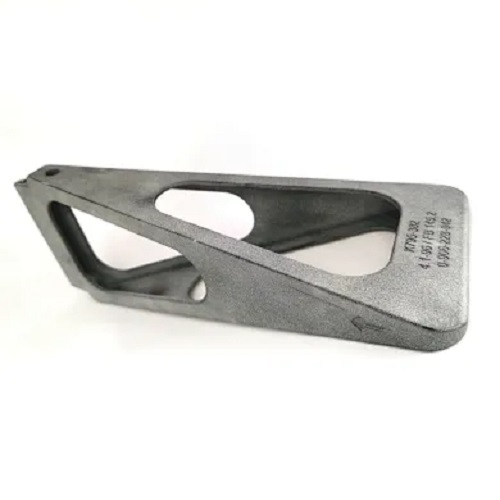
Introduction
Selective Laser Sintering (SLS) is one of the most powerful technologies in 3D printing. It builds parts from powder, using a laser to fuse particles together layer by layer.
Unlike FDM printers that squirt melted plastic, SLS creates parts that are strong, durable, and complex. No supports needed. Internal channels possible. Moving parts printed ready to use.
From aerospace components to medical implants to automotive prototypes, SLS serves industries that demand performance.
At Yigu technology, we've printed thousands of SLS parts. This guide explains how it works, why it matters, and where it's used.
What Is Selective Laser Sintering?
The Basic Idea: Fusing Powder with Light
Selective Laser Sintering builds parts from powder. A high-power laser scans each layer, fusing particles together where the part should be. Unfused powder stays in place, supporting the part as it grows.
Think of it like building a sandcastle, but instead of wet sand holding together, a laser welds each grain to its neighbors.
The name tells the story:
- Selective: The laser only hits specific areas
- Laser: The energy source
- Sintering: Fusing particles without fully melting them
A Brief History
SLS was invented in the late 1980s by Dr. Carl Deckard at the University of Texas. His work laid the foundation for a technology that would transform manufacturing.
The first commercial SLS machines appeared in the early 1990s. Since then, advances in lasers, materials, and software have made SLS faster, more precise, and more accessible.
Today, SLS is essential across industries—from prototyping to production.
How Does Selective Laser Sintering Work?
Step-by-Step Process
1. Digital Design
Everything starts with a 3D model created in CAD software. Designers specify every dimension, curve, and feature.
The model is exported—usually as an STL file—and imported into slicing software.
2. Slicing
The software slices the model into thin layers—typically 0.1 mm to 0.3 mm thick. Each layer becomes a set of instructions for where the laser should fuse.
3. Powder Spreading
A thin layer of powder is evenly spread across the build platform. A roller ensures uniform distribution.
4. Laser Scanning
A high-powered laser scans the powder bed, following the pattern of the current layer. The laser's heat causes powder particles to fuse together.
5. Platform Lowering
After each layer, the platform lowers by exactly one layer thickness.
6. New Powder Layer
Fresh powder spreads over the previous layer.
7. Repeat
Steps 4-6 repeat for hundreds or thousands of layers until the part is complete.
8. Cooling and Removal
When printing finishes, the part cools inside the powder bed. Then it's removed, and excess powder is cleaned off.
9. Post-Processing
Depending on the application, parts may need:
- Media blasting to remove residual powder
- Sanding or polishing for smoother surfaces
- Dyeing or painting for color
- Infiltration for additional strength
The Role of Unfused Powder
One of SLS's superpowers: the surrounding powder supports the part during printing. No need for separate support structures.
This means:
- Complex geometries are easy
- Internal channels possible
- No support marks to clean up
- Nested parts can print in the same build
Unfused powder is recovered and recycled—up to 95% reuse is common.
What Materials Can Be Used in SLS?
Plastics
Nylon (Polyamide) is the most common SLS material.
| Material | Properties | Applications |
|---|---|---|
| PA12 | Strong, durable, good chemical resistance | General-purpose, functional parts |
| PA11 | More flexible, bio-based | Living hinges, impact-resistant parts |
| Glass-filled nylon | Extra stiffness, dimensional stability | Structural components |
| Carbon-filled nylon | Lightweight, very strong | Aerospace, automotive |
| TPU | Flexible, rubber-like | Gaskets, seals, soft-touch parts |
Nylon offers:
- Tensile strength: 45-50 MPa
- Elongation: 15-20%
- Heat deflection: 160-180°C
Metals
Some SLS systems (often called DMLS or SLM) work with metal powders:
- Stainless steel
- Titanium alloys
- Aluminum alloys
- Cobalt-chrome
- Inconel
Metal SLS requires higher laser power and produces fully dense parts.
Ceramics
Ceramic powders can be sintered, often with binders. Used for:
- High-temperature applications
- Wear-resistant components
- Medical implants
Composites
Combinations of materials for enhanced properties:
- Glass or carbon fibers in nylon
- Metal-ceramic composites
What Are the Advantages of SLS?
Complex Geometry Production
SLS can produce geometries impossible with traditional methods:
- Internal channels that twist and turn
- Lattice structures for lightweight strength
- Undercuts that would trap molds
- Nested parts—objects inside other objects
- Organic shapes optimized for function
If you can model it, you can print it.
No Support Structures
Because the powder supports the part, SLS needs no additional supports. This means:
- Design freedom without constraints
- No support removal time or marks
- Complex internal features possible
Material Efficiency
SLS is inherently efficient:
- Only material that becomes the part is fused
- Unused powder is recycled—up to 95% reuse
- Waste is minimal compared to subtractive methods
Strong, Functional Parts
SLS parts are strong—approaching injection-molded properties. They're suitable for:
- Functional prototypes that survive testing
- End-use parts that last in the field
- Moving components like gears and hinges
Rapid Prototyping
From design to physical part in days, not weeks. Iterate quickly, test frequently, launch faster.
Design Flexibility
Changes are easy and cheap. Update the digital file, print a new part. No tooling to modify, no molds to remake.
Where Is SLS Used?
Industrial Prototyping
SLS is ideal for functional prototypes:
- Test fit and function under real conditions
- Validate designs before tooling
- Iterate quickly based on feedback
Engineers can hold parts in their hands, test them in assemblies, and refine designs with confidence.
Medical and Dental
SLS has transformed medical device manufacturing:
Custom implants: Patient-specific devices from CT or MRI scans. Better fit, better outcomes.
Surgical guides: Precise guides for complex procedures. Reduced surgery time, improved accuracy.
Prosthetics: Custom sockets that fit perfectly. Comfortable, functional, affordable.
Dental applications: Crowns, bridges, dentures, orthodontic devices. Digital impressions, perfect fits.
Aerospace
Aerospace demands lightweight, strong parts. SLS delivers:
- Brackets and housings: 30-50% lighter
- Ducting and vents: Complex airflow channels
- Prototypes: Test before committing to production
- Spare parts: Print on demand, reduce inventory
Automotive
Automotive uses SLS for:
- Functional prototypes: Test in real vehicles
- Production parts: Low-volume components
- Customization: Limited editions, specialty vehicles
- Tooling: Jigs, fixtures, end-of-arm tools
Consumer Goods
Custom products: Eyewear, footwear, accessories tailored to individuals.
Small-batch production: Limited editions without tooling costs.
Complex designs: Lattice structures, organic shapes that stand out.
How Does SLS Compare to Other 3D Printing Technologies?
| Factor | SLS | FDM | SLA |
|---|---|---|---|
| Surface finish | Slightly grainy | Layer lines visible | Smooth, glossy |
| Detail resolution | Very good (0.1-0.2 mm) | Moderate (0.2-0.3 mm) | Excellent (0.05-0.1 mm) |
| Strength | Excellent, near isotropic | Good, anisotropic | Moderate, brittle |
| Supports needed | No | Yes | Yes |
| Material options | Nylons, composites, metals | Very wide (filaments) | Resins |
| Post-processing | Powder removal | Support removal | Washing, curing |
| Cost per part | Medium-high | Low | Medium-high |
| Best for | Strength, complexity | Size, cost | Detail, aesthetics |
SLS wins for strength, complexity, and functional parts. FDM wins for size and cost. SLA wins for detail and surface finish.
What Post-Processing Do SLS Parts Need?
Powder Removal
Parts come out of the printer covered in loose powder. Removal methods:
- Media blasting (most common)
- Compressed air
- Ultrasonic cleaning for internal channels
- Manual brushing
Recovered powder is sieved and mixed with fresh for reuse.
Surface Finishing
Depending on application:
- As-printed: Acceptable for many functional parts
- Tumble polishing: Smooths surfaces, removes loose powder
- Sanding: Manual or automated for smoother finish
- Vapor smoothing: Chemical treatment for glossy finish (nylon only)
- Dyeing: Parts can be dyed in various colors
- Painting: Primer + paint for color and protection
Infiltration
For parts needing extra strength or sealing:
- Cyanoacrylate (super glue) penetrates and strengthens
- Epoxy fills surface pores
Assembly
Multiple parts can be:
- Snap-fit together
- Ultrasonically welded
- Adhesive bonded
- Mechanically fastened
Yigu Technology's Perspective
At Yigu technology, SLS is one of our most valuable tools. Here's what we've learned:
SLS excels where strength and complexity matter. If your part needs to actually work—not just look pretty—SLS is often the best choice.
Design freedom is real. We've printed parts with internal channels, living hinges, and lattice structures that would be impossible any other way.
Material selection matters. Nylon 12 for general use. Glass-filled for stiffness. TPU for flexibility. Choose based on application.
Post-processing is part of the process. Plan for powder removal, surface treatment, and any required finishing.
Applications we serve:
- Aerospace components needing lightweight strength
- Medical devices requiring customization
- Automotive parts for testing and production
- Industrial tooling for manufacturing
- Consumer products with complex designs
SLS isn't the answer for everything. But for the right applications, it's indispensable.
Conclusion
Selective Laser Sintering delivers:
- Complex geometries: Internal channels, lattice structures, organic shapes
- No supports: Design freedom without constraints
- Strong parts: Near isotropic properties, functional durability
- Material efficiency: Powder recycling, minimal waste
- Rapid prototyping: From design to part in days
Applications span:
- Industrial prototyping: Test designs before production
- Medical and dental: Custom implants, surgical guides
- Aerospace: Lightweight components
- Automotive: Functional prototypes, production parts
- Consumer goods: Custom products, complex designs
The process is straightforward:
- Create a 3D model in CAD
- Slice into thin layers
- Print with laser sintering powder
- Remove and recycle excess powder
- Finish as needed
Compared to other methods, SLS wins for strength, complexity, and functional parts.
For anyone designing parts that need to actually work, SLS deserves a place in your toolkit.
FAQ
What materials can be used in Selective Laser Sintering (SLS)?
SLS is compatible with a wide variety of materials:
- Plastics: Nylon (PA12, PA11), glass-filled nylon, carbon-filled nylon, TPU
- Metals: Stainless steel, titanium, aluminum, cobalt-chrome, Inconel
- Ceramics: For high-temperature applications
- Composites: Combinations for enhanced properties
Material selection depends on application requirements—strength, flexibility, temperature resistance, biocompatibility.
How accurate is SLS compared to other 3D printing technologies?
SLS is known for high accuracy, typically achieving ±0.1-0.3 mm tolerance (about ±0.3%). This makes it comparable to traditional machining for many applications. Factors affecting accuracy include printer quality, material properties, and part design. For critical dimensions, post-processing machining can achieve tighter tolerances.
Can SLS be used for large-scale production?
For certain applications, yes. SLS is excellent for low-to-medium volumes (tens to thousands of units) where tooling costs can't be justified. It's also ideal for highly complex or customized parts. For high-volume simple parts, traditional methods like injection molding remain more economical. Advances in machine speed and process optimization continue to expand SLS's role in production.
How strong are SLS parts?
Very strong. Nylon 12 parts have tensile strength of 45-50 MPa, comparable to injection-molded plastics. Glass-filled versions are even stiffer. For many applications, SLS parts function identically to traditionally manufactured ones.
Do SLS parts need post-processing?
Yes. Parts come out of the printer covered in loose powder, which must be removed. Beyond that, many functional parts are ready to use as-printed. For specific applications, additional post-processing may include tumble polishing, sanding, dyeing, vapor smoothing, or painting.
What's the difference between SLS and SLM?
SLS (Selective Laser Sintering) typically sinters powder—fusing particles without fully melting them. SLM (Selective Laser Melting) fully melts the powder, creating completely dense parts. In practice, the terms are often used interchangeably for metal printing. For plastics, SLS is the standard term.
Contact Yigu Technology for Custom Manufacturing
Ready to use Selective Laser Sintering for your project? Yigu technology specializes in custom manufacturing with all major 3D printing technologies.
We offer:
- Free quotes within 24 hours—just send your CAD file
- Design for SLS—optimizing your parts for success
- Wide material selection—nylons, composites, TPU, and more
- Printing—on industrial equipment with proven parameters
- Post-processing—powder removal, finishing, dyeing
- Production runs—from prototypes to small batches
Contact us to discuss your project. Tell us what you're making and what it needs to do. We'll help bring your design to life.