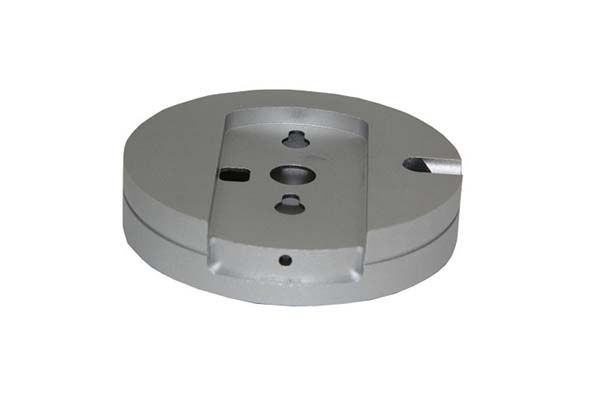
Making complex metal parts in large volumes requires efficient processes. Sheet metal stamping delivers high-quality components with speed and consistency. This guide explains how stamping works, what types exist, and where it is used.
Introduction
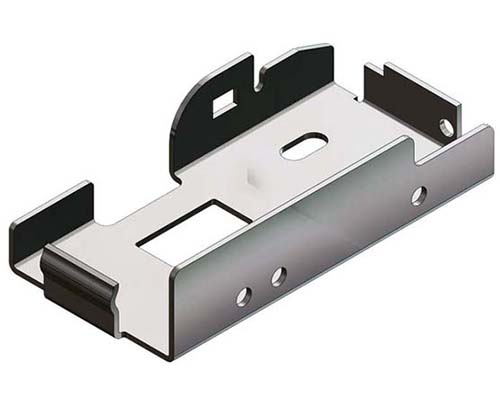
Sheet metal stamping transforms flat metal sheets into complex shapes using precision dies and presses. It produces everything from simple brackets to intricate automotive body panels. The process offers high accuracy, repeatability, and cost-effectiveness.
In this guide, you will learn about different stamping operations. You will understand material selection and die design. And you will discover how industries use stamping for high-volume production.
Types of Sheet Metal Stamping Operations
Blanking and Piercing
Blanking cuts a specific shape from a metal sheet. The cut piece—called the blank—becomes the starting point for further processing. Washers, brackets, and simple components often start as blanks.
Piercing creates holes or openings in the metal sheet. It removes material to form holes of various shapes and sizes. These holes may accommodate fasteners, ventilation, or assembly requirements.
Both operations are fundamental. They produce basic shapes that later operations refine.
Real-world example: A manufacturer needed thousands of small brackets. Blanking cut the basic shape from steel sheet. Piercing created mounting holes in the same operation. Each bracket was complete in two hits of the press.
Drawing and Embossing
Drawing stretches metal over a die to form hollow parts. A cup, can, or deep enclosure takes shape through this process. Drawing requires precise control to prevent tearing or wrinkling.
Embossing creates raised or recessed designs on the metal surface. Logos, text, or functional features like stiffening ribs are embossed without cutting the material.
| Operation | What It Does | Applications |
|---|---|---|
| Drawing | Forms hollow, cup-shaped parts | Fuel tanks, sinks, enclosures |
| Embossing | Creates raised or recessed patterns | Logos, stiffening ribs, decorative features |
Coining and Forming
Coining compresses metal to create detailed, high-relief designs. It also flattens and smooths surfaces. The process uses high pressure to flow metal into die details.
Forming bends or shapes metal without significantly changing thickness. Bends, curves, and angles are created through forming operations.
Coining creates precise details for electronic connectors and medical device components. Forming creates the structural shapes of brackets, frames, and enclosures.
Progressive Die Stamping
Progressive die stamping uses a series of dies in a single press. The metal strip moves through each station. Each die performs a specific operation—cutting, bending, forming—in sequence.
This method is highly efficient for high-volume production. A single press cycle produces a complete part. No handling between operations. Consistent quality across thousands of parts.
Key data point: Progressive die stamping can produce 50–200 parts per minute, depending on part complexity. Tooling costs are higher upfront, but per-unit costs drop significantly for volumes above 10,000.
Design and Manufacturing of Stampings
Material Selection
Material choice directly impacts strength, durability, and formability of stamped parts.
| Material | Properties | Applications |
|---|---|---|
| Steel | High strength, versatile | Automotive, industrial, structural |
| Aluminum | Lightweight, corrosion-resistant | Aerospace, electronics, consumer goods |
| Stainless Steel | Corrosion-resistant, durable | Medical, food processing, marine |
| Brass | Electrical conductivity, aesthetic | Electronics, decorative |
| Copper | Highest conductivity | Electrical components |
Material thickness also matters. Thinner gauges (higher numbers) form more easily. Thicker gauges (lower numbers) provide greater strength but require more press force.
Heat Treatment
Heat treatment enhances material properties after stamping. Processes include:
- Annealing: Softens metal, improves ductility
- Hardening: Increases strength and wear resistance
- Tempering: Reduces brittleness after hardening
For high-strength applications, heat treatment ensures parts perform under stress without failure.
Die Design and Tooling
Precision dies are the heart of stamping. They define every feature of the finished part.
Key considerations in die design:
- Die geometry: Must accurately reflect part shape and meet tolerances
- Tool materials: High-strength steel withstands repeated impact
- Wear resistance: Coatings or treatments extend tool life
- Clearance: Proper punch-to-die clearance ensures clean cuts
Real-world example: A client needed 50,000 brackets with multiple bends and holes. We designed a progressive die with eight stations. The first station pierced pilot holes for alignment. Subsequent stations cut, pierced, and formed. The final station separated the finished part. Tooling cost $18,000. Per-unit cost dropped to $0.85. Compared to laser cutting at $4.50 per part, the tooling paid for itself in the first 5,000 units.
Press Selection
Choosing the right press depends on part complexity and volume.
| Press Type | Best For | Typical Volume |
|---|---|---|
| Single-Stage | Simple parts, low volume | Under 5,000 units |
| Progressive Die | Complex parts, high volume | 10,000+ units |
| Transfer Press | Large parts, multiple operations | Medium to high volume |
Press force is measured in tons. Thicker materials and larger parts require higher tonnage. A typical automotive stamping press may have 500–2,000 tons of force.
Applications of Sheet Metal Stamping
Automotive Industry
Automotive manufacturing is the largest user of sheet metal stamping. Components include:
- Body panels: Doors, hoods, fenders, roofs
- Structural members: Pillars, beams, cross-members
- Suspension components: Control arms, brackets
- Engine components: Oil pans, valve covers, mounting brackets
A single vehicle contains hundreds of stamped parts. Quality and consistency are essential for safety and assembly.
Key data point: A typical car contains 15–25% stamped steel by weight. For electric vehicles, aluminum stamping is increasing to reduce weight.
Aerospace and Defense
Aerospace demands high strength, low weight, and corrosion resistance. Stamped components include:
- Structural components: Wing spars, fuselage frames
- Engine parts: Turbine blades, combustion chamber components
- Avionics housings: Enclosures for sensitive electronics
Parts must meet stringent standards. Material traceability and process documentation are required for every component.
Electronics and Telecommunications
Electronics rely on stamped components for precision and reliability:
- Enclosures: Cases for smartphones, laptops, tablets
- Heat sinks: Thermal management for processors
- Connectors: Electrical contacts, terminals
- Telecommunications equipment: 5G infrastructure components
Stamping produces these parts with tight tolerances—often ±0.05mm or better.
Consumer Products and Appliances
Stamping creates components for everyday products:
- Appliance panels: Control panels, decorative covers
- Hardware: Brackets, hinges, fasteners
- Kitchenware: Pots, pans, utensils
High-volume production ensures consistent quality at low cost.
Industrial Machinery
Industrial equipment uses stamped parts for durability and precision:
- Frames and enclosures: Machine housings, control cabinets
- Components: Gears, brackets, covers
- Tooling: Custom solutions for manufacturing processes
Stamped parts withstand the demanding conditions of industrial environments.
Yigu Technology’s Perspective
At Yigu Technology, we use sheet metal stamping for high-volume custom parts. The process allows us to deliver consistent quality at competitive prices.
We have seen stamping solve production challenges across industries. One automotive client needed 100,000 brackets per year. Laser cutting would have cost $4.20 per part. Progressive die stamping delivered the same part for $0.95 each after tooling. The client saved over $300,000 annually.
Another client required complex electrical connectors. Coining operations created precise contact surfaces. The stamped connectors passed 10,000 insertion cycles without failure—well beyond the 5,000-cycle requirement.
Our approach combines material expertise with precision tooling. We recommend stamping when volumes justify tooling investment. For lower volumes, we suggest laser cutting or CNC bending. The right process depends on your specific needs.
Conclusion
Sheet metal stamping is a versatile manufacturing process. It produces high-quality parts with accuracy, repeatability, and cost-effectiveness. Blanking, piercing, drawing, embossing, coining, forming, and progressive die operations cover a wide range of component types.
Material selection and die design determine part quality. Press selection depends on volume and complexity. Applications span automotive, aerospace, electronics, consumer products, and industrial machinery.
For high-volume production, stamping offers unmatched efficiency. The upfront tooling investment pays off through low per-unit costs and consistent quality.
FAQ
What are the primary advantages of sheet metal stamping?
Sheet metal stamping offers high production efficiency, cost-effectiveness for large volumes, and the ability to produce complex parts with consistent accuracy. It works with a wide range of materials and provides design flexibility for features like holes, bends, and embossed details.
Which industries commonly use sheet metal stamping?
Automotive, aerospace, electronics, telecommunications, consumer products, and industrial machinery industries all use stamping. Any application requiring high volumes of precise metal components benefits from this process.
How does progressive die stamping improve efficiency?
Progressive die stamping performs multiple operations—cutting, piercing, bending, forming—in a single press cycle. The metal strip moves through successive stations, and a finished part emerges with each cycle. This eliminates handling between operations and ensures consistent quality across all parts.
When should I choose stamping over laser cutting or CNC bending?
Choose stamping for volumes above 10,000 units. The upfront tooling cost is higher, but per-unit costs drop significantly. For lower volumes or prototypes, laser cutting and CNC bending are more cost-effective because they require no tooling investment.
Contact Yigu Technology for Custom Manufacturing
Need high-volume stamped components for your project? Yigu Technology combines precision tooling with material expertise to deliver consistent quality. From automotive brackets to electronic connectors, we handle complex stamping requirements. [Contact us] to discuss your production needs.