Introduction
The automotive industry has always been about efficiency, precision, and innovation. For over a century, car parts have been made the same way—casting, forging, machining. These methods work, but they have limits.
Casting requires expensive molds. Change a design? Make a new mold. Forging needs massive presses and custom dies. Machining wastes material—sometimes 80% of what you start with ends up as chips.
Enter 3D printing. Instead of cutting away material, it builds parts layer by layer from digital files. No molds. Minimal waste. Unlimited design freedom.
BMW prints over 400,000 parts annually. Porsche uses 3D-printed pistons in high-performance engines. Ford prototypes with parts printed overnight instead of waiting weeks.
At Yigu technology, we've seen how 3D printing transforms car part manufacturing. This guide explores how it works, what materials are used, and whether it can truly revolutionize the industry.
How Does a Car Part 3D Printer Work?
The Basic Principle: Building Layer by Layer
3D printing—additive manufacturing—builds objects by adding material layer by layer. Think of it like stacking very thin slices until you have a complete part.
For a car part that's 10 cm tall with 0.2 mm layers, the printer creates 500 layers. Each layer bonds to the one below. The result is a solid, functional component.
The Process Step by Step
1. Digital Design
Everything starts with a 3D model in CAD software. Engineers design every detail—every curve, hole, and surface.
For a custom bracket, they specify exact dimensions. For a prototype, they create a digital version of the intended part.
2. Slicing
The model is sliced into hundreds or thousands of thin layers—typically 0.1 mm to 0.3 mm thick. Each layer becomes a set of instructions for the printer.
3. Printing
Different technologies print in different ways:
FDM (Fused Deposition Modeling) : A thermoplastic filament (like ABS or PLA) feeds into a heated nozzle. The nozzle melts the plastic and deposits it layer by layer. For ABS, nozzle temperature is 230-250°C. For PLA, it's 180-220°C.
SLA (Stereolithography) : A UV laser cures liquid resin, solidifying it layer by layer. Used for high-detail parts.
SLS (Selective Laser Sintering) : A laser fuses powder (nylon, metal) into solid layers. No supports needed.
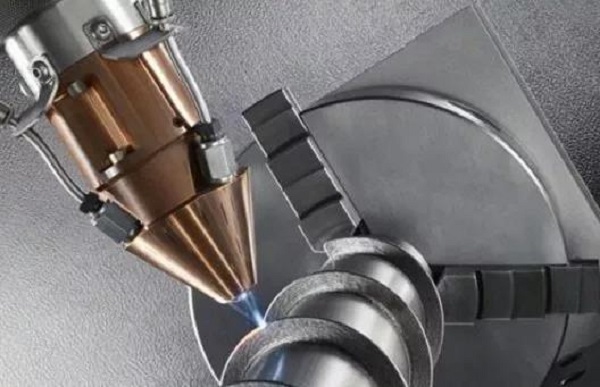
Metal printing (DMLS, SLM): Lasers or electron beams melt metal powder, creating fully dense parts.
4. Material Solidification
As material is deposited, it cools and solidifies. Cooling rate matters—too fast causes warping. Some printers use controlled fans or heated chambers to manage temperature.
5. Post-Processing
After printing, parts may need:
- Support removal
- Surface finishing (sanding, polishing)
- Heat treatment (for metals)
- Inspection
What Materials Are Used for 3D-Printed Car Parts?
Plastics: Versatile and Cost-Effective
Plastics are the most common 3D printing materials for automotive applications. They're versatile, relatively cheap, and easy to process.
| Material | Properties | Best For |
|---|---|---|
| ABS | High strength, tough, impact-resistant | Interior trims, dashboard components, functional prototypes |
| PLA | Easy to print, biodegradable, smooth finish | Decorative parts, emblems, small prototypes |
| PETG | Strong, slightly flexible, chemical-resistant | Functional parts, brackets, housings |
| Nylon | Very strong, wear-resistant, durable | Gears, moving parts, under-hood components |
| TPU | Flexible, rubber-like | Gaskets, seals, vibration dampeners |
ABS is the workhorse for functional car parts. It withstands impacts and moderate heat. But it's tricky to print—prone to warping, needs good ventilation.
PLA is great for prototypes and decorative parts. It prints easily, but it's not heat-resistant. Leave a PLA part in a hot car, and it'll warp.
Nylon offers exceptional strength and wear resistance. Ideal for gears and moving parts.
Metals: High-Strength Options
For parts that need real strength, metals are essential.
Aluminum alloys:
- Lightweight but strong
- High strength-to-weight ratio
- Good corrosion resistance
- Used for: Engine components, brackets, structural parts
Titanium alloys:
- Outstanding strength
- High-temperature resistance
- Excellent corrosion resistance
- Used for: High-performance valves, suspension components, racing parts
Stainless steel:
- Strong, corrosion-resistant
- Good for: Tooling, brackets, exhaust components
Inconel (nickel-based alloys):
- Extreme heat resistance
- Used for: Turbocharger parts, exhaust systems
Metal 3D printing is more expensive than plastic, but for critical parts, it's worth it.
Comparison: ABS vs. PLA for Car Parts
| Property | ABS | PLA |
|---|---|---|
| Strength | High, impact-resistant | Moderate, suitable for low-stress parts |
| Heat resistance | Relatively high | Low—softens at low temperatures |
| Printing difficulty | Higher—prone to warping | Lower—easy to print |
| Environmental friendliness | Non-biodegradable | Biodegradable |
| Odor during printing | Strong | Weak |
| Best for | Functional parts, interior components | Prototypes, decorative parts |
How Do 3D-Printed Car Parts Compare to Traditional Manufacturing?
| Aspect | Traditional Manufacturing | 3D Printing |
|---|---|---|
| Production cycle | Long—weeks to months for molds and tooling | Short—hours to days from design to part |
| Cost for small batches | High—tooling costs amortized over few parts | Low—no tooling required |
| Cost for large batches | Low—economies of scale | Higher—slower per-part |
| Design changes | Difficult, costly—new molds required | Easy—update digital file, print new part |
| Complexity | Limited by tool access | Unlimited—internal channels, lattices possible |
| Material waste | High—subtractive processes waste up to 80% | Low—additive, only material needed |
| Customization | Expensive—each variation needs new tooling | Free—each part can be different |
| Part strength | Excellent—proven processes | Good—approaches traditional with proper settings |
When 3D Printing Wins
- Prototypes: Get parts in days, not weeks. Test, iterate, refine.
- Small batches: 10, 50, 100 parts without tooling costs.
- Complex geometries: Internal channels, lattice structures, organic shapes.
- Customization: Each part tailored to specific needs.
- Legacy parts: Print replacements for discontinued components.
When Traditional Manufacturing Wins
- High volumes: Thousands or millions of parts.
- Simple geometries: Nothing fancy, just lots of them.
- Very high strength requirements: Some applications still need forged properties.
- Lowest possible per-part cost: At scale, traditional wins.
Where Is 3D Printing Used in Automotive Today?
Prototyping
This is where 3D printing started in automotive and remains essential.
BMW prototypes parts overnight. Designers test fit, function, and appearance before committing to tooling. Changes happen in days, not months.
Ford uses 3D-printed prototypes for everything from engine components to interior trim. Iterate quickly, launch faster.
Production Parts
BMW produces over 400,000 3D-printed parts annually—robot grippers, custom tools, small production runs.
Porsche prints pistons for high-performance engines. 3D-printed pistons are lighter, stronger, and have optimized cooling channels.
Volkswagen uses 3D printing for spare parts. No need to stock components for decades—print them when needed.
Customization and Low-Volume Production
Specialty vehicles: Low-volume models don't justify tooling costs. 3D printing makes them economical.
Racing parts: Custom components for race cars—lighter, stronger, optimized for performance.
Classic car restoration: Parts that haven't been made for decades can be scanned and printed. No need to search junkyards.
Tooling and Fixtures
Jigs and fixtures: Custom tools for assembly lines, printed on demand. When production changes, print new tools.
End-of-arm tooling: Robot grippers printed in lightweight materials. Faster movement, shorter cycle times.
What Are the Advantages of 3D Printing for Car Parts?
Design Freedom
Traditional manufacturing limits design. 3D printing removes those limits.
Internal channels: Cooling passages that follow part contours. Impossible to machine, easy to print.
Lattice structures: Lightweight, strong, optimized for load paths. Weight savings of 30-50% without sacrificing strength.
Part consolidation: Multiple components become one. Fewer failure points, less assembly, better performance.
Faster Development
From concept to physical part in days, not weeks or months.
Rapid iteration: Test a design, get feedback, modify, print again. Multiple cycles in the time traditional methods take for one.
Earlier validation: Identify issues when they're cheap to fix, not after tooling is made.
Cost-Effective for Small Batches
No tooling costs mean small runs are economical.
Prototypes: 1-10 parts at reasonable cost.
Low-volume production: 50-500 parts without six-figure mold investments.
Custom parts: Each one unique, no cost penalty.
Reduced Material Waste
Traditional machining wastes 80% of material for complex parts. 3D printing uses only what becomes the part.
For expensive materials like titanium, this is huge.
On-Demand Production
Print parts when you need them. No inventory. No warehousing. No obsolescence.
Spare parts: Store digital files, not physical inventory. Print as needed.
What Are the Challenges?
Speed for High Volumes
3D printing is fast for one part, slow for a million. Injection molding cycles in seconds. 3D printing takes hours.
The sweet spot is complexity, customization, and low-to-medium volumes.
Material Properties
While improving, 3D-printed materials don't always match traditionally manufactured ones. Anisotropy (different strength in different directions) can be an issue.
Heat treatment and post-processing help, but it's something to consider.
Part Size
Most metal printers have build volumes under 400 x 400 x 400 mm. Large parts must be printed in sections and joined.
Certification and Standards
For safety-critical parts, certification is essential. Standards for 3D-printed automotive parts are still evolving.
Surface Finish
As-printed surfaces are rough. For many applications, this is fine. For visible parts, post-processing is needed.
Yigu Technology's Perspective
At Yigu technology, we've worked with automotive clients on projects ranging from prototypes to production parts. Here's what we've learned:
3D printing isn't replacing all manufacturing. It's taking its place alongside traditional methods—doing what it does best.
For prototyping, it's essential. The ability to iterate quickly, test designs, and validate before tooling saves time and money.
For low-volume production, it's economical. Custom parts, limited editions, and specialty vehicles benefit enormously.
For complex geometries, it's enabling. Parts that couldn't be made any other way become possible.
Applications we serve:
- Functional prototypes for testing and validation
- Custom brackets and components
- Tooling and fixtures for assembly lines
- Spare parts for legacy vehicles
- Performance parts for racing and specialty vehicles
Automotive innovation depends on pushing boundaries. 3D printing is one of the most powerful tools for doing exactly that.
Conclusion
Can a 3D printer really revolutionize car part manufacturing?
Not entirely. It won't replace mass production for simple parts. Injection molding and casting will continue to dominate high volumes.
But for:
- Prototypes: Days instead of weeks
- Small batches: Economical without tooling
- Complex geometries: Parts impossible to make any other way
- Customization: Each part unique at no extra cost
- Spare parts: On-demand, no inventory
Yes, 3D printing is revolutionizing how car parts are designed, developed, and produced.
The technology delivers:
- Design freedom: Internal channels, lattice structures, organic shapes
- Faster development: Iterate quickly, launch sooner
- Cost savings: No tooling for small runs
- Reduced waste: Only material needed
- On-demand production: Print when needed
Applications across prototyping, production parts, customization, and tooling prove the value.
3D printing isn't the future of automotive manufacturing—it's the present. The question isn't whether to use it, but where it fits in your workflow.
FAQ
What materials are used for 3D-printed car parts?
Common materials include:
- Plastics: ABS (interior trims, prototypes), PLA (decorative parts), nylon (gears, moving parts), TPU (gaskets, seals)
- Metals: Aluminum alloys (lightweight components), titanium alloys (high-performance parts), stainless steel (brackets, tooling)
- Composites: Carbon-fiber filled nylon for lightweight strength
Choice depends on the part's requirements—strength, heat resistance, flexibility, cost.
How strong are 3D-printed car parts compared to traditionally manufactured ones?
Properly printed parts approach traditionally manufactured strength. ABS parts have good impact resistance. Nylon parts are strong and wear-resistant. Metal parts (aluminum, titanium) can match or exceed cast properties. For non-critical applications, 3D-printed parts are often sufficient. For safety-critical parts, certification and testing are essential.
How much does 3D printing a car part cost?
Cost varies widely:
- Small plastic prototype: $20-100
- Medium functional part (nylon): $100-500
- Complex metal component: $500-5,000+
Factors: material, size, complexity, quantity. For small batches, 3D printing is often cheaper than traditional methods because no tooling is required.
Can 3D printing be used for mass production of car parts?
For certain applications, yes. 3D printing excels at:
- Low to medium volumes (tens to thousands)
- Highly complex parts that can't be made traditionally
- Customized parts where each is different
- Rapid response manufacturing
For high-volume simple parts, traditional methods remain more economical. The sweet spot is complexity, customization, and moderate volume.
How long does it take to 3D print a car part?
Print time depends on size and complexity:
- Small part: 1-4 hours
- Medium part: 5-15 hours
- Large part: 20-50+ hours
Compare to weeks for tooling and setup with traditional methods. For prototypes, this speed is transformative.
What are the best automotive applications for 3D printing?
- Prototypes: Test designs before tooling
- Custom parts: Limited editions, specialty vehicles
- Spare parts: Print on demand, no inventory
- Tooling: Jigs, fixtures, end-of-arm tools
- Performance parts: Lightweight, optimized components
- Legacy parts: Replacements for discontinued components
Contact Yigu Technology for Custom Manufacturing
Ready to use 3D printing for your automotive project? Yigu technology specializes in custom manufacturing with all major 3D printing technologies.
We offer:
- Free quotes within 24 hours—just send your CAD file
- Design for automotive—optimizing your parts for performance and printability
- Wide material selection—plastics, composites, metals
- Printing—on industrial equipment with strict quality control
- Post-processing—finishing, heat treatment, inspection
- Production runs—from prototypes to small batches
Contact us to discuss your project. Tell us what you're making and what it needs to do. We'll help bring your automotive innovation to life.