Introduction
You need a prototype that is strong, lightweight, and conducts heat efficiently. Plastic prototypes cannot handle the load. Steel prototypes are too heavy. Aluminium offers the perfect balance—high strength-to-weight ratio, excellent thermal conductivity, and corrosion resistance. Aluminium rapid prototyping enables you to create functional metal prototypes quickly, using technologies like 3D printing, CNC machining, and casting. It is essential for industries where weight, performance, and speed matter—aerospace, automotive, and consumer electronics. At Yigu Technology, we produce aluminium prototypes daily. This article covers what you need to know: the process, techniques, materials, applications, and how to choose the right approach.
What Is Aluminium Rapid Prototyping?
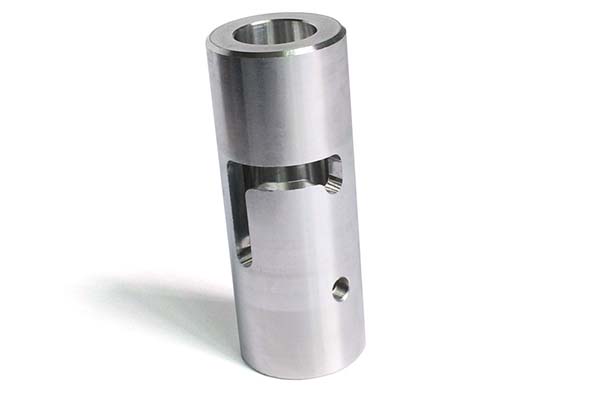
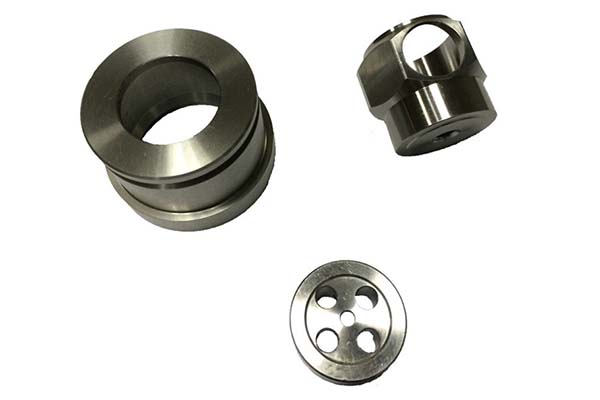
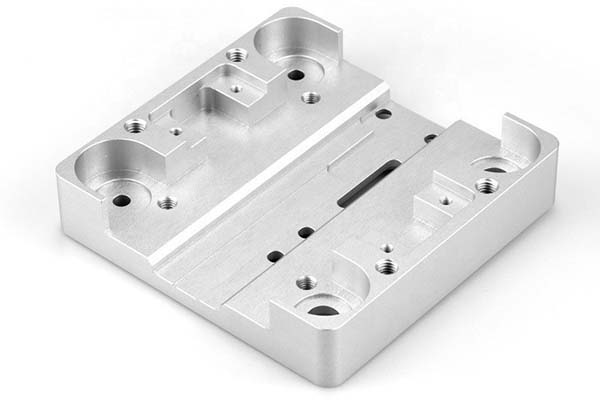
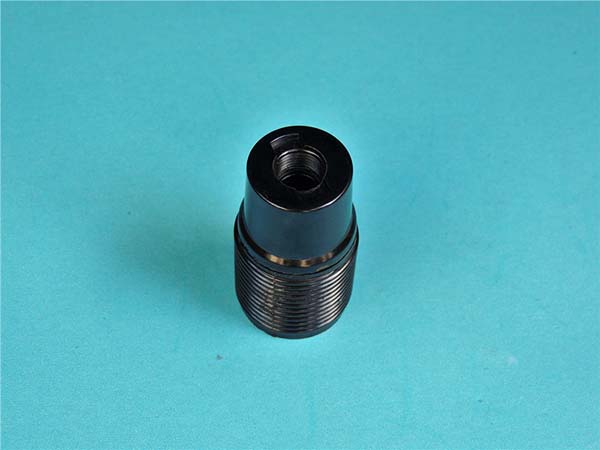
Aluminium rapid prototyping is the fast-paced process of creating preliminary models or samples using aluminium materials. It leverages advanced manufacturing technologies—3D printing, CNC machining, and casting—to produce prototypes that accurately represent final products in shape, structure, and functionality.
Why aluminium?
- High strength-to-weight ratio: Lightweight yet strong
- Excellent thermal conductivity: Ideal for heat dissipation
- Good corrosion resistance: Suitable for various environments
- Machinability: Easier to machine than steel or titanium
What Is the Process?
Design Phase
The foundation of aluminium rapid prototyping is a detailed 3D model created with CAD software.
Key considerations:
- Precise dimensions, curves, holes, and surface finishes
- Design for manufacturing (DFM)—considering how the part will be made
- Tolerance requirements for assembly and function
Why it matters: A minor design flaw can cause improper fitment, reduced functionality, or structural failure. Accuracy in design prevents costly mistakes later.
Material Selection
Aluminium alloys are not all the same. Choose based on application requirements.
| Alloy | Properties | Applications |
|---|---|---|
| 6061 | Good strength, corrosion resistance, machinability | Automotive, general engineering, structural components |
| 7075 | High strength-to-weight, good fatigue resistance | Aerospace, high-stress components |
| 5052 | Excellent corrosion resistance, formability | Marine, chemical environments, sheet metal |
| 2024 | High strength, good fatigue resistance (lower corrosion resistance) | Aerospace, structural applications |
Example: For an aerospace wing component, 7075 alloy is chosen for its high strength-to-weight ratio. For a marine enclosure, 5052 offers superior corrosion resistance.
Prototyping Techniques
| Technique | Process | Advantages | Disadvantages |
|---|---|---|---|
| 3D printing (DMLS/SLM) | Builds parts layer by layer from metal powder | Complex geometries, lattice structures, no tooling | Slow, high cost, rough surface finish |
| CNC machining | Subtractive—removes material from solid block | High precision (±0.001 inches), excellent surface finish | Time-consuming for complex shapes, material waste |
| Casting | Pouring molten aluminium into a mold | Fast for large volumes, complex outer shapes | Porosity issues, lower dimensional accuracy |
How Do the Techniques Compare?
| Factor | 3D Printing (DMLS/SLM) | CNC Machining | Casting |
|---|---|---|---|
| Precision | ±0.05–0.2 mm | ±0.01–0.05 mm | ±0.1–0.5 mm |
| Surface finish | Rough (post-processing required) | Excellent | Moderate (porosity possible) |
| Complexity | Very high—internal channels, lattices | Moderate—tool access limits | High for outer shapes |
| Material waste | 5–10% | 30–70% | Moderate |
| Lead time (1–10 parts) | 3–7 days | 5–10 days | 10–20 days (with tooling) |
| Best for | Complex geometries, low volumes | High precision, production-grade parts | Large volumes, simple shapes |
Where Is Aluminium Rapid Prototyping Used?
Aerospace Industry
Aluminium is widely used in aerospace for its lightweight strength.
Applications:
- Wing components, engine brackets, landing gear parts
- Structural spars, fuselage frames
Impact:
- A 10% reduction in aircraft weight can lead to 6–8% reduction in fuel consumption
- Prototypes enable testing of structural integrity, fatigue resistance, and aerodynamic performance
Example: A wing spar prototype is fabricated using CNC machining to test structural integrity under flight loads before production.
Automotive Industry
Aluminium rapid prototyping accelerates vehicle development.
Applications:
- Engine blocks, cylinder heads, intake manifolds
- Wheels, suspension components, chassis parts
Impact:
- Aluminium engine blocks are 30–40% lighter than cast iron counterparts
- Lighter components improve fuel efficiency, handling, and acceleration
Example: An aluminium engine block prototype is tested for heat dissipation, mechanical strength, and compatibility with other engine parts.
Consumer Electronics
Aluminium provides durability, aesthetics, and thermal management.
Applications:
- Smartphone cases, laptop bodies, tablet frames
- Heat sinks for CPUs and GPUs
Impact:
- Excellent thermal conductivity—aluminium heat sinks transfer heat away from high-power chips
- Durable finish with good impact and scratch resistance
Example: A laptop prototype uses an aluminium chassis to test heat dissipation during intensive use—gaming, video editing—ensuring stable operation.
What Are the Common Problems and Solutions?
| Problem | Cause | Solution |
|---|---|---|
| Surface roughness (3D printing) | Layer-by-layer building process | Post-processing: sandblasting, polishing, machining |
| Tool wear (CNC machining) | Hard materials, high speeds | Use high-quality cutting tools; optimize tool paths |
| Porosity (casting) | Gas entrapment during pouring | Proper degassing methods; vacuum casting |
| Dimensional inaccuracies | Incorrect design, machine calibration | Precision CAD modeling; regular equipment calibration |
How Do You Choose the Right Aluminium Alloy?
| Application | Recommended Alloy | Rationale |
|---|---|---|
| Aerospace components | 7075, 2024 | High strength-to-weight, fatigue resistance |
| Automotive parts | 6061 | Balance of strength, machinability, corrosion resistance |
| Marine/environmental | 5052 | Excellent corrosion resistance |
| General prototyping | 6061 | Widely available, good machinability, cost-effective |
Can Aluminium Rapid Prototyping Be Used for Mass Production?
Aluminium rapid prototyping is best suited for:
- Prototyping and validation: 1–100 units
- Low-volume production: 100–1,000 units
- Complex geometries: Where traditional methods are cost-prohibitive
For large-scale mass production (10,000+ units):
- Die casting: Lower per-unit cost once tooling is made
- Stamping: High-volume sheet metal parts
- Extrusion: Constant-profile parts
Hybrid approach: Use rapid prototyping for bridge production while die-casting tooling is being built.
Yigu Technology's Perspective
As a custom manufacturer of non-standard plastic and metal products, Yigu Technology has extensive experience in aluminium rapid prototyping.
Our capabilities:
- 3D printing (DMLS/SLM): Complex geometries, lattice structures
- CNC machining: High precision, excellent surface finish
- Casting: For larger volumes or complex outer shapes
What we have learned:
- Match technique to application: 3D printing for complexity, CNC for precision, casting for volume
- Material selection is critical: Choose alloy based on strength, corrosion, and thermal requirements
- Post-processing matters: Surface finish can be improved through sandblasting, polishing, or machining
- Collaboration accelerates development: Work with clients from design to final prototype
We leverage different techniques according to project requirements—providing high-quality, customized aluminium prototypes for design evaluation, functionality testing, and pre-production trials.
Conclusion
Aluminium rapid prototyping is essential for industries where weight, strength, and performance matter. Key takeaways:
- Process: Design, material selection, prototyping (3D printing, CNC machining, casting), post-processing
- Techniques: 3D printing for complex geometries; CNC machining for precision; casting for volume
- Materials: 6061 for general prototyping; 7075 for aerospace; 5052 for corrosion resistance
- Applications: Aerospace (lightweight components), automotive (engine parts, wheels), consumer electronics (housings, heat sinks)
- Challenges: Surface roughness, tool wear, porosity—addressed through post-processing and proper techniques
For low to medium volumes and complex geometries, aluminium rapid prototyping is often the most effective path to functional, testable prototypes.
Frequently Asked Questions
What are the common problems in aluminium rapid prototyping?
Common problems include surface roughness in 3D-printed parts (solved by sandblasting or polishing), tool wear in CNC machining (solved by using quality tools and optimized tool paths), and porosity in cast parts (solved by proper degassing methods). Dimensional inaccuracies are addressed through precise CAD modeling and regular equipment calibration.
How to choose the right aluminium alloy for rapid prototyping?
Consider the application: 7075 for aerospace (high strength-to-weight, fatigue resistance); 6061 for automotive (balance of strength, corrosion resistance, machinability); 5052 for marine or chemical environments (excellent corrosion resistance). For general prototyping, 6061 is widely available and cost-effective.
Can aluminium rapid prototyping be used for mass production?
Yes, for small to medium-scale production (100–1,000 units), especially for complex geometries where traditional tooling is expensive. For large-scale mass production (10,000+ units), die casting, stamping, or extrusion are more cost-effective. Many companies use rapid prototyping for bridge production while hard tooling is built.
What is the most precise method for aluminium prototyping?
CNC machining offers the highest precision, with tolerances as low as ±0.001 inches (±0.025 mm) . It produces excellent surface finish and is ideal for parts requiring tight tolerances and assembly fit.
How fast can I get an aluminium prototype?
Lead time varies by technique and complexity. Simple 3D printed parts: 3–7 days. CNC machined parts: 5–10 days. Cast parts with tooling: 10–20 days. For urgent projects, expedited services may be available.
Contact Yigu Technology for Custom Manufacturing
At Yigu Technology, we specialize in aluminium rapid prototyping and custom manufacturing. Our capabilities include 3D printing (DMLS/SLM), CNC machining, and casting. We serve aerospace, automotive, and consumer electronics industries.
If you need aluminium prototypes for testing, validation, or low-volume production, contact our engineering team. Let us help you choose the right alloy and technique for your application.