Introduction
Powder based additive manufacturing—you might know it as SLS, SLM, or EBM—is the technology behind those incredibly strong, complex metal and plastic parts that look like they came from a sci-fi movie.
Unlike the plastic filament printers many people have at home, powder based systems work with… well, powder. Fine particles of metal, plastic, or ceramic. A laser or electron beam fuses them together, layer by layer, creating parts that are fully dense and functionally strong.
This isn't prototyping technology. This is production technology.
At Yigu technology, we've used powder based additive manufacturing to create parts for aerospace, medical, and automotive clients. This guide explains how it works, why it matters, and where it's making the biggest impact.
What Is Powder Based Additive Manufacturing?
The Basic Idea: Fusing Powder into Solid
Powder based additive manufacturing—also called powder bed fusion—builds parts by selectively fusing layers of powder.
The process is elegant:
- A thin layer of powder spreads across a build platform
- An energy source (laser or electron beam) fuses specific areas
- The platform lowers
- New powder spreads
- Repeat until the part is complete
Unfused powder stays in place, supporting the part as it grows. No supports needed for most geometries.
The "Powder" Part Matters
The powder isn't just any powder. It's engineered:
- Particle size: Typically 15-100 μm, carefully controlled
- Flowability: Must spread evenly
- Purity: Contaminants ruin properties
- Recyclability: Unused powder can be reused
Different materials come in powder form:
- Metals: Titanium, stainless steel, aluminum, Inconel, cobalt-chrome
- Plastics: Nylon (PA11, PA12), polypropylene, PEEK
- Ceramics: Alumina, zirconia for high-temperature applications
The Energy Source
Two main approaches:
Laser-based (SLS, SLM, DMLS):
- Uses one or more lasers to fuse powder
- Higher precision, finer details
- Works in inert gas atmosphere
Electron beam (EBM):
- Uses electron beam in vacuum
- Higher temperatures, faster build rates
- Better for high-melting-point metals
- Lower residual stress
How Does Powder Based Additive Manufacturing Work?
Step-by-Step Process
1. 3D Design
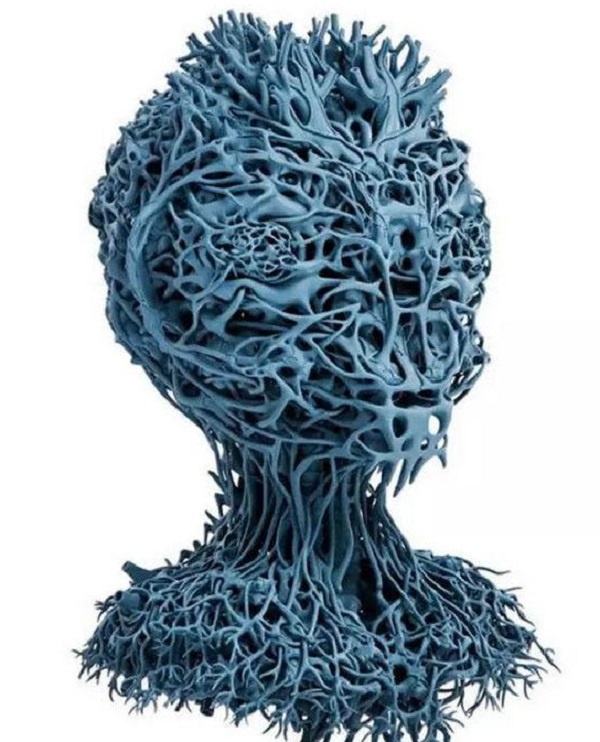
Everything starts with a 3D model in CAD software. Designers can create geometries impossible with traditional methods—internal channels, lattice structures, organic shapes.
For a heat sink, you might design a complex lattice that maximizes surface area. For a medical implant, you might create porous regions that promote bone growth.
2. Slicing
The model is sliced into thin layers—typically 20-100 μm thick. Thinner layers = more detail = longer print times. The sliced data tells the printer exactly where to fuse each layer.
3. Powder Spreading
A recoater blade spreads a thin, even layer of powder across the build platform. Consistency matters. Uneven powder means uneven fusion, which means defects.
4. Selective Fusing
The energy source scans the powder bed, fusing particles where the part should be. The beam follows the pattern from the sliced data, moving at speeds up to several meters per second.
5. Layer-by-Layer Building
After each layer, the platform lowers by exactly one layer thickness. New powder spreads. The next layer fuses, bonding to the one below. Hundreds or thousands of layers later, the part is complete.
6. Post-Processing
The part is removed from the powder bed. Excess powder is recovered and recycled—up to 95% reuse is typical. Depending on the material and application, post-processing may include:
- Heat treatment to relieve stress
- Hot isostatic pressing (HIP) to eliminate porosity
- Support removal (if any)
- Surface finishing (machining, polishing, coating)
Key Technologies
| Technology | Energy Source | Materials | Best For |
|---|---|---|---|
| SLS (Selective Laser Sintering) | Laser | Plastics, some metals | Functional prototypes, end-use plastic parts |
| SLM (Selective Laser Melting) | Laser | Metals | High-density metal parts, complex geometries |
| DMLS (Direct Metal Laser Sintering) | Laser | Metals | Similar to SLM, slightly different process |
| EBM (Electron Beam Melting) | Electron beam | Metals (especially titanium) | Large parts, high-temperature alloys |
Why Does Powder Based Additive Manufacturing Matter?
Design Freedom
Traditional manufacturing has constraints:
- Machining: Can't cut what tools can't reach
- Casting: Need draft angles, uniform walls
- Molding: Complex internal features impossible
Powder based AM has no such limits:
- Internal channels that twist and turn
- Lattice structures that save weight
- Organic shapes optimized for function
- Undercuts that would trap molds
- Integration—multiple parts become one
Designers think about performance, not manufacturability.
Material Efficiency
Traditional machining starts with a block and cuts away. For complex parts, you might remove 80-90% of the material. That's 80-90% waste.
Powder based AM uses only the material that becomes the part. Unused powder is recycled. Waste drops to 5-10% or less.
For expensive materials like titanium, this is transformative.
Lightweighting
The ability to create lattice structures and optimized geometries means parts can be much lighter—30-50% lighter than traditionally manufactured equivalents—without sacrificing strength.
In aerospace, every gram saved reduces fuel burn. In automotive, lighter parts improve performance and efficiency.
Complex Internal Features
Cooling channels can follow part contours instead of straight lines. Heat exchangers can have massive surface areas in small volumes. Medical implants can have porous structures that promote bone growth.
These features aren't just nice—they're enabling technologies that make better products possible.
Consolidation
Multiple parts become one. GE's fuel nozzle went from 20 parts to 1. Benefits:
- Fewer failure points
- Less assembly time
- Lower inventory costs
- Better performance
Where Is Powder Based Additive Manufacturing Used?
Aerospace
Aerospace leads adoption because the benefits align perfectly with industry needs.
NASA uses powder based AM for rocket engine parts—combustion chambers, nozzles, injectors. Complex internal cooling channels improve performance. Weight savings reduce launch costs.
GE Aviation prints fuel nozzles for LEAP engines. One printed part replaces 20 traditionally manufactured ones. Weight drops 25%. Durability improves 5x.
Airbus uses printed brackets in the A350 XWB. Lighter brackets mean lighter planes. Every kilogram saved saves thousands in fuel over the aircraft's life.
Biomedical
Medical applications leverage customization and biocompatibility.
Custom implants—hips, knees, spinal cages—printed from patient CT data. Perfect fit, faster recovery, better outcomes. Studies show 20% lower complication rates with custom implants.
Dental restorations—crowns, bridges, frameworks—printed in cobalt-chrome or titanium. Digital impressions lead to perfect fits.
Surgical guides position cuts exactly where planned. Surgeons practice on printed models before operating.
Tissue engineering research uses printed scaffolds that guide cell growth. Still experimental, but promising.
Automotive
Automotive uses powder based AM for:
- Functional prototypes: Test designs before tooling
- Performance parts: Lightweight components for racing
- Customization: Low-volume specialty vehicles
- Tooling: Jigs, fixtures, end-of-arm robot tools
Engine components with optimized cooling channels run cooler, last longer. A printed piston might run 15°C cooler than a machined one.
Brake calipers printed in aluminum can be 20% lighter while maintaining strength. Less unsprung weight improves handling.
Industrial and Energy
Oil and gas uses printed components for drilling equipment—hard-to-find replacements, optimized flow paths.
Power generation benefits from printed turbine components with complex cooling.
Tooling with conformal cooling channels reduces injection molding cycle times by 20-40%.
What Are the Key Advantages?
Design Freedom
- Unlimited geometric complexity
- Internal features impossible to machine
- Optimized shapes for strength and weight
Material Efficiency
- 90%+ material utilization
- Powder recycling
- Less waste, lower cost for expensive materials
Lightweighting
- Lattice structures save weight
- Topology optimization removes unnecessary material
- 30-50% lighter than machined parts
Consolidation
- Multiple parts become one
- Less assembly, fewer failure points
- Simplified supply chains
Customization
- Each part can be different at no extra cost
- Patient-specific medical devices
- Custom products for individual customers
What Are the Limitations?
Equipment Cost
Industrial systems are expensive—$500,000 to $1.5 million+ for metal printers. Plastic systems cost less but still significant. For most companies, using service bureaus makes more sense than buying.
Material Cost
Metal powders cost $200-3,000 per kilogram. Even nylon powder runs $100-300/kg. Compare to plastic filament at $20-50/kg.
Build Size
Limited by powder bed size. Most systems handle parts up to 250-400 mm in one dimension. Larger parts must be printed in sections and joined.
Surface Finish
As-printed surfaces are rough—Ra 5-30 μm depending on technology. Many applications require post-processing machining or finishing.
Speed
Slower than traditional methods for simple parts. The advantage is complexity, not speed.
Yigu Technology's Perspective
At Yigu technology, powder based additive manufacturing is one of our core capabilities. Here's what we've learned:
Material selection drives everything. Titanium for aerospace. Stainless for medical. Nylon for functional prototypes. Match the material to the application.
Design for the process. Lattice structures, internal channels, and organic shapes are possible—but they must be designed correctly. Early input from manufacturing engineers prevents problems.
Post-processing is part of the process. Plan for heat treatment, support removal, and surface finishing from the start.
Quality requires control. Powder quality, process parameters, and inspection all matter. We maintain strict standards.
Applications we serve:
- Aerospace components with complex internal features
- Medical implants customized to patient anatomy
- Automotive parts for performance and prototyping
- Industrial tooling with conformal cooling
- Research prototypes for universities and labs
Powder based AM isn't the answer for everything. But for parts that need complexity, customization, and performance, it's often the only answer.
Conclusion
Powder based additive manufacturing matters because it removes constraints:
- Design freedom: Any geometry, any complexity
- Material efficiency: 90%+ utilization, minimal waste
- Lightweighting: 30-50% lighter without sacrificing strength
- Consolidation: Multiple parts become one
- Customization: Each part can be unique
Applications across aerospace, medical, automotive, and industrial sectors prove the value. Rocket engine parts, custom implants, lightweight brackets—powder based AM makes them possible.
Challenges remain—cost, speed, surface finish. But for the right applications, it's transformative.
The technology keeps advancing. Build volumes grow. Costs gradually decrease. Materials expand. Powder based additive manufacturing will continue expanding what's possible in manufacturing.
FAQ
What materials can be used in powder based additive manufacturing?
Common materials include metals (titanium alloys, stainless steel, aluminum, Inconel, cobalt-chrome), plastics (nylon PA11/PA12, polypropylene, PEEK), and ceramics (alumina, zirconia). Each offers different properties—strength, temperature resistance, biocompatibility. Material choice depends entirely on your application requirements.
How accurate is powder based additive manufacturing?
Accuracy varies by technology. SLS plastics typically achieve ±0.1-0.3 mm. SLM/DMLS metals achieve ±0.1-0.2 mm for small parts. EBM metals are slightly less accurate (±0.2-0.5 mm) but offer other advantages. Factors affecting accuracy include printer calibration, material shrinkage, and part design. Critical dimensions can be machined after printing for tighter tolerances.
Is powder based additive manufacturing suitable for mass production?
For certain applications, yes. Powder based AM is excellent for low-to-medium volumes (hundreds to thousands) of complex, high-value parts where tooling costs can't be justified. It's also ideal for highly customized parts. For high-volume simple parts, traditional methods like casting or injection molding remain more economical. The sweet spot is complexity, customization, and moderate volume.
How strong are powder based AM parts?
Very strong. SLS nylon parts approach injection-molded properties—tensile strength 40-50 MPa. Metal parts can match or exceed cast properties—Ti-6Al-4V reaches 900-1100 MPa tensile strength with proper processing. HIP (hot isostatic pressing) further improves properties by closing microscopic pores.
What's the difference between SLS, SLM, and EBM?
SLS (Selective Laser Sintering) typically refers to plastic powder processing, though some metals use similar terms. SLM (Selective Laser Melting) and DMLS (Direct Metal Laser Sintering) are laser-based metal processes that fully melt powder. EBM (Electron Beam Melting) uses an electron beam in vacuum, runs hotter, and is excellent for titanium and high-temperature alloys. Each has strengths—choose based on your material and requirements.
Can powder be reused?
Yes, and it's a key advantage. Unused powder can be recovered, sieved, and mixed with fresh powder for future prints. Reuse rates of 95%+ are common for plastics. Metal powder reuse rates vary but are also high. This efficiency significantly reduces material cost and waste.
Contact Yigu Technology for Custom Manufacturing
Ready to explore powder based additive manufacturing for your project? Yigu technology specializes in custom manufacturing with all major technologies and materials.
We offer:
- Design for AM—optimizing your parts for success
- Material selection—matching properties to requirements
- Printing—on industrial equipment with proven parameters
- Post-processing—heat treatment, HIP, machining, finishing
- Testing—validating that parts meet specifications
Contact us to discuss your project. Tell us what you're making and what it needs to do. We'll recommend the best approach and deliver quality parts that perform.