Introduction
SLS printing—Selective Laser Sintering—produces parts that feel different from other 3D printed objects. They're strong. They're durable. They don't have the obvious layer lines of FDM prints or the brittleness of SLA resin.
If you've held an SLS printed part, you know what I mean. It feels like something from a factory, not a hobbyist's garage.
But what exactly makes SLS parts special? Where are they used? And how do they compare to other manufacturing methods?
At Yigu technology, we've printed thousands of SLS parts for clients across industries. This guide covers everything you need to know—from how it works to real-world applications to choosing the right material.
What Is SLS Printing?
The Basic Principle: Fusing Powder with Light
Selective Laser Sintering builds parts from powder. A high-power laser scans each layer, fusing particles together where the part should be. Unfused powder stays in place, supporting the part as it grows.
The process is beautifully simple:
- Spread powder in a thin layer across the build platform
- Laser scans the surface, sintering particles in the part's shape
- Platform lowers by one layer thickness
- New powder spreads over the previous layer
- Repeat until the part is complete
- Remove the finished part from loose powder
No supports needed. Complex geometries possible. Parts that are strong and functional.
How It's Different from Other 3D Printing
| Method | Process | Supports? | Strength | Surface | Best For |
|---|---|---|---|---|---|
| SLS | Laser sinters powder | No | Excellent | Slightly grainy | Functional parts, complex geometries |
| FDM | Extrudes melted filament | Yes | Good | Layer lines visible | Prototypes, large parts |
| SLA | Cures liquid resin with UV | Yes | Moderate | Smooth, glossy | High-detail models, jewelry |
SLS stands out because:
- No supports means unlimited design freedom
- Strong parts approach injection-molded properties
- Material variety includes nylons, composites, and some metals
- Batch efficiency lets you pack multiple parts in one build
What Materials Can Be Used for SLS Printed Parts?
Nylon (Polyamide) 12
The workhorse of SLS. Used for the vast majority of parts.
Properties:
- Tensile strength: 45-50 MPa
- Elongation at break: 15-20%
- Heat deflection: 160-180°C
- Good chemical resistance
- Excellent fatigue resistance
Applications:
- Functional prototypes
- End-use parts
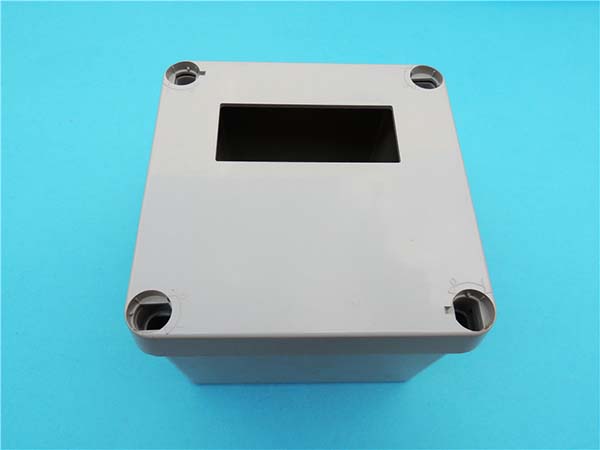
- Housings, brackets, enclosures
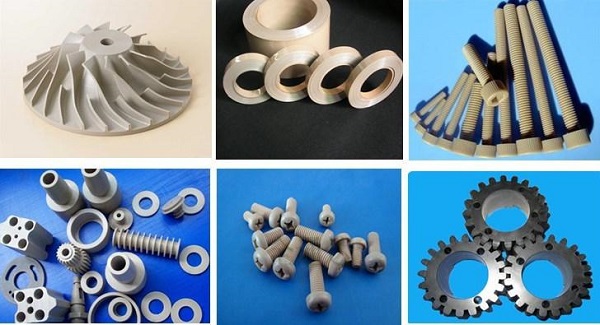
- Moving parts (gears, hinges)
Nylon 11
More flexible than Nylon 12. Better impact resistance.
Properties:
- Slightly lower strength than Nylon 12
- Higher elongation: 30-45%
- Excellent toughness
- Good for parts that need to bend
Applications:
- Snap-fit assemblies
- Living hinges
- Parts subject to impact
- Athletic equipment
Glass-Filled Nylon
Glass fibers (typically 30-40%) add stiffness and dimensional stability.
Properties:
- Stiffness: 4-8 GPa (vs. 1-2 GPa for unfilled nylon)
- Heat deflection: 170-190°C
- Rougher surface finish
- More brittle than unfilled nylon
Applications:
- Structural components
- Parts needing high stiffness
- Metal replacement in non-critical applications
Carbon-Filled Nylon
Carbon fibers increase strength and reduce weight.
Properties:
- Higher strength-to-weight ratio than glass-filled
- Excellent stiffness
- Electrically conductive (some formulations)
- Premium cost
Applications:
- Aerospace components
- High-performance automotive parts
- Lightweight structural parts
TPU (Thermoplastic Polyurethane)
Flexible, rubber-like material.
Properties:
- Hardness ranges from soft to medium
- Excellent flexibility and elasticity
- Good abrasion resistance
- Returns to shape after deformation
Applications:
- Gaskets and seals
- Flexible hinges
- Soft-touch surfaces
- Shock-absorbing parts
- Footwear components
Polypropylene (PP)
Chemical-resistant, fatigue-resistant, and flexible.
Properties:
- Excellent chemical resistance
- Good fatigue life (living hinges)
- Lower density than nylon
- More challenging to print
Applications:
- Containers and bottles
- Living hinges
- Chemical-handling components
- Automotive interior parts
PEEK and High-Performance Materials
For extreme requirements:
- PEEK: High-temperature resistance (up to 300°C), excellent mechanical properties
- PEKK: Similar to PEEK, slightly easier processing
- Ultem (PEI): Flame-retardant, high strength
These materials require specialized machines and cost significantly more.
What Are the Key Properties of SLS Printed Parts?
Strength and Durability
SLS parts are strong—approaching the properties of injection-molded plastics. Layer bonding is nearly complete, so there are no weak points along layer lines like in FDM.
For Nylon 12:
- Tensile strength: 45-50 MPa
- Flexural modulus: 1.5-1.7 GPa
- Impact strength: 4-5 kJ/m²
This means parts can handle real use—functional prototypes, end-use components, moving assemblies.
Surface Finish
SLS parts come out of the printer with a characteristic slightly grainy texture. It's not as smooth as SLA or injection molding, but it's much better than FDM's visible layer lines.
Surface roughness typically ranges Ra 5-15 μm depending on material and settings.
For applications needing smoother surfaces, post-processing options include:
- Tumble polishing (for small parts in batches)
- Sanding (manual or automated)
- Vapor smoothing (for nylon)
- Painting and coating
Accuracy and Tolerance
Typical dimensional accuracy: ±0.1–0.3 mm depending on part size and geometry.
Factors affecting accuracy:
- Printer calibration and quality
- Material shrinkage during cooling
- Part design (thin walls, large flat areas)
- Build orientation
For critical dimensions, machining after printing can achieve tighter tolerances.
Design Freedom
No supports means no design constraints. You can create:
- Internal channels that twist and turn
- Undercuts that would trap molds
- Nested parts—objects inside other objects
- Living hinges and snap-fit features
- Lattice structures for lightweight strength
- Organic shapes impossible to machine
Designers think about function, not printability.
What Are the Applications of SLS Printed Parts?
Aerospace
Aerospace loves SLS for lightweight, complex parts.
Applications:
- Brackets and housings: 30-50% lighter than machined equivalents
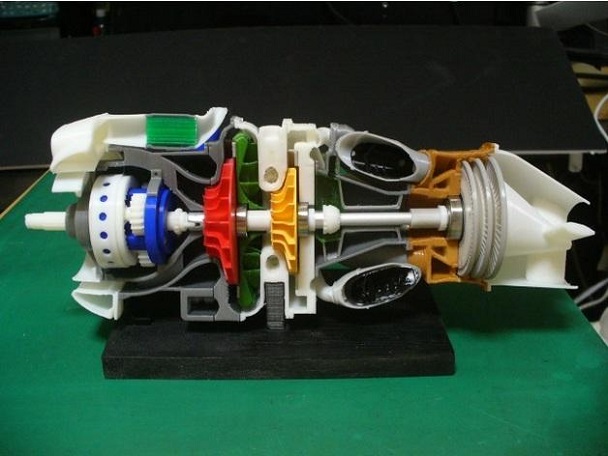
- Ducting: Complex airflow channels impossible to mold
- Prototypes: Test fit and function before production
- Tooling: Composite layup tools with optimized shapes
NASA uses SLS for satellite components. Every gram saved reduces launch costs. Complex lattice structures maintain strength while dropping weight.
Real example: A satellite bracket redesigned for SLS went from 5 machined parts to 1 printed part. Weight dropped 40%. Lead time dropped from months to days.
Automotive
Automotive uses SLS for prototyping and production.
Applications:
- Functional prototypes: Test designs before tooling
- Custom parts: Low-volume production for specialty vehicles
- Racing components: Lightweight, high-strength parts
- Tooling: Jigs, fixtures, end-of-arm robot tools
Case study: A major automaker reduced intake manifold prototype development from weeks to days using SLS. Multiple iterations tested, design optimized, production ready—faster than ever.
Medical
Medical applications leverage SLS for customization and biocompatibility.
Applications:
- Surgical guides: Patient-specific from CT data
- Prosthetics: Custom-fit sockets and components
- Orthotics: Personalized insoles and supports
- Medical devices: Housings, handles, instruments
Impact: Custom SLS surgical guides reduce operating time by 30% and improve accuracy by 20% (Journal of Neurosurgery study).
Industrial and Manufacturing
Industrial applications use SLS for durable, functional parts.
Applications:
- Jigs and fixtures: Custom-designed for specific operations
- End-of-arm tooling: Lightweight, ergonomic robot grippers
- Spare parts: Print on demand, no inventory
- Conformal cooling: Channels in molds and tooling
Consumer Goods
Consumer products benefit from SLS's design freedom.
Applications:
- Eyewear: Custom frames tailored to face shape
- Sports equipment: Lightweight, durable components
- Electronics: Housings for small-batch devices
- Fashion: Accessories with complex geometries
How Do SLS Parts Compare to Injection Molded Parts?
| Property | SLS (Nylon) | Injection Molded (Nylon) |
|---|---|---|
| Tensile strength | 45-50 MPa | 50-60 MPa |
| Elongation | 15-20% | 20-40% |
| Surface finish | Ra 5-15 μm | Ra 0.1-0.8 μm |
| Design complexity | Unlimited | Limited by mold |
| Lead time | Days | Weeks (tooling) |
| Tooling cost | None | $5,000–50,000 |
| Per-part cost (100 units) | $20-100 | $5-20 (after tooling) |
| Per-part cost (10,000 units) | $10-50 | $1-5 |
SLS wins for:
- Low to medium volumes (up to thousands)
- Complex geometries
- Customization
- Speed
Injection molding wins for:
- High volumes (tens of thousands+)
- Simple geometries
- Lowest per-part cost at scale
What Post-Processing Do SLS Parts Need?
Powder Removal
Parts come out of the printer buried in powder. Removal involves:
- Blasting with compressed air
- Vacuuming
- Ultrasonic cleaning for internal channels
- Media tumbling for small parts
Recovered powder is sieved and mixed with fresh for reuse—95%+ recycling rates are common.
Surface Finishing
Depending on application:
- As-printed: Acceptable for many functional parts
- Tumble polishing: Smooths surfaces, removes loose powder
- Sanding: Manual or automated for smoother finish
- Vapor smoothing: Chemical treatment melts surface layer for glossy finish (nylon only)
- Painting: Primer + paint for color and protection
- Coating: Additional properties (waterproofing, conductivity)
Dyeing
Nylon parts can be dyed in various colors. The dye penetrates the surface, so color won't scratch off like paint.
Machining
Critical dimensions or mating surfaces may need:
- CNC machining for tight tolerances
- Drilling and tapping for threaded features
- Cutting to separate parts printed as assemblies
Assembly
Multiple parts can be:
- Snap-fit together (design dependent)
- Ultrasonically welded
- Adhesive bonded
- Mechanically fastened
Yigu Technology's Perspective
At Yigu technology, SLS is one of our most requested services. Here's what we've learned:
SLS parts excel where strength and complexity matter. If your part needs to actually work—not just look pretty—SLS is often the best choice.
Design freedom is real. We've printed parts with internal channels, living hinges, and lattice structures that would be impossible any other way. Clients come to us because they can't make their designs with traditional methods.
Material selection matters. Nylon 12 for general use. Glass-filled for stiffness. TPU for flexibility. Carbon-filled for premium applications. We guide clients to the right choice.
Post-processing is part of the process. Parts come out of the printer functional but not finished. Plan for powder removal, surface treatment, and any required machining.
**We've seen *SLS* transform how businesses develop products.** Faster iterations, lower risk, better designs. It's not the answer for everything. But for the right applications, it's indispensable.
Conclusion
SLS printed parts offer a unique combination of properties:
- Strength: Approaching injection-molded plastics
- Design freedom: Unlimited complexity, no supports
- Durability: Functional parts that last
- Material variety: Nylons, composites, flexible materials
- Batch efficiency: Multiple parts in one build
Applications across aerospace, automotive, medical, industrial, and consumer goods prove the value. From custom implants to lightweight brackets to functional prototypes, SLS delivers.
Compared to other methods:
- Better than FDM for strength and complexity
- Better than SLA for durability and material options
- More economical than injection molding for low volumes
For anyone designing parts that need to actually work, SLS deserves a place in your toolkit.
FAQ
What materials can be used for SLS printing?
Common materials include nylon (PA12 and PA11), glass-filled nylon, carbon-filled nylon, TPU (flexible), polypropylene (PP) , and high-performance materials like PEEK. Each offers different properties—strength, flexibility, heat resistance. Material choice depends on your application requirements.
How accurate are SLS printed parts?
Typical accuracy ranges ±0.1–0.3 mm depending on part size and geometry. Factors affecting accuracy include printer quality, material shrinkage, and part design. Critical dimensions can be machined after printing for tighter tolerances.
Is SLS printing suitable for large-scale production?
SLS is excellent for low-to-medium volumes (up to thousands of units) where tooling costs can't be justified. It's also ideal for highly complex or customized parts. For high-volume simple parts (tens of thousands+), injection molding remains more economical. For many businesses, SLS fills the gap between prototyping and mass production.
How strong are SLS printed parts?
Very strong. Nylon 12 parts have tensile strength of 45-50 MPa, comparable to injection-molded plastics. Glass-filled versions are even stiffer. For many applications, SLS parts function identically to traditionally manufactured ones.
Do SLS parts need post-processing?
Yes. Parts come out of the printer covered in loose powder, which must be removed. Depending on application, additional post-processing may include tumble polishing, sanding, dyeing, vapor smoothing, painting, or machining. Plan for these steps in your timeline and budget.
Can SLS print moving parts like hinges?
Yes. SLS is excellent for living hinges and snap-fit assemblies. The material's fatigue resistance means moving parts can flex repeatedly without failing. Design considerations include hinge thickness, material choice, and orientation during printing.
Contact Yigu Technology for Custom Manufacturing
Ready to use SLS printed parts for your project? Yigu technology specializes in custom manufacturing with all major 3D printing technologies.
We help with:
- Design for SLS—optimizing your parts for success
- Material selection—matching properties to requirements
- Printing—on industrial equipment with proven parameters
- Post-processing—finishing to your specifications
- Production runs—from prototypes to small batches
Contact us to discuss your project. Send your CAD file, tell us what you're making and what it needs to do. We'll provide a free quote and help you bring your design to life.