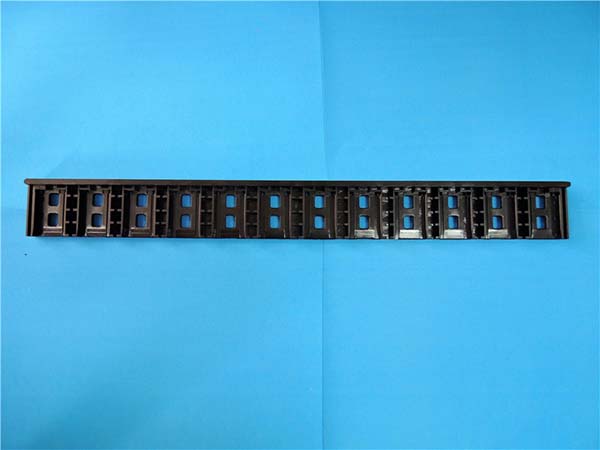
You need a part with smooth surfaces and fine details. FDM leaves layer lines. CNC machining is slow and expensive. SLA printing—stereolithography—offers a different path. It uses light to cure liquid resin into solid objects with precision that rivals injection molding. But what does that mean for your project? This guide explores what SLA printing services deliver, from high-detail prototypes to production parts, and how they fit into your manufacturing workflow.
What Is SLA Printing and How Does It Work?
SLA stands for Stereolithography Apparatus. It is the original 3D printing technology, invented in the 1980s. It remains one of the most precise additive manufacturing methods available.
The Process
- A 3D CAD model is sliced into thin layers (typically 0.025–0.1 mm)
- A UV laser traces the shape of each layer onto a vat of liquid resin
- The resin solidifies where the laser hits, bonding to the layer below
- The build platform lowers, fresh resin flows over the cured layer
- The process repeats until the object is complete
After printing, parts are washed to remove uncured resin and post-cured under UV light to achieve full mechanical properties.
What Makes SLA Printing Different?
SLA stands apart from other 3D printing technologies in several ways.
| Feature | SLA | FDM | SLS |
|---|---|---|---|
| Precision | ±0.05–0.1 mm | ±0.1–0.3 mm | ±0.1–0.2 mm |
| Layer Height | 0.025–0.1 mm | 0.1–0.3 mm | 0.08–0.12 mm |
| Surface Finish | Smooth, near-injection mold | Visible layer lines | Slightly grainy |
| Material Cost | Moderate to high | Low | Moderate to high |
| Support Structures | Required | Required | Not required |
| Best For | High detail, smooth surfaces | Large parts, functional prototypes | Durable, complex geometries |
What Advantages Does SLA Printing Offer?
SLA’s strengths make it the go-to choice for applications where detail and finish matter.
High Precision
SLA achieves tolerances as low as ±0.05 mm. This precision enables:
- Intricate features: Threads under 1 mm, fine textures, sharp edges
- Tight fits: Snap-fits, moving parts, assembly interfaces
- Accurate details: Engravings, logos, surface patterns
Smooth Surface Finish
Parts come off the printer with a smooth, near-polished surface. Minimal sanding is required compared to FDM. This reduces post-processing time and preserves fine details.
Versatile Material Options
SLA resins cover a wide range of properties:
| Resin Type | Properties | Applications |
|---|---|---|
| Standard | Good detail, general purpose | Prototypes, visual models |
| Tough | Impact-resistant, durable | Snap-fits, functional parts |
| High-Temp | Heat deflection to 200–300°C | Molds, heat-exposed components |
| Flexible | Rubber-like, bendable | Grips, seals, wearables |
| Clear | Optical clarity | Lenses, light guides |
| Biocompatible | ISO 10993 certified | Medical devices, surgical guides |
| Castable | Burnout cleanly | Jewelry patterns, investment casting |
Speed for Small Parts
SLA prints small, detailed parts faster than FDM. A miniature figure that takes 8 hours on FDM may print in 3 hours on SLA.
Repeatability
Once settings are dialed in, SLA produces consistent, repeatable parts. This makes it suitable for low-volume production where quality must be uniform.
What Applications Does SLA Serve?
SLA printing services are used across industries where precision and finish matter.
Product Design and Prototyping
Designers use SLA for high-fidelity prototypes that look and feel like final products. These prototypes secure stakeholder approval, test ergonomics, and validate assembly before tooling.
Example: A consumer electronics company printed 20 iterations of a smartwatch case using SLA. Each prototype captured button details, surface textures, and fit tolerances. The final design went to injection molding with zero dimensional changes.
Medical and Dental
SLA is a standard tool in dental labs and medical device manufacturing.
| Application | Material | Benefit |
|---|---|---|
| Surgical guides | Biocompatible resin | Patient-specific, sterile, precise |
| Dental models | Standard resin | Accurate, fast turnaround |
| Orthodontic aligners | Clear resin | Custom fit, smooth finish |
| Anatomical models | Standard resin | Surgical planning, education |
Example: A hospital printed patient-specific surgical guides for a complex jaw reconstruction. The guides fit perfectly, reducing surgery time by 40 minutes.
Jewelry and Art
Jewelers use SLA for master patterns in investment casting. The detail captures textures, engravings, and complex settings that would take hours by hand.
Example: A jewelry designer printed a ring with 0.3 mm filigree details. The castable resin pattern burned out cleanly, producing a metal ring with perfect detail.
Engineering and Manufacturing
SLA produces functional prototypes with engineering resins. Snap-fits, enclosures, and connectors are tested in materials that mimic production plastics.
Example: An automotive supplier printed a prototype air intake manifold in high-temp resin. The part withstood 150°C testing, validating the design before metal tooling.
Custom Manufacturing
For low-volume, complex parts, SLA offers no tooling costs and fast turnaround. Custom brackets, enclosures, and mechanical components print in days.
What Are the Limitations?
SLA is powerful, but it has constraints. Understanding them prevents mismatched expectations.
Material Cost
Resin costs $40–150 per liter, significantly more than FDM filament. For large parts, this adds up.
Build Volume
Most SLA printers have build volumes under 200 x 120 x 200 mm. Larger parts require splitting into sections or using industrial machines.
Post-Processing Requirements
Every SLA print requires:
- Washing: Removing uncured resin with isopropyl alcohol or water
- Support removal: Cutting away temporary structures
- UV curing: Final hardening (5–15 minutes)
These steps add time and require dedicated equipment.
Part Durability
Standard resins are brittle. Parts can shatter under impact. For functional parts needing toughness, engineering resins are necessary.
Safety
Liquid resin is toxic before curing. Gloves, safety glasses, and ventilation are essential. Uncured resin must be disposed of properly.
How Do You Choose an SLA Printing Service?
Not all SLA services are equal. Here is what to evaluate.
Technical Capability
| Factor | What to Look For |
|---|---|
| Printer quality | Industrial-grade (Formlabs, 3D Systems, Nexa3D) vs. desktop |
| Precision | Claimed tolerances (ask for ±0.05 mm or better) |
| Build volume | Max part size without splitting |
| Resin range | Standard, tough, high-temp, biocompatible, castable |
Quality Control
- Do they inspect parts? (dimensional checks, surface finish)
- Do they provide quality reports?
- Do they have ISO certifications? (9001, 13485 for medical)
Post-Processing
- What finishing options do they offer? (as-printed, sanded, polished, painted)
- Do they handle assembly?
- What is their support removal process?
Turnaround and Cost
| Factor | Typical Range |
|---|---|
| Simple part | 1–3 days |
| Complex part | 5–7 days |
| Standard resin cost | $0.50–2.00 per cm³ |
| Specialty resin cost | $2.00–5.00 per cm³ |
| Post-processing | 20–50% of base cost |
| Minimum order | $50–200 |
What Does SLA Cost in Real Terms?
Costs vary by part size, complexity, and material.
| Part Type | Size | Material | Estimated Cost |
|---|---|---|---|
| Small figurine | 30 cm³ | Standard | $15–30 |
| Dental model | 50 cm³ | Standard | $25–50 |
| Surgical guide | 20 cm³ | Biocompatible | $40–80 |
| Jewelry pattern | 5 cm³ | Castable | $10–25 |
| Functional prototype | 100 cm³ | Tough | $80–150 |
| Large assembly | 500 cm³ | Standard | $250–500 |
Real example: A medical device company printed 10 surgical guides for a clinical trial. Each guide was 25 cm³, printed in biocompatible resin. Total cost: $600. Traditional machining would have cost $4,000 and taken 3 weeks. SLA delivered in 5 days.
Yigu Technology’s Perspective
As a custom manufacturer, Yigu Technology uses SLA printing for high-precision prototypes, dental models, and jewelry patterns. The technology’s precision allows us to deliver parts that meet tight tolerances—often within ±0.05 mm.
We guide clients on:
- Resin selection: Matching material properties to application
- Design optimization: Modifying models for successful printing
- Post-processing: From washing and curing to painting and assembly
SLA is not the only technology we use. For large parts, we use FDM. For durable metal components, we use DMLS. But for detailed, smooth parts under 200 mm, SLA is often the best choice.
Conclusion
SLA printing services deliver high precision, smooth surfaces, and versatile material options. They excel at detailed prototypes, dental models, jewelry patterns, and functional parts with tight tolerances. The technology requires post-processing and careful material handling, but the results—parts that look and feel like injection-molded products—justify the effort.
For projects where detail matters more than part size, SLA is the technology to choose. It bridges the gap between design and production, turning digital concepts into physical reality with unmatched precision.
FAQ
What is the typical turnaround time for an SLA printing service?
Small, simple parts: 1–3 days. Large or complex parts: 5–7 days. Factors include print time, post-processing (washing, curing, support removal), and service provider workload. Expedited options may be available for additional cost.
How much does an SLA printing service usually cost?
Costs range from $0.50–2.00 per cm³ for standard resins and $2.00–5.00 per cm³ for specialty resins. A small figurine may cost $15–30. A complex functional prototype may cost $80–150. Post-processing adds 20–50%. Minimum orders typically $50–200.
Can SLA printing service handle large-scale production?
SLA is best for low to medium volumes (1–500 units). It is cost-effective for complex, high-detail parts where tooling costs would be prohibitive. For high-volume production (thousands of units), traditional methods like injection molding are faster and cheaper per unit. SLA excels at prototyping, custom parts, and bridge production.
What materials are available for SLA printing?
Standard (general purpose), tough (impact-resistant), high-temp (heat deflection to 200–300°C), flexible (rubber-like), clear (optical), biocompatible (ISO 10993), and castable (jewelry patterns). Each resin type has specific mechanical properties.
Is SLA printing suitable for medical applications?
Yes. Biocompatible resins certified to ISO 10993 are used for surgical guides, dental models, orthodontic devices, and medical device prototypes. These materials are safe for skin contact and short-term mucosal contact. Always verify certifications with your service provider.
Contact Yigu Technology for Custom Manufacturing
Yigu Technology specializes in non-standard plastic and metal custom manufacturing, including SLA printing for high-precision parts. Whether you need detailed prototypes, dental models, jewelry patterns, or functional components, our engineering team delivers quality and precision. Contact us today to discuss your SLA printing project.