Introduction
You've designed a great product. Now you need to make some samples—maybe 50, maybe 500. Enough to test the market, get feedback, or fulfill a small order.
Traditional thinking says you need steel molds. But steel molds cost $10,000 to $50,000 and take 4-8 weeks to make. For a startup or small business, that's often impossible.
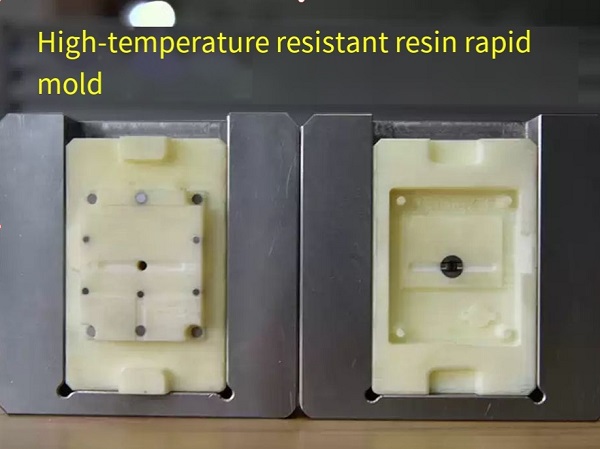
There's another way: 3D printed high-temperature resin molds.
At Yigu technology, we've helped dozens of clients use this approach for small batch injection molding. This guide explains how it works, why it makes sense, and when to choose it over traditional tooling.
Why Are Traditional Steel Molds So Challenging?
High Upfront Costs Kill Small Projects
Steel molds are expensive. Really expensive.
For a simple part, you might spend $5,000-10,000. For complex designs, prices easily exceed $10,000-50,000.
This creates a huge barrier:
- Startups can't afford the investment
- Small businesses tie up capital that could go elsewhere
- New products get shelved because the risk is too high
- Iterations become prohibitively costly
Imagine spending $20,000 on a mold, only to discover your design needs changes. That $20,000 just became a down payment on another $20,000.
Long Lead Times Delay Market Entry
Even if you have the budget, you need time.
From design to finished mold, expect 4-8 weeks. Sometimes longer.
In fast-moving markets, that's an eternity:
- A toy for a holiday trend? Missed the season.
- A response to competitor's new feature? They're already selling.
- A design iteration based on feedback? Customers have moved on.
Design Changes Are Painful
With steel molds, changing the design means changing the mold. That means:
- Retooling costs (often thousands)
- More waiting (another 4-8 weeks)
- Risk that new design needs further changes
This rigidity discourages iteration. You lock in a design early and hope it's right. If it's not, you're stuck.
What Is 3D Printed High-Temperature Resin Tooling?
The Basic Idea
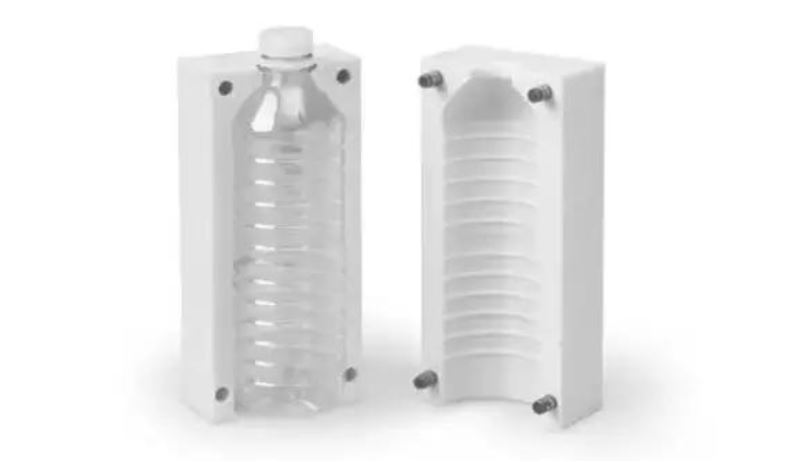
Instead of machining steel, we 3D print the mold using high-temperature resin. This resin can withstand the heat and pressure of injection molding—up to 200°C and hundreds of cycles.
The process is simple:
- Design your part in CAD
- 3D print the mold halves in high-temp resin
- Mount the mold in an injection molding machine
- Produce parts—typically 10-500 units per mold
- Iterate if needed—new design, new mold, new parts
How It Compares to Steel Molds
| Factor | Traditional Steel Molds | Yigu's Resin Molds |
|---|---|---|
| Cost | $10,000–$50,000 | $500–$3,000 |
| Lead time | 4–8 weeks | 3–7 days |
| Mold life | Millions of cycles | 50–500 cycles |
| Material compatibility | Most thermoplastics | ABS, PP, PC, elastomers |
| Design changes | Costly retooling | Easy digital updates |
| Surface finish (Ra) | 0.1–0.8 μm | 1.6–3.2 μm |
| Precision | ±0.05 mm | ±0.1 mm |
For small batch production (under 500 units), resin molds win on cost, speed, and flexibility.
Why Choose Resin Tooling for Small Batches?
Risk Reduction Through Market Testing
The biggest advantage of resin molds? You can test the market before committing to expensive steel tooling.
Produce 50-100 units and:
- Put them in front of real customers
- Gather feedback on design, function, appeal
- Validate demand before scaling
- Identify issues early when fixes are cheap
A startup with a new portable charger used this approach. They printed resin molds for $1,200, produced 100 units, and launched a crowdfunding campaign. The campaign succeeded, they got valuable feedback, and they improved the design before committing to steel molds.
Fast, Affordable Design Iteration
With resin molds, iteration is cheap and fast.
Hear that customers want a different button placement? Change the CAD, print a new mold, produce updated samples—all within days. No $10,000 retooling bill. No 8-week wait.
This "fail fast, learn fast" approach leads to better products. You can afford to test multiple variations, refine based on feedback, and arrive at an optimal design.
Performance That's Good Enough
Resin molds aren't as durable as steel. But for small batches, they don't need to be.
Temperature resistance: Up to 200°C—handles ABS, polycarbonate, and other engineering plastics.
Precision: ±0.1 mm tolerance—accurate enough for most functional prototypes and many production parts.
Surface finish: Ra 1.6–3.2 μm—smooth enough for good-looking parts, often requiring minimal post-processing.
Sustainability Benefits
Less waste: 3D printing uses only the material needed, reducing waste by up to 90% compared to CNC machining steel.
Less energy: Desktop printers consume far less power than industrial machining centers.
For companies focused on environmental impact, resin tooling aligns with sustainability goals.
What Are the Key Applications?
Automotive: Testing Custom Parts
Electric vehicle manufacturers need custom brackets for battery enclosures. Before mass production, they test fitment with resin-molded parts.
A new EV startup can produce 50 brackets, check fit in prototype vehicles, and refine the design—all before investing in steel molds.
Interior components also benefit. Want to test ergonomics of a new center console? Print resin molds, produce samples, gather user feedback, iterate. All in weeks instead of months.
Consumer Goods: Validating Products
Packaging matters. A cosmetic company can produce retail-ready mockups to evaluate branding, shelf appeal, and usability. Get feedback, tweak the design, then commit to production.
Small gadgets can launch as limited editions. A wireless earbud startup produced 200 units with resin molds, sold them to early adopters, and used feedback to perfect the design. Market validation without massive investment.
Healthcare: Patient-Specific Solutions
Surgical guides for orthopedic procedures are perfect for resin molding. Each patient needs a custom guide based on their anatomy. Resin molds produce exactly what's needed, when it's needed.
Medical device housings for small-run products—portable insulin pumps, monitoring devices—can be produced cost-effectively with resin tooling. Biocompatible resins ensure patient safety.
Industrial and Electronics
Custom enclosures for low-volume electronics. Prototype components for testing before production. Bridge tooling to keep production running while steel molds are being made.
Any situation where you need 50-500 parts, not 50,000.
How Many Parts Can a Resin Mold Produce?
Typical Range: 50-500 Cycles
The exact number depends on:
- Mold material: Different resins have different durability
- Part geometry: Simple shapes last longer than complex ones
- Molding material: High-temperature plastics wear molds faster
- Process parameters: Pressure, temperature, and cycle time affect life
For most applications, 100-300 cycles is a realistic expectation. Enough for market testing, pilot production, or small-batch manufacturing.
When 500+ Cycles Are Needed
If you need more parts, options include:
- Multiple resin molds: Print several molds and rotate them
- Steel inserts: Combine resin mold bodies with steel cores for high-wear areas
- Transition to steel: Use resin molds for validation, then invest in steel for volume
The cost savings from resin molds often justify using multiple molds even for moderate volumes.
What Materials Can You Mold with Resin Tools?
Common Thermoplastics
| Material | Typical Applications | Notes |
|---|---|---|
| ABS | Consumer goods, automotive, electronics | Good balance of properties |
| PP (Polypropylene) | Packaging, living hinges, containers | Chemical resistant, fatigue resistant |
| PC (Polycarbonate) | High-strength parts, clear components | Needs higher mold temperatures |
| Nylon | Gears, mechanical parts | Hydroscopic—dry before molding |
| TPU/Elastomers | Soft-touch parts, gaskets, seals | Flexible materials |
Material Compatibility
Resin molds work with most materials that process below 200°C. For high-temperature engineering plastics (like PEEK), steel may still be required.
Your service provider can advise on compatibility for your specific material.
What About Quality and Precision?
Dimensional Accuracy
Resin molds achieve ±0.1 mm precision. For most prototypes and many production parts, this is sufficient.
Compare to steel molds at ±0.05 mm. The difference matters for critical applications, but for fit-and-function testing, resin molds deliver.
Surface Finish
As-printed resin molds produce parts with Ra 1.6–3.2 μm surface finish. This is smoother than FDM-printed parts and acceptable for many applications.
For higher gloss requirements, molds can be polished or coated. Parts can also be painted or finished after molding.
Part Consistency
Within a single mold run, consistency is excellent. Part-to-part variation is minimal.
Between different molds (for design iterations), variations reflect the CAD changes—exactly what you want for controlled testing.
Yigu Technology's Perspective
At Yigu technology, we've seen hundreds of clients use resin tooling to bring products to market faster and cheaper. Here's what we've learned:
Start with the end in mind. Know what you're trying to learn from your small batch. Is it market validation? Fit testing? Customer feedback? Design accordingly.
Iterate deliberately. Each iteration should test a hypothesis. Don't change everything at once—you won't know what worked.
Plan for steel. If your small batch succeeds, you'll want to scale. Design with eventual steel tooling in mind, so the transition is smooth.
Our role is to guide clients through this process. We help with material selection, design for manufacturability, and production planning.
The case study that always sticks with me: a European electronics startup needed portable charger samples. Steel molds would cost $10,000 and take 8 weeks. They couldn't afford either. We printed resin molds in 5 days for $1,200. They produced 100 units, ran a crowdfunding campaign, raised money, and refined the design based on feedback. When they finally moved to steel, they had a validated product and customers waiting. That's the power of resin tooling.
Conclusion
3D printed high-temperature resin molds solve the core problems of traditional steel tooling for small batches:
- Cost: $500–$3,000 vs. $10,000–$50,000
- Lead time: 3–7 days vs. 4–8 weeks
- Flexibility: Easy digital changes vs. costly retooling
- Risk: Test market before committing vs. bet everything upfront
Performance is good enough:
- 50–500 cycles per mold
- ±0.1 mm precision
- Up to 200°C temperature resistance
- Works with ABS, PP, PC, elastomers, and more
Applications across automotive, consumer goods, healthcare, and industrial sectors prove the value. From custom EV brackets to patient-specific surgical guides, resin tooling delivers.
For small batches, it's not a compromise. It's the smart choice.
FAQ
How many injection cycles can Yigu's resin molds support?
Our high-temperature resins typically support 50–500 cycles, depending on part geometry, molding material, and process parameters. This range covers most small-batch production needs—market testing, pilot runs, limited editions, and bridge production while waiting for steel molds.
Can Yigu's resin molds work with different plastic materials?
Yes. Our molds work with ABS, PP, PC, elastomers, and other materials that process below 200°C. The wide material compatibility lets you choose the right plastic for your application—strength, flexibility, heat resistance, or cost.
How can I get a quote for Yigu's small batch injection molding service?
Simply share your CAD file with us. Our team reviews it and provides a free, detailed quote within 24 hours. We'll discuss material options, expected mold life, and production timeline based on your specific requirements.
What's the surface finish like on resin-molded parts?
Typical surface finish is Ra 1.6–3.2 μm—smoother than FDM-printed parts and acceptable for most prototypes and many production applications. For higher gloss requirements, molds can be polished, or parts can be painted or finished after molding.
How precise are resin-molded parts?
Dimensional accuracy is ±0.1 mm—sufficient for fit testing, functional prototypes, and many production parts. Critical dimensions can be held tighter with careful design and process control.
When should I switch from resin molds to steel molds?
Consider switching when:
- Volume exceeds 500 parts (or mold life limit)
- Production justifies steel economics (per-part cost drops with volume)
- Design is finalized (no more iterations planned)
- Tighter tolerances are required (±0.05 mm or better)
- Higher production speeds are needed
Resin molds are perfect for the journey from idea to validated product. Steel molds are for the destination of high-volume production.
Contact Yigu Technology for Custom Manufacturing
Ready to use 3D printed resin molds for your small batch production? Yigu technology specializes in rapid tooling and injection molding for startups, small businesses, and innovative companies.
We help with:
- Design for manufacturability—optimizing your parts for molding
- Material selection—choosing the right resin and molding material
- Mold printing—in high-temperature resin on industrial printers
- Injection molding—producing your parts in small batches
- Iteration support—fast, affordable design changes
Contact us to discuss your project. Share your CAD file, tell us what you're making, and we'll provide a free quote within 24 hours. Let's bring your product to market—faster, cheaper, and with less risk.