Introduction
You have a great product idea. You have market research, customer feedback, and a clear vision. But turning that vision into a successful product requires more than just ideas. It requires execution. This is where prototype developers come in. They are the professionals who transform abstract concepts into tangible, testable models. They bridge the gap between what you imagine and what you can build. This guide explains who prototype developers are, how they impact product development, and how to evaluate their performance to ensure your project succeeds.
Who Are Prototype Developers?
A prototype developer is a professional who creates initial product models. They stand at the crossroads of creativity and technical implementation. Their primary task is to turn abstract concepts—whether from a product manager’s vision, market trend analysis, or customer need—into testable prototypes.
These prototypes can range from simple wireframes for a software application to fully functional physical models of a hardware device. For example, in developing a new mobile fitness app, a prototype developer would take the idea of tracking workouts, setting goals, and providing real-time feedback, and create an early-stage mock-up with basic screens and clickable interactions.
In hardware development, a prototype developer might create a 3D-printed model of a new smart home device to test form, fit, and user interaction before any electronics are designed.
How Do They Impact the Product Lifecycle?
Prototype developers are involved in multiple critical stages of product development.
Concept Validation
At the very beginning, when an idea is still nascent, prototype developers build low-fidelity prototypes. These are quick, inexpensive representations that help validate the core concept. A McKinsey study found that products with early concept validation through prototyping are 50% more likely to succeed in the market.
A startup developing a new smart home device might create a simple cardboard prototype with mock-up interfaces. This allows them to present the idea to investors and early adopters, gathering feedback on whether the concept is appealing and viable.
Requirement Elicitation
Prototypes help clarify ambiguous requirements. In a software project, a prototype can reveal what users actually need versus what stakeholders assume they need. Research by the Standish Group showed that in projects using prototypes for requirement elicitation, the number of misinterpreted requirements decreased by 40%.
For an e-commerce platform, a prototype of the checkout process can be created. User testing reveals pain points—complex forms, unclear payment options—and requirements are refined accordingly.
Design Refinement
As the product progresses, high-fidelity prototypes are developed. These are much closer to the final product in appearance, functionality, and user experience. In the automotive industry, manufacturers create high-fidelity prototypes with working interiors, exteriors, and even functional engines.
A report by Frost & Sullivan found that companies using high-fidelity prototypes for design refinement can reduce the number of design changes in later production stages by up to 60%, saving both time and cost.
Testing and Iteration
Prototypes are essential for testing. Usability testing, functionality testing, and performance testing all rely on prototypes. A case study of a major social media platform found that through iterative prototype testing, they improved user engagement by 30% within six months.
Cost and Time Savings
The impact on development metrics is measurable.
| Development Aspect | Without Prototype Developers | With Prototype Developers |
|---|---|---|
| Software Development Time | 15–18 months (with delays) | 10–12 months |
| Hardware Cost Variance | 30–50% over initial budget | 10–20% over initial budget |
How Do You Evaluate Prototype Developers?
Measuring performance helps ensure you are working with the right partner.
Key Metrics
| Metric | Meaning | How to Measure |
|---|---|---|
| Development Time | Time from start to completion | Critical Path Method (CPM) identifies the sequence of tasks that determines the minimum project duration |
| Prototype Quality | Functionality, usability, visual appeal | Functionality: features working correctly / total features. Usability: users completing tasks / total users. Visual appeal: 1–5 rating by design panel |
| Cost-Effectiveness | Resource management within budget | Actual cost / budgeted cost (ratio <1 = under budget) |
| Number of Iterations | Revisions based on feedback | Count of distinct prototype versions |
| Stakeholder Satisfaction | Meets expectations of users and stakeholders | Average rating from surveys (1–10 scale) |
Case Study: Hardware Product Prototype
A tech company developing a new smart wearable tracked these metrics:
- Development time: 3 months (1 month longer than planned)
- Cost-effectiveness: 120% of budget (cost overrun)
- Iterations: 5 (expected 3)
The results triggered a review. The company brought in additional resources, conducted deeper requirement analysis, and implemented stricter cost controls for future phases.
How Do Prototype Development Methods Compare?
The choice between traditional and modern approaches affects outcomes.
Traditional vs. Modern Methods
| Aspect | Traditional Methods | Modern Methods |
|---|---|---|
| Process Flow | Linear: requirements → design → development → testing | Iterative: parallel design and development, testing integrated throughout |
| Tools | CAD software, lathes, milling machines | 3D printers, simulation software, low-code platforms |
| Advantages | Well-defined processes, comprehensive documentation, high precision for hardware | Faster time to market, continuous feedback, reduced risk of building wrong product |
| Disadvantages | Long cycles, high rework cost, difficult to change late | Less upfront documentation, challenging for highly regulated projects |
When to Choose Which Method
Product Type
- Simple, well-understood products: Modern methods work well. A startup developing a note-taking app can iterate quickly with low-code tools.
- Complex, regulated products: Traditional methods are often better. Aircraft avionics require precision, safety compliance, and comprehensive documentation.
Project Timeline
- Short-time projects: Modern methods enable faster development. A marketing team needing a campaign concept prototype can deliver in days.
- Long-time projects: Traditional methods provide stable, structured processes. An ERP system development spanning years benefits from defined phases.
Budget
- Low-budget projects: Modern methods are cost-effective. A hardware startup can use 3D printing instead of expensive traditional tooling.
- High-budget projects: Traditional methods offer maximum control and quality. A luxury car manufacturer may choose traditional prototyping for precision.
How Does Yigu Technology Approach Prototype Development?
At Yigu Technology, prototype developers are central to our service. We combine technical expertise with a collaborative approach.
We Start with Your Goals
Before any work begins, we discuss what you need to learn from the prototype. Are you testing form and fit? User interaction? Material performance? The answers shape our approach.
We Use the Right Tools for the Job
We offer both traditional and modern methods:
- 3D printing for rapid iteration and complex geometries
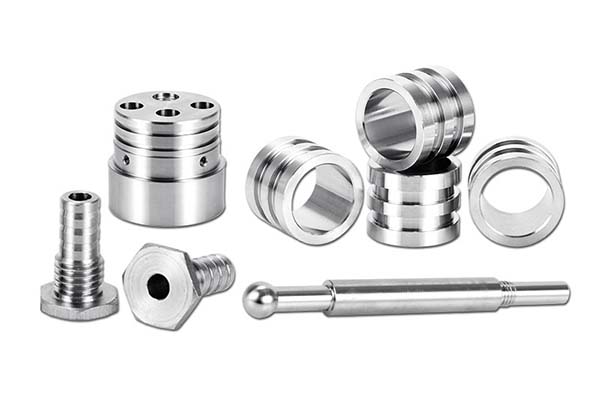
- CNC machining for precision metal and plastic parts
- Rapid tooling for functional, injection-molded prototypes
We Provide DFM Feedback Early
Our engineers review designs for manufacturability before production. We flag potential issues—thin walls, sharp corners, tolerance mismatches—so you can adjust before committing to tooling.
We Measure and Communicate
We track development time, iterations, and costs. You get regular updates and clear visibility into progress.
Conclusion
Prototype developers are essential to product success. They validate concepts early, clarify requirements, refine designs, and enable rapid testing. The metrics—development time, quality, cost-effectiveness, iterations, and satisfaction—provide clear ways to evaluate their performance.
Choosing between traditional and modern development methods depends on your product type, timeline, and budget. Modern methods offer speed and flexibility for innovative, time-sensitive projects. Traditional methods provide structure and precision for complex, regulated industries.
By understanding the role of prototype developers and how to evaluate them, you can make better decisions and increase your chances of launching a successful product.
Frequently Asked Questions
What is the difference between a prototype developer and a product designer?
A product designer focuses on the aesthetics, usability, and user experience of a product. A prototype developer focuses on turning designs into functional, testable models—selecting materials, processes, and building physical or digital prototypes that can be tested and iterated.
How do I know if I need a prototype developer?
If your product has technical uncertainty, requires user testing, or involves complex manufacturing, you need a prototype developer. They help validate assumptions before you invest in full development.
How many prototype iterations are typical?
Most products go through 3 to 5 prototype iterations. Early iterations test core concepts and form. Later iterations refine functionality, materials, and manufacturability.
What is the difference between low-fidelity and high-fidelity prototypes?
Low-fidelity prototypes are quick, inexpensive models—sketches, paper mock-ups, or basic 3D prints—used for early concept validation. High-fidelity prototypes closely resemble the final product in appearance, materials, and functionality, used for user testing and design refinement.
How much does prototype development cost?
Costs vary widely. A simple software mock-up may cost $2,000–$10,000. A functional hardware prototype with custom parts may range from $5,000–$50,000. The investment is small compared to the cost of developing a product that fails in the market.
Contact Yigu Technology for Custom Manufacturing
Ready to bring your product idea to life with expert prototype development? Yigu Technology offers prototyping services for plastic and metal parts, from quick-turn 3D printing to precision CNC machining and rapid tooling. Our prototype developers work with you from concept to functional parts. Contact us today to discuss your project.