Introduction
You have a product design. You need parts—not just prototypes, but actual end-use parts. Traditional manufacturing says: build expensive molds, wait weeks, and hope you got the design right. But what if you could skip the tooling and go straight to production? This is the promise of rapid manufacturing.
Rapid manufacturing is the production of finished, end-use products directly from digital data. Unlike traditional methods that require molds, dies, or extensive setups, rapid manufacturing uses computer-controlled equipment to build parts layer by layer or through precise subtractive processes. The result is faster lead times, lower upfront costs, and the ability to customize every single unit.
At Yigu Technology, we have used rapid manufacturing to help clients launch products, produce spare parts on demand, and create customized medical devices. This article explains what rapid manufacturing is, how it compares to traditional methods, and where it delivers the most value.
What Is Rapid Manufacturing?
Rapid manufacturing is the use of automated, digitally-driven processes to produce finished products quickly and efficiently.
The core idea is simple: start with a digital file (CAD model), then use computer-controlled equipment to create the physical part. There is no need for tooling, molds, or long setup times. The same digital file that you use for prototyping can be used for production.
This approach stands in contrast to traditional manufacturing, where creating a mold or die is a prerequisite for making parts. Those molds take weeks and cost thousands—or hundreds of thousands—of dollars.
What Are the Core Elements?
Three technologies form the foundation of rapid manufacturing.
Computer-Aided Design (CAD)
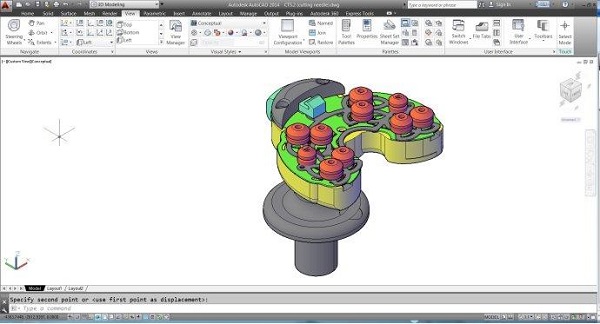
CAD is where rapid manufacturing begins. A 3D model is created in software, capturing every dimension, feature, and tolerance.
The advantage of CAD is iterative freedom. Designers can experiment with shapes, run simulations, and optimize performance before any physical material is used. In the automotive industry, engineers use CAD to design engine components, simulate fluid flow, and test for stress points—all before the first part is made.
Numerical Control (NC) Technology
NC technology translates digital designs into machine movements.
Programs tell the equipment exactly where to move, how fast, and what operations to perform. A CNC milling machine reads these instructions to cut metal with precision. A 3D printer uses them to deposit material layer by layer. Without NC technology, the speed and accuracy of rapid manufacturing would not be possible.
Additive and Subtractive Equipment
Rapid manufacturing includes both additive (building up material) and subtractive (cutting away material) processes.
| Process Type | Examples | Best For |
|---|---|---|
| Additive | 3D printing (FDM, SLA, SLS, DMLS) | Complex geometries, low volumes, customization |
| Subtractive | CNC machining, milling, turning, laser cutting | Precision, production-grade materials, medium volumes |
How Does It Compare to Traditional Manufacturing?
The differences go beyond just speed. Rapid manufacturing changes the economics and flexibility of production.
Tooling Requirements
Traditional manufacturing relies heavily on tooling. An injection mold for a plastic part can cost $10,000 to $100,000 and take 8 to 16 weeks to produce. That mold is then used to make thousands or millions of identical parts.
Rapid manufacturing eliminates tooling entirely. Parts are built directly from digital files. For low volumes, this removes a massive upfront cost. For complex parts, it removes the constraints of mold design.
A medical device company needed 50 custom titanium implants. Traditional investment casting would have required a wax pattern, ceramic shell, and finishing—each implant unique and expensive. Using direct metal laser sintering (DMLS) , they printed each implant directly from patient scan data. No tooling. No minimum order. Each implant was produced in 24 hours.
Production Time
The time from design approval to finished parts is dramatically shorter with rapid manufacturing.
| Stage | Traditional Manufacturing | Rapid Manufacturing |
|---|---|---|
| Design to first article | 2–6 weeks (mold fabrication) | 1–3 days (digital review) |
| Batch of 100 parts | 1–3 days (after mold ready) | 2–8 hours (direct production) |
| Design change iteration | 2–6 weeks (new mold) | 1–3 days (revised digital file) |
A consumer product startup needed 500 units for a market test. Traditional injection molding would have taken 12 weeks for tooling plus 2 weeks for parts. Rapid manufacturing using CNC machining delivered the first parts in 10 days. The test ran on schedule, and the company secured funding based on real customer feedback.
Customization Capability
Traditional manufacturing excels at producing identical parts at low per-unit cost. But customization is expensive. Changing a single feature often requires a new mold, new tooling, and production line adjustments.
Rapid manufacturing handles customization naturally. Since each part is built from a digital file, varying the file for each unit adds minimal cost. This is transformative for industries like healthcare, where every patient is unique.
A dental lab used rapid manufacturing to produce custom surgical guides for implant procedures. Each guide was designed from a patient's CT scan. Production time per guide: 4 hours. Cost: $50 in materials. Traditional methods would have required manual fabrication, taking days and costing significantly more.
Where Is Rapid Manufacturing Used?
Automotive Industry
Automotive manufacturers use rapid manufacturing for both prototyping and production.
General Motors adopted 3D printing to produce prototypes of engine brackets and other components. Development time dropped from months to days. Design iterations that once required new castings now require only a revised CAD file and a new print.
For production, rapid manufacturing enables on-demand spare parts. Instead of stocking thousands of parts for discontinued models, manufacturers store digital files. When a part is needed, it is printed. This reduces inventory costs and eliminates obsolescence.
A European automaker reported that switching to on-demand 3D printed spare parts reduced their warehousing costs by 40% for low-volume components.
Medical Field
The medical industry has embraced rapid manufacturing for patient-specific solutions.
Custom prosthetics: A 3D scan of a patient's residual limb creates a digital model. The prosthetic is printed to fit perfectly. Traditional fabrication required manual molding and multiple fitting appointments. Rapid manufacturing reduces fitting time from weeks to days.
Dental implants: Dental labs use SLA printing to produce surgical guides, crowns, and bridges. A crown that once took seven days using traditional methods now takes four hours. Patients receive same-day restorations.
Orthopedic implants: Companies like Stryker use metal 3D printing to produce titanium implants with porous structures that promote bone ingrowth. These complex geometries are impossible to create with traditional machining.
Aerospace
Aerospace manufacturers use rapid manufacturing for lightweight, complex components.
A leading aerospace firm produced a fuel nozzle assembly using metal 3D printing. The traditional version required 20 separate parts welded together. The printed version was a single piece, 25% lighter, and 30% stronger. Lead time dropped from 18 months to 3 months.
What Are the Limitations?
Rapid manufacturing is powerful but not universal.
| Limitation | Impact | Mitigation |
|---|---|---|
| Per-unit cost at high volumes | Additive processes are slower than injection molding for large quantities | Use rapid manufacturing for low to medium volumes; switch to traditional for high volume |
| Material selection | Fewer material options than traditional manufacturing | New materials are emerging; CNC machining offers broader material choice |
| Size constraints | Build volumes limit part dimensions | Split large designs into assemblies; use industrial-scale equipment |
| Surface finish | Some processes require post-processing | Specify finishing requirements; use SLA or CNC for smoother surfaces |
For high-volume production of simple parts, injection molding remains more economical. For complex, customized, or low-volume parts, rapid manufacturing often wins.
How Do You Choose the Right Approach?
Selecting between rapid and traditional manufacturing depends on your priorities.
| Factor | Choose Rapid Manufacturing When | Choose Traditional Manufacturing When |
|---|---|---|
| Volume | Under 10,000 units | Over 50,000 units |
| Complexity | High geometric complexity | Simple shapes |
| Customization | Each part different | All parts identical |
| Lead time | Need parts in days or weeks | Can wait 12–20 weeks for tooling |
| Tooling budget | Limited upfront capital | Can invest in tooling |
Many companies use a hybrid approach: rapid manufacturing for bridge production and customization, traditional manufacturing for high-volume scale.
Yigu Technology's Viewpoint
As a custom manufacturer of non-standard plastic and metal products, Yigu Technology sees rapid manufacturing as a critical capability. It allows us to serve clients who need:
- Low-volume production without tooling costs
- Customized parts where each unit varies
- Fast turnaround for urgent projects
- Bridge production while traditional tooling is built
We combine 3D printing for complex plastic parts, CNC machining for precision metal components, and traditional manufacturing when volumes justify it. This hybrid approach gives clients flexibility without compromising quality.
In our experience, rapid manufacturing is not a replacement for traditional methods. It is a complement—a tool that solves problems traditional methods cannot handle efficiently.
Conclusion
Rapid manufacturing changes the economics of production. It removes tooling costs, compresses lead times, and makes customization practical. For low to medium volumes, complex geometries, and patient-specific applications, it is often the best choice available.
But rapid manufacturing is not a single technology. It includes 3D printing, CNC machining, laser cutting, and other digitally-driven processes. The key is matching the process to your volume, material, and complexity requirements.
When used strategically, rapid manufacturing reduces risk, accelerates time to market, and enables products that were previously impossible to make economically. It is not just a faster way to manufacture—it is a different way to think about manufacturing.
Frequently Asked Questions
What is the difference between rapid prototyping and rapid manufacturing?
Rapid prototyping builds models for testing and validation. Rapid manufacturing produces end-use, finished products. The same technologies (3D printing, CNC machining) can be used for both, but rapid manufacturing focuses on production-grade materials and final product requirements.
What are the main technologies used in rapid manufacturing?
The main technologies include 3D printing (FDM, SLA, SLS, DMLS), CNC machining (milling, turning), laser cutting, and water jet cutting. Each has strengths for different materials, geometries, and volumes.
Is rapid manufacturing suitable for large-scale production?
It depends. For simple, high-volume products, injection molding remains more cost-effective. For complex geometries, customized products, or volumes under 10,000 units, rapid manufacturing is often the better choice. Hybrid approaches—using rapid manufacturing for initial production and traditional tooling for scale—are common.
How does rapid manufacturing ensure product quality?
Quality starts with the digital model. CAD software allows for simulation and optimization before production. During manufacturing, computer-controlled equipment follows precise instructions, minimizing human error. Post-processing and inspection can be integrated into the workflow. For production-grade parts, materials and processes are selected to meet required specifications.
What industries use rapid manufacturing most?
The medical industry uses it for customized implants, prosthetics, and surgical guides. Aerospace uses it for lightweight, complex components. Automotive uses it for prototyping, spare parts, and low-volume production. Consumer goods companies use it for custom products and bridge production.
Contact Yigu Technology for Custom Manufacturing
At Yigu Technology, we specialize in custom manufacturing for plastic and metal parts. Our capabilities include CNC machining, 3D printing (FDM, SLA, SLS), and traditional manufacturing for higher volumes. We help clients choose the right approach based on their volume, material, timeline, and budget.
If you are considering rapid manufacturing for your next project, our engineering team can guide you through the options. Contact us to discuss your requirements. Let us help you turn your designs into finished products—faster and with less risk.