
Introduction
You have a CAD model. It looks perfect on screen. But will it work in the real world? Will parts fit together? Will the mechanism survive repeated use? These questions cannot be answered by software alone. You need a physical model. Rapid prototyping engineering is the discipline that makes this possible. It combines digital design, advanced manufacturing technologies, and engineering expertise to produce physical prototypes quickly and accurately. This field has transformed how products are developed across industries—from automotive to aerospace to medical devices. At Yigu Technology, we practice rapid prototyping engineering every day. This article explains what it is, the technologies involved, and why it is essential for modern product development.
What Is Rapid Prototyping Engineering?
Rapid prototyping engineering is the use of additive and subtractive manufacturing technologies to create physical prototypes directly from digital models.
The core principle is discrete accumulation forming—building objects layer by layer or through precise material removal. A CAD model is the starting point. Specialized equipment then translates that digital data into a tangible part.
The goal is not just to make a model. It is to create a prototype that can be tested, evaluated, and refined—quickly enough to support iterative design. Rapid prototyping engineering bridges the gap between concept and production.
What Are the Key Technologies?
Several technologies form the foundation of rapid prototyping engineering. Each has strengths for different applications.
3D Printing (FDM, SLA, SLS)
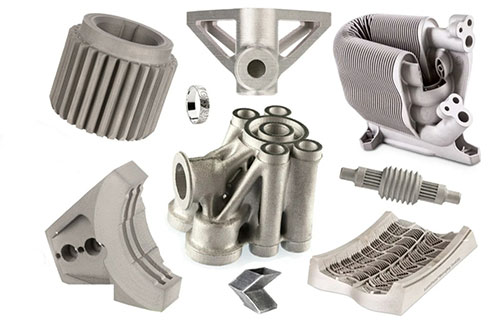
3D printing builds parts layer by layer from digital data. It is the most widely recognized rapid prototyping method.
| Technology | How It Works | Precision | Materials | Best For |
|---|---|---|---|---|
| FDM | Extrudes molten thermoplastic filament | 0.1–0.4 mm layer thickness | ABS, PLA, nylon, PETG | Concept models, form testing |
| SLA | Laser-cures liquid photopolymer resin | 0.025–0.1 mm layer thickness | Photopolymer resins | High-detail models, medical devices |
| SLS | Laser-sinters powdered material | 0.08–0.15 mm layer thickness | Nylon, metal, ceramic powders | Functional prototypes, complex geometries |
A medical device company used SLA to prototype a surgical guide with channels just 0.3 mm wide. The precision allowed surgeons to test the guide in simulated procedures with confidence.
An automotive supplier used SLS to prototype an engine intake manifold. The part was strong enough for real engine testing, and the internal geometry was optimized for airflow. The result was a 5% improvement in fuel efficiency.
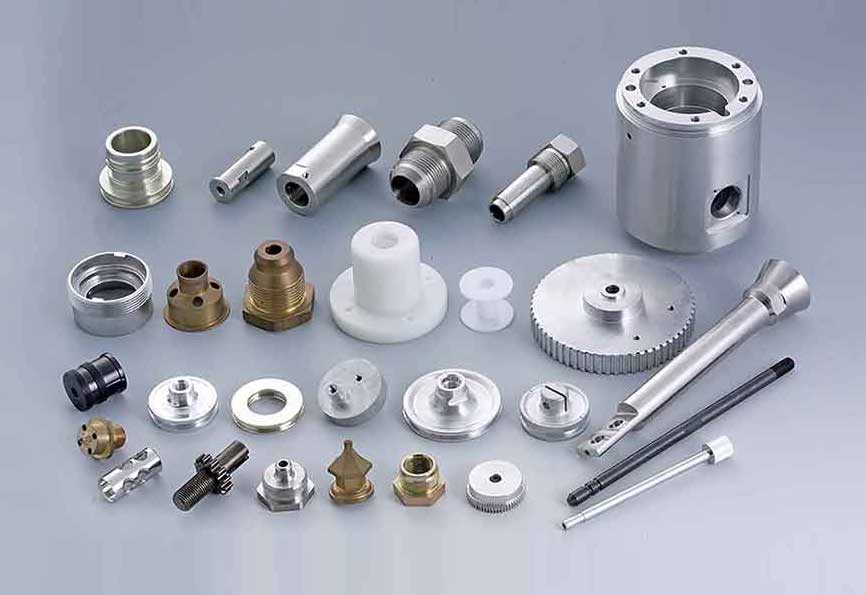
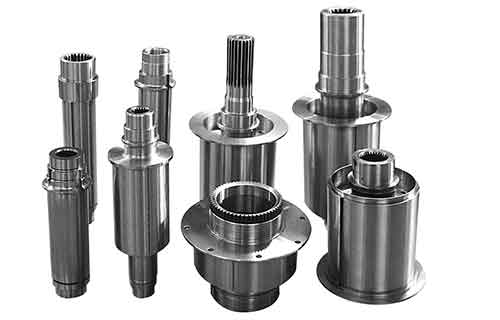
CNC Machining
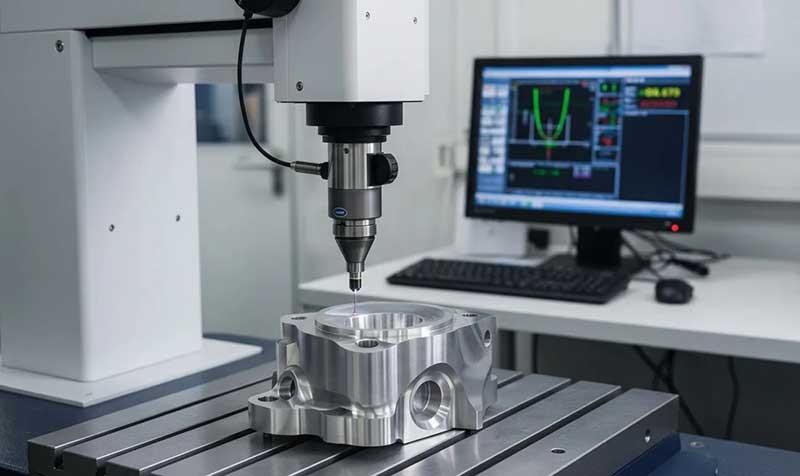
CNC machining is a subtractive process. It removes material from a solid block using computer-controlled tools.
Strengths:
- High precision (tolerances within ±0.025 mm)
- Wide material range (metals, engineering plastics, composites)
- Excellent surface finish
Limitations:
- Higher cost, especially for small batches
- Longer lead times than 3D printing
- Material waste from removal
In aerospace, CNC machining is used to prototype engine components from solid metal blocks. A turbine blade prototype might require 40–60 hours of machining but achieves the precision needed for testing.
Injection Molding
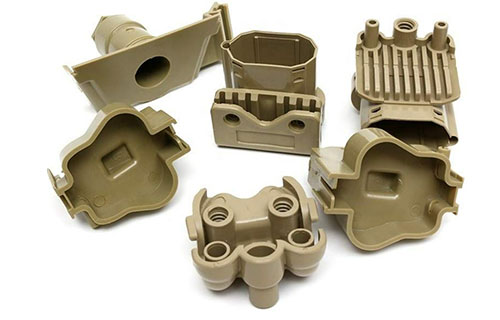
Injection molding is traditionally a production method, but it is also used for prototyping—particularly when the final product will be injection molded.
Process: Plastic pellets are melted and injected into a mold cavity under high pressure. The part cools and is ejected.
Strengths:
- Parts have production-like properties
- Good for testing manufacturability
- Efficient for larger quantities
Limitations:
- High mold cost (often $5,000–$50,000)
- Changes require mold modification
- Not cost-effective for single prototypes
A consumer electronics company used rapid injection molding with aluminum tooling to produce 500 prototype housings. The parts were identical to what production would produce, allowing final validation before committing to steel tooling.
How Is It Used Across Industries?
Automotive Industry
Rapid prototyping engineering has transformed automotive development.
Engine components: Manufacturers use SLS to prototype intake manifolds, cylinder heads, and turbocharger components. Testing with functional prototypes allows optimization of airflow and thermal performance. Engines with 3D-printed intake manifolds have shown fuel efficiency improvements of 5% or more.
Interior components: FDM is used to prototype dashboards, door panels, and center consoles. Designers can evaluate ergonomics, aesthetics, and fit. Development time for a new dashboard has dropped from months to weeks.
Electric vehicle components: Battery enclosures, motor mounts, and cooling systems are prototyped using a combination of SLS and CNC machining. Weight reduction is critical—carbon fiber-filled nylon prototypes help engineers hit weight targets.
Aerospace Industry
Aerospace demands high-performance materials and complex geometries.
Engine blades: Selective laser melting (SLM) produces turbine blades with internal cooling channels. These channels improve heat dissipation, extending blade life. Development cycles have been reduced by 30% or more.
Structural components: SLS and CNC machining produce brackets, ducting, and housings. The ability to test with production-like materials before committing to expensive tooling reduces risk.
Space applications: Satellite components prototyped in aluminum or titanium must withstand extreme conditions. Rapid prototyping allows testing of thermal expansion, vibration, and vacuum performance.
Medical Field
Rapid prototyping engineering enables personalized medicine.
Custom prosthetics: A patient's residual limb is 3D scanned. CAD software designs a custom socket. SLA or SLS printing produces the final prosthetic. Fit is precise, and production time is measured in days, not weeks.
Dental implants: SLA produces surgical guides and crowns with ±0.05 mm accuracy. A dental implant that once took a week to produce can now be made in hours. Success rates improve by an estimated 15% with custom-fitted implants.
Surgical instruments: Complex instruments are prototyped to test ergonomics and functionality. Surgeons provide feedback on prototypes, leading to instruments that are easier to use and more effective.
Why Is Rapid Prototyping Engineering Crucial?
Accelerated Development Cycles
Traditional development is sequential. Rapid prototyping engineering enables parallel work. While one prototype is being tested, the next iteration is being designed and manufactured.
A study of product development timelines found that companies using rapid prototyping engineering reduced time-to-market by an average of 30–50%.
Reduced Risk
Finding a design flaw early is cheap. Finding it after tooling is expensive. Rapid prototyping engineering allows testing at every stage, catching issues when they are still easy to fix.
A medical device company discovered during prototype testing that a surgical tool was difficult to sterilize. The fix cost $2,000 in design changes. Discovering the same issue after production would have cost $200,000 in recalls and redesign.
Better Products
Iteration leads to refinement. Rapid prototyping engineering enables more iterations in less time. Each iteration improves the design based on real-world feedback.
A consumer electronics company completed 12 prototype iterations in the time previously needed for one. The final product had 40% fewer field failures than their previous model.
Cost Savings
The upfront investment in rapid prototyping engineering pays back many times over. Lower development costs, fewer production surprises, and faster time-to-market all contribute to the bottom line.
Companies using rapid prototyping engineering report development cost reductions of 20–40% compared to traditional methods.
What Are the Technical Considerations?
Material Selection
The right material depends on what you need to learn.
| Testing Objective | Recommended Materials |
|---|---|
| Form and fit | PLA, ABS, basic resins |
| Mechanical function | SLS nylon, ABS-like resin, machined aluminum |
| Thermal performance | High-temperature resin, machined metal |
| Biocompatibility | Medical-grade resin, titanium, PEEK |
| Production-like properties | Match final material as closely as possible |
Precision Requirements
Different technologies offer different precision levels.
| Technology | Typical Tolerance |
|---|---|
| FDM | ±0.2–0.5 mm |
| SLA | ±0.05–0.1 mm |
| SLS | ±0.1–0.3 mm |
| CNC machining | ±0.025 mm |
For parts that will assemble with other components, specify tolerances early. A 0.1 mm difference in a snap-fit can mean the difference between a secure assembly and a part that falls apart.
Design for Manufacturing
Prototyping is not just about making a part. It is about learning how the part will be made in production. Design for manufacturing (DFM) principles apply even at the prototype stage.
Consider draft angles, wall thickness, and material shrinkage. A prototype that is easy to print but impossible to injection mold is a missed opportunity to learn.
Yigu Technology's Perspective
As a custom manufacturer of plastic and metal parts, Yigu Technology practices rapid prototyping engineering daily. Our capabilities include FDM, SLA, SLS, CNC machining, and injection molding.
What we have learned:
- Match technology to stage: Use FDM for early concepts. Use SLA or SLS for functional testing. Use CNC or injection molding for final validation.
- Plan for iteration: The most successful projects budget for multiple prototype cycles. The first prototype reveals issues. The second tests fixes. The third validates.
- Involve manufacturing early: Design for manufacturing feedback during prototyping prevents costly production issues later.
- Document everything: Keep records of materials, settings, and test results. This knowledge accelerates future projects.
We see rapid prototyping engineering not as a cost, but as an investment. The time and resources spent upfront pay back many times over in reduced risk, faster launch, and better products.
Conclusion
Rapid prototyping engineering is more than a set of technologies. It is a disciplined approach to product development that emphasizes speed, iteration, and learning. By turning digital designs into physical objects quickly, it enables engineers to test assumptions, validate performance, and refine designs before committing to production.
From automotive engine components to personalized medical implants, rapid prototyping engineering has transformed how products are developed. It reduces risk, accelerates time-to-market, and leads to better products.
As technologies continue to advance—faster printers, stronger materials, greater precision—rapid prototyping engineering will only become more essential. The engineers who master it will design better products, faster. Those who do not will struggle to keep pace.
Frequently Asked Questions
What materials can be used in rapid prototyping engineering?
A wide range. Plastics like ABS, PLA, and nylon for FDM. Photopolymer resins for SLA. Nylon, metal, and ceramic powders for SLS. Metals like aluminum, titanium, and stainless steel for CNC machining and metal 3D printing. Engineering plastics like PEEK for high-performance applications. Material selection depends on your testing objectives.
How accurate is the rapid prototyping process?
Accuracy varies by technology. FDM typically achieves ±0.2–0.5 mm. SLA achieves ±0.05–0.1 mm. SLS achieves ±0.1–0.3 mm. CNC machining can achieve ±0.025 mm or better. For critical dimensions, specify tolerances and discuss with your prototyping partner.
What is the typical cost range for rapid prototyping services?
Costs vary based on technology, material, part size, and complexity. A small FDM part may cost $5–$50. A complex SLA or SLS part may cost $100–$500. CNC-machined metal parts typically range from $200–$2,000. Injection molding has high upfront mold costs ( $5,000–$50,000 ) but low per-part cost for larger quantities.
How do I choose between FDM, SLA, SLS, and CNC?
Choose based on your objectives. FDM for low-cost concept models. SLA for high-detail visual models. SLS for functional testing with complex geometries. CNC for precision parts and production-grade materials. Many projects use multiple technologies—FDM for early form studies, SLS for functional testing, and CNC for final validation.
Can rapid prototyping engineering be used for production?
For low volumes (under 1,000 units), yes. SLS, SLA, and CNC machining are used for production of custom parts, medical devices, and aerospace components. For high-volume production (tens of thousands or more), traditional methods like injection molding remain more cost-effective. Many companies use rapid prototyping for bridge production while tooling is built.
Contact Yigu Technology for Custom Manufacturing
At Yigu Technology, we specialize in rapid prototyping engineering and custom manufacturing. Our capabilities include FDM, SLA, SLS, CNC machining, and injection molding. We serve automotive, aerospace, medical, and consumer goods industries.
If you have a design ready for prototyping or need guidance on the best approach for your project, contact our engineering team. Let us help you turn your concepts into reality—faster and with greater confidence.


