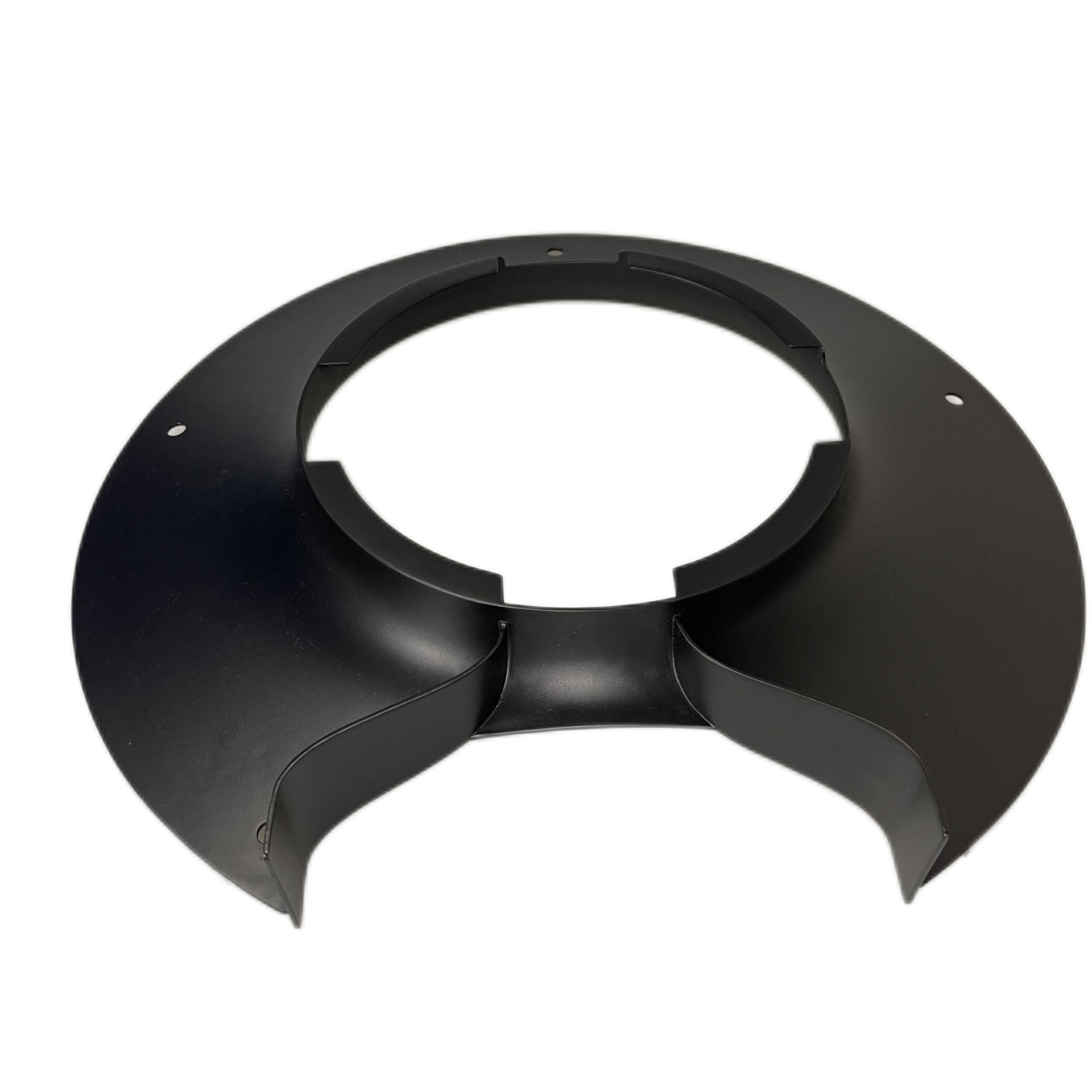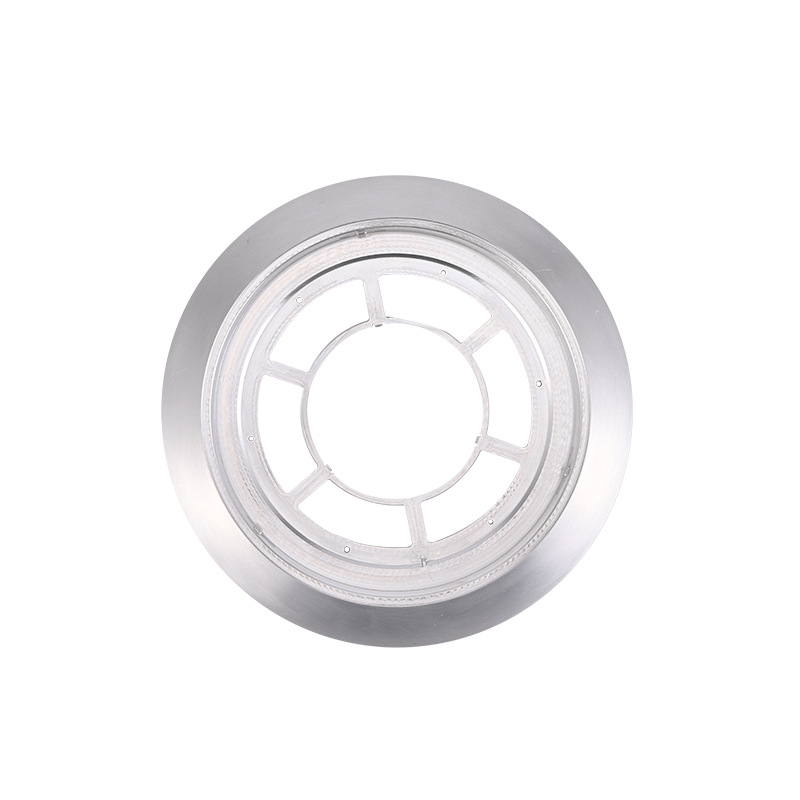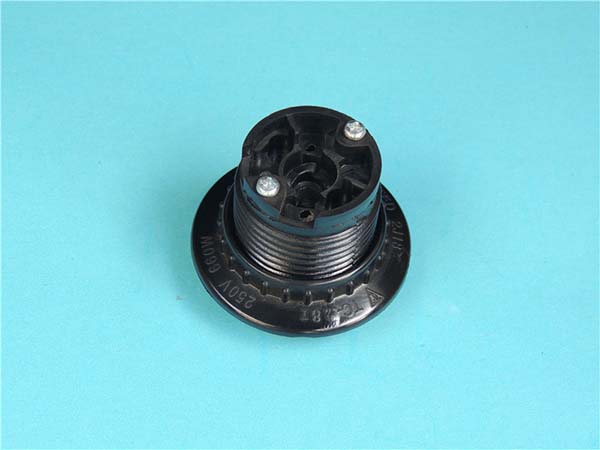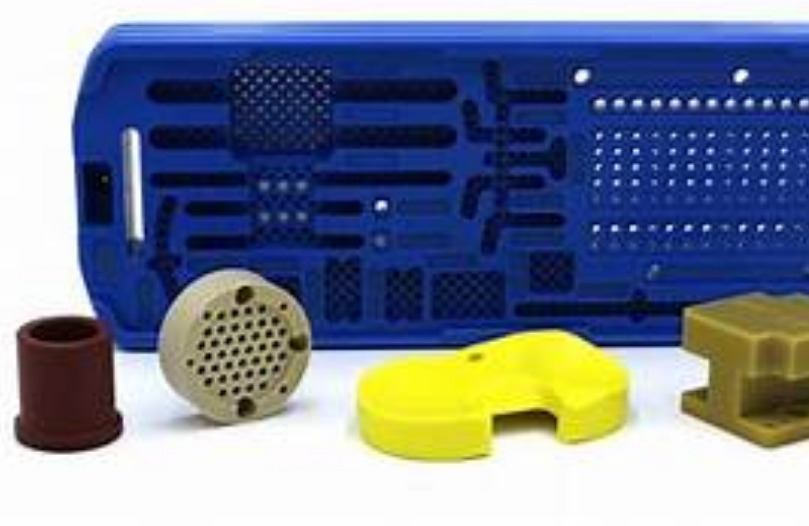
Selective Laser Sintering (SLS) is one of the most powerful 3D printing technologies available today. This guide explains how it works, what materials it uses, and why it might be the right choice for your next project—whether you need prototypes, custom parts, or small production runs.
Introduction
If you've ever needed a strong, complex part that other 3D printing methods can't handle, SLS 3D printing might be your answer. Unlike FDM (which prints with plastic filament) or SLA (which uses liquid resin), SLS uses a laser to fuse powder particles into solid objects.
I've worked with SLS technology for over a decade at Yigu Technology, helping clients in aerospace, automotive, and medical fields turn ambitious designs into reality. This technology consistently delivers where others fall short—especially for parts that need to be both strong and complex.
In this guide, I'll walk you through everything you need to know about the SLS process. You'll learn how it works, what materials work best, and when it makes sense to choose SLS over other manufacturing methods.
What Exactly Is the SLS 3D Printing Process?
Let's start with the basics and build from there.
The Core Principle
Selective Laser Sintering is an additive manufacturing technology that builds parts from powder. A high-power laser selectively fuses powder particles together, layer by layer, based on a 3D model.
The word "sintering" is important here. Unlike melting, where material becomes fully liquid, sintering bonds particles together at temperatures below their melting point. This creates solid parts while leaving unused powder loose—which then acts as natural support for the part during printing.
Think of it like this: imagine a bed of fine snow. A laser scans across the surface, melting just the areas that will become your part. The surrounding snow stays loose. After each layer, more snow spreads over the top, and the process repeats until your object is complete.
How Does It Work Step by Step?
The SLS process follows a consistent sequence:
Step 1: Powder Spreading
A thin layer of powder spreads evenly across the build platform. Typical layer thickness ranges from 0.05mm to 0.3mm. Thinner layers mean finer detail but slower printing. A roller or blade ensures the powder is perfectly level.
Step 2: Laser Scanning
A high-power laser scans the powder surface, tracing the cross-section of your part. Where the laser hits, powder particles fuse together. The laser moves fast—often hundreds to thousands of millimeters per second—depending on material and part complexity.
Step 3: Section Sintering
As the laser passes, powder in the scanned areas reaches sintering temperature. For plastics, this means the particles melt and bond. For metals, they fuse through particle-to-particle bonding below the melting point. This creates a solid layer that attaches to the one below.
Step 4: Platform Lowers
After one layer completes, the build platform drops by exactly one layer thickness. A fresh coat of powder spreads over the previous layer.
Step 5: Repeat
Steps 2-4 repeat until every layer is complete. The unsintered powder remains in place throughout, supporting the part as it builds.
Step 6: Cooling and Removal
After printing finishes, the entire powder bed cools slowly. Then the part (or parts) are removed from the loose powder and cleaned.
Why No Supports Needed?
This is one of SLS's biggest advantages. Because unsintered powder surrounds the part during printing, it acts as natural support for overhangs, internal cavities, and complex geometries. You don't need to design and remove support structures like you do with FDM or SLA.
This means:
- More design freedom – Create shapes impossible with other methods
- Less post-processing – No supports to cut away and smooth
- Better surface quality – No support marks on your finished part
What Materials Work With SLS?
SLS works with a surprisingly wide range of materials. Here's what you need to know about the most common options.
Plastics: The Workhorses of SLS
Nylon (PA11 and PA12) dominates SLS printing. And for good reason:
- PA12 offers excellent strength, toughness, and chemical resistance. Its tensile strength runs about 45-55 MPa—comparable to injection-molded plastics. It's the go-to choice for functional prototypes, end-use parts, and anything needing durability.
- PA11 is a bio-based alternative with similar properties. It's slightly more flexible and impact-resistant than PA12, making it great for parts that might see rough handling.
TPU (Thermoplastic Polyurethane) brings flexibility to SLS. With Shore hardness ranging from 80A to 98A, it's perfect for:
- Flexible hinges
- Soft-touch grips
- Gaskets and seals
- Shoe soles and sporting goods
Metals: For High-Performance Applications
SLS for metals (often called DMLS or Direct Metal Laser Sintering) opens up industrial applications:
Titanium alloys offer exceptional strength-to-weight ratios. Some grades reach tensile strength up to 1000 MPa. Aerospace and medical implants are common uses.
Stainless steel provides good corrosion resistance and mechanical strength. It's widely used for tools, functional metal parts, and prototypes that need metal properties.
Aluminum alloys combine light weight with decent strength and excellent thermal conductivity. They're popular in automotive and electronics applications.
Ceramics and Composites
Ceramic powders like alumina and zirconia bring hardness and heat resistance. Alumina can reach hardness up to 1800 HV, making it suitable for wear-resistant parts and high-temperature applications.
Composite powders mix materials for enhanced properties. Carbon-fiber reinforced nylon, for example, offers significantly higher stiffness than plain nylon—ideal for parts that must resist bending under load.
Material Comparison at a Glance
| Material | Key Properties | Tensile Strength | Common Uses |
|---|---|---|---|
| Nylon PA12 | Strong, tough, chemical-resistant | 45-55 MPa | Functional prototypes, housings, brackets |
| Nylon PA11 | Bio-based, flexible, impact-resistant | 40-50 MPa | Consumer goods, sports equipment |
| TPU | Flexible, elastic, abrasion-resistant | 20-40 MPa | Gaskets, grips, flexible joints |
| Titanium | Excellent strength-to-weight | Up to 1000 MPa | Aerospace, medical implants |
| Stainless Steel | Corrosion-resistant, strong | 500-800 MPa | Tools, industrial parts |
| Aluminum | Lightweight, thermally conductive | 200-400 MPa | Automotive, electronics |
| Alumina Ceramic | Hard, heat-resistant | N/A (brittle) | Wear parts, insulators |
What Equipment Does SLS Require?
SLS printers are more complex than FDM machines. Here are the essential components.
The Laser System
The laser is the heart of any SLS printer. For plastics, CO₂ lasers with 10-100 watts are common. Metal sintering needs more power—fiber lasers from 100-1000 watts—to fuse metal particles effectively.
Laser quality directly affects part precision. Better beam control means finer details and smoother surfaces.
Powder Delivery and Spreading
A mechanism spreads fresh powder evenly across the build area. Rollers or blades sweep across the powder bed, creating uniform layers. Spreading speed ranges from centimeters per second to tens of centimeters per second, depending on the printer and material.
Heating and Temperature Control
Temperature management is critical in SLS. For plastics, the powder bed pre-heats to near the material's melting point—typically 150-200°C for nylon. This reduces laser power needed and minimizes warping.
Metal SLS requires even more precise temperature control. The powder must stay hot enough to sinter efficiently but below its melting point. Inert atmospheres (usually nitrogen) prevent oxidation during metal printing.
The Forming Chamber
The chamber provides a controlled environment. It seals against contaminants and maintains temperature. For metals, it also holds the inert gas atmosphere needed for clean sintering.
Control System
A computer-based system coordinates everything. It reads the 3D model, controls laser movement, manages powder spreading, and adjusts temperatures throughout the print. Modern systems monitor the process in real-time, adjusting parameters to maintain quality.
Where Is SLS 3D Printing Used?
SLS serves industries that need strong, complex parts—often in small quantities.
Aerospace: Lightweight and Complex
Aerospace manufacturers love SLS for one reason: weight savings. A part that's 30% lighter than its machined equivalent means real fuel savings over an aircraft's life.
Real example: A client needed cooling channels inside a turbine component. Traditional machining couldn't create the complex internal passages. SLS with titanium alloy produced the part in one piece, with perfect internal channels. The finished component weighed 28% less than the original design and improved cooling efficiency by 15%.
Industry data shows SLS-printed parts in aerospace can reduce weight by up to 30% while improving performance. For a commercial aircraft, that translates to significant fuel savings over years of operation.
Automotive: Faster Development, Better Parts
Car manufacturers use SLS for two main purposes: prototyping and custom parts.
Prototyping is where SLS really shines. A new engine component that took months to machine can now print in days. Designers test multiple iterations quickly, finding problems before committing to expensive tooling.
Custom parts matter for high-end vehicles. A luxury car buyer might want personalized interior trim or custom gear shifters. SLS makes these one-off parts economically viable.
Small-batch production fills another niche. For runs of 100-1000 units, SLS often beats injection molding on cost. No tooling investment means each part costs the same whether you make 10 or 100.
Medical: Personalized to Perfection
Medicine might be SLS's most impactful application. Every patient is different, and SLS handles that variation beautifully.
Custom prosthetics start with a 3D scan of the patient's residual limb. From that scan, we design and print a perfectly fitting socket. Comfort improves, and fitting time drops dramatically.
Implants benefit from SLS's ability to create porous structures. Titanium implants with controlled porosity encourage bone to grow into the implant, creating a permanent bond. These can be customized to match each patient's anatomy exactly.
Surgical models give surgeons hands-on practice before operating. For complex cases—like reconstructing a shattered face—a 3D-printed model lets the surgical team plan every cut in advance. A 2023 study found this approach reduced operating time by 20-30% in complex cases.
What Are SLS's Advantages and Limitations?
Like any technology, SLS has strengths and weaknesses.
The Good: Why Choose SLS
No supports needed – Design anything, print anything. Internal cavities, overhangs, lattices—all possible without support structures.
Strong parts – SLS nylon parts rival injection-molded plastics in strength. They're suitable for functional testing and even end-use.
Material variety – Plastics, metals, ceramics, composites. SLS handles them all.
Complex geometries – If you can model it, SLS can probably print it. Internal channels, organic shapes, interlocking parts—no problem.
Batch production – Fill the entire build volume with different parts. SLS doesn't care if you're printing one thing or fifty.
The Not-So-Good: Challenges to Know
Surface finish – SLS parts come out of the printer with a matte, slightly rough surface. Some applications need post-processing to smooth things out.
Cost – SLS equipment is expensive. Industrial machines run $100,000 to $1 million+. Even desktop SLS printers cost more than FDM machines.
Material handling – Powder is messy. You need proper ventilation, safety equipment, and procedures to handle fine particles safely.
Cooling time – Parts need to cool slowly inside the powder bed after printing. This can add hours to total production time.
Size limitations – Build volumes are smaller than large FDM printers. Very large parts must be printed in sections and assembled.
How Do You Choose Between SLS and Other Methods?
Your project needs determine the right technology.
Choose SLS When:
- You need strong, functional parts – Nylon SLS parts are tough enough for real use
- Your design has complex geometry – Internal features, lattices, or organic shapes
- You want multiple parts in one run – Fill the build volume efficiently
- No supports are impractical – Overhangs that would need difficult supports in other methods
- Material properties matter – Nylon's strength, TPU's flexibility, or metal's heat resistance
Consider Other Methods When:
- Surface finish is critical – SLA gives smoother surfaces out of the printer
- Cost is the main factor – FDM is much cheaper for simple parts
- Parts are very large – Large-format FDM handles bigger pieces
- You need specific materials – Some exotic materials aren't available in SLS
What Does the Future Hold for SLS?
SLS technology continues to evolve. Here's what we're watching.
Faster Print Speeds
New laser systems and scanning methods cut print times. Multi-laser machines (with 2, 4, or even 8 lasers) work simultaneously, building parts faster than ever.
Better Materials
Material scientists keep developing new powders. We're seeing:
- Higher-performance nylons
- More metal alloys optimized for printing
- Composites with carbon fiber, glass, or other reinforcements
- Bio-based and biodegradable options
Lower-Cost Machines
Desktop SLS printers now exist for under $10,000. While industrial machines still dominate production, smaller systems make SLS accessible to more businesses and even serious hobbyists.
Improved Software
Better control software means:
- More reliable printing
- Better surface finish
- Reduced waste
- Real-time monitoring and adjustment
Conclusion
SLS 3D printing stands out as one of the most versatile and powerful additive manufacturing technologies available today. Its ability to create strong, complex parts without supports opens design possibilities that other methods can't match.
The key points to remember:
- Powder + laser = solid parts, layer by layer
- No supports needed means design freedom
- Material options include plastics, metals, ceramics, and composites
- Applications span aerospace, automotive, medical, and beyond
- Cost and complexity mean it's not always the right choice—but when it is, nothing else compares
At Yigu Technology, we've seen SLS transform how companies develop products. Prototypes that once took months now take days. Parts that couldn't be made any other way now fly in aircraft and save lives in hospitals. Custom manufacturing that was prohibitively expensive now serves individual patients and customers.
If you're considering SLS for your next project, start with a clear understanding of what you need. Match those needs to SLS's strengths. And don't hesitate to consult experts who've been there before—the technology has a learning curve, but the results are worth it.
Frequently Asked Questions
What materials are commonly used in SLS 3D printing?
Common materials include nylon (PA11, PA12) for strong, tough parts; TPU for flexible components; titanium and stainless steel for high-performance metal parts; and ceramics like alumina for heat-resistant applications. Each material serves different purposes, from prototyping to end-use production.
How accurate is the SLS 3D printing process?
Typical dimensional tolerance ranges from ±0.1mm to ±0.3mm for most applications. Accuracy depends on layer thickness, material properties, part geometry, and printer calibration. Thinner layers generally produce more precise parts but take longer to print.
Is post-processing always required for SLS parts?
Not always, but it's often beneficial. Many parts work fine as-printed with their natural matte finish. Post-processing like sandblasting, dyeing, or machining improves surface finish, appearance, or precision when needed. Metal parts often need heat treatment to relieve internal stresses.
How does SLS compare to FDM or SLA?
SLS produces stronger parts than either FDM or SLA, with no support structures required. However, it costs more and has a rougher surface finish than SLA. FDM remains cheapest for simple parts. SLA gives the smoothest surfaces. SLS wins for functional strength and complex geometries.
Can SLS print multiple parts at once?
Yes—this is one of SLS's biggest advantages. You can fill the entire build volume with different parts, all printing simultaneously. The unsintered powder supports everything, so parts can nest together without interfering.
Is SLS suitable for metal printing?
Absolutely. Metal SLS (often called DMLS) is widely used in aerospace, medical, and automotive industries. It produces dense, strong metal parts from titanium, stainless steel, aluminum, and other alloys.
How long does an SLS print take?
Print time depends on part size, layer thickness, and number of parts. A small batch of parts might print in 10-20 hours. Larger builds can run 2-3 days. Cooling adds several hours after printing completes.
What's the cost of SLS printing?
Industrial SLS machines cost $100,000 to over $1 million. Desktop SLS printers start around $5,000-10,000. Material costs vary widely—nylon powder runs $50-100/kg, while metal powders can cost several hundred dollars per kilogram. Service bureaus typically charge by part volume and complexity.
Contact Yigu Technology for Custom Manufacturing
Need expert help with SLS 3D printing for your next project? At Yigu Technology, we combine years of manufacturing experience with advanced SLS capabilities. Whether you need prototypes, custom parts, or small production runs, we deliver precision results with professional quality. Our team helps with design optimization, material selection, and finishing options. [Contact us today] to discuss your project—we'll help you choose the right approach and get your parts made right.