
Introduction
3D printing has changed how we make everything from jewelry to airplane parts. It builds objects layer by layer, following digital designs. This approach cuts waste, speeds up production, and creates shapes traditional methods can't touch.
Gas masks protect people from harmful air—chemicals, smoke, dust, biological threats. They're essential in factories, military operations, and emergency situations like wildfires or chemical spills.
So here's the question: Can these two technologies work together? Can 3D printing make better gas masks? And if so, what does that mean for safety, cost, and availability?
I've spent years at Yigu technology working with custom manufacturing. This guide explores the real potential—and real limitations—of using 3D printing for gas mask production.
How Does 3D Printing Actually Work?
The Layer-by-Layer Revolution
3D printing—also called additive manufacturing—starts with nothing and builds up. Traditional machining starts with a block and cuts away. The difference matters.
The process follows simple steps:
- Create a 3D model in CAD software or from a 3D scan
- Slice that model into hundreds of thin layers
- Feed the sliced data to a printer
- The printer deposits material layer by layer
- Each layer bonds to the one below
- A solid object emerges
Different printers use different methods:
- FDM printers melt plastic filament and squeeze it through a nozzle
- SLA printers use UV light to harden liquid resin
- Industrial systems fuse metal powder with lasers or electron beams
For gas masks, plastic printing matters most. The mask body needs to be lightweight, flexible enough to seal, and rigid enough to hold its shape.
How Do Traditional Gas Masks Work?
The Parts That Matter
A gas mask isn't just a piece of plastic. It's a system with several critical components:
Mask Body: Usually rubber or silicone. Forms a tight seal around the face. Covers nose, mouth, sometimes eyes. The seal must be perfect—any leak means unfiltered air gets through.
Filter Canister: The heart of the system. Contains materials that remove contaminants:
- Activated carbon adsorbs organic vapors and gases
- Mechanical layers trap particles—dust, pollen, bacteria
- Chemical impregnates neutralize specific toxic gases
Valves: Two one-way doors. Inlet valve opens when you inhale, letting filtered air in. Outlet valve opens when you exhale, letting carbon dioxide out. They ensure air flows the right direction.
Why Design Matters
A gas mask only works if:
- It fits your face perfectly
- Materials resist whatever they're protecting against
- Valves function reliably
- Filters attach securely
Small design flaws become life-threatening failures.
How Do 3D Printed and Traditional Gas Masks Compare?
| Aspect | 3D Printed Gas Masks | Traditional Gas Masks |
|---|---|---|
| Customizability | High—fits individual faces exactly | Low—standard sizes only |
| Cost for small batches | Lower—no molds needed | Higher—requires expensive tooling |
| Production time | Hours to days | Days to weeks |
| Material options | Wide range of plastics | Limited to rubber, silicone |
| Quality control | Variable, depends on printer | Well-established processes |
| Certification | Difficult to achieve | Standard practice |
What Are the Advantages of 3D Printed Gas Masks?
Perfect Fit Changes Everything
Standard gas masks come in sizes—small, medium, large. They work for most people most of the time. But "most" isn't "all."
Some faces don't fit standard sizes. People with:
- Scarred tissue from burns
- Unusual bone structure
- Facial deformities
- Simply unique proportions
For them, a standard mask leaks. And a leaking mask fails.
3D printing solves this. Scan someone's face. Adjust the CAD model to match exactly. Print a mask body that fits that specific person. The seal improves. Protection becomes reliable.
I've seen this work for burn survivors who couldn't get masks that sealed around scarred tissue. A custom-printed mask changed their ability to work safely.
Small Batches Become Affordable
Traditional manufacturing hates small runs. Molds cost tens of thousands. Setup takes weeks. You need volume to justify the expense.
3D printing doesn't care about volume. Print one mask or one hundred—the per-unit cost stays roughly the same. No molds. No tooling. No minimum order.
This matters for:
- Emergency response teams needing specialized masks
- Remote communities with small populations
- Research projects testing new designs
- Rapid deployment during crises
Complex Internal Structures
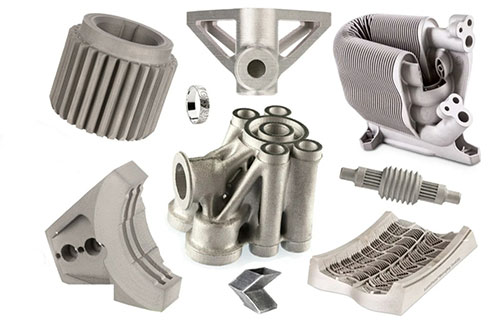
3D printing creates shapes impossible to mold. Internal channels, lattice structures, integrated features—all become design options.
For gas masks, this could mean:
- Integrated filter attachments with optimized airflow
- Lightweight reinforcement ribs
- Channels for communication devices
- Attachment points for accessories
The design isn't limited by what can be pulled from a mold.
Rapid Iteration for Better Designs
Testing a new gas mask design traditionally takes months. Design. Make a mold. Produce samples. Test. Find problems. Start over.
With 3D printing, design changes happen overnight. Print a new version tomorrow. Test it tomorrow afternoon. Iterate daily instead of monthly.
Faster iteration means better designs reach users sooner.
What Are the Limitations and Challenges?
Material Performance Questions
Traditional gas masks use materials with decades of proven performance. Rubber and silicone formulations are optimized for:
- Flexibility at all temperatures
- Chemical resistance
- Aging characteristics
- Skin compatibility
3D printing materials are newer. We know less about how they'll perform after years of storage, exposure to chemicals, or temperature extremes.
Some questions need answers:
- Will printed materials maintain flexibility at -20°C?
- Do they resist degradation from chemical warfare agents?
- How do they age over 10 years in storage?
- Are they safe for long-term skin contact?
Until these questions have decades of answers, certification remains difficult.
Quality Control Variability
A molded mask comes from a controlled industrial process. Once the mold is right, every part is identical.
3D printed parts vary. A printer slightly out of calibration affects every layer. Humidity changes filament behavior. Nozzle wear changes extrusion. Operator skill matters.
For life-safety equipment, consistency isn't optional. Every mask must perform identically. Achieving that with 3D printing requires:
- Strict process controls
- Regular calibration
- In-process monitoring
- Post-print inspection
It's possible. It's also harder than with molding.
Certification Barriers
Gas masks need certification. Standards like NIOSH in the US, CE in Europe, and others around the world set requirements for:
- Filtration efficiency
- Face seal leakage
- Breathing resistance
- Material compatibility
Getting certified takes time and money. Manufacturers invest because they'll sell thousands of masks.
For 3D printed masks, the math changes. Small batches mean fewer masks to spread certification costs. Per-unit cost rises. The business case weakens.
Valve and Filter Integration
The mask body is only part of the system. Valves must seal perfectly. Filters must attach securely and seal against the mask.
Traditional designs solve these problems with proven interfaces. 3D printed masks need:
- Valve seats that seal consistently
- Filter mounts compatible with standard cartridges
- Threads or bayonets that engage reliably
These are solvable problems. But they add complexity to an already challenging design.
What Materials Can You Use for 3D Printed Gas Masks?
PLA: The Beginner's Plastic
PLA is easy to print, biodegradable, and comes from renewable sources. For prototypes and concept testing, it's great.
But for actual gas masks? Probably not. PLA softens at relatively low temperatures. It's brittle compared to other options. Long-term chemical resistance is unknown.
ABS: Tougher and More Heat-Resistant
ABS is stronger than PLA and handles higher temperatures. It's what many functional prototypes use.
For gas masks, ABS might work for non-critical components. But it's rigid—not ideal for face seals. And like PLA, its long-term chemical resistance needs verification.
PETG: The Compromise Candidate
PETG combines ease of printing with better durability. It's more flexible than PLA or ABS, which helps with face sealing.
Some PETG formulations resist chemicals reasonably well. It's a better starting point for gas mask development.
Flexible Filaments: TPU and TPE
TPU and other flexible filaments print parts that bend and stretch. For face seals, this matters. A rigid mask can't conform to facial contours. A flexible seal can.
Combining rigid printed bodies with flexible printed seals in one print is possible with multi-material printers. This mimics traditional construction but in a single process.
Advanced Materials
Research continues on 3D printing materials with:
- Chemical resistance specifically tested against threat agents
- Anti-microbial properties
- Enhanced durability
- Skin-safe formulations
As these mature, 3D printed gas masks become more viable.
When Does 3D Printing Make Sense for Gas Masks?
Emergency Response Situations
Imagine a chemical spill in a remote area. Standard gas masks are hours or days away. But there's a 3D printer and a stock of filament.
Could you print masks for first responders while supplies arrive? Possibly. They wouldn't be certified. But in an emergency, something might be better than nothing.
Specialized Medical Applications
Some patients need respiratory protection but can't wear standard masks. Facial burns, surgical alterations, congenital conditions—these create fit challenges.
A custom-printed mask body, used with standard certified filters, could protect patients who currently have no good options.
Rapid Prototyping for Manufacturers
Before investing in expensive molds, manufacturers can 3D print prototype gas masks for testing. Fit, function, and design flaws reveal themselves early. Iteration happens fast. The final molded product benefits from extensive printed testing.
Niche Military or Industrial Needs
Small special operations units might need masks with unique features—integrated communications, specialized filter mounts, unusual shapes. 3D printing produces small batches cost-effectively.
What Would It Take for 3D Printed Gas Masks to Go Mainstream?
Material Certification
Materials need testing against relevant standards. Chemical resistance, aging characteristics, temperature performance—all must be documented and approved by certifying bodies.
This takes time and money. But as 3D printing materials improve, manufacturers will invest in certification for promising formulations.
Process Control
3D printing must become more consistent. Printer calibration, environmental control, filament quality—all affect the final part.
For certification, every printed mask must be identical to the last. That requires:
- Validated printing processes
- In-process monitoring
- Post-print inspection protocols
- Traceability for every part
Hybrid Approaches
The most likely path forward combines 3D printing with traditional components:
- 3D-printed custom mask bodies
- Standard certified filters
- Traditional valves
- Proven head harnesses
This leverages the customization advantage while relying on certified components for critical functions.
Standards Evolution
Certification bodies may eventually develop standards specific to additive manufacturing of safety equipment. These would address the unique aspects of printed parts while ensuring protection levels meet requirements.
Yigu Technology's Perspective
At Yigu technology, we see 3D printed gas masks as a promising but complex application. The technology offers real advantages—custom fit, small-batch economics, design freedom. But serious challenges remain.
Material diversity helps. We can choose from various plastics with different properties. Some resist chemicals. Some flex. Some combine both. Matching material to application gets easier as options expand.
Small-batch customization is where 3D printing shines brightest. For niche needs, emergency situations, or specialized users, printing masks makes sense today. For general issue to millions of users? Traditional methods still win.
We help clients navigate these trade-offs. Sometimes a hybrid approach works best—printed bodies with standard filters. Sometimes prototyping leads to better molded products. Sometimes the answer is "not yet, but here's what needs to happen."
Custom manufacturing means matching process to purpose. 3D printing is one tool in the toolbox. For the right gas mask applications, it's the right tool.
Conclusion
Can 3D printing revolutionize gas mask production? Partially, yes. Completely, not yet.
The technology enables:
- Perfect custom fit for unusual faces
- Affordable small batches
- Rapid design iteration
- Complex geometries impossible to mold
But challenges remain:
- Material performance needs verification
- Quality control is harder than molding
- Certification pathways aren't established
- Integration with filters and valves adds complexity
The most likely future is hybrid. 3D-printed custom bodies paired with certified standard components. Printed prototypes leading to better molded products. Emergency and niche applications served by printing while mainstream production stays traditional.
For anyone designing or using gas masks, understanding 3D printing matters. It's not magic. It's not the answer to everything. But for specific problems, it's exactly the right tool.
FAQ
Is a 3D printed gas mask as safe as a traditional one?
It can be, but certification is the key. A well-printed mask using appropriate materials might perform identically to a molded mask. But without testing and certification against standards like NIOSH or CE, you can't know for sure. For life-safety equipment, always use certified products from reputable sources.
What materials can be used for 3D printing gas masks?
PLA works for prototypes but lacks durability. ABS is stronger but rigid. PETG offers a good balance of properties. TPU and other flexible filaments can create face seals. Advanced materials with tested chemical resistance are emerging. Material choice depends on the specific application and required properties.
Can I 3D print a gas mask at home?
Technically, yes. Realistically, don't. Home printing can't guarantee the seal quality, material performance, or filtration effectiveness that life-safety requires. A home-printed mask might look like the real thing but fail when you need it most. Buy certified equipment from manufacturers who've done the testing.
How long does it take to 3D print a gas mask?
A simple mask body might print in 3-4 hours on a consumer FDM printer. More complex designs with higher resolution take longer. Post-processing—removing supports, smoothing surfaces, assembling components—adds additional time. Compare this to weeks for traditional mold production.
What's the biggest challenge for 3D printed gas masks?
Certification. Traditional gas masks meet strict standards backed by extensive testing. Creating a 3D-printed mask that meets those same standards requires proving material performance, process consistency, and design effectiveness. That's possible but expensive and time-consuming. For now, it limits printed masks to niche applications where certification isn't required.
Can 3D printing make gas masks cheaper?
For large-scale production, no. Molding is extremely efficient at volume. For small batches, yes. Without mold costs, printing one or a dozen masks costs much less than traditional tooling. The breakeven point depends on complexity, but generally, printing wins for quantities under a few hundred.
Contact Yigu Technology for Custom Manufacturing
Interested in exploring 3D printing for gas mask components or other safety equipment? Yigu technology specializes in custom manufacturing with plastics and metals.
We can help with:
- Design for custom-fit applications
- Material selection for specific requirements
- Prototyping to test concepts quickly
- Small-batch production for niche needs
- Hybrid solutions combining printed and traditional components
Contact us to discuss your project. Tell us what you're trying to protect and who you're protecting. We'll help find the right manufacturing approach for your situation.


