Introduction
You need a part. Fast. Maybe it's a prototype for a new product, a replacement component for broken equipment, or a small batch for market testing.
Traditional manufacturing says: wait weeks for tooling, pay thousands for molds, hope your design is right.
Quick Parts 3D Systems says: upload your design, get your part in days—sometimes hours.
This isn't just faster prototyping. It's a fundamentally different approach to manufacturing. Quick parts—produced through 3D printing—enable rapid iteration, customization, and on-demand production.
At Yigu technology, we've helped countless clients use quick parts to accelerate development and reduce costs. This guide covers what they are, how they work, and where they deliver the most value.
What Are Quick Parts 3D Systems?
Definition and Basics
Quick Parts 3D Systems refers to services that use 3D printing technology to produce parts rapidly—directly from digital designs, with minimal lead time.
Unlike traditional manufacturing:
| Aspect | Traditional Manufacturing | Quick Parts 3D Systems |
|---|---|---|
| Tooling | Required—molds, dies, fixtures | None—print directly from digital file |
| Lead time | Weeks to months | Days to hours |
| Minimum quantity | Often high to justify tooling | One part is economical |
| Design changes | Costly—new molds required | Free—update digital file |
The impact: A study by a leading manufacturing research firm found that Quick Parts 3D Systems can reduce prototype development time by up to 70% compared to traditional machining.
Key Features
Rapid Prototyping
Speed is the defining feature. A startup developing a new consumer electronics device can test form, fit, and function within days—not weeks. Iterate based on feedback, print again, repeat.
Diverse Material Options
3D Systems offers over 100 different materials for quick parts production:
- Plastics: ABS, PLA, polycarbonate, nylon
- Metals: Aluminum, titanium, stainless steel
- Specialty materials: Biocompatible resins, elastomers, composites
Engineers can select the most suitable material based on specific requirements—strength, flexibility, heat resistance, chemical resistance.
Complex Geometry Capability
3D printing can create parts with geometries impossible to achieve with traditional methods:
- Internal channels for cooling or fluid flow
- Lattice structures for lightweight strength
- Organic shapes optimized for function
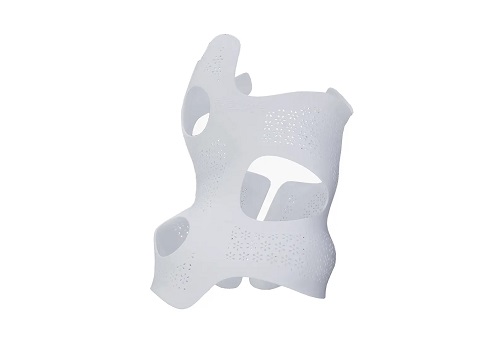
In the medical field, customized prosthetics with intricate internal structures improve weight distribution and tissue integration—enhancing patient quality of life.
How Does Quick Parts 3D Systems Work?
The 3D Printing Process
Step 1: Design and Modeling
Everything starts with a digital 3D model created in CAD software. Every detail is defined—dimensions, curves, features.
If an existing physical object needs to be replicated or modified, 3D scanning can generate a digital model through reverse engineering.
Step 2: Slicing the Model
The model is sliced into thin cross-sectional layers—typically 0.05 mm to 0.3 mm thick, depending on desired precision.
Slicing software generates G-code—instructions telling the printer where to move, how fast to go, when to extrude.
Step 3: Printing
The printer reads the G-code and builds the part layer by layer. Different technologies are used:
| Technology | How It Works | Best For |
|---|---|---|
| FDM | Melts and extrudes thermoplastic filament | Prototypes, large parts, low cost |
| SLA | UV laser cures liquid resin | High detail, smooth surfaces |
| SLS | Laser fuses powder | Strong functional parts |
| Metal printing | Laser or electron beam melts metal powder | High-strength metal components |
Step 4: Post-Processing
After printing, parts may need:
- Support removal: Breaking or dissolving temporary structures
- Sanding: Smoothing surfaces
- Painting: For appearance or protection
- Heat treatment: Improving mechanical properties (especially for metals)
What Materials Are Available?
Common Materials and Their Applications
| Material | Strength | Flexibility | Heat Resistance | Chemical Resistance | Common Applications |
|---|---|---|---|---|---|
| ABS | High | Moderate | Moderate (100-110°C) | Good | Consumer electronics, automotive prototypes |
| PLA | Moderate | Low | Low (60-65°C) | Limited | Educational models, simple consumer goods |
| Polycarbonate | High | Low-Moderate | High (130-140°C) | Good | Aerospace components, protective gear |
| Nylon | High | High | Moderate (150-170°C) | Good | Sporting goods, mechanical parts |
| Aluminum | High | Low | High (660°C melt) | Good corrosion | Aerospace, automotive engine components |
Choosing the Right Material
Consider:
- Strength requirements: Nylon or polycarbonate for high strength
- Flexibility needed: Nylon or specialty elastomers
- Temperature exposure: Polycarbonate or metals for heat resistance
- Chemical environment: ABS or metals for chemical resistance
- Weight constraints: Aluminum for lightweight strength
- Cost: PLA cheapest, engineering materials cost more
Where Are Quick Parts Used?
Automotive Industry
Ford Motor Company uses 3D-printed quick parts for prototypes of engine components like intake manifolds. Testing functionality early in development reduces time and cost.
A case study showed Ford cut development time of a new engine component by 40% using 3D-printed quick parts.
Custom interior parts: High-end manufacturers use 3D-printed quick parts for unique dashboard designs, center console components, and door trims in limited-edition models. Respond quickly to market demands for personalization.
Healthcare
Customized medical models: Surgeons use 3D-printed models of patients' organs—heart, liver, kidneys—to understand anatomy before complex surgeries.
A study in a leading medical journal found that in cardiac surgeries, the use of 3D-printed heart models improved surgical success rates by 15% through better planning.
Prosthetics: Point Designs collaborated with 3D Systems to produce titanium-printed hand prosthetics. These are 30% lighter than traditional steel-based prosthetics, allowing patients to perform a wider range of activities.
The global market for 3D-printed prosthetics is expected to grow at a compound annual rate of over 20% from 2023-2029 (market research firm GIR).
Aerospace
GE Aviation uses 3D-printed quick parts to manufacture fuel nozzles for LEAP engines. The 3D-printed nozzles are 25% lighter than traditionally manufactured ones—improving fuel efficiency and reducing operating costs.
Aircraft engine brackets: 3D Systems helped GE Aviation print a lightweight bracket that was 70% lighter than the traditional part.
Satellite components: 3D-printed quick parts enable highly customized and optimized parts, accelerating satellite development and deployment.
Consumer Electronics
Startups use quick parts to:
- Test form, fit, and function early
- Iterate based on feedback
- Get to market faster
Established companies use them for:
- Limited-edition products
- Custom configurations
- Replacement parts
What Are the Advantages of Quick Parts?
Speed
The most obvious advantage. From design to physical part in days—sometimes hours. Traditional methods take weeks or months.
This speed enables:
- Faster product development: Iterate quickly, launch sooner
- Earlier testing: Identify issues when they're cheap to fix
- Rapid response: Meet market demands quickly
No Tooling Costs
Traditional manufacturing requires expensive molds and dies—$5,000 to $100,000+ depending on complexity. Quick parts require none.
For small batches, this is transformative. Production that would be prohibitively expensive becomes economical.
Design Freedom
3D printing can create geometries impossible with traditional methods:
- Internal channels for cooling or fluid flow
- Lattice structures for lightweight strength
- Organic shapes optimized for function
Customization
Each part can be different at no extra cost. Perfect for:
- Patient-specific medical devices
- Custom consumer products
- Tailored industrial components
Reduced Waste
Additive manufacturing uses only material that becomes the part. Waste is minimal compared to subtractive methods that can waste 80-90% of material.
What Are the Limitations?
Cost at Volume
For high volumes, traditional manufacturing is cheaper. Quick parts are economical for:
- Prototypes: 1-10 parts
- Small batches: 10-100 parts
- Custom parts: Where each is unique
For thousands of identical simple parts, injection molding wins.
Speed at Volume
3D printing is fast for one part, slow for a thousand. High-speed production lines in traditional manufacturing can produce parts in seconds.
Material Properties
While improving, some 3D-printed materials don't yet match traditionally manufactured ones for the most demanding applications.
Size Limitations
Most 3D printers have build volumes under 400 x 400 x 400 mm. Large parts may need to be printed in sections and joined.
Surface Finish
As-printed surfaces may be rough. For many applications, this is fine. For aesthetic parts, post-processing is needed.
Yigu Technology's Perspective
At Yigu technology, we see Quick Parts 3D Systems as a powerful complement to traditional manufacturing:
Prototyping is essential. Before committing to expensive tooling, test your designs with quick parts. Iterate, refine, get it right.
Customization is a competitive advantage. For products where personalization matters, quick parts deliver.
Hybrid approaches work best. Use 3D-printed prototypes to validate designs. Use 3D-printed molds for small-batch injection molding. Use traditional manufacturing for high-volume production.
Applications we serve:
- Prototypes for product development
- Custom parts for niche applications
- Bridge tooling while waiting for production molds
- Replacement parts for legacy equipment
Quick parts aren't the answer for everything. But for the right applications, they're game-changing.
Conclusion
Quick Parts 3D Systems deliver:
- Speed: From design to part in days—up to 70% faster than traditional methods
- No tooling: Economical for small batches and prototypes
- Design freedom: Complex geometries impossible to machine
- Customization: Each part unique at no extra cost
- Material variety: Over 100 materials—plastics, metals, composites
Applications across:
- Automotive: Prototypes, custom interior parts
- Healthcare: Surgical models, custom prosthetics
- Aerospace: Lightweight components, fuel nozzles
- Consumer electronics: Rapid iteration, custom products
The process is straightforward:
- Create a 3D model in CAD
- Upload to a service
- Get your part in days
Quick parts aren't just faster—they're a fundamentally different way to manufacture. For prototypes, small batches, and custom applications, they're often the best choice.
FAQ
What types of materials can be used in Quick Parts 3D Systems?
Quick Parts 3D Systems supports a wide range of materials:
- Plastics: ABS, PLA, polycarbonate, nylon
- Metals: Aluminum, titanium, stainless steel
- Specialty materials: Biocompatible resins, elastomers, composites
Over 100 different materials are available. Choose based on your application requirements—strength, flexibility, heat resistance, chemical resistance.
How accurate are the parts produced by Quick Parts 3D Systems?
Accuracy depends on technology:
- SLA: Up to ±0.05 mm for small parts
- SLS: ±0.1-0.3 mm typical
- FDM: ±0.1-0.5 mm typical
- Metal printing: ±0.1-0.2 mm typical
Factors affecting accuracy include part geometry, material shrinkage, and post-processing. For critical dimensions, design with tolerances in mind.
Is Quick Parts 3D Systems suitable for large-scale production?
For certain situations, yes. Quick parts excel at:
- Small-batch production: 10-100 parts
- Highly complex parts that can't be made traditionally
- Customized parts where each is different
For extremely high-volume production of simple parts, traditional manufacturing remains more cost-effective. The sweet spot is complexity, customization, and moderate volume.
How much do quick parts cost?
Cost varies widely:
- Small plastic prototype: $50-500
- Medium functional part: $500-2,000
- Complex metal component: $2,000-10,000+
For small batches, quick parts are often cheaper than traditional methods because no tooling is required. Get quotes based on your specific design.
How long does it take to get quick parts?
Typical turnaround:
- Standard: 3-7 days
- Expedited: 24-48 hours
- Rush: Same-day for simple parts (premium cost)
Shipping adds additional time. Compare to weeks or months for traditional manufacturing.
Can I use quick parts for functional testing?
Yes. With the right material, quick parts are strong enough for functional testing. ABS for impact resistance, nylon for wear, polycarbonate for strength, aluminum for high-performance applications. Test early, identify issues, refine designs.
Contact Yigu Technology for Custom Manufacturing
Ready to use Quick Parts 3D Systems for your project? Yigu technology specializes in custom manufacturing with all major 3D printing technologies.
We offer:
- Free quotes within 24 hours—just send your CAD file
- Material expertise—choosing the right option
- Printing—on industrial equipment with strict quality control
- Post-processing—finishing to your specifications
- Production runs—from prototypes to small batches
Contact us to discuss your project. Tell us what you're making and what it needs to do. We'll help bring your design to life—quickly.