Introduction
You've heard about 3D printing. Maybe you've seen videos of printers creating amazing objects layer by layer. But when it comes to actually getting something made, the options can feel overwhelming.
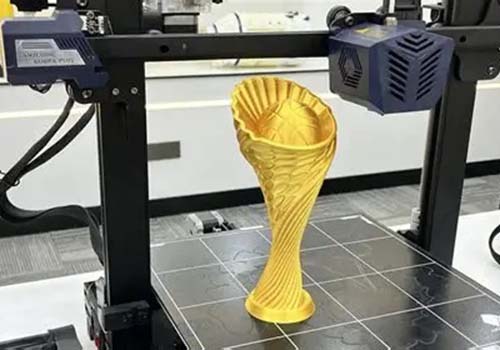
FDM 3D printing—Fused Deposition Modeling—is the most common type. It's what most people think of when they imagine a 3D printer. A nozzle moves, plastic melts, layers build, and a solid object emerges.
But what exactly can you expect from an FDM 3D printing service? How does it work? What materials are available? And how do you choose the right provider?
At Yigu technology, we've printed thousands of parts with FDM. This guide covers everything you need to know—from how it works to what it costs to how to pick the best service for your project.
How Does FDM 3D Printing Work?
The Basic Principle: Melting and Stacking
FDM 3D printing is beautifully simple. A thermoplastic filament feeds into a heated nozzle. The nozzle melts the plastic and deposits it in precise paths. Each layer bonds to the one below. Over time, a 3D object emerges.
Think of it like a hot glue gun controlled by a robot. But much, much more precise.
Step by Step
1. Create a 3D model
Everything starts with a digital design. You create it using CAD software, get it from a 3D scanner, or download it from online repositories like Thingiverse or MyMiniFactory.
2. Slice the model
Specialized software takes your 3D model and slices it into hundreds or thousands of thin layers. Each layer becomes a set of instructions for the printer. Layer thickness typically ranges from 0.1 mm to 0.4 mm. Thinner layers = more detail = longer print times.
3. Load the filament
The printer is loaded with a spool of thermoplastic filament. The most common types:
- PLA: Easy to print, biodegradable, great for prototypes
- ABS: Stronger, heat-resistant, needs ventilation
- PETG: Tough, slightly flexible, chemical-resistant
4. Start printing
The filament feeds into a heated nozzle. Temperature is precisely controlled:
- PLA: 180-220°C
- ABS: 220-250°C
- PETG: 220-250°C
The nozzle moves in a pre-programmed path, extruding melted plastic onto the build platform. Each layer is deposited, cools, and solidifies almost immediately.
5. Build layer by layer
The platform lowers slightly after each layer. For a part 50 mm tall with 0.2 mm layers, the printer deposits 250 layers to complete the object.
6. Remove and finish
When printing finishes, the part is removed from the platform. Support structures may need to be removed. Post-processing like sanding or painting can follow.
What Are the Advantages of FDM 3D Printing?
Cost-Effective
FDM is the most affordable 3D printing technology. Printers start under $200. Materials run $15-50 per kilogram. For prototypes and functional parts, it's hard to beat.
Wide Material Selection
From basic PLA to engineering-grade nylon and flexible TPU, FDM offers more material options than any other technology. Each brings different properties:
- PLA: Easy, biodegradable, good for prototypes
- ABS: Strong, heat-resistant, for functional parts
- PETG: Tough, durable, for mechanical applications
- TPU: Flexible, rubber-like, for gaskets and seals
- Nylon: Very strong, wear-resistant, for moving parts
- Polycarbonate: Extremely strong, high temperature
Large Part Capability
FDM printers can be huge. Industrial machines print parts over a meter long. Even desktop printers handle reasonably large objects. For big prototypes or components, FDM is often the only option.
Good Strength
Properly printed FDM parts are strong. Layer bonding is excellent with the right settings. For many applications, FDM parts function perfectly as end-use components, not just prototypes.
Fast Turnaround
For simple parts, FDM prints quickly. A small bracket might take an hour. A medium prototype might print overnight. Compared to waiting weeks for machined parts, FDM delivers in days.
What Are the Limitations?
Visible Layer Lines
FDM prints show layer lines. It's inherent to the process. For functional parts, this rarely matters. For aesthetic parts, post-processing (sanding, painting) can smooth them out.
Lower Detail Than Resin
If you need tiny features—like 0.1 mm details in jewelry—SLA or SLS are better. FDM nozzles have minimum sizes, typically 0.2-0.4 mm. Fine details blur.
Anisotropic Strength
Parts are strongest along layer lines, weaker across them. Design matters. Orient parts to put stress along layers, not across them.
Support Structures
Overhangs need supports. These add material, increase print time, and leave marks where they attach. Good design minimizes supports.
What Materials Are Available for FDM?
| Material | Properties | Best For | Limitations |
|---|---|---|---|
| PLA | Easy to print, biodegradable, smooth finish | Prototypes, decorative items, educational models | Low heat resistance (60°C), brittle |
| ABS | Strong, durable, heat-resistant (100°C) | Functional parts, automotive, electronics | Needs ventilation, prone to warping |
| PETG | Tough, slightly flexible, chemical-resistant | Mechanical parts, outdoor use, containers | Can be stringy, harder to sand |
| TPU | Flexible, rubber-like, abrasion-resistant | Gaskets, seals, soft-touch parts, phone cases | Slower printing, tricky supports |
| Nylon | Very strong, wear-resistant, low friction | Gears, moving parts, industrial components | Absorbs moisture, needs dry storage |
| Polycarbonate | Extremely strong, high temperature (120°C+) | High-stress parts, tooling, protective gear | Needs high temps, prone to warping |
| ASA | Like ABS, but UV-resistant | Outdoor parts, automotive exterior | Similar challenges to ABS |
| Composites | Carbon/glass fiber filled, very stiff | Lightweight structural parts | Abrasive, needs hardened nozzle |
Choose based on what your part needs to do:
- PLA for a desk ornament
- PETG for a functional bracket
- ABS for something that might get warm
- Nylon for a gear that needs to last
- TPU for a flexible seal
How Do You Choose an FDM 3D Printing Service?
Consider Equipment and Technology
Not all FDM printers are equal. Look for providers with:
Industrial-grade machines: They maintain calibration, produce consistent quality, and handle larger builds. Brands like Stratasys, Ultimaker, and Prusa are reliable.
High precision: Positioning accuracy of ±0.01 mm or better means parts fit as designed.
Heated chambers: For materials like ABS and nylon, enclosures prevent warping and improve layer bonding.
Multiple materials: Some printers handle multiple filaments in one print—supports in soluble material, flexible and rigid together.
Look at Material Options
A good service offers:
- Common materials: PLA, ABS, PETG
- Engineering materials: Nylon, polycarbonate, composites
- Specialty materials: TPU, ASA, conductive filaments
- Multiple colors: For aesthetic parts
The wider the selection, the better they can match your requirements.
Check Quality and Examples
Ask to see:
- Sample parts similar to what you're making
- Photos of recent work—look for surface finish, detail, consistency
- Customer reviews on independent platforms
Evaluate Turnaround and Pricing
- Standard turnaround: Usually 3-7 days
- Expedited options: 24-48 hours for rush jobs
- Pricing transparency: Clear cost breakdown by material, print time, and post-processing
Read Customer Reviews
Reviews reveal:
- Print quality: Do parts match expectations?
- Reliability: Do they deliver on time?
- Communication: Are they responsive when issues arise?
- Problem resolution: How do they handle mistakes?
Look for patterns, not just isolated comments.
What Questions Should You Ask a Service Provider?
- What technologies do you offer? (FDM, SLA, SLS, etc.)
- What materials can you print in?
- What file formats do you accept? (STL, OBJ, STEP, etc.)
- What's your typical turnaround time?
- How much will it cost? (Get a detailed quote)
- Do you offer design review or optimization?
- What post-processing do you include?
- Can you share examples of similar work?
- What's your quality control process?
- How do you handle failed prints or issues?
What Does FDM 3D Printing Cost?
Factors Affecting Price
- Material: PLA is cheapest. Nylon and composites cost more.
- Print time: Longer prints cost more. Complex geometries take longer.
- Part size: More material = higher cost.
- Infill: Higher infill uses more material.
- Supports: Add material and removal time.
- Post-processing: Sanding, painting, assembly add cost.
Typical Price Ranges
| Part Size | Simple | Complex |
|---|---|---|
| Small (fist-sized) | $20-50 | $50-100 |
| Medium (shoe-box) | $50-200 | $100-400 |
| Large (backpack-sized) | $200-500 | $400-1,000+ |
Most services provide instant online quotes. Upload your file and see.
Yigu Technology's View
At Yigu technology, FDM 3D printing is one of our most requested services. Here's what we've learned:
FDM is versatile. It handles everything from quick prototypes to functional production parts. The material range is unmatched.
Quality depends on the operator. A good printer in skilled hands produces excellent parts. Calibration, material selection, and design optimization all matter.
Design for FDM. Orientation, wall thickness, and support placement affect strength and cost. We help clients optimize their designs before printing.
Not all materials are equal. We guide clients to the right choice based on their application—PLA for prototypes, PETG for durability, nylon for moving parts.
We've printed parts for every industry. Automotive brackets, medical device housings, consumer product prototypes, industrial tooling. Each has different requirements. We match process to purpose.
Conclusion
FDM 3D printing services offer a powerful combination of affordability, material variety, and capability:
- Cost-effective: The most affordable 3D printing technology
- Wide material selection: From PLA to nylon to composites
- Large parts: Print objects over a meter long
- Good strength: Functional parts, not just prototypes
- Fast turnaround: Days, not weeks
The process is straightforward:
- Create or download a 3D model
- Choose a service provider
- Upload your file and select material
- Get a quote
- Approve and receive your part
Choosing the right provider matters. Look for:
- Industrial-grade equipment
- Wide material options
- Good reviews and examples
- Clear pricing and communication
- Experience with similar projects
Whether you're prototyping a new product, creating custom parts, or replacing broken components, FDM 3D printing puts manufacturing power in your hands.
FAQ
What types of files are required for FDM 3D printing?
STL (Standard Tessellation Language) is the most common format, supported by nearly all services. It contains geometric information but not color or material data. OBJ can store additional information like color. STEP files preserve more design data and are good for complex engineering parts. Check with your provider before uploading.
How much does FDM 3D printing service usually cost?
Costs vary by size, complexity, and material. Small simple parts start at $20-50. Medium parts range $50-200. Large complex projects can cost $200-1,000+. Most services provide instant online quotes based on your file. Factors affecting price include material, print time, infill, supports, and post-processing.
Can FDM 3D printing be used for mass production?
For certain applications, yes. FDM excels at low-to-medium volumes (tens to hundreds of parts) where tooling costs can't be justified. It's also ideal for highly customized or complex parts. For high-volume simple parts (thousands+), injection molding is faster and cheaper. FDM fills the gap between prototyping and mass production.
What's the strongest FDM material?
Polycarbonate offers the highest strength among common FDM materials, with tensile strength around 60-70 MPa and high impact resistance. Nylon (especially glass-filled) provides excellent strength and wear resistance. PETG offers good strength with easier printing. Choose based on your specific requirements—strength, temperature resistance, flexibility, or cost.
How accurate are FDM printed parts?
Accuracy depends on printer quality and calibration. Industrial FDM printers achieve ±0.1-0.2 mm tolerance. Desktop printers typically range ±0.3-0.5 mm. Factors affecting accuracy include thermal expansion, layer height, and part design. Critical dimensions can be machined after printing for tighter tolerances.
Do FDM parts need post-processing?
It depends on application. Many functional parts work fine as-printed. For smoother surfaces, sanding with progressively finer grits works well. Painting requires primer first. Vapor smoothing (for ABS and some other materials) creates glossy finishes. Support structures always need removal—some snap off, some require cutting.
Contact Yigu Technology for Custom Manufacturing
Ready to use FDM 3D printing for your project? Yigu technology specializes in custom manufacturing with all major technologies and materials.
We offer:
- Free quotes within 24 hours—just upload your file
- Design review to optimize for printability and cost
- Industrial-grade equipment for consistent quality
- Wide material selection—PLA, ABS, PETG, nylon, TPU, composites
- Post-processing—sanding, painting, assembly
- Volume flexibility—prototypes to production runs
Contact us to discuss your project. Tell us what you're making and what it needs to do. We'll help bring your design to life.