Introduction
3D printing—additive manufacturing—has fundamentally changed mechanical engineering. It's not just a new tool; it's a new way of thinking about design and production.
Instead of subtracting material from a larger block (milling, carving), 3D printing adds material layer by layer. This simple difference unlocks possibilities that were previously impossible:
- Complex geometries that machining can't reach
- Lightweight lattice structures that save material and weight
- Custom parts tailored to specific needs
- Rapid prototypes that compress development cycles
From aerospace components that are 40% lighter to medical implants custom-fit to individual patients, 3D printing is transforming what mechanical engineers can achieve.
At Yigu technology, we've seen this revolution firsthand. This guide explores how 3D printing is changing mechanical engineering—from prototyping to production to complex geometries.
What Is 3D Printing in Mechanical Engineering?
Definition and Basic Concept
3D printing in mechanical engineering creates three-dimensional objects from digital models by adding material layer by layer.
This contrasts with traditional subtractive manufacturing:
- Subtractive: Start with a block, remove material (milling, turning, drilling)
- Additive: Start with nothing, add material only where needed
The Process
Step 1: Create a 3D Model
Using CAD software or 3D scanning, engineers create a digital representation of the part.
Step 2: Slice the Model
Specialized software slices the model into thin cross-sectional layers—like the pages of a book.
Step 3: Print
The printer reads the sliced data and deposits material layer by layer. Technologies include:
- FDM: Melts and extrudes thermoplastic filament
- SLS: Laser sinters powdered material
- SLM/DMLS: Laser melts metal powder
- SLA: UV laser cures liquid resin
Step 4: Post-Process
Parts may need support removal, heat treatment, surface finishing.
Significance in Mechanical Engineering
3D printing has brought a paradigm shift:
- Design freedom: No longer constrained by traditional manufacturing limits
- Rapid prototyping: From design to physical part in hours, not weeks
- On-demand manufacturing: Print parts as needed—reduce inventory, waste
- Customization: Each part can be unique at no extra cost
- Complex geometries: Lattice structures, internal channels, organic shapes
How Is 3D Printing Used in Mechanical Engineering?
Prototyping
Prototyping is where 3D printing first made its mark—and it remains essential.
Before 3D printing:
- Creating a prototype involved multiple steps: machining, casting, assembly
- Automotive prototypes took months
- Costly, time-consuming, high material waste
With 3D printing:
- A physical prototype in hours or days
- Test form, fit, function early in design cycle
- Iterate quickly based on results
- Reduce overall development time and cost
Real example: Boom Supersonic uses 3D printing to build prototypes of supersonic aircraft components—rapid iteration, faster development.
Custom Parts Manufacturing
3D printing excels at producing parts tailored to specific requirements.
Medical field:
- Prosthetics custom-fit to patient anatomy
- Scanned data of residual limb creates precise 3D model
- Printed prosthetic provides comfortable, accurate fit
- Far better than mass-produced alternatives
Mechanical manufacturing:
- Custom gears, connectors for specialized machinery
- One-of-a-kind parts produced on-demand
- No expensive tooling, no minimum orders
- Reduced inventory—print when needed
Complex Geometric Structures
Traditional methods struggle with:
- Intricate internal channels
- Lattice structures
- Non-standard shapes
3D printing handles them with ease.
Turbine blades:
- Complex cooling channels inside blades
- Crucial for high-temperature performance
- Impossible to machine, easy to print
Weight reduction:
- Studies show 3D-printed parts with complex geometries can be up to 40% lighter than traditionally manufactured counterparts
- Maintain same or better mechanical properties
- Critical for aerospace where every gram counts
Mechanical molds:
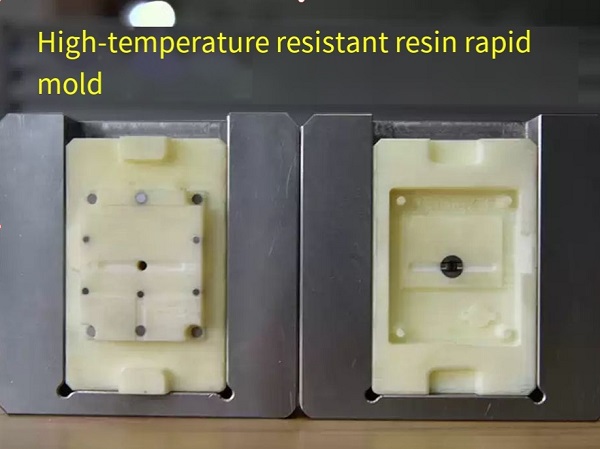
- Complex cavities and undercuts
- Enable parts with complex outer shapes
- Previously difficult or impossible to manufacture
What Are the Advantages Over Traditional Methods?
Design Freedom
Traditional manufacturing limits design:
- Machining can't reach internal cavities
- Casting requires draft angles
- Molds restrict complexity
3D printing removes these limits:
- Internal channels, lattice structures, organic shapes
- Design for function, not manufacturability
Speed
Prototyping:
- Traditional: Weeks to months
- 3D printing: Hours to days
Production:
- Small batches: Days instead of weeks
- Design changes: Update digital file, print immediately
Customization
Each part can be different at no extra cost:
- Patient-specific implants
- Custom machinery components
- Personalized consumer products
Complexity
Complex geometries add no cost in 3D printing:
- Lattice structures for lightweight strength
- Internal cooling channels
- Organic, topology-optimized shapes
Material Efficiency
3D printing uses only material that becomes the part:
- Waste as low as 5-10%
- Traditional machining can waste 80-90%
- Unused powder recycled
On-Demand Production
Print parts when needed:
- No inventory
- No warehousing
- No obsolescence
What Are the Challenges?
Equipment Cost
Industrial 3D printers are expensive:
- Metal printers: $500,000-1.5 million
- Industrial polymer: $50,000-500,000
- Desktop printers affordable but limited
Material Cost
Metal powders cost significantly more than traditional materials:
- Titanium: $300-600/kg
- Aluminum: $50-150/kg
- Plastic filaments: $20-50/kg
Speed for High Volumes
3D printing is fast for one part, slow for a thousand. For mass production, traditional methods remain faster.
Build Size
Most printers have build volumes under 400 x 400 x 400 mm. Large parts must be printed in sections and joined.
Material Properties
While improving, some 3D-printed materials don't yet match traditionally manufactured ones for the most demanding applications.
Post-Processing
Most parts need finishing:
- Support removal
- Surface treatment
- Heat treatment
- Machining
Yigu Technology's Perspective
At Yigu technology, we've seen 3D printing transform mechanical engineering:
Prototyping is essential. Before committing to expensive tooling, test your designs with 3D printing. Iterate, refine, get it right.
Customization is a competitive advantage. For products where personalization matters, 3D printing delivers.
Complexity is free. Designs that would be prohibitively expensive with traditional methods become accessible.
Applications we serve:
- Aerospace components with complex internal features
- Medical implants customized to patient anatomy
- Automotive parts for prototyping and small batches
- Industrial machinery custom components
- Robotics lightweight structures
3D printing isn't replacing traditional manufacturing. It's taking its place alongside it—doing what it does best, enabling what was impossible before.
Conclusion
3D printing is revolutionizing mechanical engineering through:
- Prototyping: From weeks to hours—faster iteration, better designs
- Custom parts: Tailored to specific needs, no tooling costs
- Complex geometries: Internal channels, lattice structures, organic shapes
- Weight reduction: Up to 40% lighter without sacrificing strength
- On-demand production: No inventory, no waste
Applications across:
- Aerospace: Lightweight components, complex cooling channels
- Medical: Custom implants, prosthetics
- Automotive: Rapid prototyping, custom parts
- Industrial: Specialized machinery components
Compared to traditional methods:
- Wins for complexity, customization, small batches
- Challenges for high volumes, material costs, build size
3D printing isn't the future of mechanical engineering—it's the present. The question isn't whether to use it, but where it fits in your workflow.
FAQ
What are the most suitable materials for 3D printing in mechanical engineering?
- Metals: Titanium (high strength-to-weight, corrosion-resistant), aluminum (lightweight, thermally conductive), stainless steel (high strength, durable)
- Plastics: ABS (tough, heat-resistant for functional prototypes), PLA (biodegradable, good dimensional stability)
- Composites: Enhanced properties combining multiple materials
Choose based on application requirements—strength, weight, heat resistance, cost.
How to ensure the accuracy and quality of 3D-printed parts?
- Optimize print parameters: Layer height, printing speed, temperature
- Use proper calibration: Ensure printer is correctly set up
- Post-process appropriately: Sanding, polishing, heat treatment
- Test and iterate: Print samples, validate settings
- Use high-quality printers with accurate motion systems
Can 3D printing completely replace traditional manufacturing methods in mechanical engineering?
No. 3D printing and traditional manufacturing complement each other:
- 3D printing excels at: prototyping, custom parts, small batches, complex geometries
- Traditional methods excel at: mass production, very large parts, applications requiring specific material properties
Most successful manufacturers use both—each for what it does best.
How much weight can 3D printing save in mechanical components?
Studies show 3D-printed parts with optimized geometries can be up to 40% lighter than traditionally manufactured counterparts while maintaining similar mechanical properties. In aerospace, this translates directly to fuel savings and increased payload capacity.
Is 3D printing cost-effective for mechanical engineering projects?
For small batches (1-100 parts), yes—no tooling costs make it economical. For high volumes (1,000+ parts), traditional methods are usually cheaper. The sweet spot is complexity, customization, and moderate volume.
How long does it take to 3D print mechanical parts?
- Simple parts: hours
- Complex parts: days
- Compare to weeks or months for traditional prototyping
Contact Yigu Technology for Custom Manufacturing
Ready to leverage 3D printing for your mechanical engineering projects? Yigu technology specializes in custom manufacturing with all major 3D printing technologies.
We offer:
- Free quotes within 24 hours—just send your CAD file
- Design optimization for manufacturability
- Material expertise—choosing the right option
- Printing—on industrial equipment with strict quality control
- Post-processing—finishing to your specifications
- Production runs—from prototypes to small batches
Contact us to discuss your project. Tell us what you're making and what it needs to do. We'll help bring your design to life.