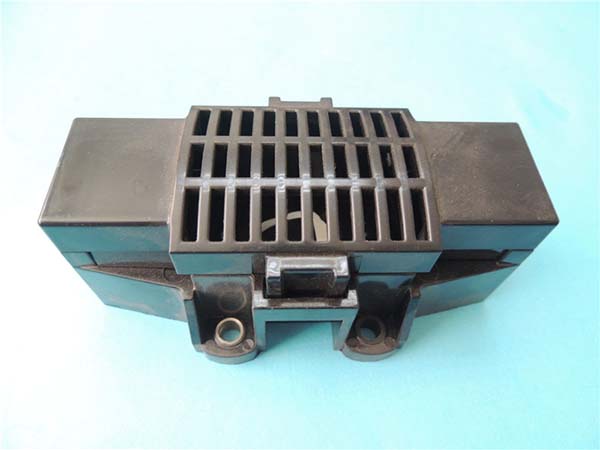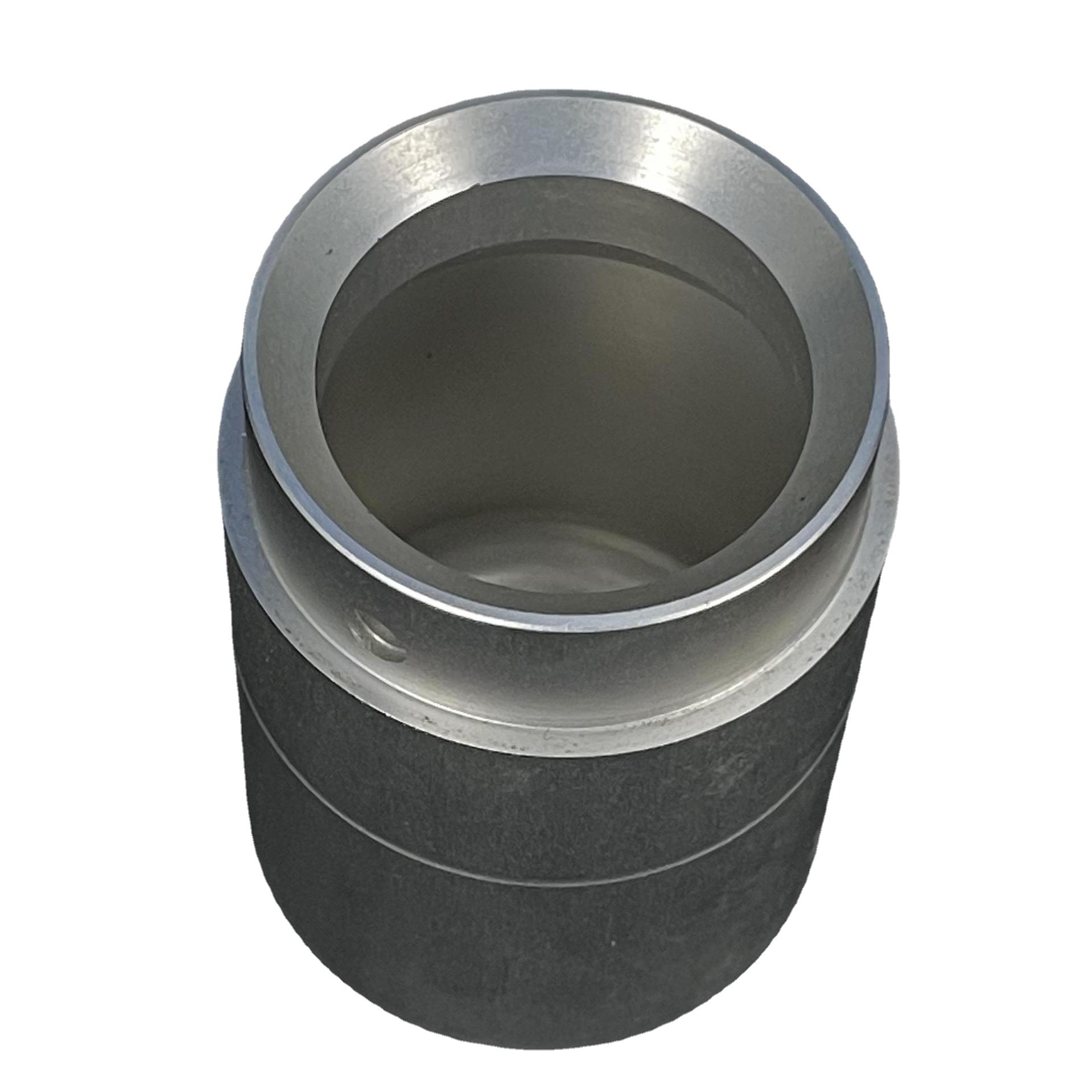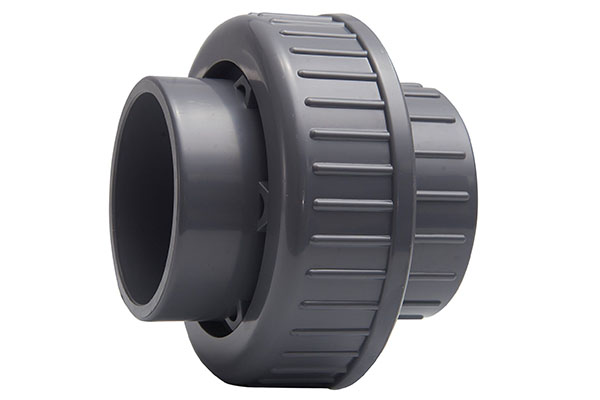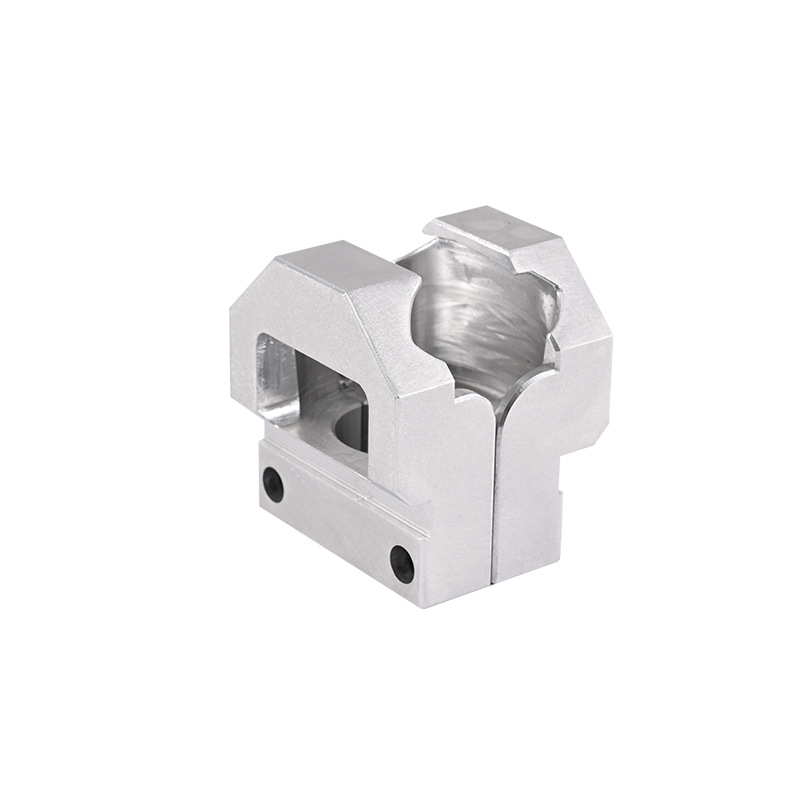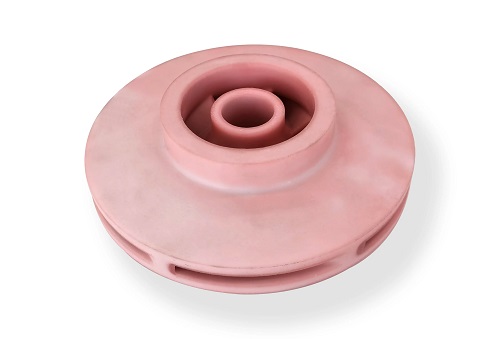
Multi Jet Fusion (MJF) is an advanced 3D printing technology that uses inkjet arrays and thermal fusing to create high-quality nylon parts with excellent mechanical properties and surface finish—faster and more cost-effectively than many alternatives.
Introduction to Multi Jet Fusion
Multi Jet Fusion (MJF) , developed by Hewlett-Packard (HP) , represents a significant advancement in additive manufacturing. It combines the speed and precision of inkjet printing with powder-based fusion to produce parts with complex geometries, smooth surfaces, and minimal post-processing.
Since its introduction, MJF has been widely adopted across aerospace, automotive, and healthcare industries. Why? Because it delivers the speed of polymer printing with the quality needed for functional prototypes and end-use parts. Unlike some 3D printing methods that trade quality for speed or vice versa, MJF delivers both.
This guide explains how MJF works, how it compares to other technologies, its applications, and what you need to know to leverage it for your projects.
What Is Multi Jet Fusion and How Does It Work?
What are the basic principles?
At its core, MJF is an additive manufacturing process that builds 3D objects layer by layer using specialized powder materials. The key innovation? Instead of using a laser to sinter powder point by point (like SLS), MJF uses inkjet print heads to selectively apply fusing agents and detailing agents to the powder bed.
Here's the simplified process: A thin layer of powder spreads across the build platform. Print heads pass over and deposit agents where solidification is desired. Then the platform heats up, fusing the treated areas into solid material. The cycle repeats until the part is complete.
The combination of multiple jets applying agents with precise heat control ensures high-quality prints with fine details, excellent surface finishes, and strong mechanical properties.
How does the printing process actually work?
Step 1: Powder Bed Preparation
A thin layer of nylon powder (or other compatible material) spreads evenly across the build platform using a roller mechanism. This layer—typically 80-100 microns thick—forms the base for printing.
Step 2: Inkjet Head Operation
Inkjet print heads pass over the powder bed and selectively deposit two types of agents:
- Fusing agents: These help the powder fuse together when heated. They're deposited exactly where solid material is desired.
- Detailing agents: These are deposited at the edges of the fusion area. They modify the thermal behavior to create sharper boundaries and finer surface resolution.
Think of it like printing—but instead of colored ink on paper, you're printing chemical agents that control where powder becomes solid.
Step 3: Heating and Fusing
The build platform heats to around 170°C (338°F) . Areas treated with fusing agent absorb more energy and melt, bonding together into solid material. Areas without fusing agent remain as loose powder.
The detailing agent plays a crucial role here—it helps define crisp edges and smooth surfaces by moderating heat transfer at part boundaries.
Step 4: Layer Repetition
After each layer fuses, the platform lowers slightly—typically by one layer thickness. A new powder layer spreads across the surface. The process repeats for each new layer, building the part from bottom to top.
Step 5: Cooling and Removal
Once printing completes, the part cools inside the machine. This cooling period is important—too fast and parts can warp. After cooling, the remaining unused powder is removed, revealing the finished part.
Because of MJF's precise control, minimal post-processing is required—often just cleaning off excess powder.
What makes MJF's material deposition special?
MJF's success lies in its precise deposition of agents. Each layer is carefully built to ensure it adheres to the previous layer, creating strong, durable, high-resolution parts.
The layer-by-layer approach combined with fine nylon powders allows MJF to achieve details and finishes that rival or exceed other powder-based methods. The ability to control fusion at a voxel level (3D pixel) enables features like:
- Sharp edges and fine details
- Smooth surfaces without visible layer lines
- Consistent mechanical properties throughout the part
- Complex internal geometries impossible to mold
How Does MJF Compare to Other 3D Printing Technologies?
MJF vs. Fused Deposition Modeling (FDM)
FDM melts thermoplastic filament and extrudes it through a nozzle, building parts layer by layer.
| Aspect | MJF | FDM |
|---|---|---|
| Surface Finish | Smooth, minimal layer lines | Visible layer lines, rough texture |
| Resolution | High (80-100 micron layers) | Moderate (100-300 micron layers) |
| Complex Geometries | Excellent—internal features, lattices | Limited—supports needed for overhangs |
| Mechanical Properties | Consistent, isotropic | Anisotropic (weaker between layers) |
| Post-Processing | Minimal—just powder removal | Often requires sanding, smoothing |
| Speed | Fast—whole layers fused at once | Slow—point-by-point extrusion |
MJF wins when: You need smooth surfaces, complex geometries, or consistent mechanical properties. FDM wins when: Cost is the primary concern or you need very large parts.
MJF vs. Stereolithography (SLA)
SLA uses a laser to cure liquid resin into solid parts.
| Aspect | MJF | SLA |
|---|---|---|
| Surface Finish | Smooth | Very smooth |
| Resolution | High | Very high (can be finer than MJF) |
| Materials | Engineering nylons | Photopolymer resins |
| Mechanical Properties | Durable, impact-resistant | Can be brittle depending on resin |
| Post-Processing | Minimal—powder removal | Washing, curing required |
| Speed | Faster for production | Slower, especially for multiple parts |
MJF wins when: You need durable, functional parts with engineering properties. SLA wins when: You need the absolute finest detail or transparent/clear parts.
MJF vs. Selective Laser Sintering (SLS)
SLS uses a laser to sinter powdered material, binding it into solid parts. This is MJF's closest competitor.
| Aspect | MJF | SLS |
|---|---|---|
| Fusing Method | Chemical agents + heat | Laser sintering |
| Speed | Faster—whole layers fused at once | Slower—point-by-point laser scanning |
| Surface Finish | Smoother | Rougher, more granular |
| Mechanical Properties | Excellent, consistent | Excellent |
| Material Options | Growing, primarily nylons | Wide range of powders |
| Cost per Part | Lower for complex parts | Higher for complex geometries |
| Build Volume | Good (up to 380x280x380mm) | Varies, some larger available |
MJF wins when: You need faster production, smoother surfaces, or lower cost per part for complex geometries. SLS wins when: You need specific materials not available in MJF or have existing SLS workflows.
Summary comparison table
| Technology | Speed | Surface Finish | Complexity | Material Properties | Post-Processing | Cost per Part |
|---|---|---|---|---|---|---|
| MJF | Fast | Smooth | Excellent | Excellent | Minimal | Low-Moderate |
| SLS | Moderate | Rough | Good | Excellent | Moderate | Moderate |
| SLA | Slow | Very Smooth | Good | Moderate | Significant | Moderate-High |
| FDM | Slow | Rough | Limited | Moderate | Significant | Low |
What Materials Work With MJF?
Primary materials
Currently, nylon-based materials dominate MJF printing due to their compatibility with the fusing and detailing agents.
Nylon 12 (PA12) : The workhorse material. Offers excellent mechanical properties, durability, and chemical resistance. Used for functional prototypes, end-use parts, and production components.
Nylon 11 (PA11) : More flexible than PA12 with higher impact resistance. Bio-based in some formulations. Used for parts requiring flexibility and toughness—clips, living hinges, snap-fits.
Nylon 12 with Glass Beads (PA12 GB) : Filled with glass beads for increased stiffness and heat resistance. Used for structural applications requiring rigidity.
Nylon 12 with Mineral Filler : Enhanced thermal and electrical properties. Used for specialized applications.
Material properties
| Property | Nylon 12 | Nylon 11 | PA12 GB |
|---|---|---|---|
| Tensile Strength | 48 MPa | 48 MPa | 48 MPa |
| Elongation at Break | 20% | 45% | 4% |
| Flexural Modulus | 1500 MPa | 1400 MPa | 4800 MPa |
| Heat Deflection Temp | 95°C | 85°C | 150°C |
| Impact Resistance | Good | Excellent | Moderate |
Future material developments
Research continues to expand MJF material options. TPU (flexible) materials are becoming available. Flame-retardant grades serve aerospace and electronics. High-temperature nylons push operating limits. As adoption grows, material choice will expand.
What Can You Create With MJF?
Aerospace applications
MJF creates lightweight, strong components for aerospace. Complex geometries help reduce part weight while maintaining strength—critical for aircraft structures and engine components.
Case Study: Aerospace Innovation
A leading aerospace manufacturer used MJF to produce engine components with intricate internal cooling channels. This approach reduced development time by 50% compared to traditional manufacturing. The components met all performance criteria and moved quickly into testing.
Additional aerospace applications:
- Ducting with complex internal paths
- Brackets optimized for weight reduction
- Airflow components with lattice structures
- Tooling for composite layup
Automotive applications
The automotive sector benefits from MJF's ability to produce functional prototypes and end-use parts quickly.
Case Study: Automotive Efficiency
A well-known automotive manufacturer used MJF to redesign a suspension bracket, optimizing for weight reduction without compromising strength. Results: a 20% weight reduction, improving fuel efficiency and handling dynamics.
Additional automotive applications:
- Instrument panels and interior components
- Under-hood parts (with appropriate materials)
- Custom fixtures for assembly lines
- Spare parts on demand
- Ventilation components with complex geometry
Healthcare applications
In healthcare, MJF enables creation of custom prosthetics, orthotics, and dental applications tailored to individual patients.
Case Study: Medical Advancements
A healthcare startup used MJF to produce customized knee braces for post-surgery recovery. By tailoring braces based on patient-specific data from 3D scans, the company enhanced comfort and effectiveness—improving patient recovery time and satisfaction.
Additional healthcare applications:
- Anatomical models for surgical planning
- Surgical guides and instrumentation
- Prosthetic sockets customized for patients
- Orthotic insoles with variable stiffness
- Medical device housings
Industrial and consumer applications
Beyond these industries, MJF serves many applications:
- Enclosures and housings for electronics
- Connectors and cable management
- Grips and ergonomic components
- Sporting goods—custom bike parts, protective gear
- Consumer products—eyewear frames, accessories
- Packaging and display components
What Are the Advantages of MJF?
Speed
MJF is fast. By fusing entire layers at once rather than tracing each point with a laser, it achieves production speeds that outpace SLS and other powder-based methods. For multiple parts in a single build, the speed advantage compounds.
Surface finish
Parts come out with smooth surfaces and fine details. The detailing agent creates crisp edges and sharp features. Visible layer lines are minimal—often invisible to the naked eye. This reduces or eliminates post-processing for many applications.
Mechanical properties
MJF parts exhibit excellent mechanical properties with isotropic behavior—similar strength in all directions. This contrasts with FDM, where layer adhesion creates weak points. Nylon materials deliver toughness, durability, and chemical resistance.
Complex geometries
Like other powder-based methods, MJF requires no supports for overhangs. Unfused powder supports the part during printing. This enables complex internal features, lattices, and geometries impossible to mold or machine.
Minimal post-processing
Most parts just need powder removal—done with media blasting or compressed air. No support removal, no extensive sanding, no chemical baths. This saves time and labor compared to SLA or FDM.
Cost-effectiveness
For complex parts and production runs, MJF often delivers lower cost per part than alternatives. Faster build times mean more parts per day. No supports mean less waste. Minimal post-processing means less labor.
What Are the Limitations of MJF?
Material restrictions
Currently, MJF is primarily limited to nylon-based materials. While these cover many applications, you can't print metals, ceramics, or the wide range of materials available in FDM or SLS. Material options are expanding but still limited compared to some technologies.
Equipment cost
Industrial MJF systems represent a significant investment. While cost per part can be low, the upfront equipment cost puts MJF out of reach for many small businesses and individuals. Service bureaus bridge this gap.
Build volume
Typical MJF build volumes are 380 x 280 x 380 mm—adequate for many parts but limiting for large components. Very large parts must be split and assembled.
Cooling time
After printing, parts must cool gradually inside the machine. This cooling period can add hours to total production time. While the printer can work on another job during cooling, it affects workflow.
Yigu Technology's Perspective
As a non-standard plastic and metal products custom supplier, Yigu Technology views MJF as a powerful tool in our additive manufacturing arsenal. Its combination of speed, quality, and mechanical properties makes it ideal for many client projects.
For functional prototypes that need to survive real-world testing, MJF delivers. For end-use parts requiring durability and aesthetics, MJF often outperforms alternatives. For complex geometries that challenge other methods, MJF handles them with ease.
We've seen MJF transform how clients approach product development—iterating faster, testing more thoroughly, and moving to production with confidence. As material options expand and costs moderate, we expect MJF to play an even larger role in custom manufacturing.
Conclusion
Multi Jet Fusion represents a significant advance in polymer 3D printing. Its ability to produce high-quality, durable parts with excellent surface finish—faster and more cost-effectively than many alternatives—makes it invaluable across industries.
Key takeaways:
- MJF uses inkjet arrays to deposit fusing and detailing agents on powder beds
- Thermal energy fuses treated areas into solid parts layer by layer
- Nylon materials dominate—PA12, PA11, glass-filled variants
- Advantages include speed, surface finish, mechanical properties, and minimal post-processing
- Applications span aerospace, automotive, healthcare, and consumer products
- Compared to SLS, MJF offers faster builds and smoother surfaces
- Compared to FDM and SLA, MJF delivers better mechanical properties and less post-processing
For functional prototypes and end-use parts requiring engineering properties and aesthetic quality, MJF deserves serious consideration.
FAQ
Q1: What are the main advantages of Multi Jet Fusion (MJF) 3D printing?
A: MJF offers high speed and precision, ability to produce complex geometries without sacrificing surface finish or strength, minimal post-processing, and versatility for both prototypes and end-use parts. Parts exhibit excellent mechanical properties with isotropic behavior.
Q2: Is Multi Jet Fusion (MJF) suitable for large-scale production?
A: While MJF is often used for rapid prototyping and small-batch production, it can scale for larger runs. It's particularly effective for parts with intricate designs that other technologies struggle with. For very high volumes, it may combine with traditional manufacturing methods.
Q3: What materials can be used with Multi Jet Fusion (MJF)?
A: Currently, nylon-based materials dominate—Nylon 12 (PA12), Nylon 11 (PA11), glass-filled nylons, and mineral-filled variants. These offer excellent mechanical properties, durability, and flexibility. TPU and other materials are becoming available as technology develops.
Q4: How does MJF compare to Selective Laser Sintering (SLS)?
A: MJF is generally faster because it fuses entire layers at once rather than scanning point by point. Surface finish is typically smoother. Cost per part can be lower for complex geometries. Material options are currently more limited in MJF, but expanding.
Q5: Do MJF parts need post-processing?
A: Minimal. Most parts just need powder removal via media blasting or compressed air. No support removal, no extensive sanding, no chemical baths. This saves significant time and labor compared to SLA or FDM.
Q6: What layer thickness does MJF use?
A: Typical layer thickness is 80-100 microns (0.08-0.1mm). This balances speed with resolution, producing smooth surfaces while maintaining reasonable build times.
Q7: Can MJF produce flexible parts?
A: Yes, with appropriate materials. Nylon 11 offers more flexibility than Nylon 12. TPU (thermoplastic polyurethane) materials are becoming available for MJF, enabling rubber-like parts.
Q8: What's the typical lead time for MJF parts?
A: Actual print time depends on part height and build density. However, MJF's speed advantage means complex parts often print in hours rather than days. Including cooling and post-processing, many parts ship within 1-3 business days.
Contact Yigu Technology for Custom Manufacturing
Ready to explore Multi Jet Fusion for your next project? At Yigu Technology, we combine deep expertise with state-of-the-art MJF capabilities. Whether you need functional prototypes, end-use parts, or small-batch production, our team delivers precision results with the speed and quality MJF enables. Contact us today for a consultation—let's bring your designs to life with Multi Jet Fusion.