Introduction
Manufacturing molds and tooling traditionally takes weeks or months. This bottleneck slows product development, delays market entry, and increases costs. Rapid tooling systems change this. They enable the quick production of molds, dies, and tooling components—bridging the gap between product design and mass production. The global rapid prototyping and tooling market is projected to grow from $12.8 billion in 2023 to $23.3 billion by 2028 (MarketsandMarkets)—a CAGR of 12.7%. This growth reflects the rising importance of rapid tooling across industries. This guide explains what rapid tooling systems are, how they work, their applications, and why you need them.
What Are Rapid Tooling Systems?
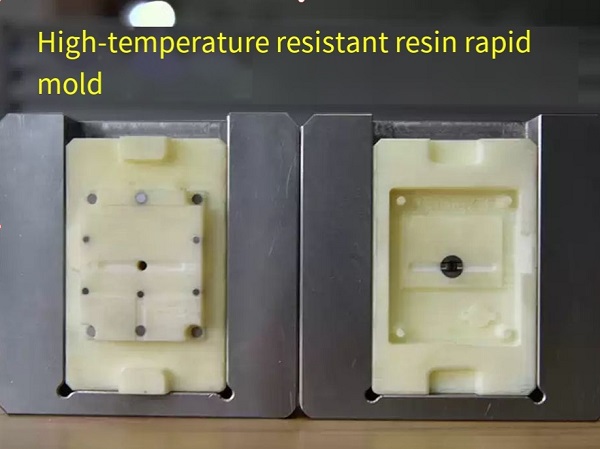
Rapid tooling systems (RT) are techniques and processes used to create molds, dies, and tooling components significantly faster than traditional methods. They bridge the gap between product design and mass production, enabling companies to quickly test and validate product concepts before large-scale manufacturing.
How Do Rapid Tooling Systems Work?
Rapid tooling integrates digital design, advanced manufacturing, and material processing.
Design Phase
3D CAD Modeling: The process begins with a 3D CAD model of the product or part requiring tooling. This digital blueprint contains all geometric and dimensional information. Designers use specialized CAD software to define shape, size, and intricate details—grooves, curves, internal features.
Manufacturing Phase
Two primary technologies are used: 3D printing (additive) and CNC machining (subtractive).
3D Printing (Additive Manufacturing) :
| Technology | Process | Applications |
|---|---|---|
| FDM (Fused Deposition Modeling) | Extrudes melted thermoplastic filament layer by layer | Low-volume tooling components, consumer electronics molds |
| SLS (Selective Laser Sintering) | Laser sinters powdered materials (nylon, metal) | Durable tooling, jigs, fixtures for aerospace |
| SLA (Stereolithography) | UV laser cures liquid resin | High-detail molds, fine features |
CNC Machining (Subtractive Manufacturing) :
| Process | Description | Applications |
|---|---|---|
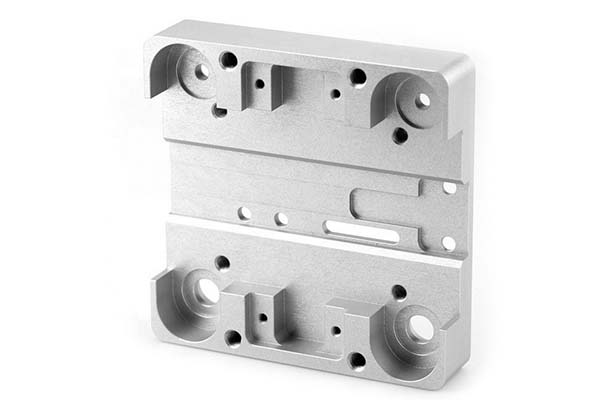
| Milling | Rotating multi-point cutting tools remove material from solid block | Aluminum molds, complex tooling components |
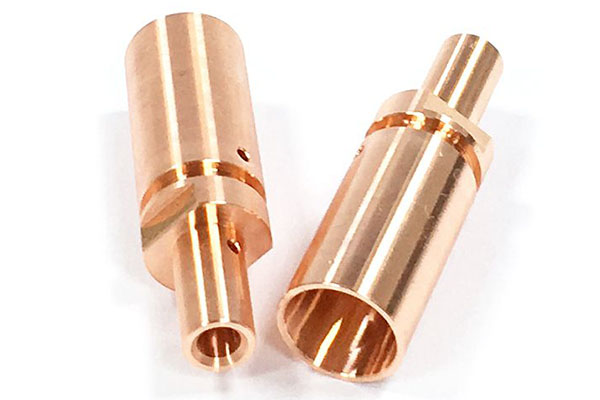
| Turning | Workpiece rotates while cutting tool removes material | Cylindrical components—cores, bushings for injection molds |
Post-Processing Phase
After fabrication, tooling components require finishing:
- Surface finishing: Polishing (smooth mold cavity), sandblasting (texture), electroplating (durability, corrosion resistance)
- Assembly: Aligning and fastening multi-component tooling—cavity inserts, runners, ejector systems—for proper functionality
What Are the Key Differences Between 3D Printing and CNC Machining in Rapid Tooling?
| Aspect | 3D Printing | CNC Machining |
|---|---|---|
| Material Usage | Additive—less waste | Subtractive—more waste |
| Complexity | Can create highly complex geometries easily | Complex shapes possible but more setup for extremely complex designs |
| Speed (Small Quantities) | Faster | Slower |
| Precision | Good, but limitations for high-precision | High precision, tight tolerances |
What Are the Applications of Rapid Tooling Systems?
Rapid tooling is transforming industries.
Automotive Industry
Prototyping: General Motors used rapid tooling to create engine block prototypes—reducing prototyping time from months to weeks. Faster testing and improvements before mass production.
Custom parts production: Companies using rapid tooling for custom parts reduced costs by up to 30% compared to traditional methods (Society of Automotive Engineers).
Aerospace Industry
Jigs and fixtures: Boeing uses SLS 3D printing to produce lightweight jigs and fixtures—20% reduction in assembly time for some aircraft models. Faster production, lighter components.
Engine components prototyping: Rapid tooling reduced engine component development cycles by an average of 40% (International Aerospace Review).
Electronics Industry
Mold making for consumer electronics: Apple used rapid tooling for tablet casing molds—reducing mold-making time by 50% (from 8–10 weeks to 4–5 weeks), enabling faster market entry.
Custom circuit board fixtures: Companies adopting rapid tooling for custom fixture production improved production efficiency by 35% (Institute of Electrical and Electronics Engineers).
Why Do You Need Rapid Tooling Systems?
Faster Time to Market
Rapid tooling cuts prototyping time by 40–60% . Automotive parts reduced from months to weeks; consumer electronics molds from 8–10 weeks to 4–5 weeks. Faster iteration accelerates market entry.
Cost Reduction
For custom parts and small-scale production, rapid tooling reduces costs by up to 30% compared to traditional methods. Lower upfront tooling costs make prototyping accessible for startups and SMEs.
Design Flexibility
Complex geometries—internal channels, lattice structures, fine details—are easily produced. Designers iterate quickly without costly mold modifications.
Risk Mitigation
Test and validate product concepts before committing to expensive mass-production tooling. Identify and correct design flaws early—when fixes are cheap.
Is Rapid Tooling Cost-Effective for Small-Scale Production?
Yes. Traditional manufacturing often has high upfront costs for tooling setup, especially for complex molds. Rapid tooling—3D printing in particular—produces small-scale parts without expensive mass-production tooling. A study found that using rapid tooling for custom parts in small-scale runs reduced costs by up to 30% compared to traditional methods.
For large-scale production, traditional high-volume methods may achieve better economies of scale. Rapid tooling excels in prototyping, custom parts, and small to medium volumes.
How Does Yigu Technology Approach Rapid Tooling?
As a non-standard plastic and metal products custom supplier, Yigu Technology leverages rapid tooling systems to serve clients efficiently.
We Offer Both Technologies
- 3D printing (FDM, SLA, SLS) for complex molds, fine details, rapid iteration
- CNC machining for high-precision metal tooling, tight tolerances
We Provide Comprehensive Services
From design optimization to post-processing—polishing, sandblasting, electroplating. Our design team optimizes CAD models for rapid tooling production.
We Ensure Quality
Advanced equipment, skilled technicians, and rigorous quality control ensure tooling components meet specifications.
Conclusion
Rapid tooling systems are transforming manufacturing. They enable faster prototyping, lower costs, greater design flexibility, and reduced risk. From automotive engine components to aerospace jigs to consumer electronics molds, rapid tooling accelerates product development and market entry. By integrating digital design, additive and subtractive manufacturing, and post-processing, rapid tooling bridges the gap between concept and mass production—making it essential for modern manufacturing.
Frequently Asked Questions
What industries is rapid tooling systems mainly used in?
Rapid tooling is mainly used in automotive (prototyping, custom parts), aerospace (jigs, fixtures, engine components), and electronics (molds for consumer electronics, circuit board fixtures). It is also applied in medical (customized surgical tools), consumer goods, and other industries requiring fast, flexible tooling.
How much can rapid tooling systems reduce production time?
Rapid tooling significantly reduces production time. Prototyping time can be cut by 40–60% . Consumer electronics mold-making reduced from 8–10 weeks to 4–5 weeks (50% reduction). Automotive prototyping reduced from months to weeks.
Is the cost of rapid tooling systems high for small-scale production?
For small-scale production, rapid tooling costs are relatively low. Traditional methods have high upfront tooling costs. Rapid tooling—especially 3D printing—produces small-scale parts without expensive mass-production tooling. Studies show cost reductions of up to 30% for custom parts in small runs.
What is the difference between rapid tooling and traditional tooling?
Rapid tooling uses additive manufacturing (3D printing) and advanced CNC machining to produce molds in days or weeks—lower upfront cost, greater design flexibility, ideal for prototyping and small volumes. Traditional tooling uses steel molds machined over months—higher upfront cost, longer lead times, ideal for high-volume mass production.
Can rapid tooling produce production-grade molds?
Yes. CNC-machined aluminum molds and SLS-printed metal tooling can produce thousands of parts—suitable for pilot production and medium-volume manufacturing. For extremely high volumes (millions of parts), traditional steel tooling remains the standard.
Contact Yigu Technology for Custom Manufacturing
Ready to accelerate your product development with rapid tooling? Yigu Technology offers 3D printing and CNC machining services for rapid tooling. Our engineers help you select the right technologies and materials for your application. Contact us today to discuss your project.