Introduction
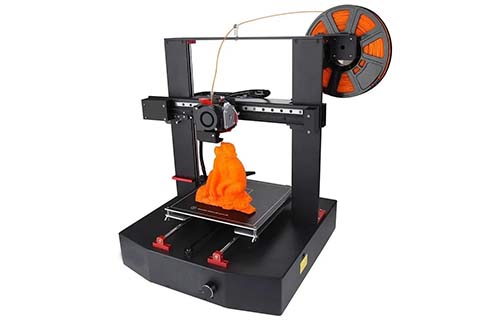
Artificial Intelligence is changing how we approach 3D printing in ways we couldn't imagine just a few years ago. Think of AI as a smart assistant that helps you design better products, catch mistakes before they happen, and even discover new materials. This combination of AI and 3D printing is creating exciting possibilities across industries like healthcare, aerospace, and automotive manufacturing. In this article, we'll explore how AI is revolutionizing 3D printing and what this means for businesses and consumers alike.
Why Does 3D Printing Need AI?
The Traditional Challenges in 3D Printing
Before AI entered the picture, 3D printing faced several frustrating limitations. Designers often spent weeks creating models through trial and error. The printing process itself was unpredictable - you might start a print job, leave it running overnight, and wake up to find it failed halfway through. Material options were limited, and quality control relied heavily on human inspection.
How AI Changes the Game
AI brings intelligence to every stage of 3D printing. It learns from data, predicts outcomes, and makes real-time adjustments. This means fewer failed prints, better quality products, and designs that human minds couldn't create alone.
What Does AI Bring to 3D Printing Design?
Smarter Design Optimization
AI algorithms can now analyze your design requirements and generate optimized 3D models automatically. Instead of manually tweaking parameters, you feed the AI your goals - like "make this part lighter but keep it strong" - and it explores thousands of design possibilities to find the best solution.
Real-world example: A leading aerospace company used AI-driven design optimization for 3D-printed aircraft components. The results were impressive:
- 30% weight reduction in components
- Maintained or improved mechanical performance
- Created complex lattice structures impossible to design manually
This weight reduction directly translates to fuel savings. According to their research, every kilogram saved in aircraft components can reduce fuel consumption by significant amounts over the aircraft's lifetime.
Handling Complex Geometries
AI doesn't get tired or stuck in conventional thinking. It can generate intricate internal structures, organic shapes, and lightweight lattices that human designers would struggle to conceptualize. This expands what's possible with 3D printing and opens doors for innovation.
Can AI Really Improve Print Quality?
Real-Time Process Monitoring
One of the most valuable applications of AI in 3D printing is process monitoring. Modern 3D printers equipped with sensors collect massive amounts of data during printing:
- Cameras capture layer-by-layer images
- Temperature sensors monitor heat distribution
- Vibration sensors detect mechanical issues
AI analyzes this data in real-time, spotting anomalies that human eyes would miss.
How AI Prevents Print Failures
When the AI detects something wrong, it takes immediate action. For example:
- If a specific area gets too hot, the system adjusts heating parameters
- If layer adhesion looks weak, it modifies printing speed
- If the print head shows unusual vibration, it recalibrates on the fly
Data point: Research shows that AI-based process monitoring can reduce defect rates in 3D printing by up to 50%. This is huge for industries like healthcare and automotive, where product reliability isn't optional - it's critical.
Case Study: Medical Implants
A medical device company implemented AI monitoring for 3D-printed surgical implants. Before AI, they experienced about 15% rejection rate due to microscopic defects. After integrating AI monitoring, rejections dropped to under 5%. More importantly, surgeons reported better fitting implants with fewer complications during surgery.
Is AI Helping Create Better 3D Printing Materials?
Predicting Material Behavior
Material science traditionally moves slowly - researchers test one combination at a time, waiting for results. AI speeds this up dramatically. Machine learning models analyze chemical compositions and predict how materials will behave during 3D printing.
This means researchers can:
- Screen hundreds of material candidates virtually
- Predict printing success before mixing anything
- Identify promising materials for specific applications
Developing New Materials
AI isn't just predicting - it's creating. Research teams now use AI to design entirely new polymers with properties tailored for 3D printing:
| Material Type | AI-Designed Properties | Potential Applications |
|---|---|---|
| Self-healing polymers | Repair micro-cracks when exposed to heat | Automotive parts, consumer goods |
| Conductive filaments | Enhanced electrical conductivity | Electronic components, sensors |
| High-temperature resins | Maintain stability at 300°C+ | Aerospace engine parts |
| Biocompatible materials | Optimized for cell growth | Medical implants, tissue scaffolds |
Example: A university research team used AI to develop a new 3D printing material with shape-memory properties. When printed into a structure, it can deform and then return to its original shape when heated - perfect for applications like self-adjusting medical stents.
How Are Industries Using AI-Powered 3D Printing Today?
Manufacturing: Smarter Production
General Electric stands out as a pioneer in this space. They've been using AI-enhanced 3D printing to produce complex engine components with internal cooling channels that traditional manufacturing couldn't create.
The results speak for themselves:
- 15% fuel efficiency improvement in aircraft engines
- Parts with intricate internal structures impossible to machine
- Reduced need for post-production inspections
Another manufacturer producing automotive parts saw their development time cut from 6 months to 3 weeks after implementing AI design optimization for their 3D printing workflow.
Healthcare: Personalized Medicine
The medical field might be where AI and 3D printing make the most immediate human impact. Surgeons now use patient-specific anatomical models printed directly from CT scan data, with AI handling the complex data processing.
Specific example: In craniofacial surgery, doctors need implants that perfectly match a patient's skull shape. Traditional methods involved shaping standard implants during surgery - imprecise and time-consuming. Now:
- Patient gets CT scan
- AI processes the data and optimizes for 3D printing
- Custom implant printed before surgery
- Surgery time reduced by hours, fit is perfect
Data point: A study in a leading medical journal found surgeries using 3D-printed patient-specific implants had 20% lower complication rates compared to traditional surgeries.
Architecture: Faster Construction
Construction has always been slow and wasteful. AI-guided 3D printing is changing that. Companies now use large-scale 3D printers to build entire house components.
Real project: A European 3D-printed house project completed construction in days instead of months. The same-sized house built traditionally would have taken 4-6 months. AI handled:
- Environmental factor analysis
- Building code compliance checking
- Structural optimization
- Print path planning
The result? Less material waste, faster construction, and architectural designs that would be prohibitively expensive with traditional methods.
What Are the Cost Implications of AI-3D Printing?
Initial Investment vs. Long-Term Savings
Let's be honest - getting started with AI-powered 3D printing isn't cheap. You need:
- 3D printers capable of data collection
- Sensors and monitoring equipment
- AI software and training
- Skilled personnel to manage the system
However, the long-term savings often justify the investment:
| Cost Factor | Traditional 3D Printing | AI-Powered 3D Printing |
|---|---|---|
| Material waste | 15-20% typical | 5-8% with optimization |
| Failed prints | Common, especially for complex parts | Reduced by up to 50% |
| Design time | Weeks of manual iteration | Days with AI assistance |
| Quality control | Manual inspection required | Automated monitoring |
| Rework costs | Significant for critical parts | Minimized through prevention |
Small Business Considerations
For smaller operations, cloud-based AI services are making the technology more accessible. Instead of building your own AI system, you can subscribe to services that analyze your prints and provide optimization recommendations. This lowers the barrier to entry while still capturing many benefits.
What's Next for AI and 3D Printing?
Emerging Trends
The field moves fast. Here's what we're watching:
Autonomous printing: Systems that learn from every print and continuously improve without human intervention. Your 3D printer becomes smarter with every job.
Multi-material intelligence: AI managing prints that combine multiple materials in a single job, adjusting parameters for each material automatically.
Predictive maintenance: AI predicting when your 3D printer parts will fail and scheduling maintenance before breakdowns occur.
Generative design integration: Design tools that understand manufacturing constraints, creating models that print perfectly the first time.
Industry Predictions
Industry analysts expect the AI in 3D printing market to grow significantly over the next five years. As hardware costs decrease and AI capabilities expand, we'll likely see:
- More small businesses adopting AI-3D printing
- New materials designed specifically for AI-guided printing
- Integration with other Industry 4.0 technologies
- Faster regulatory approval for medical applications
Conclusion
AI is transforming 3D printing from a prototyping tool into a serious manufacturing technology. By optimizing designs before printing, monitoring processes during printing, and enabling new materials, AI addresses the biggest challenges that have limited 3D printing adoption. The result is fewer failed prints, better quality products, and possibilities that didn't exist before.
For businesses considering this technology, the message is clear: AI-powered 3D printing isn't just about keeping up with trends. It's about producing better products more efficiently, reducing waste, and creating things that were previously impossible. The initial investment may seem significant, but the long-term benefits - from material savings to quality improvements - make it worth considering for any organization serious about manufacturing.
FAQ
Can AI-enabled 3D printers really print faster?
Yes, but with some context. AI optimizes print paths to reduce unnecessary head movements and adjusts parameters in real-time. For complex parts with varying detail requirements, AI can slow down for intricate sections while speeding through simpler areas. However, the maximum speed still depends on your printer's hardware capabilities - AI works within those limits.
What industries benefit most from combining AI with 3D printing?
Aerospace leads in adoption because weight reduction directly impacts fuel costs. Healthcare follows closely due to the need for customized patient solutions. Automotive manufacturers use it for prototyping and custom parts. Construction companies are starting to adopt large-scale 3D printing for faster building. Essentially, any industry needing complex, customized, or lightweight parts benefits significantly.
Is AI-3D printing technology affordable for small businesses?
Entry costs have dropped considerably. Cloud-based AI services now offer subscription models where you pay per print or monthly fees. While high-end industrial systems remain expensive, small businesses can start with consumer 3D printers and add AI services incrementally. The key is starting with specific applications where AI can deliver clear value.
How does AI actually reduce print failures?
AI monitors printing continuously, watching for signs of trouble. When it detects anomalies - like temperature variations, layer adhesion issues, or vibration patterns indicating problems - it makes immediate adjustments. This real-time intervention prevents many failures before they happen, saving material and time.
Can AI help me design better 3D models?
Absolutely. Generative design tools use AI to explore thousands of design variations based on your requirements. Tell the software your constraints (size, strength needed, weight targets, material preferences) and it generates optimized designs you might never have considered. This is particularly valuable for parts where weight reduction matters.
Contact Yigu Technology for Custom Manufacturing
At Yigu technology, we specialize in non-standard plastic and metal product manufacturing. Our team combines years of 3D printing experience with emerging AI capabilities to deliver high-quality custom solutions for our clients. Whether you need design optimization, complex part production, or guidance on integrating AI into your manufacturing process, we're here to help.
Contact us today to discuss your project requirements. Let's explore how AI-enhanced 3D printing can bring your ideas to life with better quality, faster turnaround, and cost-effective solutions tailored to your specific needs.