Introduction
Electron Beam Additive Manufacturing (EBAM) sounds like something from a space-age factory. In many ways, it is. This technology uses a high-energy electron beam to melt metal powder, building parts layer by layer directly from 3D models.
Unlike laser-based systems, EBAM operates in a vacuum, reaches higher temperatures, and builds faster. It's particularly good at working with titanium, nickel alloys, and other high-performance metals that are difficult to process any other way.
If you're in aerospace, medical, or automotive manufacturing, EBAM matters. It produces parts that are strong, lightweight, and often impossible to make with traditional methods.
At Yigu technology, we've worked with EBAM for years. This guide explains how it works, why it's different, and where it excels.
What Is Electron Beam Additive Manufacturing?
The Basic Idea: Melting Metal with Electrons
Electron Beam Additive Manufacturing is a metal 3D printing process. An electron gun generates a high-energy beam that melts metal powder. The part builds layer by layer in a vacuum chamber.
The name tells you what matters:
- Electron: The energy source is a beam of electrons
- Beam: Focused and directed by magnetic fields
- Additive: Builds up, not cuts away
- Manufacturing: For production parts, not just prototypes
How It's Different from Laser Systems
| Factor | EBAM (Electron Beam) | Laser Powder Bed Fusion |
|---|---|---|
| Energy source | Electron beam | Laser |
| Environment | Vacuum | Inert gas (argon, nitrogen) |
| Build temperature | 600-1000°C (hot) | Near room temperature |
| Cooling | Slow, controlled | Fast |
| Residual stress | Lower | Higher |
| Surface finish | Rougher | Smoother |
| Build speed | Faster | Slower |
| Material options | Conductive metals only | Wider range |
EBAM excels where hot processing helps—materials prone to cracking, large parts, and applications where residual stress matters.
How Does EBAM Work?
Step-by-Step Process
1. Digital Model Creation
Everything starts with a 3D model in CAD software. The design gets sliced into thin layers—typically 50-100 μm thick for EBAM. Each layer becomes a set of instructions for where the beam should melt.
2. Powder Preparation
High-quality metal powder is essential. Common materials:
- Titanium alloys (Ti-6Al-4V most common)
- Nickel-based superalloys (Inconel 718, 625)
- Cobalt-chrome for medical implants
- Tool steels for industrial applications
Powder particle size typically ranges 45-106 μm. The powder must be dry and free of contamination.
3. Vacuum Chamber
The build platform sits inside a vacuum chamber. Vacuum is essential because:
- Prevents oxidation of molten metal
- Eliminates beam scattering by air molecules
- Allows efficient energy transfer
- Enables high-temperature processing
4. Pre-Heating
The electron beam scans the entire powder layer, heating it to just below melting temperature—often 600-1000°C. This "sinter-cakes" the powder, improving conductivity and reducing thermal stress during melting.
5. Melting
The beam scans again, this time with full power, melting specific areas according to the layer geometry. The beam moves fast, guided by magnetic coils. Precision is exceptional.
6. Lower and Repeat
Platform drops by one layer thickness. New powder spreads. Process repeats for hundreds or thousands of layers.
7. Cooling
When printing finishes, the part cools slowly inside the powder cake. This controlled cooling minimizes residual stress.
8. Removal and Post-Processing
The part is removed from the powder bed. Loose powder is recovered and recycled (up to 95% reuse). Post-processing may include:
- Heat treatment to optimize properties
- Support removal (if any)
- Machining critical surfaces
- Surface finishing
Key Components
Electron Gun: The heart of the system. A heated filament emits electrons, which accelerate through a high-voltage field—typically 60-150 keV. Magnetic lenses focus and deflect the beam with incredible precision.
Vacuum System: Creates and maintains the vacuum environment. Essential for preventing oxidation and beam scattering.
Powder Spreading System: Usually a roller or blade that distributes powder evenly across the build platform. Consistency matters—uneven layers create defects.
Build Platform: Where parts grow. Must withstand high temperatures and conduct heat effectively. Moves vertically with micron precision.
Powder Recovery System: After printing, loose powder gets removed, sieved, and mixed with fresh powder for reuse.
What Are the Key Advantages of EBAM?
Material Efficiency and Sustainability
EBAM is inherently efficient:
- Minimal waste: Only the material that becomes the part gets used
- Powder recycling: Unused powder is recovered and reused—95%+ typical
- Energy efficient: Hot process requires less energy for subsequent melting
- Less machining: Near-net shape reduces material removal
For expensive materials like titanium, this efficiency transforms economics. Instead of buying a block and machining away 80-90%, you use almost exactly what you need.
Complex Geometry Capabilities
EBAM enables designs impossible with traditional methods:
- Internal channels: Cooling passages that follow part contours
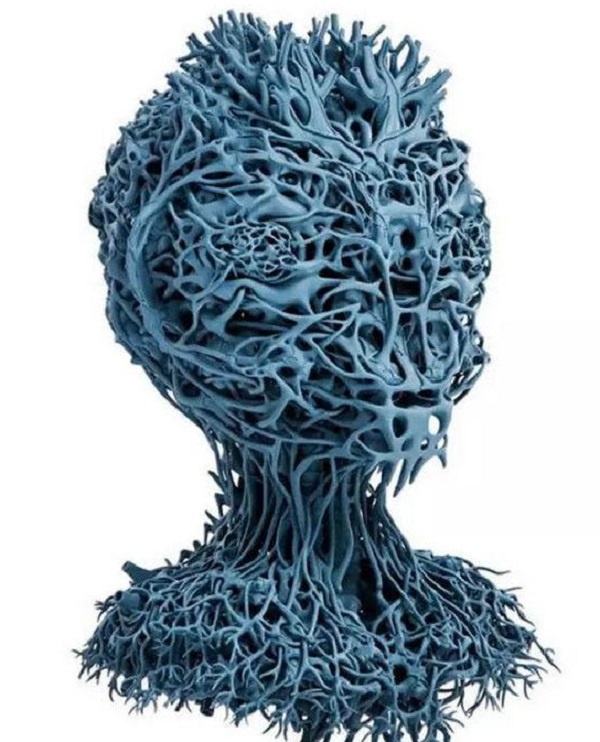
- Lattice structures: Lightweight, strong, optimized
- Organic shapes: Designed for function, not machinability
- Undercuts and overhangs: No tool access needed
- Integration: Multiple parts become one assembly
Designers think about performance, not manufacturing constraints.
High Strength, Light Weight
EBAM parts are fully dense—over 99.5% typically. Mechanical properties match or exceed cast materials, approaching wrought.
Benefits:
- Strength-to-weight ratio: Optimized for performance
- Fatigue resistance: Excellent, especially with HIP
- High-temperature capability: Materials retain strength where others fail
- Durability: Parts last in demanding environments
Reduced Residual Stress
Because the process runs hot (often 600-1000°C during printing), parts don't experience the rapid cooling that creates stress in laser processes.
Less stress means:
- Less distortion
- Fewer supports needed
- Simpler heat treatment
- Better dimensional accuracy
Faster Build Rates
The electron beam can scan faster than lasers. It also pre-heats entire layers quickly. For large parts or tall builds, EBAM can be significantly faster than laser-based methods.
What Materials Can EBAM Process?
Titanium Alloys
Ti-6Al-4V is the most common EBAM material. It offers:
- High strength-to-weight ratio
- Excellent corrosion resistance
- Biocompatibility for medical use
- Good high-temperature performance
Applications: Aerospace brackets, structural parts, medical implants, spacecraft components.
Nickel-Based Superalloys
Inconel 718 and 625 handle extreme heat and corrosion:
- Maintain strength to 700°C+
- Resist oxidation and chemical attack
- Used in turbine engines, rocket components
EBAM's hot process helps with these alloys, which can crack during laser printing.
Cobalt-Chrome
CoCr alloys offer:
- Excellent wear resistance
- Biocompatibility
- High-temperature capability
Applications: Dental frameworks, orthopedic implants, wear-resistant industrial parts.
Other Metals
Stainless steel (316L, 17-4PH) for general engineering.
Tool steels for molds, dies, and industrial tooling.
Copper and its alloys for heat exchangers and electrical components (requires care—copper reflects beams).
Refractory metals like tungsten and molybdenum—their high melting points make EBAM attractive.
Where Is EBAM Used?
Aerospace
Aerospace leads EBAM adoption for good reason. Parts are expensive. Weight matters. Performance is critical.
Applications:
- Turbine blades: Complex cooling channels, high-temperature alloys
- Structural brackets: 30-50% lighter than machined equivalents
- Engine components: Combustion chambers, nozzles, housings
- Landing gear parts: High-strength, fatigue-resistant
- Satellite structures: Lightweight, precise, space-qualified
Real example: A satellite bracket redesigned for EBAM went from 5 machined parts to 1 printed part. Weight dropped 40%. Lead time dropped from months to days.
Medical
Medical applications leverage EBAM for customization and biocompatibility.
Applications:
- Orthopedic implants: Hip stems, knee components, spinal cages
- Cranial implants: Custom-fit to skull defects
- Dental restorations: Crowns, bridges, frameworks
- Surgical instruments: Custom tools for specific procedures
Benefits:
- Patient-specific: Implants match anatomy exactly
- Osseointegration: Porous surfaces promote bone growth
- MRI compatibility: No interference with imaging
- Long-term safety: Biocompatible materials, no corrosion
Automotive
Automotive uses EBAM for high-performance and low-volume applications.
Applications:
- Racing components: Lightweight, strong parts
- Engine parts: Turbocharger housings, exhaust components
- Custom parts: Limited edition and specialty vehicles
- Tooling: Jigs, fixtures, end-of-arm robot tools
Benefits:
- Weight reduction: Improves performance, fuel economy
- Complex geometries: Optimized for function
- Small batches: Economical without tooling
Industrial and Energy
Industrial applications benefit from EBAM's durability and design freedom.
Applications:
- Oil and gas: Drilling equipment, valves, pumps
- Power generation: Turbine components, heat exchangers
- Chemical processing: Corrosion-resistant parts
- Tooling: Molds with conformal cooling
Defense
Defense applications demand extreme durability and performance.
Applications:
- Structural components: Vehicle parts, weapon systems
- Repair: On-site manufacturing of replacement parts
- Specialized equipment: Custom solutions for unique requirements
What Post-Processing Does EBAM Need?
Powder Removal
Parts come out buried in semi-sintered powder. Removal uses:
- Compressed air blasting
- Vacuum systems
- Ultrasonic cleaning for internal channels
Recovered powder is sieved and mixed with fresh for reuse—95%+ recycling rates.
Support Removal
Though fewer supports than laser printing, some may be needed to anchor parts and dissipate heat. Supports are typically removed by:
- Wire EDM (electrical discharge machining)
- Machining
- Manual removal for simple supports
Heat Treatment
Most EBAM parts receive stress relief annealing. Some need:
- Hot isostatic pressing (HIP) to close any remaining porosity
- Solution treatment and aging for specific alloys
- Surface hardening for wear resistance
Surface Finishing
As-printed surfaces are rough—Ra 10-30 μm typically. Depending on application:
- As-printed acceptable for many functional parts
- Machining for critical surfaces
- Polishing for smooth finish
- Coating for additional properties
Inspection
Critical parts require:
- Dimensional inspection (CMM, scanning)
- Non-destructive testing (X-ray, CT, ultrasound)
- Mechanical testing (tensile, hardness) on witness samples
How Does EBAM Compare to Other Metal AM Processes?
| Factor | EBAM | SLM/DMLS | Binder Jetting |
|---|---|---|---|
| Energy source | Electron beam | Laser | None (binder) |
| Environment | Vacuum | Inert gas | Air or inert |
| Build temp | 600-1000°C | Room temp | Room temp |
| Density | 99.5%+ | 99.5%+ | 92-97% (99%+ with HIP) |
| Surface finish | Rougher (10-30 μm) | Smoother (5-15 μm) | Moderate |
| Accuracy | ±0.2-0.5 mm | ±0.1-0.2 mm | ±0.1-0.3 mm (after sintering) |
| Build speed | Faster | Slower | Fastest |
| Residual stress | Low | High | None |
| Supports | Fewer | Many | None |
| Material options | Conductive metals | Wide metals | Wide metals |
Choose EBAM when:
- Parts are large or need fast build times
- Materials are prone to cracking
- Residual stress is a concern
- You need hot processing benefits
- Surface finish isn't critical
Choose SLM/DMLS when:
- Fine detail and smooth surfaces matter
- Parts are small and complex
- You need the widest material selection
Choose binder jetting when:
- Speed and cost matter most
- You can manage sintering shrinkage
- No thermal stress is beneficial
Yigu Technology's Perspective
At Yigu technology, we see EBAM as a powerful tool for specific applications. It's not the answer for every metal part. But for the right ones, it's transformative.
Where we use EBAM:
- Large titanium parts where build volume exceeds laser systems
- High-temperature alloys prone to cracking with lasers
- Parts requiring low residual stress and good dimensional stability
- Aerospace components where weight savings justify the process
- Medical implants benefiting from hot processing
What we've learned:
Start with requirements, not technology. EBAM excels at specific things. Match it to those.
Design for the process. Orientation, feature sizes, material transitions—all affect success. Early design input prevents later headaches.
Post-processing is part of the process. Plan for powder removal, heat treatment, and surface finishing from the start.
Material choice drives everything. Titanium for aerospace. Inconel for high-temperature. Cobalt-chrome for wear. Select based on your environment.
We help clients navigate these decisions every day. From design optimization to post-processing, we guide projects from concept to completion.
Conclusion
Electron Beam Additive Manufacturing is a sophisticated metal 3D printing technology that delivers exceptional results for the right applications.
Key advantages:
- Material efficiency: Minimal waste, powder recycling
- Complex geometries: Designs impossible with traditional methods
- High strength: Fully dense parts with excellent properties
- Low residual stress: Hot process reduces distortion
- Fast build rates: Faster than laser for many parts
- Large build volume: Meters possible with some systems
Applications across aerospace, medical, automotive, industrial, and defense sectors prove the value. From turbine blades to custom implants, EBAM produces parts that perform.
Challenges exist—surface finish, accuracy, equipment cost. But for the right applications, EBAM isn't just an option. It's the only option that works.
As technology advances, expect faster builds, better surface quality, and lower costs. EBAM will continue expanding what's possible in metal additive manufacturing.
FAQ
What materials can be used in EBAM?
Common materials include titanium alloys (Ti-6Al-4V), nickel-based superalloys (Inconel 718, 625), cobalt-chrome, stainless steels, tool steels, and refractory metals like tungsten. The key requirement is electrical conductivity—the material must conduct the electron beam's charge to ground.
How accurate are EBAM parts?
Typical accuracy ranges ±0.2-0.5 mm depending on part size and geometry. Factors include printer calibration, material shrinkage, and thermal effects. Critical dimensions can be machined after printing for tighter tolerances.
Is EBAM suitable for large-scale production?
EBAM is excellent for low-to-medium volumes of complex, high-value parts. Build speed is faster than laser processes, but equipment cost and build size limitations affect economics. For very high volumes of simple parts, traditional methods remain more economical. For complex, customized, or hard-to-machine parts, EBAM can be cost-effective even at moderate volumes.
How does EBAM compare to SLM for titanium printing?
EBAM runs hotter, reducing residual stress and allowing faster build rates. Surface finish is rougher. SLM achieves finer details and smoother surfaces but has higher residual stress. Material properties end up similar after proper post-processing. Choice depends on part requirements—detail vs. speed, stress sensitivity, and acceptable surface texture.
What size parts can EBAM print?
Build volumes vary by system. Industrial EBAM machines can produce parts up to several meters in size—much larger than typical powder bed systems. Parts can be oriented to maximize build height. Very large components may need to be printed in sections and joined.
Is EBAM expensive?
Equipment is expensive—industrial systems run $500,000 to $1.5 million+—and operation requires skilled technicians. However, for high-value parts where complexity adds value, EBAM can be cost-effective. Using service bureaus like Yigu technology gives access without capital investment.
Contact Yigu Technology for Custom Manufacturing
Ready to explore Electron Beam Additive Manufacturing for your project? Yigu technology specializes in custom manufacturing with advanced metal processes. We help clients navigate the options and deliver parts that perform.
We can help with:
- Design for EBAM—optimizing geometry for the process
- Material selection—choosing the right alloy
- Printing—on industrial equipment with proven parameters
- Post-processing—heat treatment, HIP, machining, finishing
- Testing—validating that parts meet requirements
Contact us to discuss your project. Tell us what you're making and what it needs to do. We'll recommend the best approach—whether EBAM or another method—and deliver quality results.