
How Can You Master CNC Machining of Ceramics Despite Their Brittleness?

Ceramics Parts 4

Contents Introduction What Ceramic Materials Are Used in CNC Machining? Alumina Ceramics (Al₂O₃) Zirconia Ceramics (ZrO₂) Silicon Carbide Ceramics (SiC) What CNC Machining Processes Work for Ceramics? Milling Turning Grinding Advanced Processes What Tools and Parameters Deliver Quality? Tool Selection Cutting Parameters Coolant and Thermal Management What Are the Key Challenges and Solutions? Brittleness and […]

Introduction

Ceramics are prized for exceptional hardness, heat resistance, and chemical stability. These properties make them indispensable in aerospace engines, medical implants, and industrial components. But these same properties make ceramics some of the most challenging materials to machine. Ceramic material brittleness leads to cracking under cutting forces. Extreme hardness causes rapid tool wear. Achieving precise surface finish on delicate parts requires meticulous process control.

Manufacturers frequently struggle with these challenges. Parts that crack during machining represent lost material and wasted time. Tools that wear quickly drive up costs. Surface defects compromise performance in critical applications.

This guide addresses these pain points. We will explore ceramic materials used in CNC machining, break down effective processes, highlight key applications, and discuss recent technological advancements. Whether you are machining alumina insulators or zirconia implants, you will find practical strategies for success.


What Ceramic Materials Are Used in CNC Machining?

Alumina Ceramics (Al₂O₃)

Alumina ceramics are the most common type used in CNC machining. They offer high ceramic hardness1500–2000 HV—and excellent ceramic thermal conductivity20–30 W/(m·K) . These properties make alumina ideal for high-temperature applications like electrical insulators, wear-resistant components, and cutting tool inserts.

Alumina’s hardness allows it to resist abrasion, but its brittleness requires careful machining. Chipping and cracking are constant risks. Sharp tools, controlled feeds, and rigid setups are essential.

Zirconia Ceramics (ZrO₂)

Zirconia ceramics stand out for their ceramic toughness—up to 10 MPa·m¹/² , far higher than alumina. This toughness makes zirconia resistant to fracture, enabling applications like ceramic bearings, dental implants, and hip replacements.

Zirconia’s phase transformation toughening mechanism absorbs energy that would otherwise cause cracks. This makes it more forgiving than alumina during machining, though it still requires diamond tools and careful parameter control.

Silicon Carbide Ceramics (SiC)

Silicon carbide ceramics boast extreme hardness—2500–3000 HV—and high thermal conductivity—80–120 W/(m·K) . These properties suit abrasive and high-heat environments like industrial nozzles, seal faces, and armor components.

Silicon carbide is one of the hardest machinable ceramics. Tool wear is rapid. Surface finish is difficult to achieve. Diamond grinding is often required for final dimensions.

Ceramic TypeHardness (HV)Toughness (MPa·m¹/²)Thermal Conductivity (W/(m·K))Key Applications
Alumina (Al₂O₃)1500–20003–520–30Electrical insulators, wear parts
Zirconia (ZrO₂)1200–15008–102–3Bearings, medical implants
Silicon Carbide (SiC)2500–30003–480–120Nozzles, seal faces, armor

All these ceramics share common ceramic material properties—chemical inertness, low electrical conductivity (except SiC variants), and high compressive strength. But their varying hardness and toughness require tailored machining approaches.


What CNC Machining Processes Work for Ceramics?

Milling

CNC milling ceramics demands diamond tools. Standard carbide tools wear almost instantly against ceramic hardness. Polycrystalline diamond (PCD) tools are the standard for milling operations.

Spindle speeds typically range from 5000–20,000 RPM. Feed rates are low—0.01–0.05 mm/rev—to minimize cutting forces that could cause cracking. Rigid machine setups are critical. Any vibration can shatter brittle ceramics.

For complex geometries, 5-axis milling reduces the need for repositioning. Fewer setups mean fewer opportunities for misalignment or stress that could cause fracture.

Turning

CNC turning ceramics uses diamond-tipped inserts with negative rake angles. Negative rake reduces cutting forces by distributing them across a larger tool area, preventing localized stress that could cause cracking.

Cutting speeds are low—10–50 m/min—with shallow depths of cut—0.1–0.5 mm. Coolant—typically water-based with lubricants—dissipates heat and flushes abrasive debris. Without coolant, heat buildup can cause thermal stress cracking.

Grinding

CNC grinding ceramics is essential for achieving precise finishes. Diamond grinding wheels with grit sizes of 80–400 mesh remove small amounts of material to achieve final dimensions and surface quality.

Grinding produces surface finishes as low as Ra 0.02 μm—suitable for sealing surfaces in medical and aerospace components. For hard ceramics like silicon carbide, grinding is often the only viable finishing process.

Advanced Processes

Laser cutting ceramics offers precision without physical contact, reducing fracture risk. Fiber lasers with 1064 nm wavelength cut through ceramics by vaporization, achieving tight tolerances of ±0.01 mm. Laser cutting is particularly useful for thin ceramic sheets or for creating complex contours before final grinding.

EDM (Electrical Discharge Machining) works for conductive ceramics like silicon carbide. Electrical sparks erode material without mechanical forces, eliminating cracking risk. EDM produces fine surface finishes and can create complex shapes inaccessible to conventional tools.

ProcessTool TypeTypical ParametersBest For
MillingPCD tools5000–20,000 RPM; 0.01–0.05 mm/revComplex geometries, slots, pockets
TurningDiamond-tipped inserts10–50 m/min; 0.1–0.5 mm depthCylindrical parts, threads
GrindingDiamond wheels, 80–400 gritSlow feeds, multiple passesFinal dimensions, surface finish
Laser CuttingFiber laser (1064 nm)±0.01 mm toleranceThin sheets, complex contours
EDMGraphite or copper electrodesConductive ceramics onlyInternal features, fine details

What Tools and Parameters Deliver Quality?

Tool Selection

Diamond tools dominate ceramic machining. Polycrystalline diamond (PCD) works for milling and turning operations. PCD tools maintain sharpness under high loads and resist wear far better than any alternative.

Diamond grinding wheels are essential for finishing. Wheel grit size determines surface finish—coarser grits (80–120 mesh) for rapid material removal; finer grits (400–800 mesh) for polishing to Ra values below 0.1 μm.

Tool geometry must be optimized. Negative rake angles reduce cutting forces. Sharp edges prevent the crushing and smearing that occur with dull tools. For micro-features, tools with radii under 0.1 mm are required.

Cutting Parameters

Cutting forces must be minimized. Ceramics fail in tension, not compression. Cutting parameters that create tensile stresses—excessive feed rates, interrupted cuts, tool entry at edges—cause cracking.

Speeds and feeds are lower than for metals. For alumina, cutting speeds of 20–40 m/min with feeds of 0.01–0.03 mm/rev are typical. For zirconia, slightly higher feeds are possible due to its toughness.

Depth of cut should be shallow—0.1–0.5 mm per pass. Multiple passes are preferred over single deep cuts that concentrate stress.

Coolant and Thermal Management

Thermal stress causes cracking. Ceramics have low thermal expansion coefficients, but localized heating from cutting creates temperature gradients that induce stress.

Coolant systems must maintain stable temperatures. Water-based coolants with lubricants are preferred. Flood coolant with precise temperature control—20–25°C—prevents thermal gradients that could crack the workpiece.


What Are the Key Challenges and Solutions?

Brittleness and Cracking

Ceramic material brittleness is the primary challenge. Ceramics lack ductility—they do not deform before failure. When cutting forces exceed the material’s strength, cracks propagate instantly.

Solutions include:

  • Sharp tools that cut rather than crush
  • Low feed rates that minimize cutting forces
  • Rigid machine setups that eliminate vibration
  • Toolpaths that avoid abrupt direction changes
  • Edge support for thin sections

Tool Wear

Tool wear in ceramic machining is rapid. Diamond tools, while effective, wear quickly against hard ceramics. Tool costs are 5–10 times higher than carbide tools used for metals.

Solutions include:

  • Advanced tool coatings like nanocrystalline diamond (NCD) that extend life by 30–50%
  • Optimized cutting paths that distribute wear evenly
  • Tool life monitoring systems that replace tools before failure
  • Roughing with lower-cost tools; finishing with premium tools

Surface Finish Consistency

Achieving consistent surface finish of machined ceramics is difficult due to micro-cracking. Even when dimensions are within tolerance, micro-cracks can compromise strength and wear resistance.

Solutions include:

  • Finishing passes with fresh, sharp tools
  • Post-machining polishing to remove micro-cracks
  • Annealing to relieve residual stresses
  • Non-destructive testing to verify surface integrity

Thermal Stress

Thermal stress during machining causes cracking. Ceramics conduct heat poorly, so localized heating from cutting creates steep temperature gradients.

Solutions include:

  • Flood coolant with temperature control
  • Interrupted cuts that allow heat dissipation
  • Reduced cutting speeds that generate less heat
  • Preheating workpieces to reduce thermal gradients
ChallengeImpactSolution
BrittlenessCracking, part failureSharp tools, low feeds, rigid setups
Tool WearHigh costs, frequent changesNCD coatings, optimized toolpaths
Surface FinishMicro-cracks, poor performancePolishing, annealing, fresh finishing tools
Thermal StressCracking from heat gradientsTemperature-controlled coolant, reduced speeds

Where Are CNC-Machined Ceramics Applied?

Aerospace

Aerospace ceramic components leverage alumina and silicon carbide’s heat resistance. Turbine blades and heat shields withstand temperatures that would soften metals. Radome components use ceramics for their dielectric properties and thermal stability.

A study of commercial aircraft engines found that ceramic-coated turbine components operate at temperatures 200°C higher than uncoated metal parts, improving fuel efficiency by 5–8% .

Medical

The medical field uses medical implants (ceramic) for their biocompatibility and wear resistance. Zirconia hip replacements outlast metal-on-polyethylene alternatives, reducing revision surgeries. Dental implants and crowns benefit from zirconia’s tooth-like appearance and tissue compatibility.

Ceramic surgical instruments offer wear resistance and sterilization compatibility. They maintain sharp edges through repeated use and cleaning cycles.

Industrial

Ceramic cutting tools made from silicon carbide outperform metal tools when machining abrasive materials like composites or hardened steels. Electronic ceramic parts—alumina substrates—provide electrical insulation for circuit boards and power electronics.

Automotive ceramic parts include oxygen sensors and turbocharger components that withstand high temperatures. Industrial ceramic nozzles—silicon carbide—resist abrasive slurries in mining and manufacturing, lasting 10 times longer than metal alternatives.


What Innovations Are Advancing Ceramic Machining?

Advanced Tool Coatings

Nanocrystalline diamond (NCD) coatings extend tool life by 30–50% compared to traditional PCD tools. The finer grain structure provides sharper cutting edges and greater wear resistance.

High-Speed Machining

High-speed machining of ceramics with spindle speeds up to 40,000 RPM reduces cutting time while minimizing heat buildup. Improved machine rigidity and dynamic balancing make these speeds possible without inducing vibration.

Real-Time Monitoring

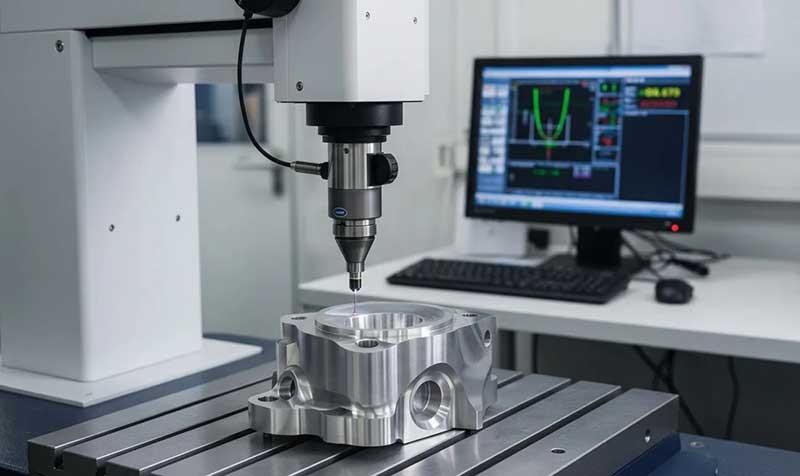
Precision CNC machines for ceramics integrate real-time monitoring systems. Sensors detect vibration, cutting forces, and tool wear. Control systems adjust feeds and speeds automatically to prevent fractures. This technology reduces scrap rates and enables unattended operation.

Additive Manufacturing Integration

Additive manufacturing of ceramics (3D printing) complements CNC machining. Printed near-net shapes require less material removal than solid blanks. Complex internal geometries that cannot be machined directly can be printed, then finished on CNC machines. This hybrid approach reduces cost and expands design possibilities.

Ceramic-Specific Software

Software for ceramic CNC machining now includes ceramic-specific algorithms. These optimize toolpaths to reduce stress concentrations, manage chip formation, and predict cracking risk. Simulation tools allow process validation before cutting begins.


Conclusion

CNC machining of ceramics requires a specialized approach that respects the material’s unique properties. Extreme hardness demands diamond tools. Brittleness requires low cutting forces and rigid setups. Thermal sensitivity demands controlled cooling.

Success comes from integrating appropriate techniques across the entire process. Material selection—alumina for hardness, zirconia for toughness, silicon carbide for extreme conditions—must match application requirements. Process selection—milling, turning, grinding, laser, EDM—must be tailored to part geometry. Tooling—PCD, NCD, diamond wheels—must be matched to material and operation. Parameters must balance material removal against cracking risk.

The applications span critical industries. Aerospace components rely on ceramics for high-temperature performance. Medical implants use ceramics for biocompatibility and wear resistance. Industrial components leverage ceramics for hardness and chemical stability.

For manufacturers willing to invest in specialized equipment, tooling, and processes, ceramics offer exceptional value. Their combination of hardness, heat resistance, and chemical stability, when unlocked through precision machining, produces components that perform reliably in the most demanding environments.


FAQ

Why are diamond tools necessary for machining ceramics?
Ceramics’ extreme hardness—1500+ HV—exceeds the capabilities of carbide tools. Diamond tools, with hardness 7000+ HV, are the only materials hard enough to cut ceramics effectively. Without diamond tools, cutting edges dull almost instantly, generating heat and stress that cause cracking.

What tolerance can be achieved in ceramic CNC machining?
With advanced processes, tolerances of ±0.005–0.01 mm are achievable. Tolerance depends on ceramic type—zirconia’s toughness allows tighter tolerances than brittle alumina. Part geometry, tooling, and machine rigidity also affect achievable precision.

How do advancements like 3D printing impact ceramic machining?
3D printing creates near-net-shape ceramic parts, reducing the amount of CNC machining required. This lowers costs, reduces material waste, and enables complex geometries—internal channels, lattice structures—that would be impossible with traditional machining alone. Machining then adds precision surfaces and critical features.

What coolant is best for machining ceramics?
Water-based coolants with lubricants are preferred. Flood coolant with precise temperature control—20–25°C—prevents thermal gradients that cause cracking. Coolant also flushes abrasive ceramic debris that would otherwise accelerate tool wear.

How can I prevent cracking during ceramic machining?
Use sharp diamond tools that cut rather than crush. Maintain low feed rates to minimize cutting forces. Ensure rigid machine setups that eliminate vibration. Use toolpaths that avoid abrupt direction changes. Support thin sections to prevent deflection. Apply temperature-controlled coolant to manage thermal stress.


Contact Yigu Technology for Custom Manufacturing

Need precision ceramic components for demanding applications? Yigu Technology specializes in CNC machining of alumina, zirconia, and silicon carbide for aerospace, medical, and industrial sectors. Our engineers select the right tools, optimize cutting parameters, and apply advanced finishing techniques to deliver reliable parts. Contact us today to discuss your project.

Scroll to Top