
Finding a material that combines high strength, good ductility, and versatility can be challenging. Many alloys are either too brittle for complex forming or lack the strength for structural applications. Sheet metal 6061 solves this problem. This guide covers its composition, properties, manufacturing processes, and applications.
Introduction
Sheet metal 6061 is a heat-treatable aluminum alloy strengthened by magnesium and silicon. It balances mechanical performance and workability. This combination makes it one of the most widely used aluminum alloys across industries.
In this guide, you will learn what gives 6061 its unique properties. You will understand how heat treatment affects its performance. And you will discover where it performs best.
Material Composition and Properties
Alloy Composition
6061 is a magnesium-silicon alloy. Its carefully balanced composition enables heat treatment and good mechanical properties.
| Element | Percentage | Role |
|---|---|---|
| Magnesium | 0.8–1.2% | Forms strengthening precipitates with silicon |
| Silicon | 0.4–0.8% | Key element for heat treatment response |
| Copper | 0.15–0.4% | Enhances strength |
| Chromium | 0.04–0.35% | Improves corrosion resistance and grain structure |
| Zinc | Max 0.25% | Minor impurity |
| Iron | Max 0.7% | Minor impurity |
This blend makes 6061 one of the most versatile aluminum alloys. It works for both structural and non-structural applications.
Mechanical Properties
6061’s strength comes from its heat-treatable nature. The T6 temper is the most common.
| Property | Value (T6 Temper) | Significance |
|---|---|---|
| Tensile Strength | 310–380 MPa | Stronger than non-heat-treatable alloys |
| Yield Strength | 276 MPa | Good resistance to permanent deformation |
| Elongation | 10–18% | Adequate ductility for forming |
| Density | 2.7 g/cm³ | Lightweight—one-third of steel |
| Hardness | 95–105 HRB | Moderate; good machinability |
Key data point: 6061-T6 has approximately 30% higher yield strength than 5052-H32, making it better suited for structural applications where loads are significant.
Corrosion Resistance
6061 offers moderate corrosion resistance. It performs well in most environments but is less suitable than 5052 or 316 stainless steel for constant saltwater exposure.
For outdoor applications, anodizing or coating provides additional protection. In marine environments, proper finishing is recommended.
Other Properties
Non-magnetic: 6061 is non-magnetic. This matters for electrical components, medical devices, and aerospace parts where magnetic interference must be avoided.
Thermal conductivity: Approximately 167 W/(m·K) . Higher than many high-strength alloys. Suitable for heat sinks and thermal management.
Electrical conductivity: About 43% IACS (International Annealed Copper Standard). Works for electrical components where moderate conductivity is sufficient.
Recyclability: Like all aluminum alloys, 6061 is highly recyclable. Recycling uses 95% less energy than producing new aluminum.
Manufacturing Processes
Forming and Heat Treatment
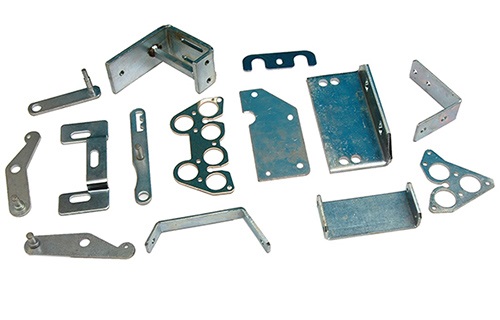
Rolling produces 6061 sheets in thicknesses from 0.2mm to 100mm. Tempers range from O (annealed, soft) to T6 (fully heat-treated).
Bending and forming depend on temper:
- O temper: Highly ductile. Can achieve tight radii without cracking.
- T4 temper: Partial strength; moderate formability.
- T6 temper: Strongest but less formable. Bends require larger radii.
Heat treatment is key to 6061’s versatility:
| Process | Temperature | Purpose |
|---|---|---|
| Solution Treatment | 530–540°C | Dissolves strengthening elements |
| Quenching | Rapid cooling | Locks elements in solution |
| Aging | 120–180°C for 8–12 hours | Forms strengthening precipitates (T6) |
Real-world example: A manufacturer needed complex brackets with high strength. We formed the parts in O temper, then heat-treated to T6. The brackets achieved full strength without cracking during forming.
Cutting and Machining
Laser cutting produces clean edges with precision up to ±0.05mm. Shearing works for straight cuts.
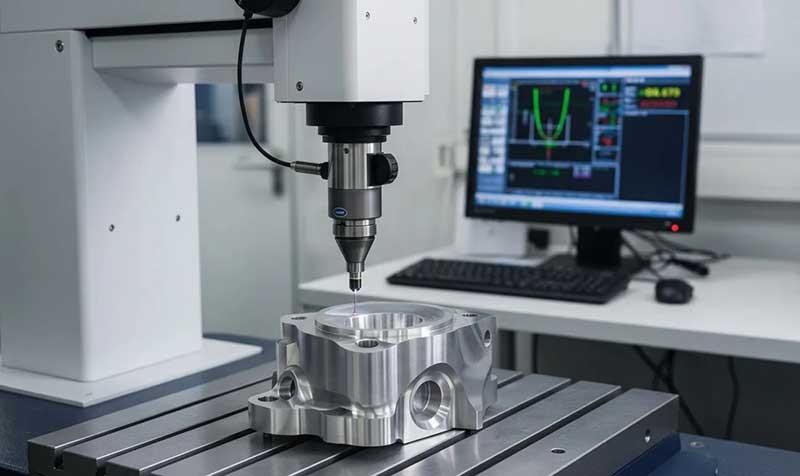
CNC machining of 6061 is efficient. Its moderate hardness reduces tool wear compared to harder alloys. Carbide tools with proper feeds and speeds produce excellent surface finishes.
Welding
6061 can be welded using TIG or MIG methods. Key considerations:
- Use filler metal 4043 or 5356
- Clean surfaces thoroughly before welding
- Heat-affected zones lose some strength
- Post-weld annealing can restore ductility if needed
Welding reduces strength in the heat-affected zone. For critical structural applications, design should account for this.
Surface Treatment and Finishing
Anodizing
Anodizing is widely used on 6061. The electrochemical process creates a porous oxide layer that can be dyed.
| Anodizing Type | Properties | Applications |
|---|---|---|
| Clear Anodize | Natural finish; enhanced corrosion resistance | Architectural, industrial |
| Dyed Anodize | Colored finish; UV-resistant | Sports equipment, consumer products |
| Hard Anodize | Thicker, wear-resistant coating | Industrial components |
Anodizing does not compromise the alloy’s strength. Post-treatment performance remains consistent.
Chemical Conversion Coating
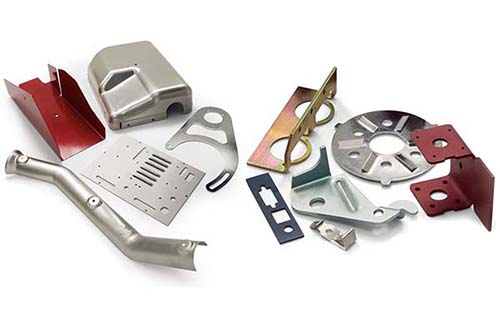
Chemical conversion coating—chromate or non-chromate—improves paint adhesion and adds a thin protective layer. Automotive parts and electronics enclosures commonly use this treatment.
Polishing and Finishes
| Finish | Process | Applications |
|---|---|---|
| Mirror Polish | Progressive polishing to high gloss | Decorative, lighting, furniture |
| Brushed | Abrasive belt creates linear texture | Home appliances, electronics |
| Satin | Fine abrasive gives uniform matte | Architectural, industrial |
Surface roughness can be controlled to 0.05–3 μm Ra, balancing functionality and aesthetics.
Powder Coating and Painting
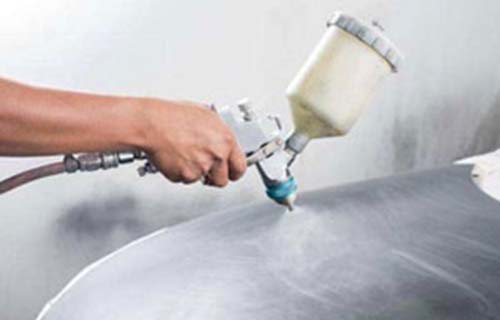
Powder coating and painting add color and protection. For outdoor or harsh environments, these finishes provide additional durability.
Applications Across Industries
Aerospace
Aerospace relies on 6061 for its high strength-to-weight ratio:
- Aircraft wings: Structural components
- Fuselage parts: Frames, bulkheads
- Structural brackets: Mounting hardware
Weight reduction is critical. Every kilogram saved improves fuel efficiency.
Automotive and Transportation
The automotive industry values 6061 for strength and light weight:
| Application | Benefit |
|---|---|
| Engine components | Withstands operating temperatures |
| Chassis parts | Structural strength, weight reduction |
| Body panels | Lightweight, corrosion-resistant |
| Truck frames | Durability, fatigue resistance |
Electric vehicles particularly benefit from weight reduction. Lighter vehicles travel farther on a charge.
Construction and Architecture
Construction uses 6061 for structural and architectural components:
- Handrails and ladders: Strength, corrosion resistance
- Structural supports: Load-bearing applications
- Architectural trim: Aesthetic finish, durability
Industrial Machinery
Industrial machinery relies on 6061 for:
- Frames: Structural integrity
- Gears and tooling: Precision, wear resistance
- Enclosures: Protection, moderate corrosion resistance
Sports Equipment and Consumer Goods
Sports equipment benefits from 6061’s balance of strength and weight:
- Bicycle frames: Lightweight, stiff
- Golf clubs: Strength, durability
- Ski poles: Lightweight, impact-resistant
- Climbing equipment: Strength-to-weight critical
Electronics
Electronics applications leverage 6061’s thermal conductivity:
- Heat sinks: Efficient heat dissipation
- Laptop casings: Lightweight, durable
- Electrical components: Moderate conductivity, non-magnetic
Medical Devices
Medical devices use 6061 for:
- Surgical tools: Strength, corrosion resistance
- Wheelchairs: Lightweight, durable
- Equipment frames: Structural integrity
Yigu Technology’s Perspective
At Yigu Technology, we frequently work with sheet metal 6061. Its combination of strength, workability, and versatility makes it a go-to material for many custom projects.
We use 6061 for aerospace components, automotive parts, and sports equipment. Its heat-treatable nature allows us to optimize properties for each application. For complex shapes, we form in O temper then heat-treat to T6. For structural parts requiring maximum strength, we work with T6 directly.
Real-world example: A client needed lightweight brackets for an electric vehicle battery system. The brackets required high strength and precise dimensions. We CNC machined 6061-T6 to achieve tight tolerances. The finished brackets met strength requirements while adding minimal weight.
Another client required anodized enclosures for outdoor electronics. We fabricated 6061 sheets, anodized them in a custom color, and delivered parts that resisted corrosion and looked professional.
Our experience shows that 6061’s versatility allows creative solutions. It adapts to forming, machining, welding, and finishing processes with consistent results.
Conclusion
Sheet metal 6061 is a versatile magnesium-silicon aluminum alloy. Its heat-treatable nature allows strength ranging from highly formable (O temper) to high-strength (T6 temper). It offers good machinability, moderate corrosion resistance, and excellent strength-to-weight ratio.
The alloy processes well through rolling, bending, cutting, welding, and heat treatment. Surface treatments like anodizing and polishing enhance its performance and appearance. For structural applications requiring strength and light weight, 6061 is an excellent choice.
FAQ
How does 6061 compare to 5052 aluminum in terms of strength?
6061-T6 has significantly higher strength—tensile strength 310–380 MPa versus 5052’s 230–290 MPa. However, 5052 has better corrosion resistance in saltwater and is more formable. Choose 6061 for structural applications requiring strength. Choose 5052 for marine environments or complex forming.
Can 6061 be used in marine environments?
6061 offers moderate corrosion resistance in marine settings. For constant saltwater exposure, 5052 or 316 stainless steel are better choices. If using 6061 in marine applications, apply protective coatings like anodizing or powder coating to extend service life.
What is the best temper for 6061 sheet metal?
T6 temper is best for maximum strength—structural parts, brackets, and load-bearing components. O temper is best for forming—complex shapes where cracking is a concern. T4 temper offers a balance—solution-treated but not fully aged; good for applications needing some formability with moderate strength.
Can 6061 be welded?
Yes. TIG or MIG welding with filler metals 4043 or 5356 works well. However, welding reduces strength in the heat-affected zone. For critical structural applications, design should account for this. Post-weld heat treatment can restore some strength if needed.
Contact Yigu Technology for Custom Manufacturing
Need 6061 aluminum components for your project? Yigu Technology combines material expertise with precision fabrication. From aerospace brackets to sports equipment, we deliver quality and performance. [Contact us] to discuss your requirements.


