Introduction
Nylon—PA6 and PA66 —ranks among the most versatile engineering plastics. It delivers strength, abrasion resistance, and chemical resistance that make it indispensable for automotive components, industrial gears, and electrical connectors.
But here’s the challenge: nylon is demanding. It absorbs moisture aggressively , changing dimensions and properties after molding. It shrinks unpredictably. Glass-filled grades wear down molds. And processing windows are narrow—miss them, and parts warp, flash, or fail.
This guide addresses those challenges. Drawing from real production experience, we’ll cover nylon’s material properties, processing requirements, mold design considerations, and troubleshooting strategies. Whether you’re molding PA6 or PA66, you’ll find practical insights to produce consistent, high-quality parts.
What Are the Key Properties of PA6 and PA66?
Nylon belongs to the polyamide family. PA6 and PA66 are the most common injection molding grades. They share many traits but differ in key areas.
Thermal Properties
| Property | PA6 | PA66 |
|---|---|---|
| Melting point | 215–225°C | 255–265°C |
| Continuous use temperature | 80–120°C | 100–150°C |
| Crystallization rate | Fast | Moderate |
PA66’s higher melting point makes it better for high-temperature applications like under-hood automotive components. PA6’s faster crystallization can shorten cycle times.
Mechanical Strength
| Property | PA6 | PA66 |
|---|---|---|
| Tensile strength (unreinforced) | 70–83 MPa | 82–94 MPa |
| Flexural modulus | 2.8–3.2 GPa | 3.0–3.5 GPa |
PA66 offers higher strength , making it the choice for load-bearing parts. Both grades accept glass fiber reinforcement (typically 10–40%), which boosts strength and stiffness while reducing ductility.
Moisture Absorption
This is nylon’s defining characteristic:
- PA6 absorbs 8–10% of its weight in water
- PA66 absorbs 6–8%
Moisture acts as a plasticizer. It increases flexibility and impact resistance but reduces tensile strength by 10–15% . Dimensional changes also occur—parts swell slightly, typically 1–2% in length .
Chemical and Wear Resistance
Both grades resist oils, greases, and alkalis . They perform poorly against strong acids. Abrasion resistance is exceptional —nylon gears and bearings outlast many other materials in moving applications.
Special Grades
- Flame retardant : UL94 V-0 ratings for electronics
- Glass-filled : 10–40% glass fiber for increased strength and stiffness
- Heat-stabilized : Improved thermal aging for under-hood applications
How Do You Optimize the Nylon Injection Molding Process?
Drying: The Non-Negotiable First Step
Nylon is highly hygroscopic . Moisture causes voids, splay, and weakened parts. Drying requirements are strict:
| Material | Drying Temperature | Drying Time | Target Moisture |
|---|---|---|---|
| PA6 | 80–90°C | 4–6 hours | <0.05% |
| PA66 | 100–110°C | 6–8 hours | <0.05% |
Use desiccant dryers , not hot air ovens. After drying, store material in sealed hoppers to prevent reabsorption. In humid environments, material can regain significant moisture in just hours.
A manufacturer producing automotive connectors learned this when parts showed voids after a weekend shutdown. Drying logs showed proper drying before the weekend, but material sat in an open hopper. Humidity in the plant caused moisture absorption. The fix: sealed hoppers and stricter material handling.
Melt Temperature
Narrow processing windows demand precision:
| Material | Melt Temperature Range |
|---|---|
| PA6 | 230–250°C |
| PA66 | 270–290°C |
Too low, and flow suffers—short shots or poor surface finish. Too high, and degradation occurs—brittleness, discoloration, and reduced mechanical properties.
Injection Parameters
Injection pressure : 80–140 MPa . Glass-filled grades need higher pressure due to increased viscosity.
Injection speed : 30–60 mm/s . Moderate speeds prevent shear heating. Faster speeds may be needed for thin walls; slower for thick sections.
Packing pressure : Apply for 2–5 seconds to compensate for shrinkage.
Cooling and Cycle Time
Nylon cools relatively quickly. Cooling typically accounts for 40–50% of cycle time :
- Cooling time: 20–45 seconds depending on wall thickness
- Total cycle time: 40–90 seconds
Humidity Control
Post-molding moisture absorption affects part dimensions. For precision parts, control relative humidity in the molding area below 50% . Store finished parts in sealed bags if they will be exposed to humid environments.
How Should You Design Molds for Nylon?
Mold Flow Analysis
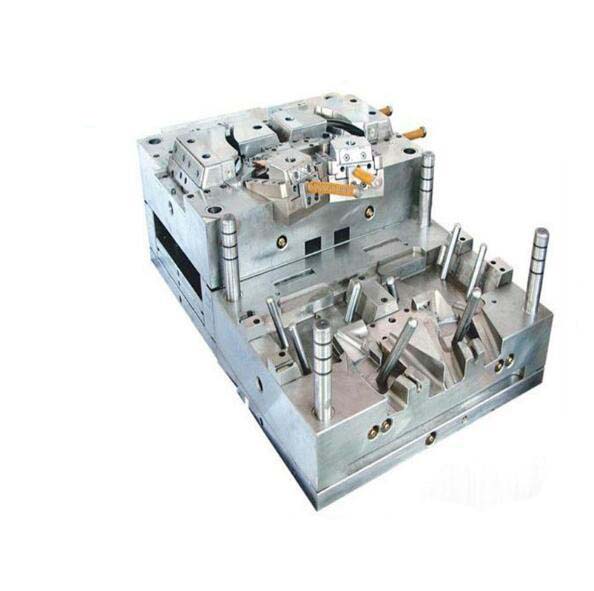
Mold flow analysis is essential, especially for glass-filled grades. It predicts filling patterns, identifies air traps, and ensures balanced flow. A manufacturer of PA66 electrical connectors used flow analysis to optimize gate placement—eliminating weld lines that had caused field failures.
Mold Materials
| Mold Component | Recommended Material | Why |
|---|---|---|
| General purpose | P20 steel | Good machinability; stable |
| Glass-filled nylon | H13 steel | Wear-resistant; holds tolerance |
| High-volume production | H13 with hard coating | Extended mold life |
Glass fibers are abrasive. Molds for glass-filled nylon should use harder steels or coatings to maintain precision over long runs.
Cooling Channel Layout
Uniform cooling prevents warpage. Design channels:
- 10–15 mm from cavity surface
- Balanced flow to all areas
- Water temperature: 50–60°C for balanced solidification
Venting
Nylon’s low viscosity can trap air. Venting requirements:
- Vent depth: 0.02–0.03 mm
- Placement: Flow ends and parting lines
- Width: 10–15 mm for adequate exhaust
Draft and Ejection
- Draft angles: 1–2° per side
- Textured surfaces: Increase to 3–5°
- Ejector pins: Use multiple pins to distribute force and avoid marks
Hot Runner Systems
Hot runners reduce waste and improve consistency. Use corrosion-resistant alloys and maintain precise temperature control to prevent material degradation.
What Defects Occur in Nylon Molding and How Do You Fix Them?
| Defect | Common Causes | Solutions |
|---|---|---|
| Warpage | Uneven cooling; moisture | Balance cooling channels; control post-mold humidity |
| Voids | Trapped air; moisture | Add vents; extend drying time |
| Sink marks | Inadequate packing | Increase packing pressure or time |
| Flash | Excessive pressure; worn mold | Reduce pressure; replace worn components |
| Short shots | Low pressure; low melt temperature | Increase pressure; raise temperature |
| Moisture-related defects | Inadequate drying | Extend drying; use sealed storage |
| Brittle parts | Material degradation | Lower melt temperature; check residence time |
A Troubleshooting Case Study
A manufacturer of PA66 industrial gears experienced intermittent brittleness. Parts passed visual inspection but failed impact testing.
Investigation revealed the problem: inconsistent melt temperature. The machine’s thermocouple was reading 10°C lower than actual. Material was degrading at true temperatures exceeding 300°C. Recalibrating the thermocouple and setting melt temperature to 285°C solved the issue. Brittleness disappeared.
What Quality Control Methods Ensure Consistency?
Statistical Process Control (SPC)
Monitor key variables:
- Melt temperature: ±5°C
- Injection pressure: ±5 MPa
- Cycle time: ±0.5 seconds
- Cooling time: Consistent
Dimensional Inspection
Nylon parts require careful measurement. Tolerances of ±0.05 mm are achievable with proper processing. Account for moisture expansion—measure parts at consistent humidity levels.
Moisture Testing
Test incoming material and finished parts. For critical applications, use moisture analyzers to verify drying effectiveness.
Mechanical Testing
For load-bearing parts, test:
- Tensile strength: Should meet specification
- Impact resistance: Verify against requirements
- Hardness: Check consistency
Where Is Nylon Injection Molding Used?
Automotive Components
PA66 with 30% glass fiber is standard for fuel line connectors, intake manifolds, and engine covers. These parts must resist oils, fuels, and engine heat.
Mechanical Parts
Gears, bearings, and bushings leverage nylon’s abrasion resistance. PA6 suits low-speed applications; PA66 handles higher loads and temperatures.
Electrical Connectors
Flame-retardant PA66 provides insulation and mechanical strength for connectors. It withstands mating forces and resists electrical tracking.
Industrial Equipment
Conveyor components, valve bodies, and pump parts use nylon for chemical resistance and durability.
Medical Devices
Non-reinforced PA6 appears in surgical tools and instrument housings. It offers biocompatibility and withstands sterilization.
Design for Manufacturing Tips
- Wall thickness: 2–3 mm uniform to prevent sink marks
- Radii: Add at corners to reduce stress concentration
- Glass-filled grades: Use larger gates and runners to accommodate higher viscosity
What Post-Processing Options Are Available?
Annealing
Heat treatment relieves residual stress and improves dimensional stability:
| Material | Annealing Temperature | Time |
|---|---|---|
| PA6 | 80–100°C | 1–2 hours |
| PA66 | 100–120°C | 1–2 hours |
Machining
Nylon machines well with sharp tools. For glass-filled grades:
- Use carbide tools
- Avoid overheating—glass fibers accelerate wear
- Coolant recommended
Bonding and Welding
- Ultrasonic welding: Creates strong, sealed joints
- Adhesive bonding: Cyanoacrylates and epoxies work well
- Surface treatment: Corona discharge or plasma improves adhesion
Painting and Plating
Surface treatment is required. Corona discharge or primers prepare the surface for coating.
Yigu Technology's Perspective
At Yigu Technology , we’ve molded thousands of nylon parts across automotive, industrial, and medical applications. Our approach starts with aggressive drying —we use desiccant dryers and sealed hoppers to maintain moisture below 0.05% .
For glass-filled grades, we use H13 molds and monitor wear carefully. Our mold flow analysis optimizes gating and cooling before steel is cut.
We understand that nylon’s moisture sensitivity doesn’t end at molding. We advise clients on storage, handling, and assembly considerations to maintain part performance throughout their lifecycle.
Conclusion
Nylon injection molding succeeds when you respect the material’s unique demands. Dry it aggressively—below 0.05% moisture . Control melt temperature within narrow windows—230–290°C depending on grade. Design molds with proper venting, uniform cooling, and adequate draft.
When these fundamentals are in place, nylon delivers. Parts come out strong, wear-resistant, and dimensionally stable. When they’re not, moisture-related defects, warpage, and brittleness plague production.
Understanding PA6 and PA66—their differences, their processing requirements, and their post-molding behavior—separates reliable production from frustrating trial and error.
FAQ
How does moisture affect nylon parts after molding?
Moisture absorption causes dimensional swelling (1–2% in length) and reduces tensile strength by 10–15% . It also increases flexibility and impact resistance. For precision parts, control post-molding humidity or store parts in sealed packaging.
What is the difference between PA6 and PA66?
PA66 has a higher melting point (255–265°C vs. 215–225°C) and better thermal properties, making it suitable for high-temperature applications. PA6 absorbs more moisture (8–10% vs. 6–8%) and crystallizes faster, which can shorten cycle times. PA66 offers higher tensile strength (82–94 MPa vs. 70–83 MPa).
Can glass-filled nylon be recycled?
Yes, but recycling is more complex. Glass fibers break down during regrinding, becoming filler. Recycled glass-filled nylon is suitable for non-critical applications where lower strength is acceptable. Blending with virgin material (10–30%) maintains consistent properties.
What is the shrinkage difference between PA6 and PA66?
PA6 shrinks 1.5–2.5% ; PA66 shrinks 1.0–2.0% . Glass reinforcement reduces shrinkage to 0.3–1.0% for both grades. Mold design must compensate accordingly.
How do you prevent flash in nylon molding?
Flash occurs when molten plastic escapes between mold halves. Solutions: reduce injection pressure , increase clamping force , check for worn mold components , and verify proper mold alignment . For glass-filled grades, mold wear accelerates—inspect regularly.
Contact Yigu Technology for Custom Manufacturing
At Yigu Technology , we specialize in nylon injection molding for demanding applications. Our team understands PA6 and PA66—including glass-filled and flame-retardant grades. We use desiccant dryers, sealed hoppers, and precise process control to deliver parts that meet specifications consistently. From automotive connectors to industrial gears, we bring expertise to every project. Contact us today to discuss your nylon injection molding needs.