Introduction
Polyvinylidene Fluoride—PVDF —is a high-performance fluoropolymer that bridges the gap between affordability and exceptional properties. It offers chemical resistance, thermal stability, and mechanical strength that make it valuable across demanding industries.
But injection molding PVDF comes with unique challenges. It requires high processing temperatures. Its flow characteristics can cause defects if not controlled. Proper handling is essential to maintain its UV resistance and thermal stability.
This guide covers everything you need to know about PVDF injection molding. You will learn about material properties, process parameters, mold design, quality control, and applications.
What Makes PVDF a High-Performance Material?
Thermal Properties
PVDF operates across a wide temperature range. Continuous use spans from -40°C to 150°C . Short-term exposure can reach 170°C .
This thermal stability means PVDF retains its properties even after prolonged exposure to high temperatures. It does not degrade quickly in hot environments.
Chemical Resistance
PVDF resists a broad range of chemicals. It performs well with:
- Acids
- Bases
- Fuels and oils
- Many industrial chemicals
While it is less chemically inert than PTFE, PVDF offers better resistance than most engineering plastics. It stands up to chlorine, making it ideal for water treatment applications.
Mechanical Properties
PVDF delivers good mechanical strength for a fluoropolymer.
| Property | Typical Value |
|---|---|
| Tensile strength | 35 – 50 MPa |
| Creep resistance | Excellent |
| Impact resistance | Good (enhanced in modified grades) |
These properties make PVDF suitable for load-bearing applications where other fluoropolymers would fail.
Electrical Properties
PVDF provides excellent electrical insulation. Its low dielectric constant remains stable across a wide frequency range. This makes it valuable for electronic components and connectors.
UV Resistance and Weatherability
PVDF offers exceptional UV resistance. Parts made from PVDF can last 20+ years outdoors without significant degradation. This property is inherent to the material—not dependent on additives.
Flame Retardancy
PVDF is inherently flame retardant. It meets UL94 V-0 standards, making it suitable for applications requiring fire safety.
How Do You Injection Mold PVDF?
Critical Process Parameters
Melt Temperature
PVDF processes at 230°C to 270°C . Staying within this range is critical.
Exceeding 290°C risks thermal degradation. Degraded material loses mechanical strength and chemical resistance. The fluoropolymer structure breaks down, compromising the part’s integrity.
Injection Speed and Pressure
Moderate injection speeds of 20 to 40 mm/s work best. Higher speeds can cause shear-induced degradation—the polymer chains break under excessive stress.
Injection pressure typically ranges from 800 to 1200 bar . Thin-walled sections may require higher pressures to fill completely.
Cooling Time
PVDF has moderate thermal conductivity. Cooling time ranges from 15 to 30 seconds .
Total cycle time typically falls between 45 and 90 seconds . This is shorter than many other fluoropolymers, making PVDF relatively efficient to process.
The table below summarizes key parameters:
| Parameter | Range | Notes |
|---|---|---|
| Melt temperature | 230 – 270°C | Above 290°C causes degradation |
| Injection speed | 20 – 40 mm/s | Moderate speeds prevent shear damage |
| Injection pressure | 800 – 1200 bar | Higher for thin walls |
| Cooling time | 15 – 30 seconds | Based on part thickness |
| Cycle time | 45 – 90 seconds | Efficient compared to other fluoropolymers |
What Material Handling Is Required?
Drying Requirements
PVDF absorbs moisture from the air. Moisture causes defects like voids and surface imperfections.
Drying conditions: 120°C to 140°C for 4 to 6 hours
Target moisture content: below 0.02%
Storage and Handling
Keep PVDF pellets in sealed containers with desiccants. Limit exposure to ambient air to 1 hour before processing. Humidity control prevents moisture absorption that could affect part quality.
Equipment Considerations
High-temperature processing requires equipment that can handle potential fluoride byproducts. Use corrosion-resistant components like:
- Nickel-plated barrels
- Corrosion-resistant screws
- Stainless steel or nickel-alloy hot runner components
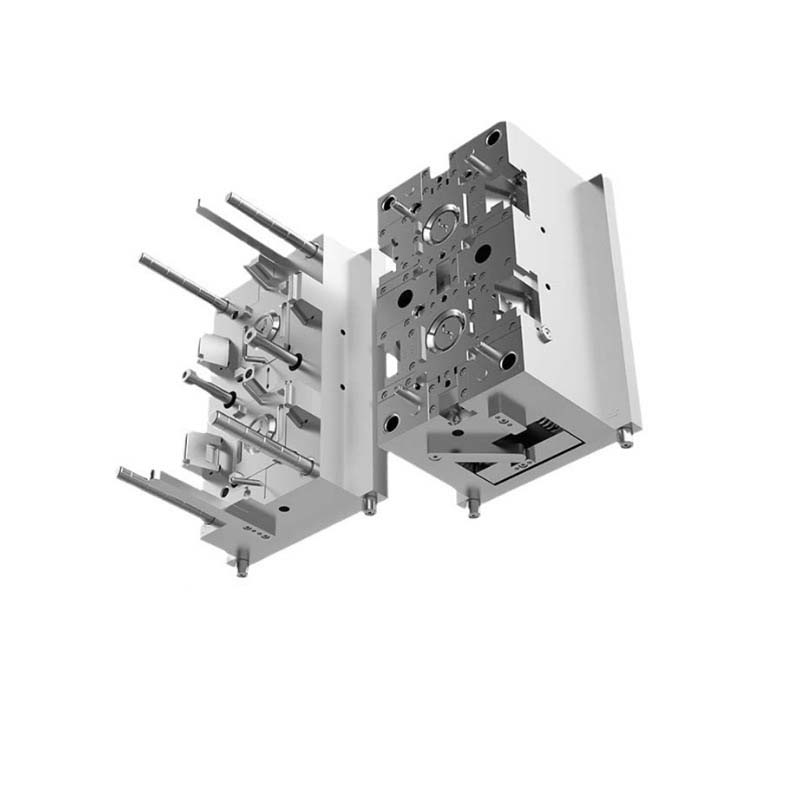
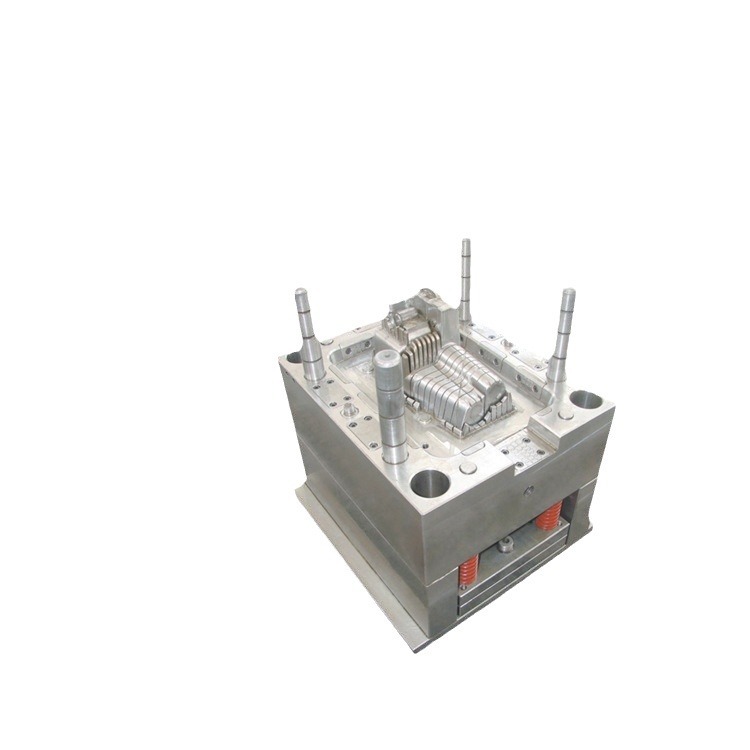
How Should Molds Be Designed for PVDF?
Venting Requirements
PVDF releases minimal volatiles during processing. But proper venting is still essential to prevent trapped air.
Vent depth: 0.02 to 0.04 mm
Vent width: 8 to 12 mm
Place vents at flow path ends and around ribs where air is most likely to be trapped.
Cooling Channel Layout
Uniform cooling prevents warpage. Design cooling channels with:
- 8 to 12 mm from cavity surface
- 8 to 10 mm channel diameter
- 1:1.5 ratio of channel length to diameter for efficient cooling
Draft Angles and Surface Finish
Draft angles: 2° to 3° per side. PVDF ejects more easily than some other fluoropolymers, so moderate draft angles work well.
Surface finish: Ra 0.8 to 1.6 μm. This range balances part release with appearance. Smoother finishes may cause sticking. Rougher finishes affect part aesthetics.
Mold Materials
| Material | Best For |
|---|---|
| P20 steel | Most applications, moderate volumes |
| H13 steel | High-volume production runs |
Hot Runner Systems
Hot runners can be used with PVDF. Use stainless steel or nickel-alloy components. Operate at 240°C to 260°C .
What Defects Occur and How to Prevent Them?
Common Defects and Solutions
| Defect | Cause | Solution |
|---|---|---|
| Warpage | Uneven cooling, mold temperature variation | Balance cooling channels; set mold temperature to 60-80°C |
| Voids | Moisture absorption, insufficient packing | Improve drying; increase packing pressure by 10% |
| Short shots | Low melt temperature, inadequate speed | Raise melt temperature by 5-10°C; increase injection speed |
| Surface defects | Contaminated material, rough mold surface | Use filtered feeding; polish mold to Ra 0.8 μm |
Quality Control Measures
Process monitoring: Track melt temperature and pressure. Keep variations within ±2°C and ±50 bar .
Mechanical testing: Test tensile strength and impact resistance on 1 in 500 parts . Verify properties meet specifications.
Dimensional accuracy: Use coordinate measuring machines (CMMs). Target tolerances of ±0.05 mm for parts under 100 mm.
Chemical resistance testing: Periodically test with target fluids. Ensure performance integrity over time.
Where Is PVDF Used in Injection Molding?
Chemical Processing Equipment
PVDF’s chemical resistance makes it ideal for handling aggressive fluids.
Applications: Valves, pumps, fittings, pipe components
These parts withstand acids, bases, and industrial chemicals that would degrade other plastics.
Water Treatment
PVDF resists chlorine and other water treatment chemicals. It does not degrade in the presence of disinfectants.
Applications: Filtration systems, piping, membrane housings
Electrical Components
PVDF’s electrical properties and flame retardancy serve the electronics industry.
Applications: Insulators, connectors, cable housings, switch components
Aerospace Components
PVDF’s strength-to-weight ratio and thermal stability make it valuable in aerospace.
Applications: Fuel system components, wiring harnesses, lightweight structural parts
Medical Devices
Some PVDF grades are biocompatible. They offer chemical inertness for fluid handling.
Applications: Fluid handling components, diagnostic equipment housings, medical tubing
The table below summarizes applications:
| Industry | Applications | Key Properties Used |
|---|---|---|
| Chemical processing | Valves, pumps, fittings | Chemical resistance, mechanical strength |
| Water treatment | Filtration, piping | Chlorine resistance, durability |
| Electrical | Insulators, connectors | Electrical insulation, flame retardancy |
| Aerospace | Fuel systems, harnesses | Strength-to-weight ratio, thermal stability |
| Medical | Fluid handling, diagnostics | Biocompatibility, chemical inertness |
What Post-Processing Options Exist?
Machining and Trimming
PVDF machines well with carbide tools. Use 1500 to 3000 RPM . Coolant prevents heat buildup and maintains precision.
PVDF does not require extensive post-machining for most applications. When needed, standard machining practices work well.
Adhesive Bonding
Surface preparation improves adhesion. Plasma etching creates a bond-ready surface.
Use epoxy or polyurethane adhesives. Cure at room temperature or 60°C to 80°C for faster processing.
Heat Treatment
Annealing relieves internal stresses. Process: 120°C to 140°C for 1 to 2 hours .
This reduces warpage in tight-tolerance parts. It is recommended for components with thick sections or complex geometries.
What Does a Real-World Example Look Like?
A water treatment equipment manufacturer needed components for a high-pressure filtration system. The parts would be exposed to chlorinated water at elevated temperatures. Standard plastics degraded within months.
PVDF was selected for its chlorine resistance and thermal stability. Molding parameters were optimized: melt temperature at 250°C, injection speed at 30 mm/s, mold temperature at 70°C.
The molded parts passed accelerated testing equivalent to 10 years of service. The manufacturer reduced maintenance frequency and extended equipment life.
Conclusion
PVDF injection molding combines a high-performance material with precise process control. The material offers thermal stability from -40°C to 150°C, broad chemical resistance, good mechanical strength, and exceptional UV durability.
Successful molding requires:
- Melt temperatures between 230°C and 270°C
- Moderate injection speeds to avoid shear degradation
- Proper drying to below 0.02% moisture
- Molds with appropriate vents, cooling channels, and draft angles
Applications span chemical processing, water treatment, electrical components, aerospace, and medical devices. Each leverages PVDF’s unique combination of properties.
When processed correctly, PVDF parts deliver long service life in demanding environments where many other plastics would fail.
FAQ
How does PVDF compare to PTFE in chemical resistance?
PTFE offers broader chemical resistance, particularly against strong oxidizing acids and some solvents. However, PVDF is more resistant to certain chemicals like ketones and esters. PVDF also has significantly higher mechanical strength, making it better for load-bearing applications. PTFE is softer and more prone to creep under load.
Can PVDF be used in food contact applications?
Yes. Certain PVDF grades meet FDA and EU 10/2011 standards for food contact. These grades are used in food processing equipment such as valves, fittings, and conveyor components where chemical resistance and cleanliness are required.
What causes PVDF parts to lose UV resistance over time?
Improper processing is the primary cause. Overheating during molding—melt temperatures above 270°C—can degrade the polymer structure and reduce UV stability. Contamination with additives not designed for outdoor exposure can also affect UV resistance. Using virgin PVDF and maintaining melt temperatures within the recommended range preserves UV properties.
What are the drying requirements for PVDF before molding?
PVDF requires drying at 120°C to 140°C for 4 to 6 hours . Target moisture content below 0.02% . Store pellets in sealed containers with desiccants. Limit exposure to ambient air to 1 hour before processing to prevent moisture absorption.
Is PVDF suitable for high-temperature applications?
Yes. PVDF operates continuously from -40°C to 150°C. Short-term exposure up to 170°C is acceptable. For applications above 150°C, PEEK or other higher-temperature polymers may be more appropriate.
Contact Yigu Technology for Custom Manufacturing
At Yigu Technology , we specialize in PVDF injection molding. Our equipment handles the high temperatures and corrosion considerations required for processing this fluoropolymer.
We understand the critical process parameters: melt temperature control, moderate injection speeds, and proper drying. Our quality control systems ensure consistent mechanical properties and dimensional accuracy.
We serve chemical processing, water treatment, aerospace, and medical industries. Whether you need valves, electrical components, or custom parts, we deliver reliable PVDF components.
Contact Yigu Technology today to discuss your PVDF injection molding project.