Introduction
In high-end manufacturing—aerospace, automotive, rail transit—two processes stand above all others. Machining and welding directly determine product precision, strength, and service life. A jet engine blade with a surface finish measured in nanometers. A high-speed rail bogie that must withstand millions of stress cycles. Both depend on the perfect execution of these fundamental technologies.
But mastering these processes requires more than knowing definitions. It demands understanding underlying principles, selecting appropriate equipment, matching processes to materials, and implementing rigorous quality control. This guide provides a practical framework for machining and welding—from basic principles to advanced applications. Whether you are an engineer, technical buyer, or student, you will gain actionable insights into the technologies that shape modern manufacturing.
What Are the Core Principles of Machining and Welding?
Machining: The Art of Material Removal
At its core, machining operates on the principle of cutting. A tool moves relative to a workpiece, removing excess material to achieve required dimensions, shape, and surface quality. The four most basic machining methods are:
Turning rotates the workpiece while the tool moves linearly. It is ideal for shafts, discs, and cylindrical parts—motor shafts and flanges.
Milling rotates the tool while the workpiece moves. It produces flat surfaces, grooves, and complex contours—gearbox housings and engine blocks.
Planing moves the tool in a straight reciprocating path. It is suited for large flat surfaces—machine tool beds.
Grinding uses a high-speed rotating wheel as the cutting tool. It achieves high precision and low surface roughness—bearing inner and outer rings.
Work hardening occurs during machining. Metal surfaces become harder as grains flatten and refine. Hardness increases, but toughness decreases, potentially complicating subsequent operations. Cutting forces and cutting heat generate residual stresses. Without proper treatment—such as aging—these stresses can cause workpiece deformation or cracking.
Welding: The Science of Permanent Joining
Welding fuses base metals with filler material through heating or pressure. Upon cooling, a strong weld forms, creating a permanent connection.
| Welding Method | Representative Types | Core Principle | Applicable Materials | Advantages | Key Considerations |
|---|---|---|---|---|---|
| Arc Welding | SMAW, TIG, MIG/MAG | Arc melts base metal and filler wire | Carbon steel, stainless steel, low-alloy steel | Simple equipment, low cost, adaptable | Pore and undercut risks; control heat-affected zone |
| Laser Welding | Fiber laser, CO₂ laser | High-energy beam focuses heat; narrow weld | Aluminum, titanium, dissimilar metals | Fast speed, minimal deformation, high precision | Tight assembly clearance requirements |
| Specialized Welding | Resistance welding, brazing | Resistive heat or wetted filler | Thin sheets, electronic components | High efficiency, no weld defects | Joint strength lower than fusion welding |
The heat-affected zone (HAZ) is critical. This area—where base metal is not melted but properties change—directly affects weld strength and toughness. In high-strength steel welding, a hardened HAZ structure can lead to cold cracks.
What Equipment and Tools Ensure Process Quality?
Machining Equipment: From Manual to Intelligent
The evolution from conventional machine tools to CNC machining centers has transformed manufacturing.
CNC machining centers integrate milling, drilling, boring, and other functions. With tool magazines and automatic tool changers, they handle complex parts in high volumes—deep holes in hydraulic valve blocks.
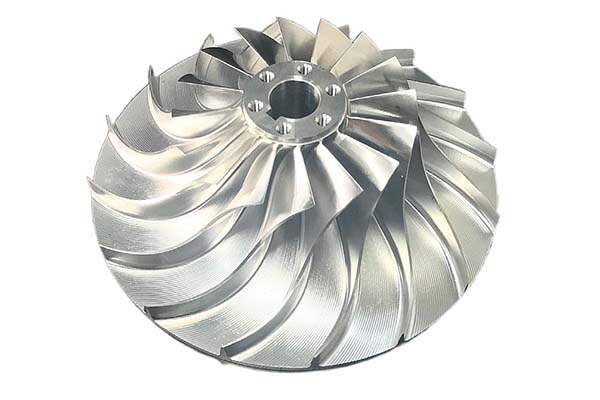
Five-axis machine tools enable multi-directional linkage machining. They solve complex surface challenges—aero engine blades—with accuracy reaching ±0.005 mm.
Auxiliary tools matter. Chucks and clamps secure workpieces during cutting. Tool selection directly affects efficiency. For stainless steel, cobalt-containing high-speed steel or carbide tools with coatings like TiN or AlTiN improve wear resistance.
Case Study: A new energy auto parts factory upgraded from conventional milling to five-axis CNC machining centers. Machining efficiency for complex cavity parts increased by 40%. Scrap rates dropped from 3.2% to 0.8%.
Welding Equipment: From Manual to Automated
Welding equipment selection must match both welding method and production requirements.
Core equipment includes the welding power source, which provides stable arc or laser energy. MIG welding power sources often include pulse functions to reduce spatter. Wire feeders ensure consistent filler wire delivery.
Auxiliary tools are equally important. Welding torch nozzles control shielding gas coverage to prevent oxidation. Shielding gases—argon, carbon dioxide mixtures—isolate the weld from air. Ceramic backing strips enable single-sided welding with double-sided formation, improving weld root quality. Auto-darkening helmets protect operators from arc damage.
Industry Trend: Automated welding systems—robotic workstations—are now standard in automotive and shipbuilding industries. Pre-programmed operations deliver high precision and efficiency, particularly for mass-produced standardized parts like automotive chassis components.
How Do You Match Processes to Materials?
Material properties vary widely. Mismatched processes lead to rapid tool wear, cracking, or joint failure. Mastering material adaptation is essential.
Processing and Welding Characteristics
| Material | Machining Characteristics | Welding Characteristics | Core Adaptation Solutions |
|---|---|---|---|
| Carbon Steel | Good machinability, low tool wear | Excellent weldability; arc welding sufficient | Machining: Standard HSS tools; Welding: No preheating for <20 mm thickness |
| Stainless Steel | Prone to built-up edge, poor heat dissipation | Medium weldability; intergranular corrosion risk | Machining: Carbide tools, increased cutting speed; Welding: TIG, control temperature <600°C |
| Aluminum Alloy | High deformation tendency, gummy | Easily oxidized; poor weld formation | Machining: Diamond tools, emulsion coolant; Welding: Laser or TIG with high-purity argon |
| Titanium Alloy | High-temperature oxidation, low cutting efficiency | Severe high-temperature oxidation; embrittlement risk | Machining: Tungsten-cobalt carbide, dry cutting; Welding: Vacuum electron beam, stress relief annealing |
| Dissimilar Metals | Physical properties differ significantly | Brittle phases form; low joint strength | Brazing or diffusion welding with interlayer (e.g., copper foil) |
Process Parameter Adjustments
Machining side: Cutting fluid compatibility varies by material. Emulsion works for carbon steel. Extreme-pressure cutting oil suits stainless steel. Synthetic cutting fluids reduce tool wear for superalloys.
Welding side: Preheating temperature and post-weld heat treatment ensure dissimilar metal joint quality. For carbon steel to stainless steel welding, preheat to 100–150°C. Post-weld tempering at 300–400°C reduces residual stress. Filler wire selection must match base metal composition—ER308L wire for 304 stainless steel.
Case Study: An aerospace company welding titanium alloy skeletons initially used conventional TIG welding. Welds experienced embrittlement and cracking. Revised process: vacuum laser welding, workpiece preheating to 80°C before welding, stress relief at 550°C for 2 hours post-weld, and Ti-6Al-4V filler wire. Final weld joint strength reached 92% of base metal, meeting aerospace standards.
How Do You Detect Machining and Welding Defects?
Machining accuracy and welding quality directly determine product safety. In aerospace and rail transit, even minor defects can have serious consequences.
Machining Quality Inspection
Two core indicators define machining quality: dimensional tolerance and surface roughness Ra.
Dimensional tolerance is the allowable deviation between actual and design dimensions. Precision parts may require ±0.001 mm, measured by coordinate measuring machines (CMMs) .
Surface roughness Ra reflects surface smoothness. Smaller Ra values indicate smoother surfaces—grinding achieves Ra 0.025 μm. Roughness testers perform contact measurement.
Additional checks for burrs, chips, and internal cracks use visual inspection or ultrasonic flaw detection.
Welding Quality Inspection
Welding defects include porosity, lack of fusion, undercut, and cracks. Select detection methods based on defect type.
Visual inspection checks surface defects—undercut, poor formation—with the naked eye or magnification.
Non-destructive testing (NDT) includes multiple methods. Ultrasonic testing (UT) uses sound waves to detect internal porosity and lack of fusion in thick plates. Radiographic testing (RT) uses X-rays or gamma rays to visualize internal defect locations—common for high-pressure vessel welds. Penetrant testing (PT) detects surface-opening defects like microcracks with simple, low-cost operation.
Destructive testing verifies mechanical properties. Tensile, bending, and impact tests on specimens measure joint strength. Penetration depth measurement determines effective weld connection thickness.
Practical Suggestion: For mass production, implement a three-level inspection system—first article inspection, in-process sampling, final full inspection. Combine with laser trackers to monitor deformation during welding, preventing quality issues before they occur.
Where Are Machining and Welding Applied?
Aerospace: Aero Engine Blades
Aero engine blades are quintessential “high-precision, high-difficulty” parts. Titanium or superalloy materials are machined on five-axis CNC machining centers to complex surfaces with Ra below 0.05 μm. Blade-to-hub connections use vacuum electron beam welding with penetration error ≤0.1 mm, ensuring stability in high-temperature, high-pressure environments.
New Energy Vehicles: Battery Trays
Battery trays are core load-bearing components requiring both light weight and high strength. Aluminum alloy is milled and drilled on CNC machining centers to ensure mounting hole position accuracy. Tray assembly uses laser welding at speeds up to 3 m/min with deformation <0.5 mm. Weld seams undergo UT inspection to verify no internal defects.
Rail Transit: High-Speed Rail Bogies
High-speed rail bogies directly affect operational safety. High-strength steel frames are welded with preheating to 150°C. MIG welding performs root passes; submerged arc welding fills. Welds pass both RT and PT verification. Bogie gearbox housings are machined on CNC machining centers to dimensional tolerances of ±0.01 mm, ensuring precise component fit.
Remanufacturing: Equipment Repair
Machining and welding are core repair technologies. A steel mill roll worn beyond tolerance: turning removes the wear layer. Surfacing—submerged arc welding—restores the surface. Grinding returns dimensional accuracy. Repaired rolls achieve 80% of new part service life, significantly reducing production costs.
Conclusion
Machining and welding form the foundation of modern manufacturing. Their mastery determines product quality, production efficiency, and ultimately, competitive advantage.
Understanding core principles is essential. Machining relies on cutting mechanics; welding on controlled heat input and fusion. Equipment selection matters—CNC machining centers and automated welding systems deliver precision and consistency that manual methods cannot match. Material adaptation requires matching processes to the specific properties of carbon steel, stainless steel, aluminum, titanium, and dissimilar combinations. Quality control through dimensional inspection, surface measurement, and non-destructive testing ensures that finished products meet specifications.
Under trends toward intelligence and sustainability, both processes are advancing. CNC machining centers integrate with industrial robots. Laser welding combines with artificial intelligence for adaptive control. These innovations drive higher precision, greater efficiency, and lower energy consumption.
For manufacturers, mastering machining and welding means investing in equipment, training, and quality systems. For practitioners, it means understanding principles deeply and building experience systematically. As new materials and technologies emerge, the applications of machining and welding will only expand—and the need for expertise will only grow.
FAQ
How can I avoid built-up edge when machining stainless steel?
Use carbide or diamond-coated tools. Increase cutting speed—recommended 100–150 m/min. Apply extreme-pressure cutting oil for cooling and lubrication to reduce friction between tool and workpiece.
What welding process is most reliable for dissimilar metals like steel and aluminum?
Brazing or diffusion welding is recommended. Use a specialized interlayer material—copper, nickel—to bridge the physical property differences between the two metals, preventing brittle phase formation and improving joint strength.
How do I solve workpiece deformation after welding?
Address deformation through three approaches: (1) preheating before welding to reduce temperature gradient; (2) symmetrical or segmented welding sequences to disperse welding stress; (3) post-weld stress relief annealing, or mechanical correction to adjust deformation.
What is the core difference between a CNC machining center and a five-axis machine?
CNC machining centers typically operate with three axes (X, Y, Z), suitable for simple surfaces and cavities. Five-axis machines add two rotary axes (A, B, or C), enabling complex surface machining in a single setup with higher precision and efficiency for high-end applications like aerospace components.
How can I tell if a weld has internal defects?
Use non-destructive testing methods. Ultrasonic testing (UT) detects internal defects in thick plates. Radiographic testing (RT) visualizes defect locations. Penetrant testing (PT) identifies surface-opening defects. For validation, destructive testing—tensile, bending—verifies mechanical properties.
Contact Yigu Technology for Custom Manufacturing
Need precision machined or welded components for your next project? Yigu Technology combines advanced machining and welding capabilities with deep material expertise to deliver high-quality parts across aerospace, automotive, and industrial sectors. Our engineers help select the right processes, optimize parameters, and implement quality controls to meet your specifications. Contact us today to discuss your requirements.