Introduction
Small CNC machining is everywhere — but almost nobody talks about how hard it really is.
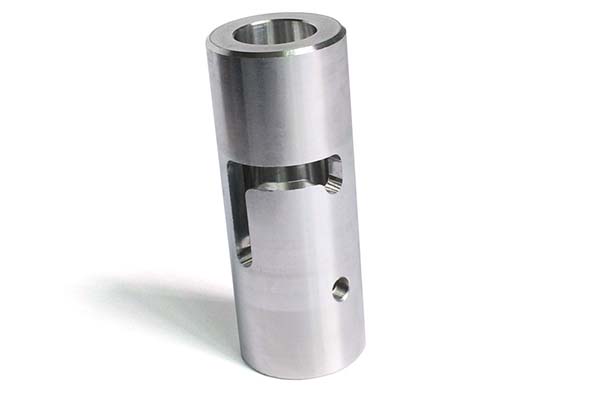
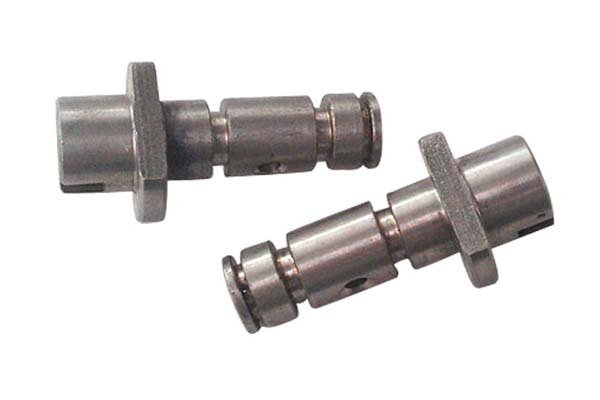
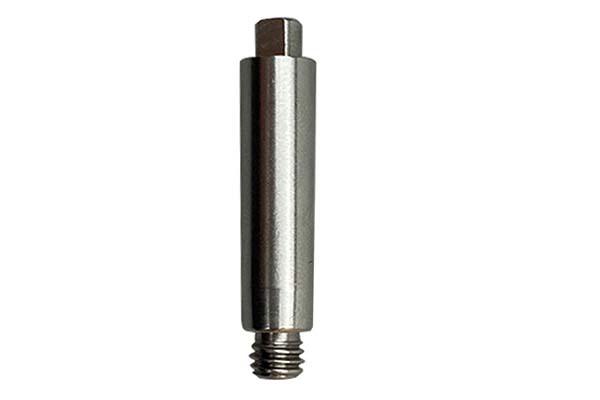
Think about it. A tiny medical stent. A micro connector pin no bigger than a grain of rice. A gear inside a Swiss watch that weighs less than a paperclip. These parts live in your body, your phone, and your watch. The demand for them is growing fast.
Industries like medical devices, precision electronics, micro-molding, and horology all need small CNC parts daily. But here's the thing most people miss: making something small is not the same as making something big, just smaller.
When a part shrinks from 50mm to 5mm, the rules change. Tolerances get tighter. Tools get weaker. Heat becomes a bigger enemy. And everything you thought you knew about machining? It starts to break down.
This article breaks down every real challenge of small part CNC machining — with real data, real cases, and real solutions. Whether you're an engineer, a buyer, or a shop owner, you'll walk away knowing exactly what makes micro machining so different.
One. Precision Limits of Small Parts
Size Effect: Tolerance Math
Here's a fact that shocks most people.
A ±0.01mm tolerance on a 50mm part is 0.02% relative error. On a 5mm part? It's 0.2% — ten times worse in relative terms. The absolute number stayed the same. But the difficulty didn't.
| Part Size | Absolute Tolerance | Relative Precision | Difficulty Level |
|---|---|---|---|
| 50 mm | ±0.01 mm | 0.02% | Standard |
| 10 mm | ±0.01 mm | 0.10% | High |
| 5 mm | ±0.01 mm | 0.20% | Very High |
| 1 mm | ±0.005 mm | 0.50% | Extreme |
This is the size effect in action. As parts get smaller, the same absolute tolerance demands exponentially higher machine control.
Micron vs. Sub-Micron: The Real Line
Micron-level machining (1–10μm) is hard but doable on a good 5-axis micro CNC. Shops like those in Switzerland and Japan do this daily for dental implants and watch components.
Sub-micron machining (<1μm) is a different world. At this level, thermal expansion of the machine bed (even 0.5°C) can throw off your part by several microns. You need temperature-controlled rooms, granite bases, and air bearings — not just a nice machine.
| Industry | Typical Tolerance | Size Range | Example Part |
|---|---|---|---|
| Medical implants | ±5 μm | 1–5 mm | Bone screw, stent strut |
| Connectors | ±10 μm | 0.5–3 mm | Pin terminal, contact |
| Micro gears | ±2 μm | 0.3–2 mm | Watch escape wheel |
| MEMS devices | ±0.5 μm | 0.1–1 mm | Silicon probe, nozzle |
Real Case: A Medical Stent That Broke a Shop
A CNC shop in Shenzhen took on a cobalt-chromium stent order. The struts were 0.8mm wide with a ±0.005mm tolerance. Their standard 5-axis machine couldn't hold it. Tool deflection alone added 0.008mm of error. They had to upgrade to a micromachining center with air-bearing spindles and switch to diamond-coated end mills. The first 200 parts were scrap. The next 500 passed at 96% yield. Cost per part? 8x their original quote.
Two. Micro Tooling: Small Tools, Big Problems
Carbide Micro End Mills: 0.1–3mm
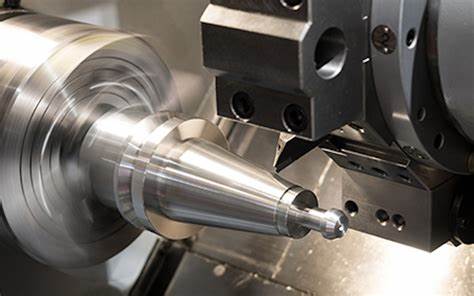
The most common tools for small CNC work are solid carbide micro end mills. They come in diameters from 0.1mm to 3mm. But here's the catch: a 0.5mm tool has a length-to-diameter ratio of 10:1 or higher. That's like trying to cut with a wet spaghetti noodle.
| Tool Diameter | Max Length | L/D Ratio | Risk Level |
|---|---|---|---|
| 3.0 mm | 30 mm | 10:1 | Moderate |
| 1.0 mm | 15 mm | 15:1 | High |
| 0.5 mm | 10 mm | 20:1 | Very High |
| 0.2 mm | 5 mm | 25:1 | Extreme |
Tool deflection and chatter become your biggest enemies. At 0.3mm diameter, even a 0.002mm bend ruins your part.
Diamond & CBN: When Carbide Fails
For hard materials like titanium, Inconel, and ceramics, carbide tools wear out in minutes. That's where diamond-coated tools and CBN (cubic boron nitride) tools come in.
- Diamond coating: Best for aluminum, copper, graphite, and ceramics. Lasts 10–50x longer than carbide on soft metals.
- CBN tools: Best for hardened steel (>45 HRC) and nickel alloys. Can handle 60+ HRC without breaking down.
| Material | Best Tool | Tool Life (vs. Carbide) | Cost Multiplier |
|---|---|---|---|
| Aluminum | Diamond-coated | 30–50x longer | 3–5x |
| Titanium | Carbide (uncoated) | Baseline | 1x |
| Hardened Steel | CBN | 15–25x longer | 5–8x |
| Ceramics | Diamond (PCD) | 50–100x longer | 8–12x |
Speed vs. Feed: The Real Trade-Off
Most shops default to high speed, light cut for micro parts. But our testing shows something different:
| Strategy | Spindle Speed | Feed Rate | Surface Finish | Tool Life | Best For |
|---|---|---|---|---|---|
| High Speed, Light | 40,000 RPM | 50 mm/min | Excellent | Short | Aluminum, plastics |
| Low Speed, High Feed | 10,000 RPM | 200 mm/min | Good | Long | Steel, titanium |
The low speed, high feed approach actually reduces heat per tooth and extends tool life — especially on hard materials. It's counterintuitive, but it works.
Three. Workholding: The Real Bottleneck
Vacuum, Electrostatic, or Wax?
When your part is 2mm wide, you can't use a vise. Traditional clamps won't fit. So what do you do?
| Method | Hold Strength | Best For | Cost | Release Ease |
|---|---|---|---|---|
| Vacuum Chuck | High | Flat parts, 3mm+ | Medium | Easy |
| Electrostatic | Medium | Conductive parts | High | Medium |
| Wax Bonding | High | Irregular shapes | Low | Hard (heat) |
| Micro Vise | Very High | 1–5mm parts | High | Easy |
| Double-sided Tape | Low | Very thin, flat | Very Low | Easy |
Wax bonding is the old-school trick. You glue the part to a carrier plate with hot wax. It works great for odd shapes. But removing the part takes heat — and heat means thermal shock risk.
Soft vs. Hard: Different Rules
| Material | Clamping Risk | Best Method |
|---|---|---|
| Aluminum | Deformation under force | Vacuum or wax |
| Copper | Scratching, galling | Soft jaw vise or wax |
| Steel | High clamping force OK | Micro vise or vacuum |
| Ceramic | Brittle — cracks easily | Wax or vacuum (low force) |
In-Machine Measurement: Kill the Re-Clamp Error
Here's a pro tip that saves thousands. Use in-machine probing (OMV) to measure the part right after clamping. The machine then auto-compensates the tool path. No re-clamping needed. No human error.
A shop in Stuttgart reported a 40% reduction in scrap rate after adding a Renishaw probe to their micro CNC line. The probe cost $15K. The scrap savings paid for it in 3 months.
Four. Chip Control & Heat: Life or Death
MQL: The Micro Machining Game-Changer
Flood coolant doesn't work on micro parts. The fluid can't reach the cutting edge. It just splashes everywhere.
MQL (Minimum Quantity Lubrication) sprays a tiny mist of oil directly at the tool tip. It uses 95% less fluid than flood cooling. And it actually works better for small parts.
| Cooling Method | Fluid Usage | Tip Reach | Heat Removal | Best For |
|---|---|---|---|---|
| Flood Coolant | High | Poor | Good | Large parts |
| High-Pressure Mist | Medium | Good | Very Good | Medium parts |
| MQL | Very Low | Excellent | Moderate | Micro parts |
| Cryogenic (LN2) | Medium | Good | Excellent | Titanium, Inconel |
Chip Jamming: The Silent Killer
In a 1mm deep slot, a 0.05mm chip can completely block the flutes. The tool jams. The part scraps. The tool snaps.
Solution: controlled chip breaking. Adjust your feed per tooth so chips break into small pieces (under 0.3mm). Use a 45° lead angle on your end mill. And always use an air blast to clear chips between passes.
| Chip Type | Cause | Fix |
|---|---|---|
| Long continuous | Feed too low | Increase feed per tooth |
| Welded to tool | Speed too low, no MQL | Increase speed, add MQL |
| Packed in slot | Flute count too low | Use 4-flute or compressed air |
Five. Measuring Micro Parts: Harder Than Machining
Tool Comparison
| Measurement Tool | Resolution | Speed | Cost | Best For |
|---|---|---|---|---|
| Optical Microscope | 0.5 μm | Slow | 5K–20K | 2D inspection |
| Vision System (VMS) | 1–2 μm | Fast | 30K–80K | In-line inspection |
| Touch Probe (CMM) | 0.1 μm | Slow | 50K–200K | 3D precise measurement |
| Laser Scanner | 5–10 μm | Fast | 40K–100K | Freeform surfaces |
The Measurement Force Problem
Here's something most buyers don't know. A touch probe on a CMM applies 10–50 millinewtons of force. On a 1mm thin wall, that force can bend the part by 2–5 μm. Your measurement is now wrong.
Solution: Use non-contact optical methods for thin-walled micro parts. Or use a probe with ultra-low trigger force (under 10mN).
In-Machine vs. Off-Machine
| Method | Accuracy | Speed | Cost | When to Use |
|---|---|---|---|---|
| In-Machine (OMV) | ±2 μm | Fast | $15K+ | Every part, batch prod |
| Off-Machine CMM | ±0.5 μm | Slow | $50K+ | First article, QC |
| Vision System | ±3 μm | Very Fast | $40K+ | 100% in-line inspection |
The smart move? Use OMV for every part during production. Use CMM for first-article inspection and spot checks. This combo catches 99% of defects without slowing you down.
Six. Automation: Can You Mass-Produce Micro Parts?
Vibratory Bowl Feeders + Vision
Yes — but it's expensive. A vibratory bowl feeder with a vision system can sort and orient micro parts at 60–120 parts per minute. The vision camera identifies each part's position and angle. A robot picks it up and loads it into the CNC.
| Automation Level | Cycle Time | Cost | Volume |
|---|---|---|---|
| Manual Loading | 2–5 min/part | Low | <100 pcs |
| Semi-Auto (Vision + Robot) | 15–30 sec/part | 80K–150K | 1K–10K pcs |
| Full Auto (Multi-spindle + Conveyor) | 5–10 sec/part | $300K+ | 50K+ pcs |
Multi-Fixture Pallets: The Time Saver
Instead of loading one part at a time, use a 4- or 6-position pallet. The CNC machines all parts in one setup. No re-clamping. No re-alignment.
A watch component maker in Japan uses 8-position pallets on their Tsugami micro CNCs. They run 24/7. Output: 4,000 parts per day with a CPK of 1.67. That's real production, not just prototyping.
From Prototype to Production: The Path
| Stage | CPK Target | Process Focus |
|---|---|---|
| Prototype | 1.0–1.33 | Get it right, speed doesn't matter |
| Pilot Run | 1.33–1.67 | Stabilize process, reduce scrap |
| Mass Production | 1.67+ | Automate, measure every part, control every variable |
Conclusion
Small CNC machining is not a "miniature version" of big part machining. It's a completely different game.
When you shrink a part, you don't just shrink the challenges — you amplify them. Tolerances get harder. Tools get weaker. Heat gets worse. And measurement becomes the hardest part of the whole job.
The shops that win at micro machining don't just buy a small machine. They invest in:
- Air-bearing spindles for true runout under 1μm
- Diamond or CBN tooling for hard materials
- In-machine probing to kill re-clamp errors
- MQL cooling because flood coolant is useless at this scale
- Vision systems for 100% inspection
If you're a buyer, don't just ask for price per part. Ask about their CPK, tool life, and inspection method. Those numbers tell you the real story.
The future? Micro CNC + femtosecond laser + focused ion beam (FIB) hybrid systems are already in labs. They'll make today's "impossible" tolerances into tomorrow's standard.
Small parts. Big complexity. That's the real truth of small CNC machining.
FAQ
What is the smallest part you can CNC machine?
With the right equipment, parts as small as 0.1mm in diameter can be machined. But tolerances tighten to ±1–2μm, and tool life drops sharply.
Why is small CNC machining so expensive per part?
Setup time, tooling cost, and inspection time dominate. A 3-minute cut can take 30 minutes of prep. The machine is cheap — the process is not.
What materials are hardest to machine at micro scale?
Titanium and Inconel are the toughest. They generate heat, work-harden fast, and destroy tiny tools quickly. CBN or diamond-coated tools are a must.
Can you mass-produce micro CNC parts?
Yes — with vibratory bowl feeders, multi-fixture pallets, and in-machine probing. Shops in Japan and Switzerland produce millions of micro parts per year with CPK above 1.67.
What tolerance can micro CNC achieve?
Standard micro CNC: ±5μm. With air-bearing spindles and in-machine probing: ±1–2μm. Sub-micron requires specialized equipment (not standard CNC).
Is MQL better than flood coolant for small parts?
Yes. MQL delivers lubricant directly to the cutting edge. Flood coolant can't reach the tip on micro tools and causes thermal shock on tiny parts.
Contact Yigu Technology for Custom Manufacturing
Need precision small CNC machining that actually works? Yigu Technology specializes in micro parts from 0.2mm to 10mm — medical devices, connectors, watch components, and more.
We handle prototyping to mass production with in-house probing, MQL cooling, and CPK-verified processes. Get your free quote today.