Introduction
You hear about 5-axis CNC machining everywhere. Aerospace shops use it. Medical device makers swear by it. But when you sit down to run the numbers, something feels off. The machine costs way more. The programming is a nightmare. And you start wondering: Do my parts actually need this?
You are not alone. Thousands of engineers and procurement managers face this exact question every year. 5-axis machining is no longer a luxury. It is becoming a necessity for complex parts. But it is not the right answer for every job.
This article breaks down the real math. We cover when 5-axis CNC saves you money, when it drains your budget, and how to decide for your specific parts. No fluff. No hype. Just the facts you need to make a smart call.
1. What Is 5-Axis CNC Machining?
The Basic Difference From 3-Axis
A 3-axis CNC machine moves in three directions: X (left-right), Y (forward-back), and Z (up-down). That is it. The part stays flat. The tool comes straight down.
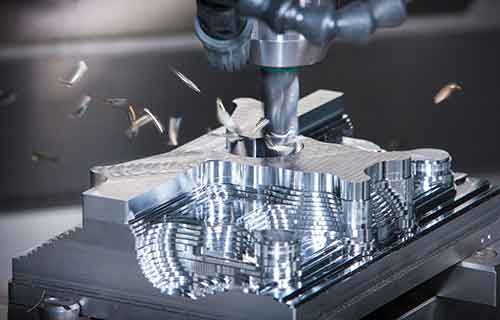
A 5-axis CNC machine adds two more moves. These are rotational axes, usually called A, B, or C. The tool can now tilt and rotate while it cuts. The part can also move and reposition on the fly.
Think of it this way. With 3-axis, you are carving a statue with a chisel held straight. With 5-axis, you can angle the chisel from any direction without moving the statue.
| Feature | 3-Axis CNC | 5-Axis CNC |
|---|---|---|
| Movement Axes | X, Y, Z | X, Y, Z + A, B (or C) |
| Tool Angles | Fixed | Fully adjustable |
| Setups Needed | Often multiple | Usually one |
| Best For | Simple to moderate parts | Complex geometries |
Simultaneous vs. Positional Machining
Not all 5-axis work is the same. There are two main modes.
- Simultaneous 5-axis: All five axes move at the same time. This is the real deal. It handles the toughest shapes.
- 3+2 positional (indexed) 5-axis: The machine moves to a position, locks, then cuts in 3-axis. It is faster to program. But it is not true simultaneous machining.
Most shops do not tell you which mode they use. Always ask. It changes the cost, the quality, and the time.
2. Which Parts Actually Need 5-Axis?
Geometries That Demand 5-Axis
Some parts simply cannot be done well on 3-axis. Here is where 5-axis CNC machining becomes a must, not a nice-to-have.
- Undercuts: Features that go "inside" the part where a straight tool cannot reach.
- Deep cavities: Pockets with steep walls that need the tool at an angle.
- Compound angles: Surfaces that curve in two directions at once. Think turbine blades.
- Organic shapes: Medical implants and aerospace brackets with freeform surfaces.
Real-World Examples
| Industry | Part Example | Why 3-Axis Fails |
|---|---|---|
| Aerospace | Turbine blades | Compound curves, tight tolerances |
| Medical | Hip implant stems | Organic shape, biocompatible finish |
| Mold Making | Core inserts | Deep cavities, undercuts everywhere |
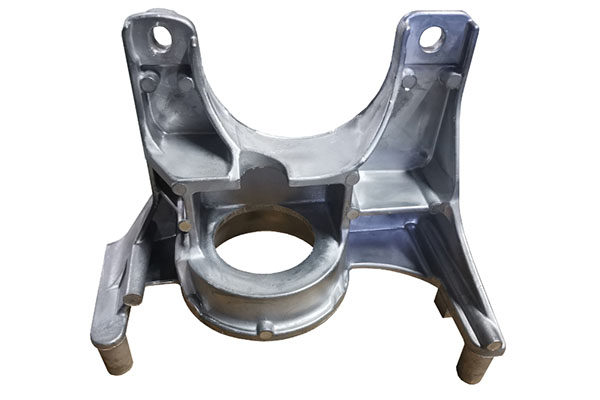
| Automotive | Turbocharger housings | Internal passages, angled ports |
| Oil & Gas | Valve bodies | Complex internal channels |
A mold shop in Michigan told us they used to run a deep-cavity mold core in 7 setups on 3-axis. Each setup added 45 minutes plus alignment time. Switching to 5-axis machining cut it to one setup. Cycle time dropped by 60%. Scrap rate dropped too.
When 3-Axis Still Wins
If your part has flat faces, simple holes, and no undercuts, 3-axis is fine. Even better. It is cheaper, faster to program, and the machines are everywhere.
Rule of thumb: If you need more than 3 setups on 3-axis to finish a part, start looking at 5-axis.
3. How 5-Axis Cuts Time and Labor
Fewer Setups Mean Faster Turnaround
Every setup on a 3-axis machine costs time. You unclamp. You flip. You realign. You re-zero. Each step adds 15 to 60 minutes depending on the part.
5-axis CNC machining does most of the work in one clamp. The tool reaches every face. No flipping. No re-fixturing.
Here is what that looks like in practice:
| Process Step | 3-Axis (4 setups) | 5-Axis (1 setup) |
|---|---|---|
| Setup time | ~90 min total | ~20 min |
| Machining time | ~120 min | ~100 min |
| Inspection stops | 4 | 1 |
| Total cycle time | ~210 min | ~120 min |
That is a 43% reduction in total time. Multiply that across hundreds of parts per month, and the savings are real.
Better Surface Finish
When the tool stays perpendicular to the surface, the finish is smoother. 5-axis machining keeps the tool at the optimal angle throughout the cut. This means:
- Fewer pass marks
- Less post-processing
- Tighter surface roughness specs (often Ra 0.4 or better straight off the machine)
One aerospace supplier we worked with reported a 30% drop in hand-finishing labor after switching to 5-axis for their bracket line.
Less Rework, Less Scrap
Every time you re-clamp a part, you risk misalignment. That leads to scrap. 5-axis CNC removes that risk. One setup. One alignment. One chance to get it right.
4. The Hidden Costs You Must Know
Machine Price and Maintenance
Let us talk money. A decent 5-axis CNC machine costs 150,000to500,000+. A 3-axis VMC might run 80,000to150,000. That is a big gap.
Maintenance is higher too. More axes mean more bearings, more encoders, more ways things can break. A single spindle repair on a 5-axis can cost 10,000to30,000.
| Cost Item | 3-Axis CNC | 5-Axis CNC |
|---|---|---|
| Machine cost | 80K–150K | 150K–500K+ |
| Annual maintenance | 8K–15K | 15K–40K |
| Spindle repair (worst case) | 5K–10K | 10K–30K |
| Tooling cost (per job) | Lower | Higher (special tools) |
Programming Is a Real Bottleneck
CAM programming for 5-axis is not just "3-axis plus two more axes." You need to think about collision avoidance, tool orientation, and optimal toolpaths all at once.
A skilled 5-axis programmer charges 40–80/hour. A bad one can crash a $300,000 machine in seconds. That is why many shops underinvest in training and pay the price later.
The Learning Curve
Operators need time to get comfortable. New shops often see a 15–20% scrap rate in the first 3 months of 5-axis production. That drops to under 3% once the team gains experience. Plan for that ramp-up.
5. How to Calculate Real ROI
The Break-Even Framework
Here is a simple way to think about it. Compare these four factors:
| Factor | Favor 3-Axis | Favor 5-Axis |
|---|---|---|
| Batch size | Low (<50 pcs) | High (>200 pcs) |
| Part complexity | Simple | Complex, multi-face |
| Tolerance needs | ±0.05mm or looser | ±0.01mm or tighter |
| Labor rate | Low | High (expensive operators) |
A Quick ROI Example
Let us say you machine a turbine housing. Here are the numbers:
| Metric | 3-Axis (5 setups) | 5-Axis (1 setup) |
|---|---|---|
| Machine time | 180 min | 110 min |
| Setup time | 150 min | 25 min |
| Programming time | 4 hrs | 8 hrs |
| Labor cost | $120 | $95 |
| Scrap rate | 8% | 2% |
| Cost per part | $185 | $142 |
Even though 5-axis programming takes longer, the per-part cost is 23% lower. At 500 parts per year, that saves you over $21,000 annually.
When Outsourcing Beats Buying
If you run less than 100 complex parts per month, buying a 5-axis machine rarely pays off. Outsourcing to a 5-axis job shop gives you the capability without the capital risk. You pay per part. No downtime. No maintenance headaches.
6. How to Pick the Right 5-Axis Partner
Certifications That Matter
Do not just check if they have a 5-axis machine. Check their quality system.
| Certification | What It Means |
|---|---|
| ISO 9001:2015 | Basic quality management |
| AS9100D | Aerospace-grade quality |
| ISO 13485 | Medical device quality |
| ITAR registered | Defense work capability |
Equipment and Inspection
Ask about their machine brands. DMG Mori, Mazak, Makino, and Hermle are industry leaders. Also ask about in-process inspection. Do they have a CMM on-site? Do they use Renishaw probing? These details separate good shops from great ones.
Red Flags to Watch For
- No sample parts offered before production
- Cannot explain their 3+2 vs. simultaneous approach
- No documented quality system
- Programming done by the same person who runs the machine (no separation of duties)
A good partner will walk you through their process. They will tell you what they can and cannot do. They will not overpromise.
Conclusion
So, is 5-axis CNC machining worth the investment? The answer is not yes or no. It depends on your parts, your volumes, and your quality requirements.
For simple parts in low volumes, 3-axis is still king. But for complex geometries, tight tolerances, and high volumes, 5-axis CNC is not a luxury. It is a cost-saving tool.
The key is to do the math before you commit. Look at your setup count. Look at your scrap rate. Look at your labor costs. If the numbers line up, 5-axis will pay for itself within 12 to 18 months.
And if you are not ready to buy? Find a trusted 5-axis machining partner who can handle your complex work without the capital risk.
FAQ
Is 5-axis CNC machining always more accurate than 3-axis?
Not always. Accuracy depends on the machine, the tooling, and the programmer. But 5-axis reduces error from multiple setups, so the final part is often more accurate.
How much more does 5-axis programming cost?
Expect 2 to 3 times the cost of 3-axis programming. A simple 3-axis job might take 2 hours to program. The same part in 5-axis could take 6 to 8 hours.
Can I convert my existing 3-axis machine to 5-axis?
No. You cannot add rotational axes to a 3-axis VMC. You need to buy a dedicated 5-axis machine. Some shops offer 5-axis heads as retrofits, but results vary.
What is the minimum batch size to justify 5-axis?
As a rough guide, 150 to 200 parts per year is the break-even zone for most shops. Below that, outsourcing is usually smarter.
Does 5-axis machining work with all materials?
Yes. Aluminum, steel, titanium, Inconel, plastics, and composites all work. But harder materials like titanium benefit the most from 5-axis because tool life improves with better tool angles.
Contact Yigu Technology for Custom Manufacturing
Need precision 5-axis CNC machining without the guesswork? Yigu Technology delivers high-quality custom parts for aerospace, medical, automotive, and mold industries. We run simultaneous 5-axis machines from top brands. Our team holds AS9100D and ISO 9001 certifications. We offer free DFM reviews and fast quotes.
📩 Get your quote today: Contact Yigu Technology for custom 5-axis CNC machining tailored to your exact specs.