Introduction
Picking the wrong stainless sheet metal grade can cost you thousands. Not upfront—but down the road. Rust spots, warped panels, failed inspections. These problems don't show up on day one. They show up six months later, when you're already in deep.
Stainless sheet metal powers everything from kitchen appliances to offshore oil rigs. It's in hospitals, food plants, and skyscrapers. But here's the thing: not all stainless steel is the same. A 304 grade works great in a dry kitchen. It fails fast near the ocean. A 316 grade handles salt spray like a champ—but it costs more.
So how do you pick the right one? This guide breaks it all down. We'll cover grades, environments, fabrication tips, finishes, suppliers, costs, and sustainability. By the end, you'll know exactly which grade fits your project—and which supplier won't waste your money.
1. Understanding Stainless Sheet Metal Grades
Not all stainless steel is created equal. The grade you choose changes everything—corrosion resistance, strength, weldability, and price. Let's break down the most common options.
304: The Workhorse Grade
Grade 304 is the most used stainless steel in the world. It contains 18% chromium and 8% nickel. This combo gives it solid corrosion resistance for most indoor and mild outdoor settings.
Think kitchen equipment, architectural panels, and general fabrication. It's affordable and easy to work with. But it struggles in salty or acidic environments.
316: The Marine-Grade Upgrade
Grade 316 adds 2–3% molybdenum to the mix. That small change makes a huge difference. It resists pitting corrosion from chlorides—like seawater or de-icing salts.
Use it for marine hardware, chemical tanks, and coastal construction. It costs about 20–30% more than 304. But in harsh environments, it lasts years longer.
430: The Budget Option
Grade 430 is a ferritic stainless. It has no nickel. That makes it cheaper—but also less corrosion-resistant. It works for indoor trim, appliance panels, and automotive parts.
Don't use it outdoors. It will rust. Period.
Duplex Grades: Best of Both Worlds
Duplex stainless steel (like 2205) mixes austenitic and ferritic structures. It's stronger than 304 or 316. It also resists stress corrosion cracking.
Industries like oil & gas and water treatment love it. The trade-off? Harder to weld and form.
| Grade | Chromium | Nickel | Molybdenum | Best For | Approx. Cost vs 304 |
|---|---|---|---|---|---|
| 304 | 18% | 8% | 0% | Indoor, food, general | Baseline (100%) |
| 316 | 16% | 10% | 2–3% | Marine, chemical, coastal | 120–130% |
| 430 | 17% | 0% | 0% | Indoor trim, automotive | 70–80% |
| 2205 (Duplex) | 22% | 5% | 3% | Oil & gas, water treatment | 140–160% |
2. Matching Material to Environment
Choosing a grade isn't just about specs. It's about where your metal will live. The environment dictates everything.
Indoor vs. Outdoor Use
For indoor applications like kitchen counters or elevator panels, 304 stainless sheet metal is usually enough. The air is dry. There's no salt. No chemicals.
For outdoor use, things change fast. Rain, UV, temperature swings—they all attack metal. Near the coast? You need at least 316 grade. In industrial zones with acid rain? Go duplex.
Coastal and Chemical Environments
Salt spray is stainless steel's worst enemy. Chloride ions break down the passive oxide layer that protects the metal. Once that layer fails, rust starts.
| Environment | Recommended Grade | Why |
|---|---|---|
| Dry indoor | 304 | Low corrosion risk |
| Humid indoor | 304 or 316 | Moisture management matters |
| Urban outdoor | 316 | Pollution and rain exposure |
| Coastal / marine | 316 or duplex | Chloride resistance is critical |
| Chemical plant | 316L or 904L | Acid and alkali resistance |
| High temp (>600°F) | 309S or 310S | Heat oxidation resistance |
Common Mistakes That Cause Failure
Here's a real case. A food processing plant in Florida used 304 stainless sheet metal for their outdoor storage racks. Within eight months, the racks had orange rust spots. They switched to 316 grade. The problem vanished.
The mistake? Assuming all "stainless" steel handles the same conditions. It doesn't.
Another common error: using 430 grade for a splash zone in a restaurant kitchen. It rusted in weeks. Always match the grade to the worst-case exposure, not the average one.
3. Fabrication Best Practices
You picked the right grade. Now you cut, weld, and bend it. Here's where most projects go wrong.
Cutting Without Ruining Protection
When you cut stainless sheet metal, you destroy the passive layer at the cut edge. That exposes raw metal to corrosion.
Best practices:
- Use laser cutting for clean edges with minimal heat-affected zones.
- Avoid plasma cutting for thin sheets—it creates a rough, oxidized edge.
- Always passivate cut edges after fabrication. A nitric acid bath restores the protective layer.
Welding and Passivation
Welding creates heat tint—that blue or brown discoloration. It's not just ugly. It's a corrosion trap.
| Welding Method | Heat Input | Best For | Passivation Needed? |
|---|---|---|---|
| TIG (GTAW) | Low | Thin sheets, clean welds | Yes |
| MIG (GMAW) | Medium | Thicker sheets, speed | Yes |
| Spot Welding | Very low | Sheet metal assembly | Minimal |
| Resistance Welding | Low | High-volume production | Yes |
Pro tip: Always use 316L filler rod when welding 316 base metal. Using 308 on 316 creates a weak spot. It's a tiny detail. But it causes failures in corrosive environments.
Bending and Forming
Stainless sheet metal work-hardens fast. That means it gets harder (and more brittle) the more you bend it.
- Bend along the grain direction when possible.
- Use a large bend radius—at least 1x the sheet thickness.
- Anneal the metal after heavy forming to restore ductility.
4. Surface Finishes and Their Real-World Impact
The finish on your stainless sheet metal isn't just about looks. It affects hygiene, maintenance, and performance.
What Each Finish Means
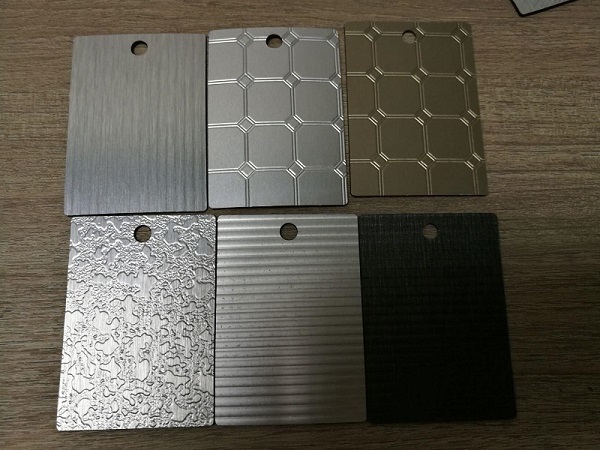
| Finish | Description | Best Application |
|---|---|---|
| 2B | Smooth, matte, cold-rolled | General use, tanks, industrial |
| BA | Bright annealed, mirror-like | Food, dairy, pharmaceutical |
| No.4 | Brushed, satin look | Elevators, architectural panels |
| HL | Hairline finish | Decorative, appliance fronts |
| Mirror (8K) | Super polished, reflective | High-end architecture, signage |
Industry-Specific Requirements
- Food industry: You need a BA or electropolished finish. Surface roughness must be under 0.5 µm Ra. Bacteria hide in scratches. A smooth finish kills that risk.
- Medical devices: 2B or BA with electropolishing is standard. The FDA requires surfaces that can be sterilized without trapping contaminants.
- Architecture: No.4 or HL finishes balance looks and maintenance. Mirror finishes look stunning but show every fingerprint.
A hospital in Texas learned this the hard way. They used No.4 finish 304 stainless for wall panels in an operating room. Inspectors flagged it. The surface wasn't smooth enough for sterilization. They re-ordered with a BA finish. Cost more upfront. But they passed inspection.
5. Evaluating Suppliers and Certifications
This is where most buyers get burned. The wrong supplier can ruin even the best material choice.
Red Flags in Mill Test Certificates
A Mill Test Certificate (MTC) proves your metal is what the supplier says it is. But fake MTCs are common.
Watch for these red flags:
- Missing heat number or lot number
- No third-party verification (like SGS or TUV)
- Certificates that don't match the actual material markings
- Thickness tolerances that seem "too perfect"
Thickness Tolerance Standards
| Standard | Tolerance (for 1mm sheet) | Region |
|---|---|---|
| ASTM A240 | ±0.03mm | USA |
| EN 10088 | ±0.02mm | Europe |
| JIS G4305 | ±0.02mm | Japan |
| GB/T 4237 | ±0.04mm | China |
If a supplier claims "zero tolerance," walk away. No mill can hit that. It's a lie.
Delivery and Inventory Reliability
Ask these questions before you commit:
- Do they hold stock in standard sizes (4x8, 4x10 sheets)?
- What's their lead time for custom cuts?
- Can they provide same-day shipping for urgent orders?
A good supplier doesn't just sell metal. They solve your logistics headaches too.
6. Cost Analysis: Short-Term Savings vs. Long-Term Value
Cheaper metal isn't cheaper. Let's prove it.
Lifecycle Costing Approach
Here's a real comparison. A restaurant chain needed stainless sheet metal for outdoor signage in a coastal city.
| Option | Material Cost | Expected Lifespan | Replacement Cost (10 yrs) | Total 10-Year Cost |
|---|---|---|---|---|
| 304 grade | $2,000 | 4 years | $5,000 (2 replacements) | $7,000 |
| 316 grade | $2,800 | 12+ years | $0 | $2,800 |
The 304 option saved 800upfront.Butitcost4,200 more over ten years. 316 paid for itself in year three.
When Premium Grades Pay Off
Go premium when:
- The metal is hard to access (replacement is expensive)
- The environment is corrosive (coastal, chemical, high humidity)
- Downtime costs money (production lines, medical equipment)
- The project has a long service life (10+ years)
Don't overpay when:
- The metal is indoor and dry
- It's a short-term or disposable application
- Budget is truly tight and replacement is easy
7. Sustainability and Recyclability Considerations
Stainless steel is one of the most recyclable materials on earth. About 60–70% of all stainless steel ever made is still in use today.
Stainless Steel in the Circular Economy
| Metric | Value |
|---|---|
| Recyclability rate | 100% (infinitely recyclable) |
| Recycled content in new steel | 60–80% |
| Energy saved vs. virgin production | ~74% |
| CO₂ reduction vs. virgin production | ~58% |
This matters. More buyers—especially in Europe and North America—now require environmental product declarations (EPDs). If you can't prove your stainless steel has recycled content, you lose bids.
How to Verify Green Credentials
- Ask for EPD documents from your supplier
- Check for ISO 14001 certification at the mill
- Confirm recycled content percentage on the MTC
- Look for suppliers who use electric arc furnaces (EAF)—they use less energy
Conclusion
Choosing the right stainless sheet metal grade isn't guesswork. It's a decision that affects your budget, performance, and reputation.
Here's your quick checklist:
✅ Match the grade to the environment (304 for indoor, 316 for coastal)
✅ Pick the right finish for the industry (BA for food, No.4 for architecture)
✅ Verify your supplier with real MTCs and tolerance standards
✅ Think in lifecycle costs, not just purchase price
✅ Use sustainability data to win more projects
The right grade saves you money. The wrong one costs you everything. Don't cut corners here.
FAQ
What is the best stainless steel grade for outdoor use?
Grade 316 is the best all-around choice for outdoor use. It resists rust from rain, humidity, and salt spray. For extreme coastal exposure, go with duplex 2205.
Can I weld 304 and 316 together?
Yes, but use 316L filler rod. Using 308 filler on 316 base metal creates a weak, corrosion-prone joint. Always match the filler to the higher-alloy base metal.
What does 2B finish mean on stainless sheet metal?
2B finish is a smooth, matte surface produced by cold rolling and annealing. It's the standard finish for most industrial and architectural applications. It's not mirror-smooth, but it's clean and consistent.
How much does 316 stainless sheet metal cost vs 304?
316 costs about 20–30% more than 304. But in corrosive environments, it lasts 2–3x longer. The total cost of ownership is actually lower for 316.
How do I check if my stainless steel supplier is legit?
Ask for a Mill Test Certificate (MTC) with a heat number. Verify it with a third party like SGS. Check thickness tolerances against ASTM or EN standards. Fake certs are easy to spot if you know what to look for.
Is stainless sheet metal recyclable?
Yes—100% recyclable. Stainless steel can be melted down and reused infinitely without losing quality. About 60–80% of new stainless steel contains recycled material.
Contact Yigu Technology for Custom Manufacturing
Need custom stainless sheet metal cut to your exact specs? Yigu Technology delivers precision-grade 304, 316, 430, and duplex stainless sheet metal with verified mill certifications, tight thickness tolerances, and fast turnaround.
📞 Get a quote today—we respond within 24 hours.
Yigu Technology: Your trusted partner for custom stainless sheet metal manufacturing.