Introduction
Engineers working in marine environments face a tough problem. Standard stainless steels often corrode quickly when exposed to saltwater. The result is frequent replacements, costly repairs, and unexpected downtime. Sheet metal SUS316—often called marine grade stainless steel—solves this issue. Its unique composition resists pitting, crevice corrosion, and chemical attack. In this guide, we’ll explore what makes SUS316 different, how it is processed, what finishes it can take, and where it performs best. By the end, you will understand why this material is the top choice for harsh environments.
What Is SUS316 Made Of?
Alloy Composition
SUS316 is an austenitic stainless steel. Its composition gives it exceptional corrosion resistance.
| Element | Percentage | Role |
|---|---|---|
| Chromium | 16–18% | Forms protective oxide layer |
| Nickel | 10–14% | Stabilizes structure, adds ductility |
| Molybdenum | 2–3% | Enhances resistance to pitting and chlorides |
| Carbon | ≤0.08% | Limits carbide formation during welding |
| Manganese | ≤2% | Improves strength |
| Silicon | ≤1% | Aids deoxidation |
| Sulfur | ≤0.03% | Controlled for machinability |
| Phosphorus | ≤0.045% | Kept low to maintain toughness |
The molybdenum content is the key difference from 304 stainless steel. This element allows SUS316 to resist saltwater and chlorides that would cause other grades to pit and fail.
What Properties Does SUS316 Offer?
Strength, Ductility, and Hardness
SUS316 delivers reliable mechanical performance.
- Tensile strength: 515–795 MPa
- Yield strength: 205 MPa
- Elongation: 40–60%
- Hardness (Rockwell): 70–90 HRB
The high elongation means the metal is very ductile. You can bend, form, and roll it without cracking. For example, when fabricating curved boat parts like hull fittings, this ductility prevents failures during shaping.
Corrosion Resistance and Other Properties
This is where SUS316 truly shines.
- Salt spray resistance: Over 5,000 hours without rusting
- 304 stainless steel comparison: Typically lasts 1,000–2,000 hours in the same test
SUS316 resists not only saltwater but also:
- Acids and alkalis
- Chlorides
- Chemical processing fluids
It also maintains good impact resistance at low temperatures. Thermal conductivity is about 16 W/(m·K) , and electrical conductivity is 2.1 × 10⁶ S/m.
Real-world example: A coastal marina replaced standard steel railings with SUS316. After eight years of constant salt spray, the railings showed no pitting or corrosion. The previous railings had needed replacement every three years.
How Is SUS316 Sheet Metal Manufactured?
Forming and Shaping
The process starts with rolling. Slabs are heated and rolled into sheets ranging from 0.3 mm to 10 mm thick.
Cutting methods like laser cutting and CNC machining produce precise shapes. The ductility of SUS316 makes bending and forming easy. Even tight 90-degree bends are possible without cracking.
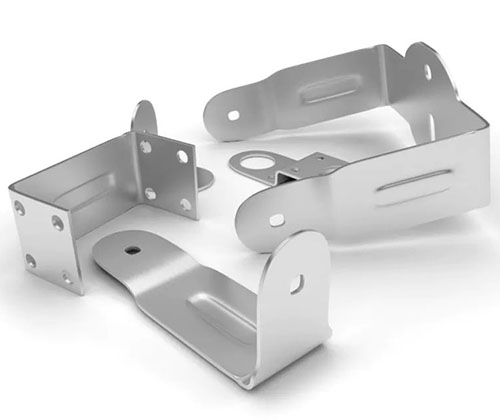
Case study: An offshore equipment manufacturer needed complex brackets for a drilling platform. Using laser-cut SUS316 sheets, they achieved tight tolerances of ±0.1 mm. The brackets held up through years of saltwater exposure with no signs of corrosion.
Welding and Heat Treatment
Welding SUS316 requires care to maintain its corrosion resistance.
- Use TIG (Tungsten Inert Gas) welding with matching filler metals.
- Avoid contamination from carbon steel tools or work surfaces.
Post-weld treatment is often necessary. Annealing at 1040–1100°C followed by rapid cooling removes weld oxides and restores the material’s properties. This step is critical for marine applications where welds face constant saltwater exposure.
What Surface Treatments Are Available?
Cleaning and Protective Treatments
After fabrication, surface treatments enhance both protection and appearance.
Pickling uses a mixture of nitric and hydrofluoric acids. It removes weld scale and surface impurities.
Passivation follows with nitric acid. This process strengthens the natural oxide layer, boosting corrosion resistance. It is essential for marine and sanitary applications.
Aesthetic and Functional Finishes
SUS316 accepts a variety of finishes.
| Finish | Description | Common Use |
|---|---|---|
| Brushed | Matte, textured look | Boat parts, architectural components |
| Mirror | Highly reflective | Decorative pieces, high-end equipment |
| Grain | Uniform directional lines | Industrial machinery |
| Electropolished | Ultra-smooth surface | Medical devices, pharmaceutical equipment |
Surface roughness is tightly controlled. It ranges from 0.02 μm Ra (polished) to 5 μm Ra (brushed). Electropolishing creates a surface that resists bacterial growth—perfect for medical and food applications.
Where Is SUS316 Used?
Marine and Offshore Applications
Shipbuilding relies on SUS316 for:
- Hulls and propeller shafts
- Deck fittings and railings
- Pumps and valves
Offshore structures like oil rigs and wind turbines use it for pipes, brackets, and safety barriers. The material withstands constant salt spray and seawater exposure.
Key fact: In salt spray testing, SUS316 lasts over 5,000 hours without corrosion. That is more than twice the performance of 304 stainless steel.
Chemical Processing and Pharmaceutical
SUS316 handles aggressive chemicals. It is used for:
- Pipes, tanks, and valves
- Mixing equipment
- Storage vessels
In pharmaceutical settings, its corrosion resistance and easy-to-clean surfaces meet strict hygiene standards.
Food Processing and Medical Devices
Food processing equipment—such as meat grinders, dairy tanks, and brewing systems—uses SUS316. It resists corrosion from food acids and cleaning agents.
Medical devices benefit from its biocompatibility. Surgical tools, implants, and hospital equipment use SUS316 because it resists bodily fluids and sterilizes easily.
Aerospace and Coastal Construction
The aerospace industry uses SUS316 for components exposed to high humidity and corrosive fluids.
In coastal construction, architectural components like railings, facades, and window frames rely on SUS316. Salt-laden air quickly degrades lesser materials, but SUS316 stands up for decades.
Yigu Technology’s Perspective
At Yigu Technology, we frequently work with SUS316 sheet metal for clients in demanding environments. Its ductility allows us to perform laser cutting, CNC machining, and precision welding with excellent results.
We apply surface finishing based on the application:
- Passivation for marine and chemical parts
- Electropolishing for medical and pharmaceutical components
- Brushed or mirror finishes for architectural and decorative uses
Example: A client in the seafood processing industry needed custom tanks that could withstand constant saltwater and cleaning chemicals. We fabricated them from SUS316 with electropolished interiors. The tanks have operated for over six years with no corrosion or contamination issues.
Conclusion
SUS316 sheet metal sets the standard for corrosive environments. Its molybdenum content provides superior resistance to saltwater, chlorides, and harsh chemicals. It offers excellent ductility for forming, good weldability with proper techniques, and a range of surface finishes for both protection and appearance. Whether you are building boats, chemical plants, or coastal structures, SUS316 delivers long-term reliability. Investing in this material upfront saves money on replacements and maintenance over time.
FAQ
How does SUS316 differ from SUS304 in terms of corrosion resistance?
SUS316 outperforms SUS304 in corrosive environments, especially those with saltwater or chlorides. The 2–3% molybdenum in SUS316 prevents pitting and crevice corrosion. SUS304 works for mild conditions, but SUS316 is the choice for marine and chemical applications.
Is SUS316 difficult to machine or weld?
Machining SUS316 is slightly more challenging than 304 due to its toughness. Use sharp tooling and proper coolants. Welding is straightforward with TIG or MIG methods. Use matching filler metals and consider post-weld annealing to maintain corrosion resistance.
Can SUS316 be used in freshwater environments?
Yes. SUS316 performs excellently in freshwater. However, it may be overkill for non-corrosive freshwater applications where SUS304 could suffice. Its value is highest in saltwater or chemically aggressive environments.
What is the typical thickness range for SUS316 sheet metal?
SUS316 sheets are commonly available from 0.3 mm to 10 mm. Thinner sheets suit applications like cladding or decorative panels. Thicker sheets are used for structural components and heavy-duty equipment.
Does SUS316 require coating for outdoor use?
Usually not. SUS316’s natural corrosion resistance is sufficient for most outdoor and marine environments. However, in extreme chemical exposure, additional coatings or passivation may be applied for extra protection.
Contact Yigu Technology for Custom Manufacturing
At Yigu Technology, we specialize in custom fabrication using SUS316 and other high-performance materials. From marine components to medical devices, our team delivers precision, quality, and durability. [Contact us today] to discuss your project and get a tailored manufacturing solution.