Introduction
In modern manufacturing, the journey from concept to finished product is often long and risky. Design flaws discovered late in development can cost months of time and millions of dollars. Precision prototype machining solves this problem by creating a reliable bridge between ideas and mass production.
Consider the aerospace industry, where a single engine component must withstand extreme temperatures and stresses. A deviation of just a few microns can lead to failure. Precision prototype machining allows engineers to test and refine these critical parts before committing to full production.
In the medical field, new surgical instruments and implants must be not only functional but also biocompatible and ergonomic. Prototypes that closely mimic final products enable thorough testing in realistic conditions. This ensures patient safety and regulatory compliance.
The automotive industry, with its rapid shift toward electric and autonomous vehicles, depends on quick iteration. Prototypes of batteries, sensors, and structural components help manufacturers identify and fix design flaws early, reducing costly recalls.
This article explores how precision prototype machining works, the technologies that make it possible, and why it has become essential for companies that want to innovate faster and with less risk.
What Exactly Is Precision Prototype Machining?
Defining the Process
Precision prototype machining is the highly accurate manufacturing of prototype components used for testing, evaluation, and refinement. It transforms initial design concepts into tangible models that closely mimic final production parts in size, shape, material properties, and functionality.
Unlike general machining, which may tolerate wider variations, precision prototype machining achieves tolerances in the micrometer range. This level of accuracy ensures that testing results accurately predict how the final product will perform.
| Machining Type | Typical Tolerance Range |
|---|---|
| General Machining | ±0.1 – ±1 mm |
| Precision Prototype Machining | ±0.001 – ±0.01 mm |
Key Characteristics
High Precision is the defining feature. Modern precision machining can maintain tolerances as tight as ±0.001 mm. In micro-electromechanical systems (MEMS), components require this level of accuracy to function properly.
Advanced Equipment makes this possible. Computer Numerical Control (CNC) mills, lathes, and electrical discharge machining (EDM) equipment execute complex operations with high repeatability. A high-end CNC milling machine can achieve positioning accuracy of ±0.0005 mm.
Material Flexibility is another hallmark. Precision prototype machining works with metals (aluminum, titanium, stainless steel), plastics (polycarbonate, ABS), and even ceramics. Each material presents unique challenges, but advanced techniques adapt to ensure quality results regardless of the material.
How Does the Process Work?
Step 1: Design Phase
The process begins with conceptualization using Computer-Aided Design (CAD) software. Engineers create detailed 3D models that contain all geometric and dimensional information. For a smartphone prototype, the CAD model defines the exact shape, port positions, button locations, and internal component layout.
A design review follows. Mechanical engineers, electrical engineers, and product managers examine the design for functional requirements, manufacturability, and industry standards. Potential flaws are identified and corrected before any material is cut.
Step 2: Material Selection
Material compatibility determines the choice of material. An automotive prototype requiring high strength and heat resistance might use aluminum alloys or high-strength steels. A medical device prototype needing biocompatibility would use titanium or medical-grade plastics.
Material properties analysis follows. Engineers evaluate mechanical, thermal, and chemical properties using supplier data sheets and in-house tests. For a consumer electronics prototype, they examine impact resistance, electrical insulation, and temperature response.
Step 3: Machining Operation
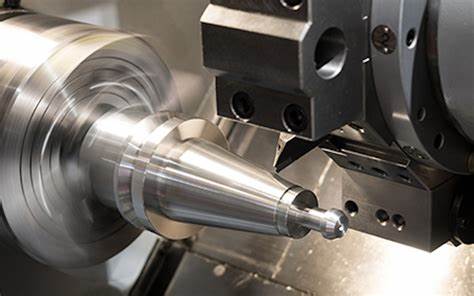
CNC machining setup involves programming the machine according to the CAD model. The workpiece is clamped securely, and cutting tools are selected based on material and required operations. For a hardened steel workpiece, a carbide-tipped end mill might be used.
Multi-axis machining execution allows complex shapes in a single setup. In 5-axis machining, the workpiece moves along X, Y, and Z axes plus two rotational axes. This reduces multiple setups and potential errors.
Micro-machining creates miniature components. Micro-milling uses extremely small cutting tools to remove tiny amounts of material. This is essential for micro-channels in fluidic devices or small gears in MEMS.
Step 4: Quality Inspection
In-process inspection occurs during machining. Operators use calipers, micrometers, or coordinate measuring machines (CMMs) to check dimensions at various stages. After rough milling, measurements ensure material removal is on track and within tolerance.
Final inspection is comprehensive. The prototype is checked for dimensional accuracy, surface finish, and defects. High-resolution optical microscopes inspect for scratches or imperfections. CMMs provide accurate 3D measurements to verify the final product matches design specifications.
What Advanced Technologies Are Involved?
CNC Machining
High-precision control is the foundation. CNC machines execute computer-controlled movements with positioning accuracy as high as ±0.0005 mm. This enables machining of complex geometries with tight tolerances. In aerospace components, CNC machining creates parts with intricate shapes requiring precise alignment of multiple features.
Automation and repeatability ensure consistency. Once programmed, the machine repeats operations with identical results. When multiple prototype iterations are needed, each prototype meets the same high-quality standards.
Electrical Discharge Machining (EDM)
Non-traditional material removal uses electrical discharges (sparks) to remove material. EDM excels at machining hard or brittle materials difficult to process with conventional cutting. Tungsten carbide, a very hard material used in tooling, is commonly machined with EDM.
High-precision molding and die-making benefit from EDM. It creates extremely precise cavities and intricate details in molds, which then produce plastic or metal parts. In plastic injection molding, EDM-produced molds ensure high-quality surface finishes and accurate dimensions in final products.
Additive Manufacturing (3D Printing)
Complex geometry creation is where additive manufacturing shines. Lattice structures that are difficult or impossible with traditional machining can be printed easily. In lightweight aerospace or automotive components, these structures provide strength while reducing weight.
Rapid prototyping and iteration accelerate development. Engineers can print a prototype, test it, and modify the design quickly. For startups or small-scale research projects, 3D printing offers a cost-effective way to create precision prototypes without expensive tooling.
How Does It Compare to Traditional Machining?
Understanding the differences helps explain why precision prototype machining has become the preferred choice for innovation-driven companies.
| Comparison Aspect | Precision Prototype Machining | Traditional Machining |
|---|---|---|
| Precision Level | ±0.001 mm achievable | Typically ±0.1 mm |
| Prototype Production Time | Days | Weeks |
| Material Utilization | High (minimal waste) | Lower (significant waste) |
| Design Flexibility | High (quick CAD modifications) | Limited (costly changes) |
| Setup Complexity | Moderate (CNC programming) | Higher (manual setups) |
Precision level is the most significant difference. While traditional machining may hold ±0.1 mm, precision prototype machining achieves ±0.001 mm. For satellite communication components, this level of accuracy ensures optimal signal transmission.
Production time favors precision machining. Complex prototypes can be completed in days rather than weeks. Advanced CNC programming and automated processes enable rapid turnaround. A startup developing a new consumer electronics product can iterate quickly and reach market faster.
Material utilization is higher with precision methods. Techniques like 5-axis machining and additive manufacturing use materials more efficiently. In lightweight automotive components, 3D printing creates internal structures that reduce waste while maintaining strength. Traditional subtractive machining often cuts away large portions of the original material.
Design flexibility is a game-changer. Engineers can modify CAD models and CNC machines can execute new designs immediately. In custom jewelry prototyping, designers can change shapes and details quickly. Traditional machining makes significant design changes difficult and costly once production begins.
Where Is Precision Prototype Machining Applied?
Aerospace Industry
Aerospace demands the highest precision. Engine components, structural frames, and landing gear parts all require tight tolerances and rigorous testing before certification.
A Yigu Technology aerospace client needed prototype compressor blades with complex airfoil shapes and tolerances of ±0.05 mm. Using 5-axis CNC machining, we delivered prototypes in 5 days instead of the 3 weeks quoted by traditional shops. The customer identified a minor design flaw during testing, corrected the CAD model, and received revised prototypes within 48 hours. This rapid iteration prevented a costly tooling change during mass production.
Medical Device Sector
Medical devices require biocompatibility, ergonomics, and precise functionality. Surgical instruments, orthopedic implants, and dental components must perform reliably in critical applications.
A medical startup developing a new surgical stapler used precision prototype machining to create functional prototypes from medical-grade stainless steel. Testing revealed that the handle ergonomics caused operator fatigue during extended procedures. The design was modified, and new prototypes were machined within one week. The final product received FDA approval six months faster than originally projected.
Automotive Industry
The shift toward electric and autonomous vehicles creates constant demand for new components. Battery housings, sensor mounts, and lightweight structural parts require rapid iteration.
An electric vehicle manufacturer needed prototype battery enclosures that could withstand crash testing while maintaining thermal management. Using precision machining, we produced aluminum prototypes that allowed real-world testing. Results showed that the initial cooling channel design was insufficient. The design was revised, and new prototypes were tested within two weeks—a process that would have taken months with traditional methods.
Consumer Electronics
Consumer electronics demand rapid development cycles. Smartphone housings, wearable device components, and connector systems require prototypes that look and feel like final products.
A consumer electronics company developing a new smartwatch used precision prototype machining to create titanium cases with complex internal features. The prototypes allowed usability testing and fit verification with watch bands. Design refinements were made after user feedback, and production-ready prototypes were delivered in 10 days, enabling the company to meet a critical product launch deadline.
What Are the Economic Benefits?
Reduced Development Costs
Early detection of design flaws is the most significant cost benefit. Correcting a flaw during prototyping costs a fraction of what it would cost during mass production. Industry data shows that design changes made after production begins cost 10 to 100 times more than changes made during prototyping.
Faster Time-to-Market
Precision prototype machining compresses development timelines. A typical product development cycle might take 12–18 months. Companies using precision prototyping often reduce this by 30–40%, gaining critical competitive advantage in fast-moving markets.
Lower Tooling Investment
Traditional manufacturing often requires expensive hard tooling before any parts can be produced. Precision prototype machining eliminates this upfront investment. Companies can validate designs with machined prototypes before committing to production tooling, reducing the risk of investing in tooling that later needs modification.
Improved Product Quality
Thorough testing with accurate prototypes leads to better final products. Each iteration reveals potential issues that can be addressed before production. The result is higher reliability, fewer warranty claims, and stronger customer satisfaction.
Conclusion
Precision prototype machining has fundamentally changed how products are developed. It enables manufacturers to test ideas quickly, identify flaws early, and refine designs before committing to expensive production tooling.
The key takeaways are clear. High precision—tolerances as tight as ±0.001 mm—ensures prototypes accurately represent final products. Advanced technologies like CNC machining, EDM, and additive manufacturing provide the tools to create complex geometries in a wide range of materials. Faster production times—days rather than weeks—accelerate development cycles. Design flexibility allows rapid iteration based on testing results.
Compared to traditional machining, precision prototype machining offers superior precision, shorter lead times, better material utilization, and greater design flexibility. These advantages make it indispensable for industries where innovation, quality, and speed are critical.
Precision prototype machining is more than a manufacturing process. It is the engine that drives innovation, enabling companies to turn ideas into market-ready products faster, with less risk, and at lower cost. As manufacturing continues to evolve, its role will only grow.
FAQ
What materials are most suitable for precision prototype machining?
Aluminum, titanium, stainless steel, polycarbonate, and ABS are commonly used. Aluminum offers lightweight and good machinability for aerospace and automotive applications. Titanium provides biocompatibility and high strength-to-weight ratio for medical and high-performance parts. Plastics like polycarbonate and ABS work well for consumer electronics prototypes due to their mechanical properties and ease of machining.
How does precision prototype machining reduce product development costs?
It enables early detection and correction of design flaws. Correcting a flaw during prototyping costs far less than correcting it during mass production. The high precision reduces rework, saving both time and material costs. Faster prototype production allows quicker iteration, shortening development cycles and reducing overall expenses.
Can precision prototype machining be used for small-batch production?
Yes. CNC machining offers high repeatability, ensuring consistent quality across small production runs. This is ideal for custom-made products, low-volume specialty items, or initial production runs for market testing. Many companies use precision machining for bridge tooling—producing small quantities while production tooling is being completed.
What is the typical turnaround time for a precision prototype?
Turnaround depends on complexity, material, and quantity. Simple prototypes can be completed in 2–3 days. Complex parts requiring multi-axis machining or specialized materials typically take 5–10 days. This is significantly faster than traditional methods, which often take several weeks.
Contact Yigu Technology for Custom Manufacturing
Need precision prototypes that accurately represent your final product? Yigu Technology specializes in precision prototype machining across aerospace, medical, automotive, and consumer electronics industries. Our engineering team selects the right processes and materials to deliver prototypes that test like production parts. Contact us today to discuss your next project.