Introduction
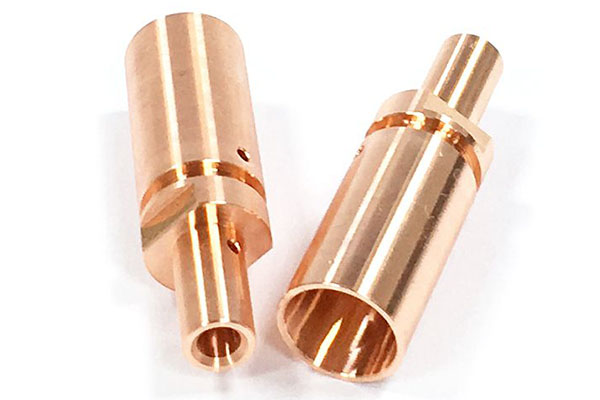
C51000 (Phosphor Bronze A) is a high-performance alloy valued for its spring properties and conductivity, but machining it presents unique challenges. Its high tin content and varying tempers make it prone to work-hardening, leading to poor surface finishes, rapid tool wear, and difficulty maintaining tight tolerances. This guide addresses these pain points, providing expert strategies to master CNC machining of C51000 —from alloy composition and mechanical properties to tool selection, cutting parameters, surface finish, and applications.
What Is the Alloy Identity and Composition of C51000?
C51000 bronze, commonly known as phosphor bronze A, is a wrought alloy with a precise composition:
| Element | Composition Range |
|---|---|
| Copper (Cu) | 94 – 96% |
| Tin (Sn) | 4.2 – 5.8% |
| Phosphorus (P) | 0.03 – 0.35% |
This lead-free copper alloy is recognized under standards such as UNS C51000 and ASTM B103 , ensuring consistent quality for critical applications. As a wrought phosphor bronze , it is produced through rolling, drawing, or forging, which enhances mechanical properties. Tin improves strength and corrosion resistance; phosphorus acts as a deoxidizer and strengthens the alloy. However, this composition makes machining challenging—tin increases hardness, and phosphorus can make the alloy brittle if not properly processed.
What Are the Mechanical and Physical Properties of C51000?
C51000 offers a wide range of mechanical properties, primarily determined by its temper (hardness level).
Mechanical Properties by Temper
| Temper | UTS (ksi) | Yield Strength (ksi) | Elongation (%) | Hardness (HRB) |
|---|---|---|---|---|
| H02 (half hard) | 47 – 60 | 18 – 30 | 35 – 45 | 30 – 50 |
| H04 (hard) | 60 – 80 | 30 – 50 | 20 – 30 | 50 – 70 |
| H06 (extra hard) | 80 – 95 | 50 – 70 | 10 – 15 | 70 – 85 |
| H08 (spring) | 95 – 105 | 70 – 90 | 5 – 10 | 85 – 95 |
Key Physical Properties
| Property | Value | Significance |
|---|---|---|
| Density | 8.86 g/cm³ | Slightly denser than pure copper; good mass for vibration-damping applications |
| Electrical conductivity | 15% IACS | Moderate—ideal for electrical contacts, terminals |
| Modulus of elasticity | 16 Msi | Ensures stiffness for spring applications |
| Fatigue strength | Excellent | Spring temper (H04–H08) ideal for repeated deflection—switch parts, musical instrument springs |
Versatility: Low tempers (H02–H04) for flexible components (bellows, diaphragms); high tempers (H06–H08) for high-strength parts (spring terminals, bearing cages).
What Machinability and Recommended Practices Apply?
Machinability Rating
C51000 has a machinability rating of 20% compared to free-machining brass (rated 100%)—highlighting its challenging nature.
Tool Selection
| Operation | Tool Recommendation | Why |
|---|---|---|
| General operations | Carbide K20–K30 inserts | Hardness resists wear from tin particles |
| Coatings | TiCN, AlTiN | Reduces friction; prevents work-hardening |
| High tempers (H06–H08) | PCD (polycrystalline diamond) tools for finishing passes | Maintains sharp edges longer when cutting through work-hardened surfaces |
Cutting Parameters
| Parameter | H02–H04 (lower tempers) | H06–H08 (higher tempers) |
|---|---|---|
| Cutting speed | 100 – 120 m/min | 60 – 80 m/min |
| Feed rate | 0.05 – 0.10 mm/tooth | 0.03 – 0.08 mm/tooth |
| Depth of cut (finishing) | 0.1 – 0.3 mm | 0.1 – 0.3 mm |
| Depth of cut (roughing) | 0.5 – 1.0 mm | 0.3 – 0.5 mm |
Faster feeds risk work-hardening; slower rates may cause rubbing and heat buildup.
Coolant and Vibration Dampening
| Requirement | Implementation |
|---|---|
| Coolant | Flood coolant essential—dissipates heat, flushes chips, prevents work-hardening; water-soluble coolant with good lubricity (5–10% concentration) |
| Vibration dampening | Rigid toolholders, tuned boring bars, machine dampers minimize chatter; C51000’s spring properties amplify vibration—critical for thin-walled parts (diaphragms) |
How Do You Achieve Surface Finish and Dimensional Accuracy?
Surface Finish
| Target | Method |
|---|---|
| Ra 0.1 – 0.5 μm | Sharp tools; light finishing passes |
| Mirror finish passes | PCD tools with 0.01 mm edge radius; feed rates 0.02–0.05 mm/rev—critical for electrical contacts where surface smoothness affects conductivity |
Dimensional Accuracy
| Requirement | Achievable Value |
|---|---|
| Tolerance | ±0.005 mm with precision setups—essential for flexible bellows, aerospace clips |
Burr-Free Edges
| Challenge | Solution |
|---|---|
| Ductility (especially low tempers H02–H04) | Tools with positive rake angles (10–15°); micro-deburring—ultrasonic cleaning with abrasive media—prevents short circuits in electrical components |
Inspection
| Method | Purpose |
|---|---|
| CMM (Coordinate Measuring Machine) | Dimensional verification |
| Roundness measurement | <0.8 μm—ensures smooth operation in bearing cages, bushings |
| Eddy current testing | Surface integrity checks; confirm no micro-cracks in high-fatigue applications (springs) |
Where Is C51000 Applied?
| Industry | Applications | Why C51000? |
|---|---|---|
| Electrical | Electrical contacts, spring terminals | Conductivity (15% IACS) + spring properties; reliable current flow, consistent force |
| Electrical | Switch parts | Fatigue strength—withstands millions of cycles without failure |
| Mechanical | Flexible bellows, diaphragms | Low tempers (H02–H04) for ductility |
| Mechanical | Bearing cages, bushings | Higher tempers (H06–H08) for wear resistance |
| Specialty | Musical instrument springs (brass instruments) | Consistent spring temper—reliable tone and response |
| Aerospace | Clips, precision stampings | Strength + dimensional stability for critical assemblies |
What Is Yigu Technology’s Expertise?
At Yigu Technology , we specialize in CNC machining C51000 (Phosphor Bronze A) across all tempers. Our expertise includes:
- Tool selection: Carbide K20–K30 inserts; TiCN/AlTiN coatings; PCD tools for high-temper finishing.
- Cutting parameters: Cutting speeds 60–120 m/min (lower for higher tempers); feed rates 0.03–0.10 mm/tooth; depth of cut 0.1–1.0 mm.
- Coolant management: Flood coolant (5–10% concentration) to dissipate heat, prevent work-hardening.
- Vibration dampening: Rigid toolholders, tuned boring bars—critical for C51000’s spring properties.
- Quality control: Achieve ±0.005 mm tolerances , Ra 0.1–0.5 μm surface finishes , roundness <0.8 μm ; eddy current testing for micro-cracks.
Whether for electrical components (contacts, terminals) or precision springs (musical instrument springs, aerospace clips), we deliver high-quality C51000 parts tailored to your application.
Conclusion
CNC machining C51000 (Phosphor Bronze A) requires understanding its tin-rich composition (4.2–5.8% Sn) and temper-specific properties. C51000 has a machinability rating of 20% (vs. free-machining brass 100%). Tool selection: Carbide K20–K30 inserts; TiCN/AlTiN coatings; PCD tools for high-temper finishing (H06–H08). Cutting parameters: cutting speeds 60–120 m/min (H02: 100–120 m/min; H08: 60–80 m/min); feed rates 0.03–0.10 mm/tooth; finishing depth of cut 0.1–0.3 mm. Coolant: Flood coolant (5–10%) essential to prevent work-hardening. Vibration dampening critical—C51000’s spring properties amplify chatter. Achievable results: ±0.005 mm tolerances , Ra 0.1–0.5 μm surface finish , roundness <0.8 μm . Applications span electrical contacts (15% IACS conductivity), spring terminals, flexible bellows (low tempers), bearing cages (high tempers), musical instrument springs, and aerospace clips. With proper tooling, parameters, and quality control, C51000 delivers reliable spring properties, conductivity, and dimensional stability.
FAQs
Why does C51000 work-harden so easily?
Its high tin content (4.2–5.8% Sn) causes rapid work-hardening during machining. Tin atoms disrupt the copper lattice, increasing hardness and reducing ductility. Requires sharp tools and light cuts to avoid surface degradation.
Can C51000 be machined in spring temper (H08) without cracking?
Yes, but requires slow cutting speeds (60–80 m/min) , sharp carbide inserts with AlTiN coating , and minimal depth of cut (0.1–0.3 mm) to prevent cracking in this high-strength temper (UTS 95–105 ksi).
How does C51000’s conductivity compare to other bronzes?
With 15% IACS conductivity , it outperforms aluminum bronzes (10–15% IACS) and silicon bronzes (5–10% IACS), making it a better choice for electrical applications where conductivity and spring properties are both critical.
Contact Yigu Technology for Custom Manufacturing
At Yigu Technology , we combine deep material knowledge with advanced CNC machining to deliver precision C51000 components. Our 3-axis, 4-axis, and 5-axis CNC machines are equipped with carbide K20–K30 inserts , TiCN/AlTiN coatings , PCD finishing tools , and flood coolant systems to achieve tolerances as tight as ±0.005 mm and surface finishes Ra 0.1–0.5 μm . From electrical contacts to musical instrument springs, we provide DFM feedback to optimize your designs for manufacturability.
Ready to machine your next C51000 project? Contact Yigu Technology today for a free consultation and quote. Let us help you achieve precision spring properties and conductivity in every component.