Introduction
Think about the last time you bought something and wished you could change just a few details—a different color, a personalized engraving, a size that actually fit perfectly. Now imagine being able to design exactly what you want and have it ready in days, not weeks. That's the promise of 3D printed consumer products, and it's already happening faster than most people realize.
From custom jewelry that matches your exact vision to home decor pieces that no one else owns, additive manufacturing is transforming how we think about the things we buy. But does this technology really represent the future of customization, or are we overhyping another tech trend? Having worked with both traditional manufacturing and 3D printing at Yigu technology, I've seen how this shift actually plays out in the real world. Let me walk you through what you need to know.
What Makes 3D Printing Different for Consumer Products?
The Basic Idea Anyone Can Understand
3D printing (also called additive manufacturing) builds objects layer by layer from a digital file. Think of it like a very precise hot glue gun controlled by a computer—except instead of glue, it uses plastics, metals, ceramics, or even food ingredients.
The process starts with a digital 3D model. You can create this using CAD software, scan an existing object, or download designs from thousands of online repositories. That digital file gets sliced into thin layers by software, and the printer follows those instructions to build your object from the bottom up.
What makes this revolutionary for consumer products is simple: every print can be different without slowing down production or increasing cost. In traditional manufacturing, changing the design means new tools, new molds, new setups—all expensive and time-consuming. With 3D printing, change the digital file and you change the product. No extra cost. No delay.
Materials You Can Actually Use
The range of materials for consumer 3D printing keeps expanding:
| Material | What It's Like | Best For |
|---|---|---|
| PLA | Biodegradable plastic, easy to print, low cost | Hobby projects, toys, decorative items |
| ABS | Stronger, heat-resistant plastic | Functional parts, phone cases, small mechanical items |
| PETG | Food-safe, durable, slightly flexible | Containers, kitchen items, outdoor products |
| Resin | Smooth, detailed, can be transparent | Jewelry, miniatures, detailed art pieces |
| TPU | Flexible, rubber-like | Phone cases, wearable items, gaskets |
| Nylon | Tough, durable, slightly flexible | Tools, functional prototypes, sports equipment |
| Metal (various) | Strong, premium feel | High-end jewelry, watch components, custom hardware |
For most home users, PLA and resin cover the majority of projects. PLA is forgiving, inexpensive, and works on basic machines. Resin gives that smooth, professional finish but requires more handling and cleanup.
What Consumer Products Are People Actually Printing?
Jewelry That's Truly One of a Kind
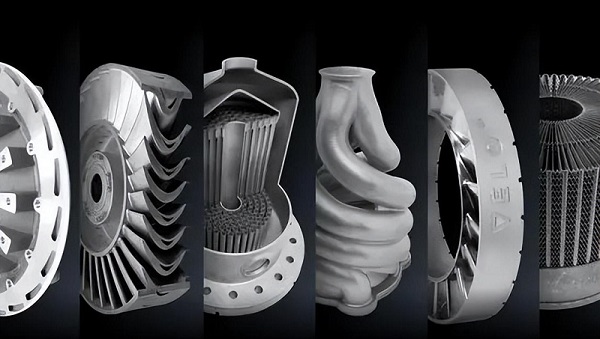
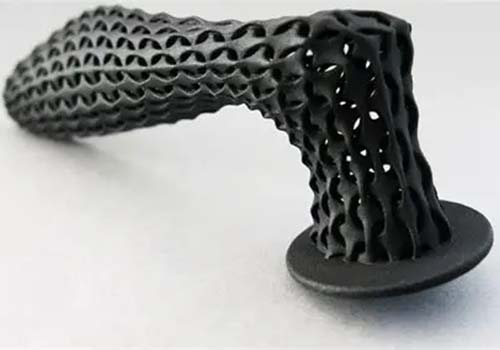
3D printed jewelry has exploded in popularity, and for good reason. Traditional jewelry manufacturing requires molds, casting, and skilled labor for each design. 3D printing lets designers create intricate patterns, lattice structures, and custom settings that would be impossible to make by hand.
A friend of mine who designs engagement rings now prints wax patterns for casting. Each ring starts as a digital design, gets printed in wax, then goes to a jeweler for traditional casting. The result? Custom rings that cost a fraction of what traditional custom jewelry would run, delivered in days instead of months.
What works well:
- Statement pieces with complex geometry
- Custom engagement and wedding rings
- Matching sets for bridal parties
- Pieces incorporating customer sketches or ideas
Home Decor That Fits Your Space Exactly
3D printed home decor solves a problem everyone faces: nothing ever fits your space perfectly. Mass-produced vases, lamps, and furniture come in standard sizes. Your home has non-standard spaces.
I worked with a client who needed a lamp for an awkward corner with a built-in shelf. Nothing from stores worked. We designed and printed a lamp that fit exactly, with a switch positioned perfectly for the space. Total time from measurement to installation: four days.
Popular home decor applications:
- Vases with organic, flowing shapes
- Lampshades with custom patterns
- Wall hooks and organizers
- Furniture legs and connectors
- Planters for oddly sized pots
Custom Gifts People Actually Want
Let's be honest—most personalized gifts are forgettable. A mug with a printed photo. A keychain with a name. But 3D printed custom gifts offer something different: objects that couldn't exist any other way.
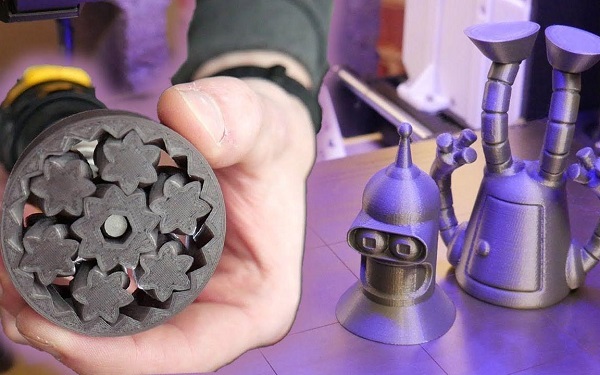
A customer recently ordered a figurine of her son's stuffed animal that had been lost. We 3D scanned a similar toy, adjusted the design to match photos, and printed a perfect replica. The reaction? Tears of joy. That's not something a mass-produced gift can deliver.
Gift ideas that work:
- Figurines based on photos or drawings
- Game pieces for family board games
- Custom cookie cutters from children's drawings
- Replacement parts for cherished items
- Scale models of meaningful places or objects
Fashion and Accessories
The fashion world has embraced 3D printing for both haute couture and everyday accessories. Designers create handbags with impossible geometries, sunglasses that fit exactly, and watch cases in unique patterns.
A small fashion brand we work with now produces their entire line of belt buckles using 3D printing. Each buckle can be customized with the customer's initials or a unique pattern, printed in nylon, then metal-plated for a premium finish. The cost per buckle is higher than mass-produced alternatives, but the perceived value justifies the price.
How Big Is This Market Really?
Numbers You Should Know
The 3D printing consumer products market isn't a hobbyist sideshow anymore. According to recent market research:
- Global market value reached approximately $X billion in 2023
- Projected to hit $Y billion by 2028
- Compound annual growth rate (CAGR) around XX%
- Over XX% growth in the past five years alone
What's driving this growth? Three factors:
- Affordable printers – Good quality machines now cost less than a mid-range smartphone
- Material improvements – Better colors, finishes, and properties
- Consumer awareness – People know what's possible and want it
The DIY Revolution
The DIY 3D printing community has grown from a niche hobby to a significant market force. Online repositories now host millions of designs, freely available for anyone to print. Want a replacement knob for your stove? Someone's designed it. Need a specific bracket for a DIY project? It's probably online.
This community drives adoption in ways corporate marketing never could. When people see their friends printing useful objects at home, the technology becomes accessible rather than intimidating.
What Are the Real Advantages Over Traditional Manufacturing?
Customization Without Penalty
This is the big one. In traditional manufacturing, customization costs money. Every variation requires setup time, tooling changes, and often minimum order quantities. With 3D printing, customization costs nothing beyond the design time.
Want ten copies of the same design? Same cost per part as a single copy. Want every part slightly different? Same cost per part. This changes the economics of personalization completely.
No Inventory, No Waste
Traditional manufacturing requires forecasting demand and holding inventory. Both activities cost money and create risk. Get the forecast wrong and you're stuck with unsold products or stockouts.
3D printing enables on-demand production. Make exactly what customers order, when they order it. No inventory holding costs. No unsold products to discount. No waste from overproduction.
Complexity Is Free
In traditional manufacturing, complexity costs money. Intricate shapes require complex molds or multiple machining operations. Simple shapes cost less.
With 3D printing, complexity costs nothing. A simple cube takes the same machine time as a geometrically complex sculpture. This frees designers to focus on function and aesthetics rather than manufacturing constraints.
What Limitations Should You Know About?
Speed Still Matters
Let's be realistic: 3D printing is slow compared to mass production. Injection molding can produce thousands of identical parts per hour. A 3D printer might produce one complex part in that same hour.
For low volumes and custom items, speed doesn't matter. For high-volume consumer goods, it's a dealbreaker. The technology works best for niche products and personalization, not replacing mass production.
Material Properties Vary
3D printed parts behave differently than molded or machined parts. Layer lines create potential weak points. Surface finish varies. Material properties can be anisotropic—meaning different strengths in different directions.
For many consumer applications, these differences don't matter. A decorative vase doesn't need injection-molded strength. But for functional items, you need to design with these limitations in mind.
Quality Consistency
Mass production delivers consistent quality through controlled processes. Every part from a given mold is essentially identical. With 3D printing, every print is slightly different. Calibration drifts. Material batches vary. Environmental conditions affect results.
Professional services control these variables through rigorous process management. Home printing remains more variable—sometimes frustratingly so.
Should You Print at Home or Use a Service?
The DIY Approach
Printing at home gives you control and convenience. You can iterate quickly, print whenever you want, and keep your designs private. But you also take on all the responsibility.
| Pros | Cons |
|---|---|
| Complete control over timing | Learning curve for setup and troubleshooting |
| No per-part markup | Maintenance and repairs required |
| Privacy for designs | Limited to materials you can stock |
| Satisfaction of making | Variable quality until you gain experience |
For hobbyists and frequent users, owning a printer makes sense. For occasional customization, the math rarely works.
Professional Services
3D printing services like Yigu technology handle everything. Upload your design, choose your material and finish, receive finished parts. The cost per part is higher, but you pay for expertise and consistency.
| Pros | Cons |
|---|---|
| Professional quality guaranteed | Higher per-part cost |
| Access to industrial machines and materials | Shipping time |
| No equipment to maintain | Less control over schedule |
| Expert guidance for design optimization | Design must be shared with provider |
For most consumer products, services make sense. You get better results without investing in equipment or learning complex processes.
What Does Yigu Technology Think About This?
Our Experience with Consumer Customization
At Yigu technology, we've watched the 3D printing consumer market evolve from curiosity to legitimate business. Our non-standard product customization services now regularly include 3D printed components alongside traditionally manufactured ones.
The technology shines for small-batch custom production. When a customer needs fifty uniquely designed pieces—maybe custom phone cases for a corporate event or personalized awards—3D printing delivers in days instead of weeks, without tooling costs that would make the project uneconomical.
We've also learned where the technology struggles. High-volume consumer goods still belong to injection molding and casting. Extreme precision requirements may need machining. Specific material properties might not be available in printable formulations.
Where We See the Future
The sweet spot for 3D printed consumer products is customization and complexity. Products where every customer wants something slightly different. Products with geometries that can't be molded. Products that benefit from being designed and made in days rather than months.
As materials improve and printers get faster, that sweet spot expands. But 3D printing won't replace mass production—it will coexist with it, handling the custom work while traditional methods handle the volume.
Conclusion
So, are 3D printed consumer products the future of customization? Yes—emphatically yes—but with important context.
For personalized, custom, and uniquely designed items, 3D printing isn't just the future; it's already the present. The technology lets consumers participate in the design process in ways that were impossible before. It enables products that fit exact specifications rather than standard sizes. It creates objects that couldn't exist any other way.
For mass-produced consumer goods, 3D printing will remain a niche tool—wonderful for prototyping, useful for low-volume variants, but not replacing the economics of scale that traditional manufacturing delivers.
The real revolution isn't about replacing one manufacturing method with another. It's about expanding what's possible. Today, if you can imagine it and design it, you can have it made. That wasn't true twenty years ago. It's true now, and it's changing how we think about the objects in our lives.
The future of customization isn't a single technology—it's the ability to choose, for each product, the manufacturing method that makes sense. And for custom, complex, personalized items, that method increasingly involves 3D printing.
Frequently Asked Questions
What types of materials can be used for 3D printing consumer products?
Common materials include thermoplastics like PLA (easy to print, biodegradable) and ABS (stronger, heat-resistant). Resins produce smooth, detailed prints for jewelry and miniatures. PETG offers durability and food-safe options. TPU provides flexibility for wearable items. Nylon delivers toughness for functional parts. Some services also offer metal printing in materials like stainless steel, titanium, and aluminum for premium products.
How much does it cost to start 3D printing consumer products at home?
Initial investment ranges from $300 to $3,000 depending on your goals. Entry-level printers cost $200-$500, mid-range machines run $500-$2,000, and professional desktop models exceed $2,000. Materials add ongoing costs—filament spools run $20-$50, resin costs $50-$150 per liter. Free design software exists (Tinkercad), while professional options can cost hundreds per year. For occasional use, professional services often make more economic sense than buying equipment.
Are 3D printed consumer products as durable as traditionally manufactured ones?
It depends on the application and materials. For many decorative items, durability is perfectly adequate. For functional parts, 3D printed items can match or exceed traditionally manufactured ones when properly designed and printed. However, the layer-by-layer construction creates potential weak points that don't exist in molded parts. Metal 3D printed parts can be extremely strong—used in aerospace and medical applications—but cost accordingly. For simple, high-volume items, traditional manufacturing typically offers better durability at lower cost.
Can I sell 3D printed products I make at home?
Yes, with some important considerations. You need to ensure your designs don't infringe on others' intellectual property. Products must meet relevant safety standards for your market. Business regulations (taxes, licenses) apply just as they would for any manufacturing business. Many successful small businesses start with home 3D printing and scale up as demand grows.
How long does it take to 3D print a consumer product?
Print time varies dramatically based on size, complexity, and technology. A small keychain might print in 30-60 minutes. A detailed jewelry piece could take 3-6 hours. A large decorative vase might require 12-24 hours. Professional services can often produce parts faster than home printers due to industrial equipment and optimized settings.
What's the quality difference between home and professional 3D printing?
Professional services typically deliver more consistent quality due to calibrated industrial machines, controlled environments, and experienced operators. Home printing quality varies based on printer quality, calibration, and user skill. For critical applications or products you'll sell, professional services reduce risk. For personal projects and learning, home printing offers flexibility and satisfaction.
Contact Yigu Technology for Custom Manufacturing
At Yigu technology, we specialize in turning ideas into reality. Whether you need 3D printed consumer products for personal use, a business venture, or corporate gifting, our team combines technical expertise with practical manufacturing experience to deliver exceptional results.
We offer a range of 3D printing technologies and materials matched to your specific requirements. Need something in durable nylon? We've got it. Want the smooth finish of resin printing? That's available too. Looking for metal printed components with that premium feel? We can help.
Contact us today to discuss your project. Tell us what you're imagining, and we'll help you figure out the best path to make it real—whether that's 3D printing, traditional manufacturing, or a combination of both. Let's create something uniquely yours.