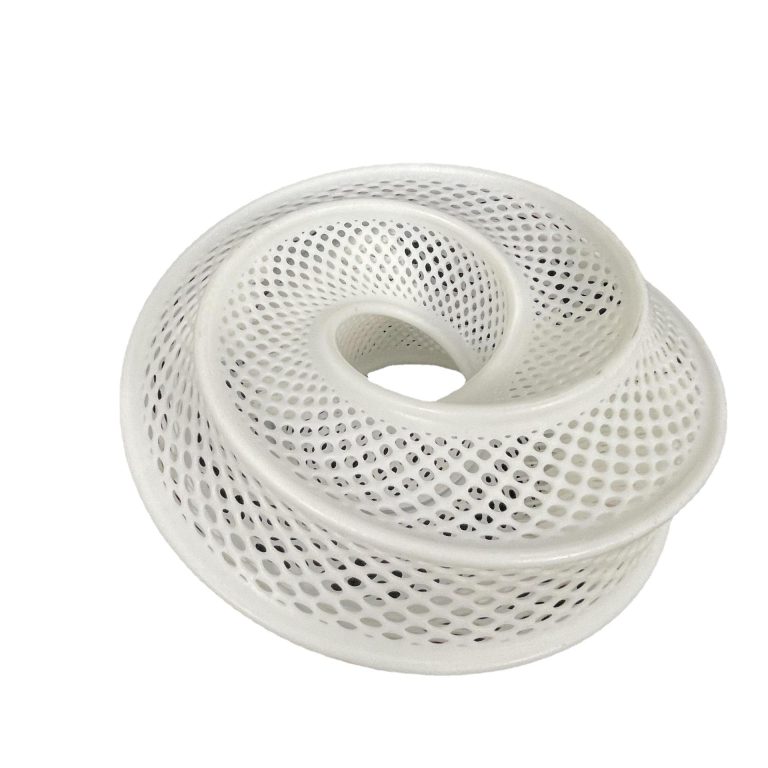
From perfectly fitted medical implants to one-of-a-kind fashion items, customized 3D printing is transforming how products are made. This guide explores how this technology enables personalization at scale, why it matters across industries, and what it means for the future of manufacturing.
Introduction
Imagine a prosthetic limb that fits so perfectly you forget you're wearing it. A aerospace component that's 40% lighter because its internal structure was optimized just for its function. A piece of jewelry with flowing, organic forms that no traditional method could create.
This isn't science fiction. It's customized 3D printing—and it's changing how we think about manufacturing.
Also called additive manufacturing, 3D printing builds objects layer by layer from digital files. Unlike traditional methods that require molds, dies, or specialized tooling, 3D printing can make each part different at no extra cost. This fundamental difference unlocks new levels of individuality and innovation.
I've spent years at Yigu Technology watching this transformation unfold. From medical implants that save lives to consumer products that express personality, customized 3D printing is delivering value that mass production never could.
In this guide, I'll walk you through how customized 3D printing works across industries, how it compares to traditional manufacturing, and what it means for the future of making things.
Why Does Customization Matter in Manufacturing?
Before diving into specific applications, let's understand why customization is so valuable.
The Shift from Mass Production to Personalization
For most of industrial history, manufacturing followed a simple logic: make millions of identical products to spread tooling costs and achieve economies of scale. This worked, but it assumed everyone wanted the same thing.
Today, consumers expect products that fit their unique needs and express their individuality. Companies that deliver personalization win loyalty and command premium prices.
3D printing makes personalization economical because:
- No tooling means each part can be different at no extra cost
- Digital files are infinitely variable
- Production runs of one are as efficient as runs of one thousand
Where Customization Creates Value
Customization matters most when:
- Fit is critical – Medical implants, prosthetics, eyewear
- Function varies by user – Athletic equipment, tools, handles
- Expression matters – Fashion, accessories, home décor
- Performance requirements differ – Aerospace, automotive, industrial
How Is Healthcare Being Transformed by Custom 3D Printing?
Medicine might be the most impactful application of customized 3D printing.
Custom Prosthetics and Orthotics
Traditional prosthetics are mass-produced and adjusted by hand—a process that often results in poor fit. Research published in the Journal of Prosthetics and Orthotics found that about 80% of patients report discomfort with conventional prosthetics due to poor fit.
3D printing changes this entirely:
- 3D scan captures the patient's exact anatomy
- Design creates a prosthetic perfectly matched to that anatomy
- Print produces the final device in biocompatible materials
Real example: A 35-year-old amputee struggled with a traditional prosthetic that limited his daily wear to 4 hours due to discomfort. After switching to a 3D-printed socket designed from his exact limb scan, his wearing time doubled to 8 hours. The better fit reduced pressure points and improved his quality of life.
Additional benefits:
- Lightweight materials reduce fatigue
- Multiple material options (rigid for structure, flexible for comfort)
- Quick iterations if adjustments are needed
Patient-Specific Surgical Models
Before complex surgeries, practice makes perfect—but practicing on the actual patient isn't possible. 3D-printed anatomical models solve this problem.
From CT or MRI scans, medical engineers create exact replicas of patient anatomy. Surgeons can:
- Study the unique structure before operating
- Plan approaches and anticipate challenges
- Practice procedures on the model
- Explain the procedure to patients and families
Impact on outcomes:
A study in cardiac surgery found that using 3D-printed models for pre-operative planning:
- Reduced average operation time by 20%
- Decreased post-operative complications from 15% to 8%
Real example: A patient needed complex heart valve replacement surgery. Surgeons printed a model of the exact heart, practiced the procedure, and identified potential complications before entering the operating room. The actual surgery went smoothly, and the patient recovered faster.
Custom Dental Applications
Dentistry was an early adopter of 3D printing. Today, custom dental restorations are routine:
- Crowns and bridges printed to exact tooth dimensions
- Aligners for orthodontics, customized tooth by tooth
- Surgical guides for implant placement
- Dentures that fit perfectly from the start
Why it matters: Better fit means better function, less adjustment time, and happier patients.
What's Happening in Aerospace with Custom 3D Printing?
Aerospace pushes the boundaries of what's possible with custom manufacturing.
Lightweight Components with Complex Geometry
Every gram saved on an aircraft saves fuel for decades. 3D printing enables weight reduction through:
- Lattice structures – Internal grids that maintain strength while removing material
- Topology optimization – Algorithms that place material only where stress requires it
- Part consolidation – Multiple components combined into one printed piece
NASA research showed that 3D-printed rocket engine components with lattice structures were 40% lighter than traditionally manufactured versions—while maintaining required strength.
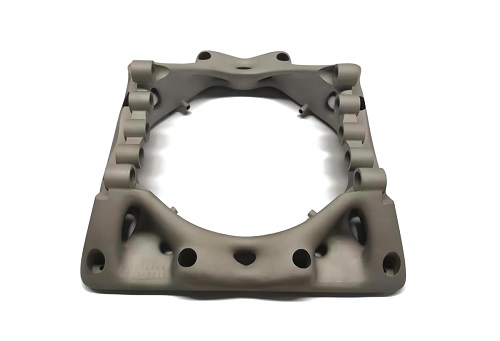
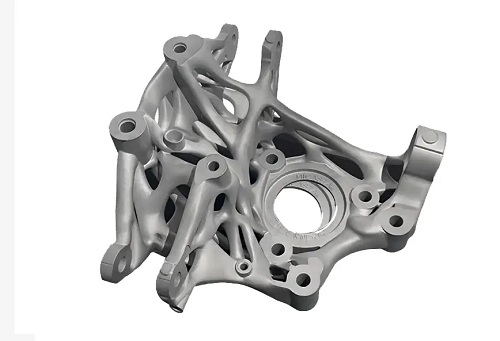
Real example: A titanium bracket for a satellite needed to be as light as possible. Traditional machining would remove material from a solid block, but design freedom was limited. 3D printing created an organic, optimized shape that looked almost biological—and weighed 40% less than the machined version.
Cost-Effective Small-Batch Production
Aerospace often needs small quantities of highly specialized parts. Traditional manufacturing punishes small runs with high tooling costs.
Cost comparison for 100 custom aerospace parts:
- Traditional machining and casting: $500,000, 3-4 months
- 3D printing: $150,000, 2-3 weeks
That's a 70% cost reduction and 90% time savings.
Why the difference:
- No tooling investment
- No minimum order quantities
- Design changes cost nothing but file updates
Parts with Enhanced Properties
3D printing allows engineers to design for performance, not just manufacturability:
- Internal cooling channels that follow optimal paths
- Variable density – Solid where strength matters, lattice elsewhere
- Multi-material possibilities (still emerging)
How Is the Consumer Goods Industry Embracing Customization?
Consumer products show the creative potential of customized 3D printing.
Custom Fashion and Footwear
Fashion has embraced 3D printing for its ability to create forms impossible with traditional methods.
Custom-fit shoes:
- Scan the customer's feet
- Design shoes that match their exact dimensions and gait
- Print midsoles with variable stiffness where needed
- Add customized uppers in chosen colors and patterns
Market growth: The global 3D printed fashion market is projected to grow at 25% annually from 2024 to 2030. Consumers increasingly want products that express their individuality.
Real example: A footwear company now offers completely customized sneakers. Customers choose style, colors, and materials. The shoes are printed to their exact foot measurements. The result? Better fit, unique style, and a product no one else has.
Personalized Electronic Accessories
Phone cases, tablet stands, headphone holders—all can be customized with 3D printing.
Market data:
- 2023 global market for 3D printed electronic accessories: $500 million
- Projected 2028 market: $1.5 billion
- Growth rate: 20% annually
What customers want:
- Unique patterns and colors
- Personalized text or images
- Functional customizations (built-in card holders, adjustable angles)
- Perfect fit for specific devices
Why 3D printing works: Each accessory can be different at no extra cost. Small production runs are economical. Design changes are instant.
Custom Jewelry
Jewelry has always been about individuality, but traditional methods limit what's possible.
3D printing enables:
- Complex, organic forms impossible to cast
- Lightweight structures with intricate detail
- One-of-a-kind pieces at reasonable cost
- Direct printing in precious metals
Real example: A jewelry designer created a limited-edition collection of necklaces with interlocking, 3D-printed metal components. The filigree patterns were detailed and delicate—and each piece was slightly different, making every necklace unique.
How Does Custom 3D Printing Compare to Traditional Manufacturing?
Understanding the differences helps you choose the right approach.
Cost Comparison
| Production Volume | Traditional Manufacturing Cost | 3D Printing Cost | Key Difference |
|---|---|---|---|
| Small batch (100 units) | High tooling cost + material | Material cost only | 3D printing wins—no tooling investment |
| Medium batch (1,000 units) | Tooling amortized, lower per-unit | Higher per-unit cost | Traditional starts winning |
| Large batch (10,000+ units) | Very low per-unit cost | Still high per-unit | Traditional dominates |
The economics are clear:
- 3D printing wins for low volumes (1-100 parts) and high complexity
- Traditional wins for high volumes (1,000+ parts) and simple geometries
Real example: A startup needed 50 custom brackets. Traditional method: $5,000 tooling + $50 each = $7,500. 3D printing: $50 each = $2,500. The startup saved $5,000 by choosing additive.
Production Time Comparison
| Stage | Traditional Manufacturing | 3D Printing |
|---|---|---|
| Design | 2-3 weeks | 2-3 weeks |
| Tooling | 4-6 weeks | None |
| Production | 1-2 weeks | 1-2 weeks |
| Total | 8-12 weeks | 3-5 weeks |
3D printing cuts total time by 60-70% for custom parts by eliminating tooling.
Case study: A product development company prototyping a new consumer electronic device needed a custom housing. Traditional process: 12 weeks to first prototype. 3D printing: 3 weeks. They went through four design iterations in the time one traditional prototype would have taken.
Design Flexibility Comparison
This is where 3D printing has no competition.
Traditional manufacturing constraints:
- Injection molding requires draft angles for part removal
- Machining limited by tool access
- Casting requires certain wall thicknesses
- Assemblies need fasteners or welding
3D printing freedom:
- Internal features – Channels, lattices, voids
- Organic shapes – Ergonomics optimized for human hands
- Part consolidation – Multiple components into one
- Customization – Each part different at no cost
Real example: A company needed a heat sink for a high-performance computer chip. Traditional manufacturing would produce a simple finned design. 3D printing created a lattice structure that increased surface area by 40% and improved cooling efficiency by 25%—a design impossible to machine.
What Are the Challenges of Customized 3D Printing?
The technology isn't perfect. Know the limitations.
Cost at Scale
As the comparison table shows, 3D printing becomes expensive at high volumes. For mass production, traditional methods still win on cost.
When to use 3D printing:
- Prototypes and development
- Low-volume production (under 1,000 units)
- Highly complex parts
- Customized or personalized products
When to use traditional methods:
- High-volume production
- Simple geometries
- Commodity products
- Cost-sensitive applications
Material Limitations
While material options expand constantly, 3D printing still can't match the full range of traditional manufacturing materials:
- Some engineering alloys aren't available in printable form
- Material properties can differ from wrought or cast versions
- Certification for critical applications requires testing
Surface Finish
Most 3D-printed parts need post-processing for smooth surfaces:
- Layer lines visible on FDM parts
- SLS parts have matte, slightly rough finish
- Metal parts often need machining of critical surfaces
Quality Consistency
For critical applications, proving that every printed part meets specifications requires:
- Process monitoring
- Inspection (CT scanning, mechanical testing)
- Traceability throughout production
What Does the Future Hold for Customized 3D Printing?
The technology continues to advance rapidly.
More Materials
New materials appear constantly:
- Engineering polymers with better properties
- More metal alloys optimized for printing
- Composites with enhanced performance
- Sustainable and bio-based options
Faster Printing
Multi-laser systems, better scanning strategies, and new technologies (like binder jetting) will continue to increase speed, making 3D printing more competitive for larger volumes.
Lower Costs
As machines improve and competition increases, costs will decrease. Desktop metal printers under $50,000 already exist. This trend will continue.
Integrated Design Tools
AI-powered design tools will make customization easier:
- Generative design creates optimized geometries automatically
- Scan-to-print workflows become seamless
- Design validation happens before printing
Mass Customization
The ultimate promise: products that are both mass-produced and completely customized. Each item unique, but produced at near-mass-production speeds and costs.
Conclusion
Customized 3D printed products are transforming how we make things—from medical implants that fit perfectly to aerospace components that weigh less to consumer goods that express individuality.
The key takeaways:
- Healthcare benefits from better-fitting prosthetics, surgical models, and dental restorations
- Aerospace achieves weight savings and complex geometries impossible with traditional methods
- Consumer goods enable personalization and unique designs
- Cost comparison favors 3D printing for low volumes, traditional for high volumes
- Production time drops dramatically by eliminating tooling
- Design freedom is unmatched—if you can model it, you can print it
At Yigu Technology, we've seen customized 3D printing transform how our clients develop products and serve customers. The technology isn't replacing all manufacturing—but for the right applications, it delivers value that traditional methods can't match.
The future points toward more materials, faster printing, lower costs, and seamless design tools. As these advances happen, customized 3D printing will become accessible to even more industries and applications.
If you're considering custom 3D printing for your next project, start with a clear understanding of what you need. Match those needs to the technology's strengths. And work with partners who have been there before—the learning curve is real, but the results are worth it.
Frequently Asked Questions
Are customized 3D printed products more expensive than traditional products?
It depends on volume. For small batches (under 100-500 units), 3D printing is often cheaper because there's no tooling cost. For large volumes (1,000+ units), traditional manufacturing usually wins on per-part cost due to economies of scale.
What materials can be used for customized 3D printing?
A wide range: plastics (PLA, ABS, nylon), metals (titanium, stainless steel, aluminum), ceramics, and even some biocompatible and flexible materials. The choice depends on your application requirements.
How long does it take to produce a customized 3D printed product?
Simple parts can print in hours. Complex parts may take days. Compared to traditional methods for custom parts, 3D printing is typically 60-70% faster because it eliminates tooling and setup steps.
Can I 3D print in multiple materials at once?
Some technologies allow multi-material printing. Stratasys PolyJet can print multiple materials and colors in one part. Other methods are developing multi-material capabilities, but single-material printing remains most common.
Is 3D printing strong enough for functional parts?
Yes—especially with engineering materials like nylon (SLS) or metals (DMLS). These parts are strong enough for real-world use in many applications, from automotive brackets to medical implants.
What's the biggest advantage of custom 3D printing?
Design freedom. You can create geometries that are impossible with traditional methods—internal channels, organic shapes, lattice structures—and each part can be different at no extra cost.
How do I get started with custom 3D printing?
Start with a design in CAD software. Then choose a service provider (like Yigu Technology) or invest in your own printer. For most businesses, starting with a service makes sense—no equipment investment, access to multiple technologies.
What industries benefit most from custom 3D printing?
Medical, aerospace, automotive, and consumer goods lead the way. Any industry that needs complex, low-volume, or personalized parts can benefit.
Contact Yigu Technology for Custom Manufacturing
Ready to explore custom 3D printing for your next project? At Yigu Technology, we combine years of manufacturing experience with advanced additive capabilities. Whether you need medical implants, aerospace components, custom consumer products, or help optimizing designs for 3D printing, our team delivers professional results. [Contact us today] to discuss your project—we'll help you choose the right materials and approach for your specific needs.