Electron Beam Melting (EBM) additive manufacturing uses a high-energy electron beam to melt metal powder layer by layer, creating complex, high-strength parts for aerospace, medical, and industrial applications. This article explains how it works and why it matters for your projects.
Introduction: Why Electron Beam Melting Matters
Electron Beam Melting Additive Manufacturing (EBM AM) represents a revolutionary technology within 3D printing. It belongs to the powder-bed fusion family of additive manufacturing processes.
In EBM AM, a high-energy electron beam melts metal powder in a vacuum environment. The beam scans across each layer, selectively fusing powder particles according to your digital model. Layer by layer, the object builds up—just like stacking bricks, but with microscopic precision and automated control.
This technology matters because it enables production of complex metal components that traditional methods cannot create. From titanium aerospace brackets with lattice structures to custom hip implants matching patient anatomy, EBM AM delivers design freedom, material efficiency, and exceptional mechanical properties.
How Does Electron Beam Melting Actually Work?
What happens step by step in the EBM process?
Step 1: Powder Spreading
A thin layer of metal powder spreads evenly across the build platform. Typical layer thickness ranges from 50 to 200 micrometers. A recoater mechanism—often a blade-like device—moves across the platform, pushing powder from a reservoir to create a flat, uniform layer.
Quality matters here. Uneven powder spreading can cause defects. If the layer is too thick in spots, the electron beam may not fully melt the powder, resulting in porosity that weakens the final part.
Step 2: Electron Beam Scanning and Melting
The electron gun generates a high-energy beam focused to a small spot size—typically 0.1 to 1 mm. The beam scans across the powder layer following the cross-sectional geometry from your CAD model.
Energy density reaches 10⁷ to 10⁸ W/cm²—intense enough to melt metals with high melting points. Titanium alloy, commonly used in EBM, melts around 1668-1760°C. The beam raises powder temperature above this point rapidly, fusing particles together.
Scanning speed varies by material and part complexity. For simple geometries and materials with good thermal conductivity, speeds reach 1-10 m/s. Complex parts or materials with poor conductivity may need slower speeds to ensure complete melting and good bonding.
Step 3: Solidification and Layer Formation
After scanning each layer, melted powder solidifies rapidly as it cools. The vacuum environment prevents oxidation during melting and solidification, preserving material properties.
Step 4: Repeat the Process
The build platform lowers by one layer thickness. A new powder layer spreads, and the process repeats. For a small component 50mm tall with 100-micrometer layers, approximately 500 layers print to complete the part.
What are the key components of an EBM system?
Electron Gun: The beam source consists of a cathode, anode, and focusing system. The cathode emits electrons when heated—in a tungsten filament cathode, electric current heats the filament, releasing electrons through thermionic emission. The anode accelerates electrons toward the build area. Electromagnetic lenses focus the beam to precise spot size.
Vacuum System: Essential for EBM operation, the vacuum maintains pressure at 10⁻⁴ to 10⁻⁶ mbar. This prevents oxidation of reactive metals like titanium and aluminum. It also reduces electron scattering—in air, electrons would collide with gas molecules, spreading the beam and losing energy needed for precise melting.
Build Platform: The movable platform supports the growing part. It requires good thermal conductivity for efficient heat transfer during melting and solidification. Copper or aluminum alloys work well, quickly conducting heat away from melted powder. Surface treatment ensures good adhesion of the first layer while preventing parts from sticking.
Powder Delivery and Recoating System: Powder reservoirs store metal powder and supply it to the build area. The recoating system spreads powder evenly with precise thickness control. Advanced systems use sensors to monitor layer thickness in real-time and adjust accordingly.
What Materials Work With EBM?
EBM primarily processes metals that can withstand high-energy beams and vacuum environments:
| Material | Key Properties | Typical Applications |
|---|---|---|
| Titanium Alloys (Ti-6Al-4V) | High strength-to-weight, biocompatible | Aerospace brackets, medical implants |
| Nickel-Based Alloys (Inconel) | Heat resistant, corrosion resistant | Turbine blades, exhaust components |
| Cobalt-Chrome Alloys | Wear resistant, biocompatible | Dental implants, orthopedic devices |
| Stainless Steels | Corrosion resistant, strong | Industrial components, tooling |
| Aluminum Alloys | Lightweight, thermally conductive | Heat exchangers, automotive parts |
Material quality matters. Powders must have consistent particle size and shape for proper spreading and melting. Most EBM powders range from 45 to 105 micrometers in diameter.
How Does EBM Compare to Other 3D Printing Technologies?
EBM vs. Selective Laser Melting (SLM)
| Comparison Aspect | Electron Beam Melting (EBM) | Selective Laser Melting (SLM) |
|---|---|---|
| Energy Source | Electron beam | Laser |
| Environment | Vacuum (10⁻⁴-10⁻⁶ mbar) | Inert gas (argon, nitrogen) |
| Accuracy | ±0.1-0.3mm | ±0.05-0.15mm |
| Scanning Speed | 1-10 m/s | 0.1-1 m/s |
| Build Speed | Faster for large parts | Slower overall |
| Surface Finish | Rougher (Ra 10-50μm) | Smoother (Ra 5-20μm) |
| Materials | Titanium, nickel alloys, some steels | Wider range including aluminum, stainless, precious metals |
| Part Properties | Good density, homogeneous structure | Very high density, excellent mechanical properties |
| Equipment Cost | Very high | High |
| Typical Applications | Aerospace, medical implants | Automotive, medical, industrial |
Key trade-offs: EBM offers faster build speeds and eliminates oxidation concerns but with rougher surfaces and slightly lower accuracy. SLM provides better surface finish and wider material choice but slower speeds.
What Industries Benefit Most From EBM?
Aerospace: How does EBM improve aircraft performance?
Aerospace leads EBM adoption. The technology enables lightweight components with complex internal features impossible to machine.
General Electric uses EBM for turbine engine components. By printing parts with internal cooling channels, they achieve:
- 30% weight reduction versus traditional manufacturing
- Higher operating temperatures from improved cooling
- Better fuel efficiency from lighter components
Airbus manufactures structural components using EBM. Lattice structures within brackets and fittings provide high strength-to-weight ratios. Tests confirm these parts withstand mechanical stresses equal to conventionally-made versions while weighing significantly less.
Benefits for aerospace:
- Fuel savings from every kilogram reduced
- Complex geometries optimizing performance
- Consolidated assemblies replacing multi-part constructions
- On-demand production reducing inventory
Medical: How does EBM improve patient outcomes?
Medical applications leverage EBM's ability to create patient-specific implants with biocompatible materials.
Custom hip implants: Surgeons design implants based on patient CT scans. EBM prints titanium alloy implants matching exact anatomy. Results include:
- Perfect fit reducing rejection risk
- 20% faster recovery versus standard implants
- Better long-term outcomes from optimized load distribution
Dental applications: Cobalt-chrome crowns and bridges print with precise fit. Porous surface structures promote bone integration for dental implants.
Prosthetics: EBM enables lightweight prosthetics with optimized internal structures. A prosthetic hand printed via EBM provides more natural movement and grip strength. Patients report 30% improvement in daily activities compared to traditional prosthetics.
Benefits for healthcare:
- Patient-specific design improving outcomes
- Biocompatible materials safe for implantation
- Osseointegration enhanced by porous structures
- Rapid production for time-sensitive cases
Industrial: What applications benefit from EBM?
Industrial applications leverage EBM for complex tooling, high-performance components, and small-batch production.
Tooling inserts with conformal cooling channels improve injection molding efficiency. Printed inserts reduce cycle times by 30% compared to conventional tooling.
Heat exchangers with complex internal passageways achieve better thermal performance. EBM enables geometries impossible to machine, improving efficiency by 25% in some applications.
Specialized components for demanding environments—chemical processing, oil and gas, marine applications—benefit from EBM's material properties and design freedom.
What Are the Advantages of EBM for Your Projects?
Design Freedom
EBM removes geometric constraints. You can design:
- Internal channels for cooling or fluid flow
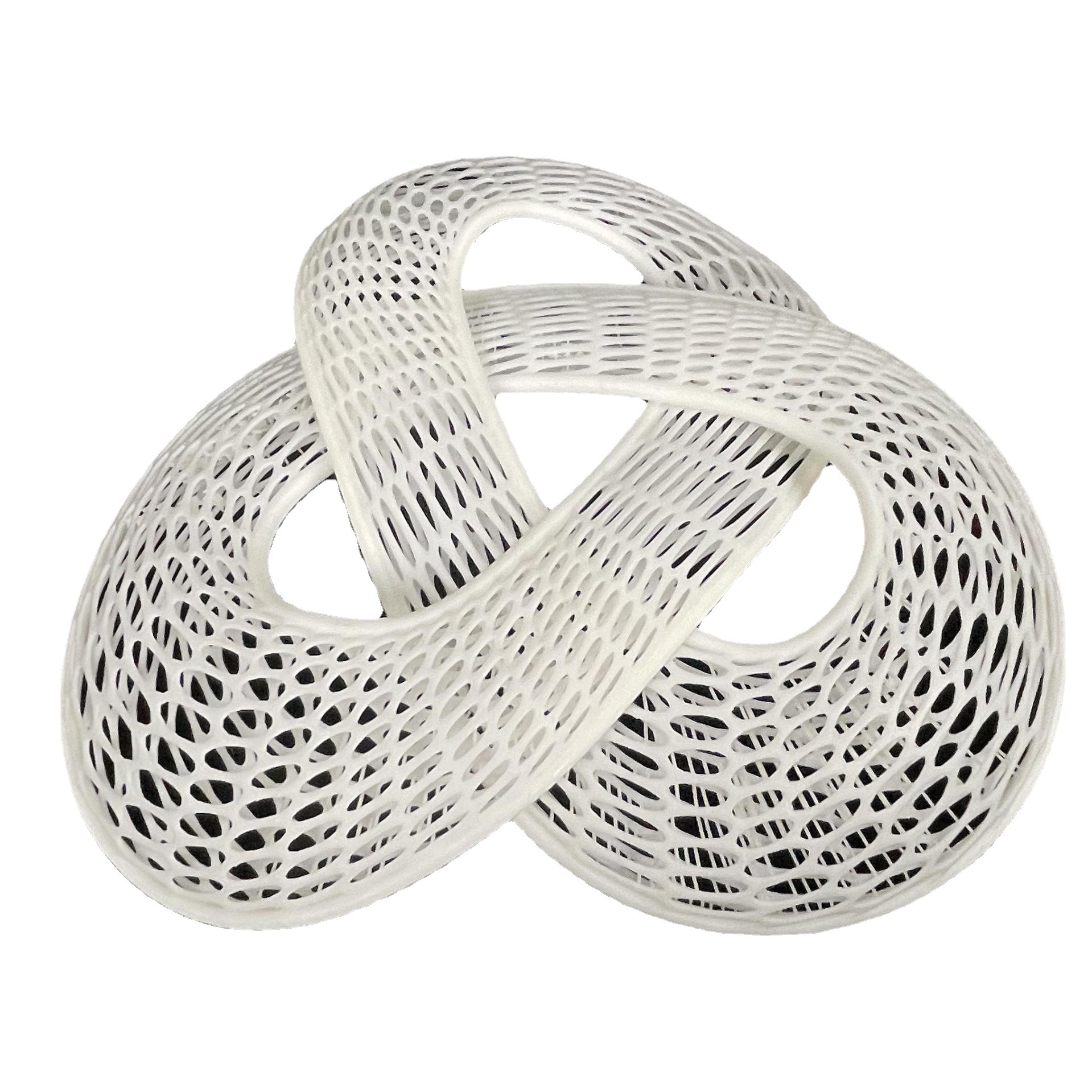
- Lattice structures reducing weight while maintaining strength
- Organic shapes optimized for performance
- Consolidated assemblies replacing multiple components
Material Efficiency
Traditional manufacturing wastes material through subtractive processes. Machining a titanium bracket from solid stock can waste 80-90% of the material. EBM uses only what you need—waste drops to near zero.
For expensive materials like titanium and Inconel, this matters significantly. Material savings often offset higher equipment costs.
Mechanical Properties
EBM-printed parts achieve mechanical properties matching or exceeding wrought materials. The vacuum environment prevents oxidation. Controlled cooling creates homogeneous microstructures with excellent strength and fatigue resistance.
Titanium alloy (Ti-6Al-4V) printed via EBM achieves tensile strength of 880 MPa—comparable to forged material per ASTM F136 standards.
Complex Geometries
Features impossible to machine become routine with EBM:
- Undercuts and internal cavities
- Curved cooling channels following part contours
- Variable density structures with solid and lattice regions
- Thin walls down to 0.3-0.5mm
What Are the Limitations of EBM?
Surface Finish
EBM produces rougher surfaces than laser-based methods. Typical roughness ranges from Ra 10-50μm. Functional surfaces often require post-processing—machining, grinding, or polishing.
Accuracy
Dimensional accuracy of ±0.1-0.3mm suits many applications but may not meet tight tolerances. Critical features often need finish machining after printing.
Cost
Equipment costs remain high—industrial EBM systems range from $500,000 to $1.5 million. Material costs also exceed traditional manufacturing for standard geometries. However, for complex parts or expensive materials, overall costs often favor EBM.
Build Size
Build volumes limit maximum part size. Typical EBM systems handle parts up to 200-350mm in each dimension. Larger parts require segmentation and welding.
What Does Yigu Technology Think About EBM?
As a non-standard plastic and metal products custom supplier, Yigu Technology highly values EBM's potential. This technology enables us to create custom-designed metal components with complex geometries difficult or impossible to produce conventionally.
For special-shaped metal parts in industrial equipment, EBM delivers high-precision manufacturing without costly molds. Material efficiency aligns with our commitment to sustainable, cost-effective production. By reducing waste, we offer competitive pricing while minimizing environmental impact.
We've invested in training our engineering team to master EBM technology. This allows us to guide customers from initial design consultation through final product delivery. We believe EBM will play an increasingly important role in non-standard metal products manufacturing, and we're excited to be at the forefront.
Conclusion
Electron Beam Melting additive manufacturing represents a powerful tool for producing complex metal components. Its ability to create intricate geometries, reduce material waste, and achieve excellent mechanical properties makes it invaluable for aerospace, medical, and industrial applications.
Key takeaways:
- EBM uses high-energy electron beams to melt metal powder layer by layer
- Vacuum environment prevents oxidation and enables reactive metal processing
- Titanium, nickel alloys, and cobalt-chrome are common materials
- Faster build speeds than laser methods but rougher surfaces
- Ideal for complex, high-value components in demanding applications
As technology advances and costs moderate, EBM will become accessible to more manufacturers. Understanding its capabilities and limitations helps you identify opportunities where this technology delivers real value.
FAQ
Q1: What metals can you use in EBM 3D printing?
A: Common materials include titanium alloys (Ti-6Al-4V), nickel-based alloys (Inconel), cobalt-chrome, and some stainless steels. These metals withstand the high-energy beam and vacuum environment while offering properties needed for demanding applications.
Q2: How accurate is EBM compared to CNC machining?
A: EBM typically achieves ±0.1-0.3mm accuracy. CNC machining achieves tighter tolerances (±0.025mm or better). For critical features, combine EBM near-net shape with finish machining.
Q3: Is EBM faster than laser powder bed fusion?
A: Generally yes. EBM scanning speeds reach 1-10 m/s versus 0.1-1 m/s for laser systems. The electron beam's higher energy density enables faster melting, especially for larger parts.
Q4: What post-processing do EBM parts need?
A: Common steps include support removal, heat treatment to relieve stress, surface finishing (machining, polishing, or blasting), and sometimes hot isostatic pressing (HIP) to eliminate internal porosity.
Q5: Can EBM produce large parts?
A: Build volumes limit maximum size. Typical systems handle parts up to 200-350mm in each dimension. Larger parts require segmentation with subsequent welding or assembly.
Q6: How much does EBM cost?
A: Equipment costs range from $500,000 to $1.5 million. Material costs vary by metal—titanium powder runs $200-400 per kilogram. Operating costs include energy, maintenance, and labor. For complex, high-value parts, overall economics often favor EBM.
Q7: What industries use EBM most?
A: Aerospace leads adoption, followed by medical implants and industrial applications. Any industry needing complex metal parts with excellent properties can benefit.
Contact Yigu Technology for Custom Manufacturing
Ready to explore how Electron Beam Melting can advance your next project? At Yigu Technology, we combine deep expertise with state-of-the-art EBM capabilities. Whether you need aerospace components, medical implants, or specialized industrial parts, our team delivers precision results tailored to your specifications. Contact us today for a consultation—let's turn your complex designs into reality with EBM additive manufacturing.