Introduction
3D printing production sounds like futuristic technology. But it's already here, transforming how companies create everything from airplane parts to custom medical implants. Unlike traditional manufacturing that cuts away material, additive manufacturing builds objects layer by layer from digital files.
This guide explains what 3D printing production really means—the technologies, materials, and processes that turn digital designs into physical products. You'll discover how this approach benefits businesses and individuals, and when it makes sense to use it versus traditional methods.
How Does 3D Printing Production Actually Work?
The Basic Principle: Building Up, Not Cutting Down
Traditional manufacturing often uses subtractive methods—cutting, drilling, or machining material away from a solid block. Think of a sculptor carving a statue from marble. You start with more material than you need and remove the excess.
3D printing production reverses this logic. It adds material only where needed, layer by thin layer. This fundamental difference unlocks possibilities impossible with subtractive methods.
The Three Essential Elements
Digital Model: Every 3D-printed part starts as a digital blueprint created in CAD (Computer-Aided Design) software. This model contains complete geometric information—every curve, hole, and internal feature. A tiny error here becomes a physical flaw in the final part.
3D Printer: The machine that brings digital designs to life. Different printer types use different technologies, but all follow the same basic process: read the sliced digital file, deposit material precisely, and build the object layer by layer.
Printing Material: From common plastics to exotic metals, the material choice determines the part's properties—strength, flexibility, heat resistance, and more. Selecting the right material is as important as the design itself.
What Are the Main 3D Printing Technologies for Production?
Fused Deposition Modeling (FDM): The Workhorse
FDM printing works by melting thermoplastic filament and extruding it through a heated nozzle, like a precise hot glue gun. The nozzle moves in patterns, depositing material layer by layer.
Why it's popular:
- Low cost: Printers range from $200 for hobbyist models to $5,000 for professional machines
- Easy to use: Simple operation makes it accessible for beginners
- Wide material selection: Dozens of filament types available
Limitations:
- Visible layer lines: Surface finish is rougher than other methods
- Slow for large parts: Complex models can take days
- Support structures needed: Overhangs require removable supports
Best for: Prototypes, jigs and fixtures, large parts where surface finish isn't critical, hobbyist projects.
Stereolithography (SLA): Precision and Detail
SLA printing uses ultraviolet light to cure liquid photopolymer resin. A laser or projector traces each layer, solidifying the resin exactly where needed.
Why choose SLA:
- Exceptional detail: Layer heights as fine as 25 microns
- Smooth surfaces: Almost invisible layer lines
- Complex features: Captures intricate details other methods miss
Limitations:
- Resin cost: More expensive than filament
- Post-processing required: Parts need washing and curing
- Smaller build volumes: Typically limited to desktop-sized objects
Best for: Jewelry patterns, dental models, miniatures, parts requiring smooth surfaces and fine details.
Selective Laser Sintering (SLS): Industrial Strength
SLS printing uses a high-power laser to fuse powdered material—plastic, metal, or ceramic—into solid structures. The unsintered powder surrounds the part, providing natural support.
Why SLS excels:
- No supports needed: Powder supports overhangs, reducing post-processing
- Excellent mechanical properties: Parts are strong and durable
- Material variety: Nylon, TPU, composites, and metals
Limitations:
- High equipment cost: Industrial machines start at $50,000+
- Rough surface finish: Parts have matte, slightly grainy texture
- Powder handling: Requires careful safety procedures
Best for: Functional prototypes, end-use parts, complex geometries, small-batch production.
Technology Comparison at a Glance
| Technology | Method | Accuracy | Surface | Cost | Best For |
|---|---|---|---|---|---|
| FDM | Melted filament extrusion | ±0.2-0.5mm | Rough | Low | Prototypes, large parts |
| SLA | UV-cured liquid resin | ±0.05-0.1mm | Smooth | Medium | Detail parts, jewelry |
| SLS | Laser-sintered powder | ±0.1-0.3mm | Matte | High | Functional parts, small runs |
What Materials Can You Use in 3D Printing Production?
Plastics: The Most Common Choice
PLA (Polylactic Acid) :
- Renewable source (corn starch, sugarcane)
- Easy to print, minimal odor
- Biodegradable under industrial conditions
- Tensile strength: 40-60 MPa
- Best for: Hobbyist projects, educational models, low-stress parts
ABS (Acrylonitrile Butadiene Styrene) :
- Stronger and more heat-resistant than PLA
- Requires heated bed to prevent warping
- Good impact resistance
- Best for: Functional prototypes, automotive parts, electronic enclosures
Nylon (PA11, PA12) :
- Excellent strength and flexibility
- Abrasion and chemical resistant
- Absorbs moisture—requires drying before use
- Best for: Gears, bushings, living hinges, industrial components
Metals: For Demanding Applications
Aluminum alloys:
- Lightweight with good thermal conductivity
- Strength-to-weight ratio ideal for aerospace and automotive
- Printed via SLS or Direct Metal Laser Sintering (DMLS)
- Cost: $500-1500 per kg of powder
Titanium alloys:
- Exceptional strength-to-weight ratio
- Excellent corrosion resistance
- Biocompatible for medical implants
- Withstands temperatures above 500°C
- Cost: $1000+ per kg of powder
Stainless steel:
- Good strength and corrosion resistance
- Lower cost than titanium
- Widely available for various printing methods
- Best for: Tools, brackets, industrial components
Resins: High Detail and Special Properties
Standard photopolymer resins:
- Smooth, detailed surfaces
- Ideal for visual prototypes and display models
- Cost: $100-300 per liter
Engineering resins:
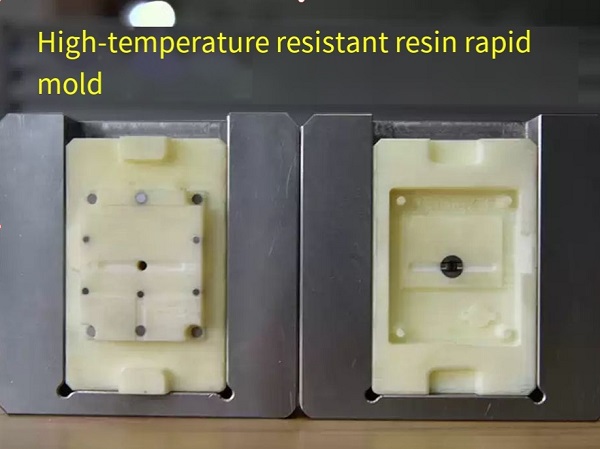
- High-temperature resistance (up to 250°C)
- Tough and durable formulations
- Simulated polypropylene or ABS properties
- Cost: $300-1000+ per liter
Biocompatible resins:
- Certified for medical contact
- Sterilizable
- Used for surgical guides and dental applications
How Does 3D Printing Production Benefit Businesses?
Cost Savings for Low Volumes
Traditional manufacturing requires expensive molds and tooling. A single injection mold can cost $10,000 to $100,000+. That investment only makes sense for thousands of parts.
3D printing production eliminates tooling costs entirely. Each part costs the same whether you make one or one hundred. For low volumes (typically under 1,000 units), additive manufacturing often proves more economical.
Real-world example: A medical device company needed 50 custom surgical guides. Traditional machining would cost $800 per part ($40,000 total). 3D printing produced them for $50 each ($2,500 total)—a 94% savings.
Speed from Design to Part
Traditional manufacturing involves weeks of tooling fabrication before producing the first part. Design changes mean starting over.
With 3D printing, the path from design to part takes days, not months:
- Design: Hours to days
- Print preparation: Minutes to hours
- Printing: Hours to days
- Post-processing: Hours
A part that takes 8 weeks through traditional methods can ship in 3 days with additive manufacturing.
Design Freedom and Complexity
Traditional manufacturing has geometric limits. Holes must be straight. Internal features require access. Assemblies need separate parts.
3D printing production removes these constraints:
- Internal channels: Conformal cooling passages following part contours
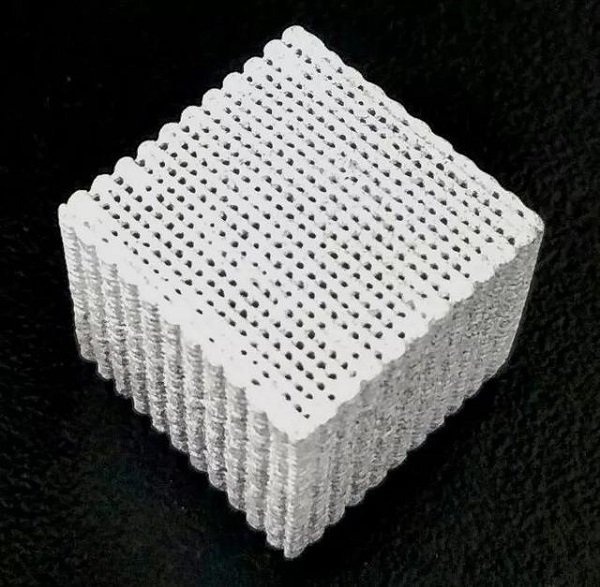
- Lattice structures: Lightweight but strong internal frameworks
- Part consolidation: Assemblies of dozens of parts printed as one
- Organic shapes: Ergonomically optimized forms impossible to machine
Case study: An aerospace supplier consolidated a 12-part hydraulic manifold assembly into a single 3D-printed component. Weight dropped by 40%, assembly labor vanished, and leak points (potential failure locations) decreased from 24 to zero.
Customization at No Extra Cost
Traditional manufacturing loves identical parts. Customization requires new tooling—prohibitively expensive for individual items.
With 3D printing, customization costs nothing. The same printer produces different designs without retooling. Each part can be unique for the same cost as identical ones.
Applications:
- Medical: Patient-specific implants and surgical guides
- Consumer: Custom-fit products (eyewear, hearing aids, footwear)
- Industrial: Replacement parts for legacy equipment
- Racing: Driver-specific ergonomic components
What Are the Limitations of 3D Printing Production?
Speed for High Volumes
While 3D printing excels at low volumes, traditional methods win at scale. An injection molding machine produces a part every 30 seconds. Matching that output would require dozens of 3D printers.
Economic crossover point: For most parts, 3D printing remains cost-effective up to 100-1,000 units. Above that, traditional methods take over.
Material Properties
3D-printed parts differ from traditionally manufactured ones:
Anisotropy: Parts are stronger in directions parallel to layer lines, weaker perpendicular to them. Design must account for this.
Surface finish: As-printed surfaces are rougher than molded or machined ones, often requiring post-processing.
Material consistency: While improving rapidly, printed parts may show slight variations in density or mechanical properties.
Size Limitations
Most 3D printers have build volumes under 500mm in any dimension. Large parts require printing in sections and assembling—adding complexity and potential weak points.
When Does 3D Printing Production Make Sense?
Ideal Applications
Rapid prototyping: Test form, fit, and function before committing to tooling
Custom products: Patient-specific medical devices, custom consumer goods
Low-volume production: Spare parts, specialty components, limited runs
Complex geometries: Parts impossible to machine or mold
Supply chain resilience: Digital inventory, print on demand, no minimum order quantities
Less Suitable Applications
High-volume consumer goods: Millions of identical parts are cheaper via injection molding
Simple geometries: A basic cube prints no faster than a complex shape—but machining might be faster
Extreme precision requirements: Sub-0.01mm tolerances still favor precision machining
Very large parts: Beyond printer build volumes, traditional fabrication remains necessary
What's the Future of 3D Printing Production?
Hybrid Manufacturing
The future isn't 3D printing replacing traditional methods—it's integration. Hybrid approaches combine additive and subtractive:
- Print near-net shape, machine to final tolerances
- Add features to cast or forged blanks
- Repair high-value components by printing onto damaged areas
Larger Print Volumes
Industrial printers now achieve build volumes large enough for automotive parts, aerospace components, and even furniture. As sizes increase, applications expand.
Multi-Material Printing
Advanced systems print multiple materials in single jobs:
- Rigid structures with flexible seals
- Conductive traces within insulating housings
- Gradient materials with varying properties
Faster Production Speeds
New technologies—continuous printing, multiple lasers, high-speed sintering—dramatically reduce build times. What took days now takes hours.
Conclusion: 3D Printing Production as a Strategic Tool
3D printing production isn't magic. It's a manufacturing technology with specific strengths and appropriate applications. Understanding when and how to use it transforms it from a curiosity into a strategic advantage.
The benefits are real:
- Cost-effective for low volumes and complex parts
- Fast from design to finished product
- Flexible for customization and iteration
- Capable of geometries impossible otherwise
The limitations matter:
- Not economical for high volumes
- Slower than mass production at scale
- Different material properties requiring design accommodation
Smart manufacturers don't ask "Can we 3D print this?" They ask "Should we 3D print this?" The answer depends on volume, complexity, customization needs, and timeline.
For the right applications, additive manufacturing delivers value traditional methods cannot match. It's not the future of all manufacturing—but it's an essential tool in the modern manufacturer's toolkit.
Frequently Asked Questions
What types of materials can be used in 3D printing production?
A wide range: plastics (PLA, ABS, nylon, polycarbonate), metals (aluminum, titanium, stainless steel, tool steel), resins (standard, engineering, biocompatible), ceramics, and composites. Each offers different properties for specific applications.
How accurate is 3D printing production?
Accuracy varies by technology. FDM: ±0.2-0.5mm. SLA: ±0.05-0.1mm. SLS: ±0.1-0.3mm. Metal printing: ±0.05-0.2mm. Factors include printer calibration, material properties, and part geometry.
Can 3D printing production replace traditional manufacturing methods?
No—they complement each other. 3D printing excels at low volumes, complex geometries, and customization. Traditional methods (injection molding, machining, casting) win at high volumes and simple shapes. The smart approach uses both where they make sense.
How much does 3D printing production cost?
Costs vary wildly by part size, material, and quantity. A small plastic part might cost $5-50. A medium metal part: $200-1,000. Complex aerospace components: $2,000-10,000+. Always compare to alternative methods for your specific part.
Is 3D printing production suitable for large-scale manufacturing?
For most products, no—traditional methods remain more economical above 1,000-10,000 units. However, for highly complex or customized products, 3D printing can remain cost-effective at higher volumes. Each case requires analysis.
What industries use 3D printing production most?
Aerospace (lightweight brackets, ducts), medical (implants, surgical guides), automotive (prototypes, custom parts, tooling), consumer goods (eyewear, hearing aids), and industrial equipment (spare parts, custom tooling).
How long does 3D printing production take?
From design to finished part: 1-7 days typically. Printing itself ranges from 1 hour (small simple part) to 7 days (large complex part). Post-processing adds hours to days depending on requirements.
Contact Yigu Technology for Custom Manufacturing
3D printing production offers powerful capabilities—but navigating the options requires expertise. At Yigu Technology, we combine years of hands-on experience with a comprehensive range of technologies to deliver parts that meet your exact specifications.
Our production capabilities include:
- FDM for large prototypes and functional parts
- SLA for high-detail components and smooth finishes
- SLS for durable nylon parts without supports
- Metal printing for titanium, aluminum, and stainless steel components
- Post-processing (sanding, polishing, painting, heat treatment)
- Design optimization for manufacturability
Whether you need a single prototype, a small batch of custom parts, or production quantities of complex components, our team delivers quality results on your timeline.
Contact us today to discuss your project. Let's explore how 3D printing production can solve your manufacturing challenges.