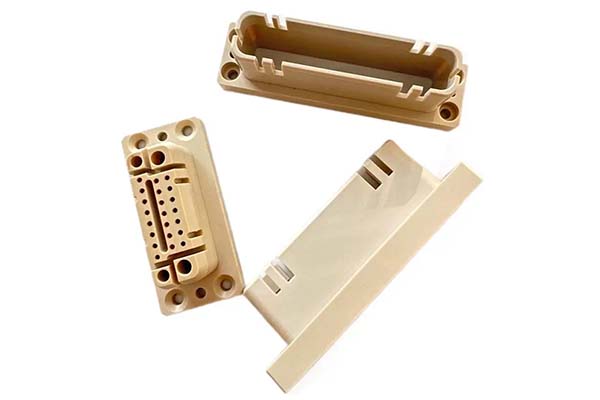
Selective Laser Sintering (SLS) has become a cornerstone of modern rapid prototyping. This guide explains how it works, why it matters, and how it compares to other technologies—helping you decide if it's the right choice for your next project.
Introduction
When you need strong, functional prototypes with complex geometries, SLS 3D printing often delivers where other methods fall short. Unlike FDM (which prints with plastic filament) or SLA (which uses liquid resin), SLS fuses powder particles with a laser—creating parts that need no support structures and can use engineering-grade materials.
I've worked with SLS technology for over a decade at Yigu Technology, helping clients across automotive, aerospace, and medical industries turn designs into reality. The technology keeps improving, and its role in rapid prototyping continues to expand.
This guide covers everything you need to know about SLS for prototyping: how it works, what materials work best, where it's used, and how it compares to other methods. By the end, you'll understand why SLS has become essential for so many product development teams.
What Exactly Is SLS 3D Printing?
Let's start with the fundamentals.
The Core Principle
Selective Laser Sintering (SLS) is an additive manufacturing technology that builds parts from powder. A high-power laser selectively fuses powder particles together, layer by layer, based on a 3D model.
The word "sintering" is important. Unlike melting, where material becomes fully liquid, sintering bonds particles together at temperatures below their melting point. This creates solid parts while leaving unused powder loose—which then acts as natural support during printing.
Think of it like this: imagine a bed of fine powder. A laser scans across the surface, fusing just the areas that will become your part. The surrounding powder stays loose. After each layer, more powder spreads over the top, and the process repeats until your object is complete.
How Does the Process Work?
The SLS process follows a consistent sequence:
Step 1: Powder Spreading
A thin layer of powder spreads evenly across the build platform. Typical layer thickness ranges from 0.05mm to 0.3mm. Thinner layers mean finer detail but slower printing. A roller or blade ensures the powder is perfectly level.
Step 2: Laser Scanning
A high-power laser scans the powder surface, tracing the cross-section of your part. Where the laser hits, powder particles fuse together. The laser moves fast—often 1-5 meters per second—depending on material and part complexity.
Step 3: Section Sintering
As the laser passes, powder in the scanned areas reaches sintering temperature. For plastics, this means the particles melt and bond. For metals, they fuse through particle-to-particle bonding below the melting point. This creates a solid layer.
Step 4: Platform Lowers
After one layer completes, the build platform drops by exactly one layer thickness. A fresh coat of powder spreads over the previous layer.
Step 5: Repeat
Steps 2-4 repeat until every layer is complete. The unsintered powder remains in place throughout, supporting the part as it builds.
Step 6: Cooling and Removal
After printing finishes, the entire powder bed cools slowly. Then the part (or parts) are removed from the loose powder and cleaned.
Why No Supports Needed?
This is one of SLS's biggest advantages for prototyping. Because unsintered powder surrounds the part during printing, it acts as natural support for overhangs, internal cavities, and complex geometries. You don't need to design and remove support structures like you do with FDM or SLA.
This means:
- More design freedom – Create shapes impossible with other methods
- Less post-processing – No supports to cut away and smooth
- Better surface quality – No support marks on your finished part
What Materials Work With SLS Prototyping?
SLS works with a surprisingly wide range of materials—one of its greatest strengths for prototyping.
Common SLS Materials
| Material | Melting Point (°C) | Key Properties | Typical Applications |
|---|---|---|---|
| Nylon (PA12) | 170-180 | Strong, tough, chemical-resistant | Functional prototypes, automotive parts, housings |
| Nylon (PA11) | 180-190 | Bio-based, flexible, impact-resistant | Consumer goods, sports equipment |
| Polycarbonate (PC) | 220-230 | High strength, heat-resistant, stable | Electronic housings, mechanical parts |
| TPU | 200-220 | Flexible, elastic, abrasion-resistant | Gaskets, grips, flexible prototypes |
| Aluminum-filled Nylon | Varies | Stiff, metal-like feel | Tooling, aesthetic prototypes |
| Metal Powders | Alloy-dependent | High strength, conductive | Aerospace, medical, high-performance |
| Ceramic Powders | >1600 | Hard, wear-resistant, heat-resistant | Cutting tools, high-temp components |
Material Considerations for Prototyping
Nylon (PA12) dominates SLS prototyping for good reason. It offers:
- Excellent strength and toughness
- Good chemical resistance
- Consistent printing behavior
- Reasonable cost
For most functional prototypes, PA12 is the right starting point.
PA11 offers similar properties but comes from renewable sources. If sustainability matters for your project, this is worth considering.
TPU brings flexibility to SLS. Need to prototype a gasket, seal, or soft-touch component? TPU delivers.
Filled materials (like aluminum-filled nylon) add stiffness and a different aesthetic. They machine nicely after printing if you need threaded holes or precise features.
Material Properties That Matter for Prototyping
When choosing materials for prototypes, consider:
- Strength – Will the part need to bear load during testing?
- Flexibility – Does it need to bend or flex?
- Heat resistance – Will it see elevated temperatures?
- Surface finish – Does appearance matter for evaluation?
- Post-processing – Will you machine, paint, or bond it?
SLS nylon handles most requirements well. For specialized needs, the material options keep expanding.
What Are the Key Components of an SLS System?
Understanding the hardware helps you appreciate what SLS can (and can't) do.
The Laser
The laser is the heart of any SLS printer. For plastics, CO₂ lasers with 50-200 watts are common. Metal sintering needs higher power—often several hundred watts.
Laser quality directly affects part precision. Better beam control means finer details and smoother surfaces.
Scanning Mirrors
These mirrors direct the laser beam across the powder bed. High-speed galvanometers move them at meters per second with micrometer-level accuracy. The scanning system determines how fast and how accurately the printer can work.
Worktable (Build Platform)
The worktable holds the part during printing. It moves down precisely after each layer—typically in steps of 0.05-0.3mm. High-end systems position within 0.01mm accuracy.
Powder Cylinder
This stores fresh powder and supplies it to the build area. A piston pushes powder up, where the spreading roller can distribute it.
Powder Spreading Roller
This roller spreads fresh powder evenly across the build platform. Consistent layer thickness is critical for quality—variations cause defects.
Temperature Control System
SLS runs hot. The powder bed pre-heats to near the material's melting point—typically 150-180°C for nylon. This reduces laser power needed and minimizes warping. Precise temperature control throughout the build volume is essential for consistent results.
How Does SLS Compare to Other Prototyping Methods?
Choosing between technologies requires understanding their differences.
SLS vs FDM (Fused Deposition Modeling)
| Aspect | SLS | FDM |
|---|---|---|
| Accuracy | High (±0.1-0.2mm) | Moderate (±0.2-0.5mm) |
| Surface Finish | Matte, slightly rough | Visible layer lines |
| Materials | Powders (nylon, TPU, composites) | Filaments (PLA, ABS, PETG) |
| Supports | None needed | Required for overhangs |
| Part Strength | Strong, isotropic (nearly equal in all directions) | Weaker between layers |
| Equipment Cost | High ($50k-$500k+) | Low ($500-$10k) |
| Material Cost | Moderate-high ($50-100/kg) | Low ($20-50/kg) |
| Best For | Functional prototypes, complex geometries | Simple parts, low-cost prototyping |
When to choose SLS over FDM:
- You need strong, functional parts
- Your design has complex geometry or overhangs
- Surface finish matters more than FDM delivers
- You're prototyping in engineering materials
SLS vs SLA (Stereolithography)
| Aspect | SLS | SLA |
|---|---|---|
| Accuracy | High (±0.1-0.2mm) | Very high (up to ±0.05mm) |
| Surface Finish | Matte, slightly rough | Smooth, detailed |
| Materials | Powders (nylon, TPU, composites) | Liquid resins |
| Supports | None needed | Required |
| Part Strength | Strong, durable | Can be brittle |
| Best For | Functional prototypes | Visual prototypes, detailed models |
When to choose SLS over SLA:
- Parts need to be strong and functional
- You want to avoid support structures
- The material properties of nylon suit your application
- Slightly rougher surface finish is acceptable
SLS vs Traditional Machining
| Aspect | SLS | CNC Machining |
|---|---|---|
| Geometry | Unlimited complexity | Limited by tool access |
| Material Waste | Low (unsintered powder reused) | High (chips removed) |
| Lead Time | Days | Days to weeks |
| Material Properties | Good, but layer-dependent | Excellent, wrought properties |
| Surface Finish | Moderate | Excellent |
| Best For | Complex, low-volume parts | Simple shapes, high precision |
When to choose SLS over machining:
- Your design has internal features or complex curves
- You want to test multiple design iterations quickly
- Material waste matters
- You need parts in days, not weeks
Where Is SLS Used for Prototyping?
Real-world examples show the technology's value.
Automotive: Faster Iteration, Better Parts
A major car manufacturer needed to test a new intake manifold design. Traditional methods would take 4-6 weeks for a machined prototype—too slow for their development schedule.
Using SLS with nylon, they printed functional prototypes in 1-2 weeks. The design team tested multiple iterations in the time one machined part would have taken. They optimized airflow, found issues early, and brought the final design to production faster.
Key benefit: SLS compressed their development cycle by 60-70% for complex parts.
Consumer Goods: Rapid Market Testing
A toy company wanted to test market response to new designs. Before SLS, creating prototypes meant weeks of waiting and significant cost per iteration.
Now they print prototypes in days, show them to focus groups, incorporate feedback, and print revised versions within the same week. Products reach market faster and better match customer preferences.
Key benefit: Multiple design cycles in the time one used to take.
Medical: Patient-Specific Models
Surgeons preparing for complex procedures need accurate anatomical models. From CT scan data, medical engineers create 3D models and print them via SLS.
The resulting models let surgeons:
- Study patient-specific anatomy
- Plan surgical approaches
- Practice procedures before operating
- Explain conditions to patients
Impact: A study found that surgical planning with 3D-printed models reduced operating time by 20-30% in complex cases.
Aerospace: Lightweight Prototypes
Aerospace companies prototype components that must be both light and strong. SLS with nylon or composite materials produces parts that accurately represent final production pieces.
Engineers test fit, function, and performance before committing to expensive metal machining or production tooling.
What Are SLS's Advantages for Prototyping?
The technology offers specific benefits for rapid prototyping.
Design Freedom
With no supports needed, you can prototype:
- Internal channels and lattices
- Complex organic shapes
- Interlocking assemblies
- Features that would be impossible to machine
This means you test the actual design, not a compromised version.
Functional Parts
SLS nylon parts are strong enough for real testing. You can:
- Assemble with other components
- Test mechanical performance
- Evaluate fit and function
- Use them in low-stress applications
Your prototype behaves like a production part, giving you meaningful data.
Speed
From finished CAD to physical part in days—not weeks. Multiple design iterations fit into the time one traditional prototype would take.
No Tooling
Every prototype can be different at no extra cost. Design changes cost nothing but file updates. This encourages experimentation and optimization.
Material Variety
Choose materials that match your application requirements. Need flexibility? Use TPU. Need stiffness? Try filled nylon. Need heat resistance? Specialized materials exist.
What Are the Limitations?
SLS isn't perfect. Know the constraints.
Equipment Cost
Industrial SLS machines cost $50,000 to $500,000+. Even desktop SLS systems run $10,000-20,000—far more than FDM printers.
Surface Finish
SLS parts come out with a matte, slightly rough surface. For appearance models, SLA often looks better straight from the printer. Post-processing (sanding, coating) can improve finish but adds time.
Material Handling
Powder is messy. You need:
- Proper ventilation
- Safety equipment (particulates)
- Procedures for handling and recycling powder
- Storage that keeps powder dry
Cooling Time
Parts need to cool slowly inside the powder bed after printing. This can add hours to total production time—especially for dense builds with many parts.
Size Limitations
Build volumes are smaller than large FDM printers. Very large parts must be printed in sections and assembled.
What Does the Future Hold for SLS Prototyping?
The technology continues to evolve.
Faster Printing
Multi-laser systems now print with 2, 4, or even 8 lasers working simultaneously. This cuts build times dramatically—a part that took 24 hours now prints in 6 with four lasers.
Better Materials
New powders appear regularly:
- Higher-performance nylons
- Better composites
- More sustainable options
- Materials with enhanced properties
Lower-Cost Systems
Desktop SLS printers under $10,000 now exist. While industrial machines still dominate production, smaller systems make SLS accessible to more businesses.
Improved Software
Better control software means:
- More reliable printing
- Better surface finish
- Reduced waste
- Real-time monitoring
How Do You Choose SLS for Your Project?
Consider these factors.
Choose SLS When:
- You need strong, functional prototypes that behave like production parts
- Your design has complex geometry that would need difficult supports in other methods
- You want to test multiple design iterations quickly
- Material properties (nylon's strength, TPU's flexibility) match your needs
- No supports simplifies your workflow
Consider Other Methods When:
- Surface finish is critical – SLA gives smoother results out of the printer
- Cost is the main factor – FDM is much cheaper for simple parts
- Parts are very large – Large-format FDM handles bigger pieces
- You need specific materials – Some materials aren't available in SLS
Conclusion
SLS 3D printing has earned its place as a cornerstone of rapid prototyping. Its ability to create strong, functional parts without supports—using engineering materials—makes it invaluable for product development.
The key points to remember:
- Powder + laser creates solid parts layer by layer
- No supports needed means design freedom
- Material options include nylons, TPU, composites, and more
- Applications span automotive, medical, consumer goods, and aerospace
- Cost and complexity mean it's not always the right choice—but when it is, nothing else compares
At Yigu Technology, we've seen SLS transform how companies develop products. Prototypes that once took months now take days. Designs get tested more thoroughly. Products reach market faster.
If you're considering SLS for your next prototyping project, start with a clear understanding of what you need. Match those needs to SLS's strengths. And don't hesitate to consult experts who've been there before—the technology has a learning curve, but the results are worth it.
Frequently Asked Questions
What are the common materials used in SLS 3D printing?
Common materials include nylon (PA12, PA11) for strong, tough parts; TPU for flexible components; polycarbonate for heat resistance; and composite powders for enhanced properties. Metal and ceramic powders are also available for specialized applications.
How does SLS compare to FDM in terms of cost?
SLS has higher upfront costs—equipment runs $50,000 to $500,000+ compared to FDM's $500 to $10,000. Material costs are also higher for SLS. However, for complex parts, SLS's ability to print without supports and use engineering materials can justify the cost.
Can SLS be used for large-scale production?
Currently, SLS is best suited for prototyping and small-batch production (tens to hundreds of parts). While some industries use it for production, widespread large-scale manufacturing faces challenges in speed, cost, and post-processing requirements.
How accurate is SLS 3D printing?
Typical dimensional tolerance ranges from ±0.1mm to ±0.2mm for most applications. Accuracy depends on layer thickness, material, part geometry, and printer calibration.
Is post-processing always required for SLS parts?
Not always, but often beneficial. Many parts work fine as-printed with their natural matte finish. Post-processing like sandblasting, dyeing, or machining improves surface finish, appearance, or precision when needed.
What's the difference between SLS and SLA?
SLS uses a laser to sinter powder materials, creating strong parts without supports. SLA uses a laser to cure liquid resin, producing smoother surfaces but requiring supports. SLS parts are generally stronger; SLA parts have better surface finish.
How long does an SLS print take?
Print time depends on part size, layer thickness, and number of parts. A small batch of prototypes might print in 10-20 hours. Larger builds can run 2-3 days. Cooling adds several hours after printing.
Do I need special training to use SLS?
Yes. SLS requires understanding of powder handling, printer operation, material properties, and post-processing. Most manufacturers provide training, and many users start by working with service bureaus before investing in equipment.
Contact Yigu Technology for Custom Manufacturing
Need expert help with SLS prototyping for your next project? At Yigu Technology, we combine years of manufacturing experience with advanced SLS capabilities. Whether you need functional prototypes, custom parts, or help optimizing designs for additive manufacturing, we deliver precision results with professional quality. [Contact us today] to discuss your project—we'll help you choose the right approach and get your parts made right.