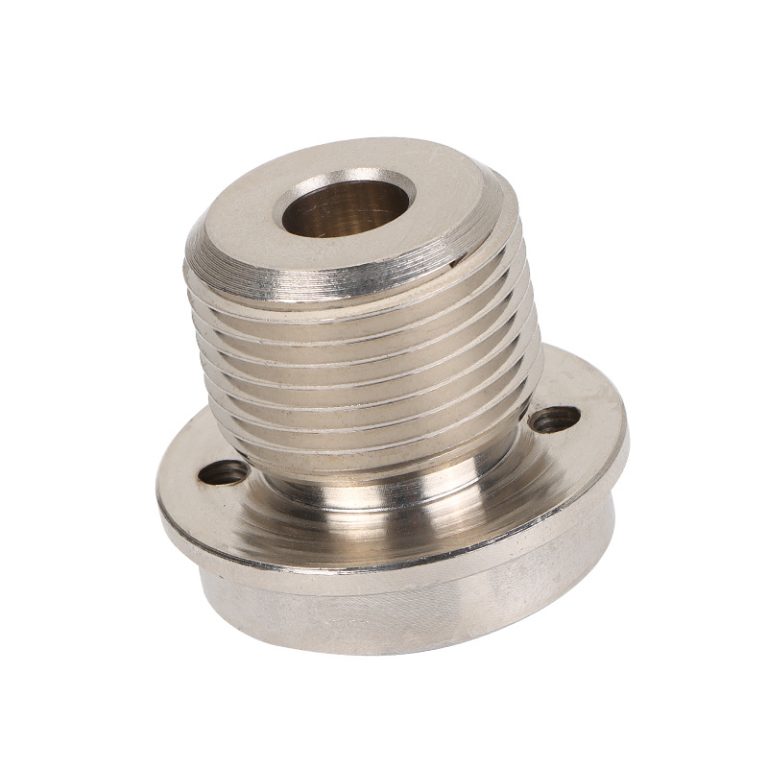
Selective Laser Melting (SLM) is a metal 3D printing technology that uses a high-powered laser to fuse metal powder into complex, high-performance parts. This article explains how the process works, its applications, and how you can benefit from it.
Introduction to Selective Laser Melting
Selective Laser Melting (SLM) is a revolutionary additive manufacturing technology that creates complex, high-performance metal parts. By using a powerful laser to melt metal powders and fuse them together layer by layer, SLM can produce parts with intricate geometries impossible to achieve with traditional manufacturing methods.
Industries like aerospace, automotive, medical, and tooling increasingly adopt SLM. Why? Because the demand for lightweight, strong, and highly customized components continues to grow. SLM delivers exactly that—parts optimized for performance, with minimal waste and maximum design freedom.
What Is Selective Laser Melting?
How do we define SLM?
Selective Laser Melting (SLM) is a type of additive manufacturing that uses a focused laser beam to melt and fuse metal powder particles. The process builds parts layer by layer from a 3D digital model created in Computer-Aided Design (CAD) software.
Unlike traditional subtractive manufacturing—which removes material from a solid block—SLM adds material one layer at a time. This makes it ideal for creating complex shapes, internal structures, and intricate details that machining or casting cannot produce.
Where did SLM come from?
The concept of laser-based metal processing dates back to the 1980s. But Selective Laser Melting itself emerged in the 1990s as laser technology and computer control systems advanced. By the early 2000s, commercial SLM systems became available.
Since then, continuous improvements in lasers, material formulations, and software have enhanced precision, speed, and material options. Today, SLM is a versatile manufacturing technique for producing high-quality, customized metal components across multiple industries.
How Does Selective Laser Melting Work?
What happens step by step?
The SLM process follows a precise, layer-by-layer approach:
Step 1: Powder Bed Preparation
A thin layer of metal powder spreads evenly across the build platform. A hopper supplies powder, and a recoater blade distributes it uniformly. Layer thickness typically ranges from 20 to 50 microns—about half the width of a human hair.
Step 2: Laser Scanning
A high-powered laser scans the powder bed, melting metal powder according to the cross-sectional pattern from your digital 3D model. The laser energy fuses powder particles together, solidifying them into a solid layer.
Step 3: Platform Lowering
Once the first layer completes, the build platform lowers by one layer thickness—again, 20-50 microns. A new powder layer spreads over the previous one.
Step 4: Repetition
The process repeats layer by layer. Each new layer fuses to the one below it. Over time, the part builds from bottom to top until complete.
Step 5: Post-Processing
After printing, the part typically needs post-processing—heat treatment to relieve stresses, surface polishing, and support removal.
What laser technology does SLM use?
The heart of SLM is a high-powered laser capable of melting metal powder. Two common types:
- Fiber lasers: Efficient, precise, and commonly used in modern SLM systems
- CO2 lasers: Used in some systems, though fiber lasers increasingly dominate
The laser generates enough energy to melt metals with high melting points—titanium at 1668°C, for example.
What materials work with SLM?
SLM works with various metal powders. Material choice depends on your application requirements:
| Material | Key Properties | Typical Applications |
|---|---|---|
| Titanium Alloys | High strength-to-weight, biocompatible | Aerospace components, medical implants |
| Stainless Steel | Durable, corrosion-resistant | Tooling, automotive parts, industrial equipment |
| Aluminum Alloys | Lightweight, good thermal conductivity | Aerospace, automotive, heat exchangers |
| Cobalt-Chrome | Wear-resistant, biocompatible | Medical implants, dental devices |
| Nickel Alloys (Inconel) | Heat-resistant, corrosion-resistant | Turbine blades, exhaust systems |
| Tool Steels | Hard, wear-resistant | Molds, dies, cutting tools |
Each material requires specific laser parameters—power, scan speed, and exposure time—optimized for its melting characteristics.
What Can You Create With SLM?
Aerospace applications
Aerospace leads SLM adoption. The industry demands lightweight, high-strength parts with complex geometries. SLM delivers.
Turbine blades: SLM produces blades with intricate internal cooling channels. These channels allow higher operating temperatures, improving engine efficiency. Traditional machining cannot create such internal features.
Engine components: Brackets, nozzles, and structural elements benefit from weight reduction and material efficiency. GE Aviation uses SLM for fuel nozzles—parts once assembled from 20 components now print as single pieces, 25% lighter and five times more durable.
Custom parts: Rapid prototyping and low-volume production of customized components accelerate development cycles and improve performance.
Automotive applications
Automotive manufacturers use SLM for both prototyping and production.
Engine components: Exhaust manifolds, cylinder heads, and turbochargers benefit from weight reduction and enhanced performance. Lighter components improve fuel efficiency and vehicle dynamics.
Gears and housings: Complex, lightweight parts improve performance while reducing material waste.
Prototyping and customization: SLM enables rapid design iterations. High-performance and luxury vehicles get custom parts tailored to specific requirements.
Medical applications
In healthcare, SLM transforms implant and device manufacturing.
Custom implants: Hip implants, dental crowns, and cranial implants designed from patient CT scans fit perfectly. Studies show patients with custom SLM implants recover 20% faster than those with standard implants.
Surgical tools: Specialized instruments with ergonomic designs improve surgeon precision and reduce fatigue.
Biocompatible materials: Titanium and cobalt-chrome alloys offer excellent biocompatibility, safe for long-term implantation.
What Advantages Does SLM Offer?
Precision and complexity
SLM excels at producing parts with high precision and complex geometries. Layer-by-layer construction enables:
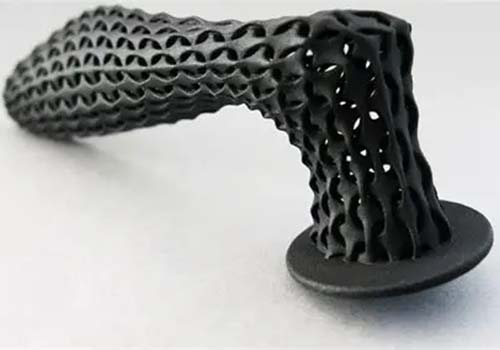
- Fine lattice structures reducing weight while maintaining strength
- Internal channels for cooling or fluid flow
- Undercuts and features impossible to machine
- Thin walls down to 0.3-0.5mm
For industries requiring exacting tolerances—aerospace, medical—this capability proves invaluable.
Material efficiency
SLM is inherently material-efficient. Unlike subtractive methods that cut away up to 80-90% of material, SLM uses only what the part requires.
Unused metal powder can be recycled and reused. For expensive materials like titanium and Inconel, this matters significantly. Material savings often offset higher equipment costs, making SLM economical for complex, high-value parts.
Design freedom
Perhaps SLM's greatest benefit: design freedom. Engineers create parts with:
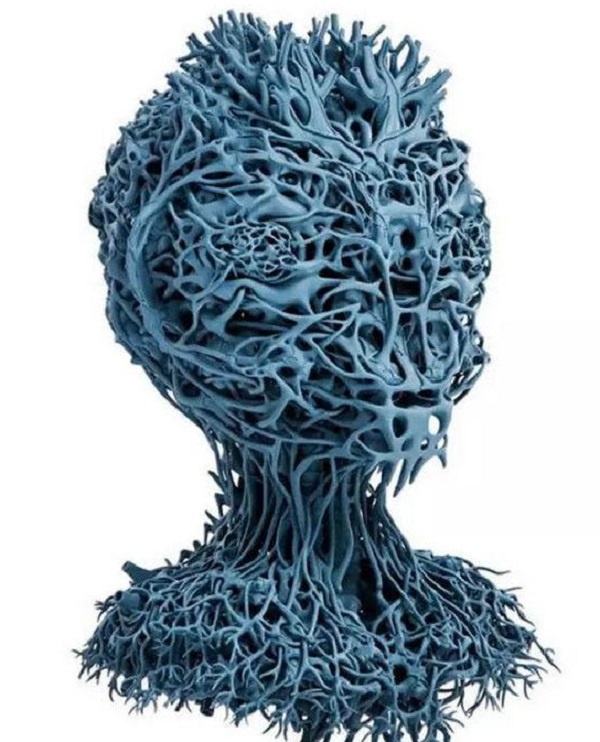
- Organic shapes optimized for performance
- Internal structures impossible to machine
- Consolidated assemblies replacing multi-part constructions
- Variable density with solid and lattice regions
This flexibility enables innovations impossible with traditional methods.
What Are the Limitations of SLM?
Cost and accessibility
SLM involves significant costs:
Equipment: Industrial SLM systems range from $500,000 to $1.5 million. Even desktop metal printers cost more than plastic printers.
Materials: Metal powders cost more than traditional stock materials. Titanium powder runs $200-400 per kilogram.
Operations: High energy consumption, regular maintenance, and skilled operators add to ongoing costs.
For small businesses or low-volume applications, these costs may be prohibitive. However, as adoption grows and technology advances, costs continue decreasing.
Post-processing requirements
SLM parts rarely come out ready to use. Common post-processing steps:
- Heat treatment to relieve residual stresses
- Support removal—cutting away structures needed during printing
- Machining critical surfaces to achieve tighter tolerances
- Polishing for improved surface finish
- Hot Isostatic Pressing (HIP) to eliminate internal porosity
These steps add time and cost to production. Plan for them in your project timeline and budget.
Material property considerations
Not all materials suit SLM. Those that do may exhibit different properties than traditionally processed versions:
- Strength may differ from wrought material
- Ductility can be lower in as-printed parts
- Fatigue resistance requires careful process control
- Anisotropy—properties vary with build orientation
Thorough testing validates each application. Process parameters must be optimized for consistent results.
How Does SLM Compare to Other Metal 3D Printing Technologies?
SLM vs. Electron Beam Melting (EBM)
| Aspect | SLM | EBM |
|---|---|---|
| Energy Source | Laser | Electron beam |
| Environment | Inert gas (argon, nitrogen) | Vacuum |
| Accuracy | ±0.05-0.15mm | ±0.1-0.3mm |
| Surface Finish | Smoother (Ra 5-20μm) | Rougher (Ra 10-50μm) |
| Build Speed | Slower | Faster for large parts |
| Materials | Wider range | Titanium, nickel alloys primarily |
| Part Size | Limited by build volume | Similar limitations |
Choose SLM when: You need highest accuracy, smooth surface finish, or wider material choice.
Choose EBM when: You need faster build speeds for large parts or prefer vacuum processing for reactive metals.
SLM vs. Binder Jetting
| Aspect | SLM | Binder Jetting |
|---|---|---|
| Process | Laser melts powder | Binder bonds powder, then sintered |
| Density | Near 100% | 95-98% before infiltration |
| Surface Finish | Good | Moderate |
| Build Speed | Slower | Faster—multiple parts simultaneously |
| Cost | Higher per part | Lower per part at volume |
| Post-Processing | Support removal, heat treat | Sintering, infiltration |
Choose SLM when: You need fully dense parts with best mechanical properties.
Choose Binder Jetting when: You need higher throughput or lower cost for production volumes.
Yigu Technology's Perspective
At Yigu Technology, we view SLM as a transformative tool for custom metal part manufacturing. As a non-standard plastic and metal products custom supplier, we've integrated SLM into our capabilities for projects demanding:
- Complex geometries impossible to machine
- Small-batch production without tooling costs
- Custom designs tailored to specific requirements
- High-performance materials like titanium and Inconel
Our team optimizes every aspect of the SLM process—from design for additive manufacturing (DfAM) to parameter selection to post-processing. We test mechanical properties and verify dimensions to ensure every part meets specifications.
SLM isn't right for every project. But when you need precision, complexity, and performance in metal parts, it's often the best solution available.
Conclusion
Selective Laser Melting represents a powerful tool for manufacturing complex, high-performance metal parts. Its ability to create intricate geometries, reduce material waste, and achieve excellent mechanical properties makes it invaluable for aerospace, medical, automotive, and industrial applications.
Key takeaways:
- SLM uses high-powered lasers to melt metal powder layer by layer
- Titanium, stainless steel, aluminum, cobalt-chrome, and nickel alloys are common materials
- Applications span aerospace (turbine blades), medical (custom implants), and automotive (engine parts)
- Advantages include precision, complexity, material efficiency, and design freedom
- Challenges include cost, post-processing requirements, and material property considerations
As technology advances and costs moderate, SLM will become accessible to more manufacturers. Understanding its capabilities and limitations helps you identify opportunities where this technology delivers real value.
FAQ
Q1: What are the primary benefits of Selective Laser Melting?
A: SLM offers high precision, ability to create complex geometries, and material efficiency. It enables lightweight designs, customization, and rapid prototyping—valuable in aerospace, automotive, and medical industries.
Q2: What are common applications of SLM?
A: Aerospace uses SLM for turbine blades and engine components. Automotive uses it for high-performance engine parts and gears. Medical uses it for custom implants, prosthetics, and surgical tools.
Q3: What are the challenges associated with SLM?
A: Main challenges include high equipment and material costs, post-processing requirements, and material properties that may differ from traditional methods. Each application requires careful validation.
Q4: How accurate is SLM compared to CNC machining?
A: SLM typically achieves ±0.05-0.15mm accuracy. CNC machining achieves tighter tolerances (±0.025mm or better). For critical surfaces, combine SLM near-net shape with finish machining.
Q5: Can SLM produce large parts?
A: Build volumes limit maximum size. Typical SLM systems handle parts up to 200-400mm in each dimension. Larger parts require segmentation with subsequent welding or assembly.
Q6: What post-processing do SLM parts need?
A: Common steps include heat treatment to relieve stress, support removal, surface finishing (machining, polishing, blasting), and sometimes Hot Isostatic Pressing (HIP) to eliminate internal porosity.
Q7: How much does SLM cost?
A: Equipment costs range from $500,000 to $1.5 million. Material costs vary by metal—titanium powder runs $200-400 per kilogram. Operating costs include energy, maintenance, and labor. For complex, high-value parts, overall economics often favor SLM.
Contact Yigu Technology for Custom Manufacturing
Ready to explore how Selective Laser Melting can advance your next metal part project? At Yigu Technology, we combine deep expertise in additive manufacturing with state-of-the-art SLM capabilities. Whether you need aerospace components, medical implants, or specialized industrial parts, our team delivers precision results tailored to your specifications. Contact us today for a consultation—let's turn your complex designs into reality with SLM technology.