Introduction
You send a drawing. You get a quote. You wait. Then the parts arrive — and something is wrong. Maybe the holes are off by 0.1 mm. Maybe the surface is rough. Maybe the material isn't what you ordered. This happens all the time in CNC machining. The problem? Most buyers focus only on price. They ignore quality signals. They skip supplier vetting. They don't understand how pricing works. The result? Wasted money, missed deadlines, and parts you can't use.
This guide fixes that. We'll walk you through a proven system to pick CNC machining parts that are right the first time. From quality checks to supplier selection to pricing tricks — you'll know exactly what to look for.
1. Quality Core: What Precision Really Means
1.1 Tolerances: Know the Priority Order
Not all specs matter equally. Here's the order that actually impacts your assembly:
| Spec Type | What It Controls | Priority |
|---|---|---|
| Dimensional Tolerance | Hole size, shaft diameter, length | 🔴 Critical |
| Geometric Tolerance | Flatness, concentricity, runout | 🔴 Critical for fits |
| Surface Roughness (Ra) | How smooth the surface feels | 🟡 Important for seals/slides |
| Visual Appearance | Color, texture, cosmetics | 🟢 Low priority for prototypes |
Most buyers obsess over surface finish. But dimensional tolerance is what breaks your assembly. A part can look perfect but still not fit if the hole is 0.05 mm too small.
1.2 Key vs Non-Key Dimensions
Don't inspect everything. It wastes time and money. Use this rule:
| Dimension Type | Inspection Method | Frequency |
|---|---|---|
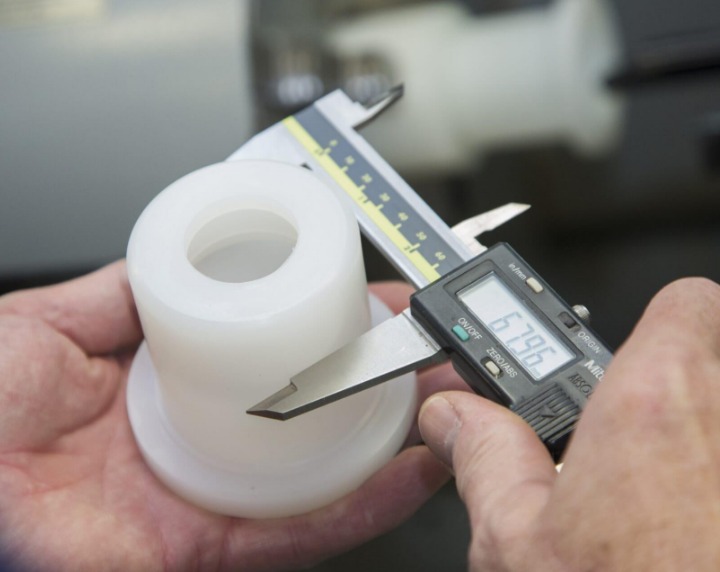
| Key dimensions (mating surfaces, bearing seats) | CMM or calibrated calipers | 100% of parts |
| General dimensions (overall size, non-mating features) | Calipers or gauges | Sample 10–20% |
| Cosmetic dimensions (edges, non-visible areas) | Visual check | Spot check only |
A real example: We worked with an automotive sensor housing client. They were measuring every single dimension on every part. It cost them $800 extra per batch in inspection time. We told them to focus on the 6 key dimensions that affected the seal. Inspection cost dropped 70%. Quality stayed the same.
1.3 Batch Consistency: Avoid the "First Part Trap"
Here's a common nightmare. The first sample is perfect. But batch production drifts. Why? Tool wear. As the cutter runs, it dulls. Dimensions shift by 0.01–0.03 mm per 50 parts.
To prevent this, demand:
- Tool life tracking: Ask the shop how often they replace tools.
- In-process gauging: They measure mid-batch, not just at the end.
- First Article Inspection (FAI): A full report on the first 3–5 parts before full production runs.
A medical device startup learned this the hard way. Their first 100 CNC titanium brackets were perfect. Parts 101–500 drifted out of spec. They had to scrap 400 brackets. That's a $12,000 loss. A simple mid-batch check would have caught it.
2. Supplier Screening: Beyond Price
2.1 Machine Match: 3-Axis vs 5-Axis
Your part complexity dictates the machine you need:
| Machine Type | Best For | Prototype Suitability |
|---|---|---|
| 3-Axis CNC | Flat parts, simple pockets, drilled holes | 80% of orders |
| 4-Axis CNC | Cylindrical parts, rotational features | Shafts, housings |
| 5-Axis CNC | Complex curves, deep cavities, organic shapes | High-end functional parts |
Don't pay for 5-axis if 3-axis can do the job. But don't send a 5-axis part to a 3-axis shop. That's how you get bad results.
2.2 Quality System: ISO Is Not Enough
ISO 9001 is a baseline. It means they have a system. But it doesn't mean they follow it. Look deeper:
| Quality Signal | What It Really Tells You |
|---|---|
| ISO 9001 certified | They have documented processes |
| AS9100 certified | They meet aerospace-level standards |
| IATF 16949 certified | They serve automotive OEMs |
| Clean shop floor | They actually care about quality |
| Calibrated tools on wall | They measure what they claim |
We visited a "ISO 9001" shop once. The certificate was on the wall. But the calipers were uncalibrated. The floor was covered in chips. We walked out. Always visit or video-call before you commit.
2.3 Experience Beats Size
A small shop with 5 machines and 10 years of CNC experience will often beat a big factory with 50 machines and no prototype focus. Ask for:
- Photos of similar parts they've made.
- References from product development teams, not just production buyers.
- Their typical prototype turnaround time.
2.4 Response Speed Shows Service Level
| Quote Response Time | What It Means |
|---|---|
| Under 4 hours | Prototype-focused, well-organized |
| 4–12 hours | Standard professional shop |
| Over 24 hours | Likely not set up for fast prototyping |
Speed in quoting = speed in production. It's that simple.
2.5 After-Sales: What Happens When Parts Fail?
Before you order, ask: "What's your defect rate, and how do you handle bad parts?"
A good shop will say: "Our defect rate is under 1%. If a part fails, we re-machine it at no cost within 48 hours." A bad shop will say: "We don't accept returns." That answer tells you everything.
3. Pricing Breakdown: What You're Actually Paying For
3.1 Cost Components: Full Transparency
Here's what makes up a CNC machining quote:
| Cost Item | Typical Share | What Affects It |
|---|---|---|
| Raw material | 15–25% | Material type, size, waste |
| Machine time | 40–55% | Complexity, tolerances, setup |
| Programming & setup | 15–25% | Part complexity, CAM time |
| Quality inspection | 5–10% | Number of dimensions checked |
| Post-processing | 5–15% | Deburring, anodizing, coating |
If a quote seems too low, they're cutting corners on material or inspection. If it's too high, they're padding setup time.
3.2 Volume Pricing Curve
| Order Qty | Per-Part Cost | Setup Cost Per Part |
|---|---|---|
| 1 piece | $150 | $150 (100% of setup) |
| 10 pieces | $85 | $15 (10% of setup) |
| 100 pieces | $35 | $1.50 (1% of setup) |
| 1000 pieces | $18 | $0.15 (negligible) |
Setup cost is the killer for small orders. That's why 1-piece quotes look expensive. It's not the machining — it's the fixed cost spread over one part.
3.3 Hidden Cost Traps
| Hidden Cost | Often Excluded? | How to Avoid |
|---|---|---|
| Shipping | Yes | Ask for DDP (delivered duty paid) pricing |
| Packaging | Sometimes | Confirm protective packaging is included |
| Material certs | Sometimes | Request with quote upfront |
| Deburring | Often | Specify "deburred" in your drawing |
| First Article Inspection | Rarely | Add it to the quote explicitly |
Always ask: "Is this quote all-in, or are there extra charges?" A shop that surprises you with fees after the fact is not a shop you want.
4. Delivery Management: Get Parts On Time
4.1 Lead Time Expectations
| Service Level | Typical Time | Cost Multiplier |
|---|---|---|
| Standard | 5–7 business days | 1x |
| Rush | 2–3 business days | 1.5x – 2x |
| Emergency | 1 business day | 2x – 3x |
For prototypes, standard is usually fine. Rush only makes sense for critical design checks.
4.2 What Causes Delays?
| Bottleneck | Why It Happens | How to Prevent |
|---|---|---|
| Material sourcing | Exotic alloys take time to stock | Use standard grades (6061, 304) |
| Complex geometry | More setup, slower cuts | Simplify design where possible |
| Tight tolerances | Slower feeds, more inspection | Loosen non-critical tolerances |
| Queue position | Small orders get pushed back | Batch orders or pay for priority |
4.3 Protect Yourself in the Contract
Include these clauses:
- Firm delivery date with penalty for late delivery (e.g., 5% discount per day late).
- Partial shipment option — get some parts early if full batch isn't ready.
- Right to audit — you can visit the shop to check progress.
A robotics company we advised added a "5% per day late" clause to their contract. The shop delivered 2 days early. Incentives work.
5. Drawing Communication: Stop the Rework Loop
5.1 Make Your Drawing Readable
A bad drawing = bad parts. Here's what to include:
| Must-Have | Why |
|---|---|
| 3D CAD file (STEP or IGES) | Eliminates interpretation errors |
| Critical dimensions called out | Tells the machinist what matters |
| Tolerance block on drawing | No guessing |
| Datum references (A, B, C) | Ensures consistent measurement |
| Section views for internal features | Shows what can't be seen from outside |
5.2 Specify Material & Heat Treatment
Don't just say "aluminum." Say exactly what you need:
| Vague Spec | Clear Spec |
|---|---|
| "Aluminum" | 6061-T6 aluminum |
| "Stainless steel" | 304 stainless, 2B finish |
| "Hardened steel" | 4140, quenched & tempered to 28–32 HRC |
This one change eliminates 80% of material mix-ups.
5.3 Add Special Instructions in Writing
| Instruction | Example |
|---|---|
| Deburring | "All edges deburred, break sharp corners 0.3 mm" |
| Chamfers | "45° chamfer 0.5 mm on all external edges" |
| Cleanliness | "Parts must be oil-free, suitable for anodizing" |
| Surface finish | "Ra 1.6 µm on mating surfaces, Ra 3.2 µm elsewhere" |
Write these in a text note on the drawing. Don't assume the machinist will guess.
6. Material & Finishing: The Two Biggest Traps
6.1 Verify Material Authenticity
Suppliers do substitute materials. It's common. Here's how to verify:
| Verification Method | What It Proves | Cost |
|---|---|---|
| Material certificate (Mill Test Report) | Grade and heat treatment | Free with order |
| Spectrometer test (XRF/OES) | Exact chemical composition | 20–50 per part |
| Hardness test | Heat treatment state | 5–15 per part |
| Density check | Catches fake tungsten or brass | $10 per batch |
For critical parts (aerospace, medical, automotive), always request a material certificate. For high-value metals (titanium, Inconel), add a spectrometer test.
A client ordered Inconel 718 brackets. The parts looked right. But they failed a salt spray test. Spectrometer revealed they were actually 304 stainless with a nickel plating. **25,000inscrap.∗∗A50 test would have saved it.
6.2 Surface Treatment: Pick the Right One
| Treatment | Best For | Typical Cost Add |
|---|---|---|
| Anodizing | Aluminum, corrosion resistance | +2–5 per part |
| Electroplating (zinc, nickel, chrome) | Steel, wear resistance | +3–8 per part |
| Powder coating | Steel/aluminum, color + protection | +5–12 per part |
| Passivation | Stainless steel, clean surface | +1–3 per part |
| Black oxide | Steel, mild corrosion + look | +1–2 per part |
Don't skip this step. A part without surface treatment will corrode in most environments.
6.3 Deburring: The Last Mile That Matters
This is the most overlooked step. CNC leaves burrs — tiny metal spikes on every edge. If you skip deburring:
- Parts won't assemble smoothly.
- Operators can get cut.
- Seals will leak.
- Anodizing will look terrible.
| Deburring Method | Quality Level | Cost |
|---|---|---|
| Manual (hand file) | Basic | 1–3 per part |
| Tumbling/vibratory | Good for small parts | 0.50–2 per part |
| Thermal energy (TEM) | Excellent, no dimensional change | 3–8 per part |
| Electrochemical | Best for complex parts | 5–15 per part |
Always specify "deburred" on your drawing. It costs 1–3 extra per part. It saves you hours of assembly headaches.
Conclusion
Choosing CNC machining parts isn't about finding the cheapest quote. It's about building trust across the entire chain — from quality to delivery. The shops that win long-term aren't the cheapest. They're the ones with clear pricing, real quality systems, fast communication, and honest material practices. Use this guide as your checklist. Ask the right questions. Inspect the right things. Specify the right details. When you do that, you won't just get parts — you'll get parts you can count on.
FAQ
How do I know if a CNC supplier is reliable?
Look for ISO 9001+ certification, fast quoting (under 12 hours), prototype-focused experience, transparent pricing, and willing to share material certificates. Visit or video-call before ordering.
What's a reasonable CNC machining price for a prototype?
For a simple aluminum part (100mm × 50mm × 30mm), expect 80–170 per piece. Complex 5-axis parts run 200–500+. Always get 3+ quotes to benchmark.
How do I avoid getting the wrong material?
Specify the exact grade and heat treatment on your drawing (e.g., "6061-T6"). Request a mill test report with every order. For expensive materials, add a spectrometer test.
Should I pay extra for tight tolerances?
Only on mating and functional surfaces (±0.02–0.05 mm). Loose tolerances (±0.1–0.2 mm) on non-critical features save 20–40% with zero functional loss.
What's the biggest mistake in CNC part ordering?
Sending a 2D drawing without a 3D CAD file. It causes interpretation errors that lead to wrong parts. Always send STEP or IGES files.
How do I handle late deliveries?
Include a penalty clause in your contract (e.g., 5% discount per day late). Use partial shipment options. Work with shops that have proven on-time records.
Contact Yigu Technology for Custom Manufacturing
Need CNC machining parts that are accurate, on-time, and honestly priced? Yigu Technology specializes in precision CNC prototyping and low-volume production. From aluminum to titanium, from simple brackets to complex 5-axis housings — we deliver parts you can trust.
Yigu Technology — Your CNC Partner, Done Right.