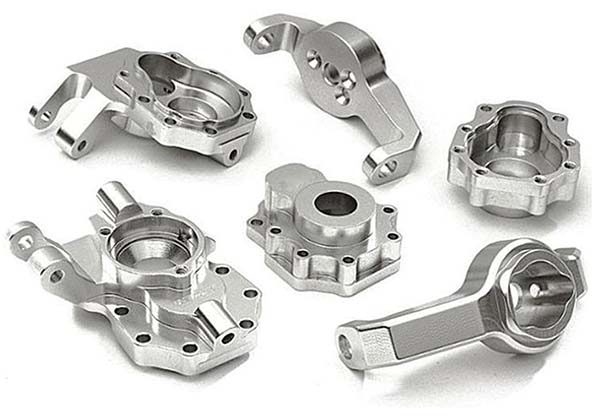
Introduction
Time is money. In construction, manufacturing, and infrastructure projects, delays in steel fabrication ripple through the entire schedule—causing cost overruns, missed deadlines, and lost revenue. Traditional steel fabrication processes can take weeks or months from design to installation. Rapid steel fabrication changes this. It combines advanced technologies—laser cutting, automated welding, computer-controlled forming—to compress timelines, reduce waste, and maintain precision. Whether you are building a skyscraper, manufacturing automotive components, or producing aerospace parts, rapid steel fabrication is the key to faster project completion and lower costs. At Yigu Technology, we use these techniques to serve clients across industries. This article covers what you need to know: the process, technologies, applications, and quality considerations.
What Is the Significance of Rapid Steel Fabrication?
Time is a precious resource. Traditional steel fabrication has long lead times—from design to installation. Delays cause project overruns, increased costs, and missed deadlines.
Impact of delays:
- Commercial building: each day of delay can cost thousands in lost revenue
- Infrastructure: extended timelines increase labor, equipment rental, and overhead
How rapid steel fabrication solves this:
- Reduces time from design to production
- Streamlined processes reduce waste and optimize resource use
- Enables projects to be completed on schedule and within budget
What Is the Process of Rapid Steel Fabrication?
Step-by-Step Overview
| Step | Description | Technologies |
|---|---|---|
| 1. Raw material preparation | Sourcing high-quality steel; inspection for defects | Quality certificates, ultrasonic testing |
| 2. Cutting | Shaping steel to required dimensions | Laser cutting, oxy-fuel, plasma cutting |
| 3. Forming | Bending and shaping cut steel | Press braking, rolling |
| 4. Welding | Joining fabricated parts | Automated welding, robotic welding |
| 5. Finishing | Surface treatment, coating, inspection | Painting, galvanizing, dimensional checks |
Raw Material Preparation
Steel comes in various grades, each with unique properties—tensile strength, corrosion resistance, hardness. Selection depends on application:
- Bridge components: High-strength low-alloy (HSLA) steel for strength-to-weight ratio
- Aerospace: High-strength alloys for heat resistance
- Automotive: Formable steels for body panels
Quality control: Raw steel is inspected for cracks, impurities, and defects to ensure final product integrity.
Cutting
Cutting is where rapid fabrication begins. Laser cutting has become the go-to method for speed and precision.
| Cutting Method | Speed (thin-gauge steel) | Kerf Width | Precision |
|---|---|---|---|
| Laser cutting | Up to 10 m/min | 0.1–0.3 mm | Very high |
| Oxy-fuel cutting | 1–2 m/min | 1–2 mm | Moderate |
| Plasma cutting | 2–5 m/min | 1–3 mm | Moderate |
Advantages of laser cutting:
- High speed—up to 10 m/min for thin-gauge steel
- Narrow kerf (0.1–0.3 mm) reduces material waste
- Guided by CAD files ensures precise dimensions
- Enables intricate designs, internal cutouts, sharp corners
Forming
Forming gives cut steel its desired shape.
| Method | Best For | Capability |
|---|---|---|
| Press braking | Complex shapes, curved components | Forces up to hundreds of tons; precise bending |
| Rolling | Straight beams, simple curves | Continuous bending for long sections |
| CNC forming | Precision components | Computer-controlled accuracy |
Welding
Welding joins fabricated parts. In rapid steel fabrication, automated welding is preferred.
| Welding Method | Speed Increase vs. Manual | Error Rate |
|---|---|---|
| Automated GMAW | Up to 30% faster | Reduced |
| Robotic welding | Continuous operation | Very low |
Advanced features:
- Robotic arms follow pre-programmed paths
- Real-time monitoring detects and corrects defects
- Consistent, strong welds
What Advanced Technologies Are Involved?
Laser Cutting
Laser cutting uses a high-power laser beam to melt or vaporize steel, enabling extremely precise cuts.
Key specifications:
- Kerf width: 0.1–0.3 mm (vs. 1–3 mm for traditional methods)
- Speed: Up to 10 m/min for thin-gauge steel
- Precision: Guided by CAD files; intricate designs possible
Applications:
- Small-scale steel artworks
- Precision-engineered machine parts
- Complex architectural components
Automated Welding Technology
Automated welding, including robotic welding, plays a significant role in rapid fabrication.
Advantages:
- Continuous operation with high accuracy
- Reduced human error and fatigue
- Real-time monitoring detects defects immediately
- Complex welding paths programmed from CAD models
Example: A large-scale steel fabrication plant can complete complex welding jobs in a fraction of the time required by manual welders.
Where Is Rapid Steel Fabrication Applied?
Construction Industry
Rapid steel fabrication has revolutionized building construction.
High-rise buildings:
- Pre-fabricated steel components reduce on-site construction time by up to 30%
- Off-site fabrication in controlled environments improves quality control
- Example: Salesforce Tower in San Francisco used rapid steel fabrication for pre-fabricated components
Large-span structures:
- Bridges, stadiums, convention centers
- High-strength steel trusses and beams fabricated quickly
- Example: Modern cable-stayed bridges use rapidly fabricated high-strength steel components
Automotive Manufacturing
Steel is the most common material in automotive manufacturing due to strength, affordability, and recyclability.
Prototyping:
- Rapid steel fabrication creates prototype chassis in days vs. weeks
- Faster design iterations; quicker time-to-market
- Example: Ford uses rapid steel fabrication for prototype chassis
Mass production:
- Automated stamping produces thousands of identical body panels per day
- Consistent quality, high-volume output
Aerospace Industry
Aerospace demands the highest precision and quality.
Applications:
- Landing gear components with tight tolerances
- Engine parts requiring high strength and heat resistance
- Structural components
Example: Boeing uses advanced steel fabrication methods to quickly manufacture landing gear parts—meeting strict safety and performance standards.
Benefits:
- Reduced lead time for replacement parts
- Maintained operational readiness of aircraft
How Do You Ensure Quality?
Raw Material Inspection
- Steel suppliers provide quality certificates
- Random sampling using non-destructive testing (ultrasonic testing)
- Check for internal defects before fabrication begins
In-Process Monitoring
| Process | Monitoring Method |
|---|---|
| Laser cutting | Sensors detect deviations in cutting path or power output; immediate adjustments |
| Welding | Real-time monitoring; defect detection and correction |
| Forming | Computer-controlled accuracy; dimensional checks |
Final Inspection
- Dimensional checks: Coordinate measuring machines (CMMs) verify dimensions
- Surface finish inspection: Visual and tactile checks
- Non-destructive testing: Ultrasonic, X-ray for internal defects
What Is the Typical Lead Time?
| Project Type | Typical Lead Time |
|---|---|
| Simple projects (standard components, small quantity) | 3–5 days |
| Complex projects (custom designs, high volume) | 2–4 weeks |
Factors affecting lead time:
- Raw material availability
- Complexity of cutting and forming operations
- Fabrication facility workload
Yigu Technology's Perspective
As a custom manufacturer of non-standard plastic and metal products, Yigu Technology uses rapid steel fabrication daily.
What we offer:
- Laser cutting: High-speed, precise cuts for complex geometries
- Automated welding: Consistent, strong joints for assemblies
- CNC forming: Computer-controlled bending for precision
What we have learned:
- Speed without compromise: Advanced technologies maintain quality while reducing lead time
- Design freedom: Laser cutting enables intricate designs impossible with traditional methods
- Quality control: In-process monitoring ensures consistent results
We serve a diverse range of industries—from machinery manufacturing to architectural components—providing efficient, reliable custom solutions.
Conclusion
Rapid steel fabrication is essential for modern construction and manufacturing. It delivers:
- Speed: Lead times from 3–5 days for simple projects; 2–4 weeks for complex
- Precision: Laser cutting with 0.1–0.3 mm kerf; automated welding with real-time monitoring
- Cost-effectiveness: Reduced waste, optimized resource use, lower overall costs
- Design freedom: Intricate shapes, complex geometries
- Quality: Raw material inspection, in-process monitoring, final dimensional checks
Applications span construction (high-rise buildings, bridges), automotive (prototyping, mass production), and aerospace (landing gear, structural components). Advanced technologies—laser cutting, automated welding, CNC forming—enable rapid fabrication without sacrificing quality.
For projects where time, precision, and cost matter, rapid steel fabrication is the answer.
Frequently Asked Questions
What is the typical lead time for rapid steel fabrication?
Simple projects with standard components: 3–5 days. Large-scale projects with complex designs and high volume: 2–4 weeks. Factors include raw material availability, cutting/form complexity, and facility workload.
How to ensure the quality of rapid-steel-fabricated products?
Three stages: raw material inspection (quality certificates, ultrasonic testing), in-process monitoring (laser cutting sensors, real-time welding monitoring), and final inspection (CMM dimensional checks, surface finish, non-destructive testing).
Can rapid steel fabrication handle complex designs?
Yes. Laser cutting enables intricate shapes with internal cutouts and sharp corners. CNC press brakes accurately bend steel into complex 3D shapes. Robotic welding systems follow complex paths programmed from CAD models—ensuring strong, precise welds for complex assemblies.
What industries use rapid steel fabrication?
Construction: High-rise buildings, bridges, stadiums. Automotive: Prototyping, mass production of chassis and body components. Aerospace: Landing gear, engine parts, structural components. Industrial machinery: Custom equipment, tooling.
What are the advantages of laser cutting over traditional cutting?
Laser cutting is faster (up to 10 m/min vs. 1–2 m/min), more precise (0.1–0.3 mm kerf vs. 1–3 mm), and enables intricate designs with less material waste. It is guided by CAD files, ensuring accurate dimensions.
Contact Yigu Technology for Custom Manufacturing
At Yigu Technology, we specialize in rapid steel fabrication and custom manufacturing. Our capabilities include laser cutting, automated welding, CNC forming, and finishing. We serve construction, automotive, aerospace, and industrial clients.
If you need high-quality steel components delivered fast—without compromising precision or quality—contact our engineering team. Let us help you turn designs into reality on time and within budget.