Finding a stainless steel that balances corrosion resistance, formability, and hygiene can be challenging. Many materials either corrode in moist environments or lack the ductility for complex shapes. Sheet metal SUS304 solves this problem. This guide covers its composition, properties, manufacturing processes, and applications.
Introduction
Sheet metal SUS304 is an austenitic stainless steel. It contains chromium for corrosion resistance and nickel for ductility. This combination makes it one of the most widely used stainless steels across industries.
In this guide, you will learn what gives SUS304 its unique properties. You will understand how it is processed and finished. And you will discover where it performs best.
Material Composition and Properties
Alloy Composition
SUS304 has a carefully balanced composition that delivers both strength and workability.
| Element | Percentage | Role |
|---|---|---|
| Chromium | 18–20% | Forms protective oxide layer; provides corrosion resistance |
| Nickel | 8–10.5% | Stabilizes austenitic structure; enhances ductility |
| Carbon | Up to 0.08% | Limited to prevent carbide precipitation |
| Manganese | Up to 2% | Improves hot working properties |
| Silicon | Up to 1% | Deoxidizer; improves oxidation resistance |
| Sulfur | Under 0.045% | Controlled for machinability |
| Phosphorus | Under 0.045% | Controlled to maintain ductility |
This composition makes SUS304 both strong and workable—ideal for applications from kitchen appliances to medical devices.
Mechanical Properties
SUS304 offers impressive mechanical properties that balance strength and formability.
| Property | Value | Significance |
|---|---|---|
| Tensile Strength | 515–725 MPa | Strong enough for structural applications |
| Yield Strength | 205 MPa | Good resistance to permanent deformation |
| Elongation | 40–60% | Excellent ductility for forming |
| Hardness | 70–90 HRB | Moderate; balances durability and workability |
The high elongation—40–60% —is what makes SUS304 so formable. When manufacturing stainless steel sinks through deep drawing, this ductility ensures the metal stretches without cracking.
Corrosion Resistance
Corrosion resistance comes from the chromium content. Chromium forms a thin, invisible oxide layer on the surface. This layer is self-healing—if scratched, it reforms when exposed to oxygen.
SUS304 resists:
- Water and moisture: Excellent for indoor and outdoor use
- Mild acids: Food acids, cleaning chemicals
- Atmospheric conditions: Rain, humidity, temperature changes
Real-world example: A commercial kitchen installed SUS304 countertops and sinks. After ten years of daily exposure to water, food acids, and cleaning chemicals, the surfaces showed no rust or pitting. Regular cleaning maintained the protective oxide layer.
Other Properties
Non-magnetic: SUS304 is non-magnetic in its annealed state. This matters for electrical enclosures and aerospace parts where magnetic interference must be avoided. Cold working may introduce slight magnetism.
Thermal conductivity: Approximately 16.2 W/(m·K) . Lower than copper or aluminum but sufficient for even heat distribution in cookware and kitchen appliances.
Electrical conductivity: Low at 2.1 × 10⁶ S/m . Suitable for non-conductive components like enclosures and housings.
Recyclability: Like all stainless steels, SUS304 is highly recyclable. Stainless steel recycling saves significant energy compared to producing from virgin materials.
Manufacturing Processes
Forming and Shaping
Rolling produces SUS304 sheets in thicknesses from 0.3mm to 10mm and beyond. Hot rolling creates thicker sheets; cold rolling produces thinner sheets with smoother surfaces and tighter tolerances.
Cutting methods include:
- Laser cutting: Precision up to ±0.05mm; ideal for complex shapes
- Shearing: Cost-effective for straight cuts
- Waterjet cutting: No heat-affected zone; good for thick materials
Bending is straightforward due to high ductility. SUS304 can achieve tight 90° bends without cracking. This is essential for architectural components like handrails and enclosures.
Deep drawing creates complex, cup-shaped forms. Stainless steel sinks, bowls, and sanitary components are made this way.
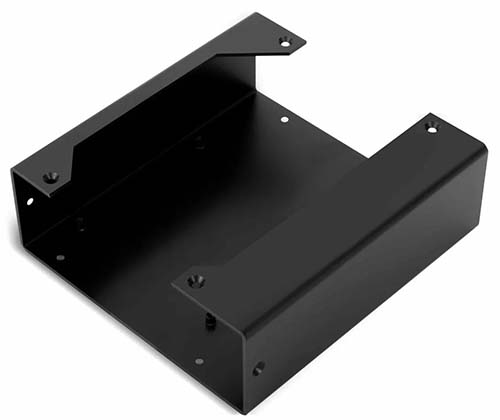
Punching adds holes for fasteners. Used in industrial machinery parts and electrical enclosures.
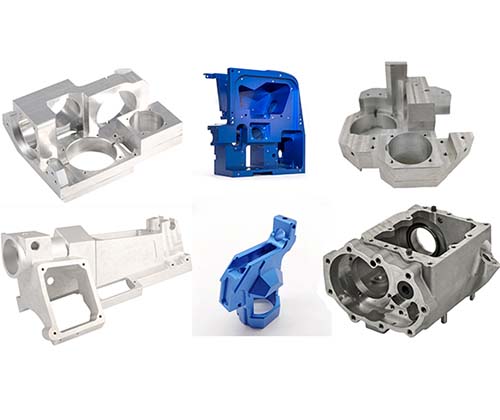
CNC machining produces high-precision parts. SUS304’s toughness requires sharp tools and adequate coolant to prevent overheating and tool wear.
Welding
Welding SUS304 is common, but care is needed. Carbide precipitation can occur in the heat-affected zone, reducing corrosion resistance.
Best practices:
- Use low-heat techniques to minimize heat input
- Choose low-carbon grades (SUS304L) for welded applications
- Perform post-weld annealing at 1040–1100°C followed by rapid cooling
- Apply passivation after welding to restore the oxide layer
Annealing
Annealing softens the metal after cold working. The process involves heating to 1040–1100°C, then cooling quickly. This restores ductility for further forming and removes internal stresses.
Surface Treatment and Finishing
Cleaning and Passivation
Pickling uses acid to remove scale and impurities from the surface after manufacturing. This prepares the metal for further treatment.
Passivation applies a nitric acid solution to enhance the protective oxide layer. This step is vital for:
- Food processing equipment: Where cleanliness matters
- Medical devices: Where corrosion resistance is critical
- Pharmaceutical equipment: Where contamination cannot be tolerated
Aesthetic Finishes
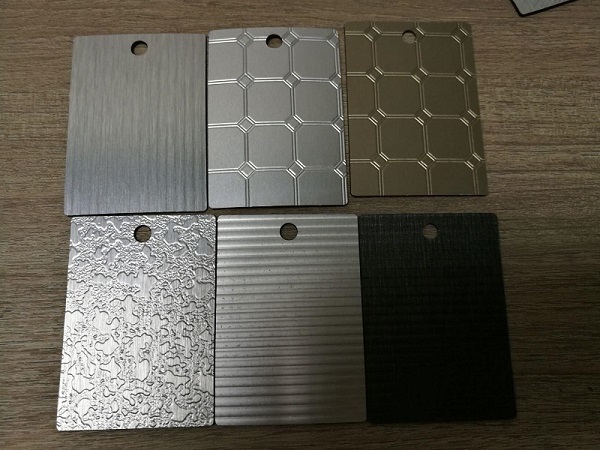
| Finish | Process | Applications |
|---|---|---|
| Mirror Polish | Progressive polishing to high gloss | Architectural, high-end appliances |
| Brushed Finish | Abrasive belts create linear texture | Kitchen appliances, automotive trim |
| Satin Finish | Fine abrasives give uniform matte | Electrical enclosures, industrial |
| Grain Finish | Uniform directional pattern | Pharmaceutical equipment, easy cleaning |
Surface roughness is tightly controlled. Finishes range from 0.02–5 μm Ra, depending on the application.
Electropolishing
Electropolishing smooths the surface at a microscopic level. It removes microscopic burrs and peaks, creating an ultra-smooth finish. Benefits include:
- Improved corrosion resistance
- Easier cleaning—bacteria have fewer places to cling
- Enhanced appearance
Medical devices and pharmaceutical equipment often require electropolished finishes.
Coating and Plating
SUS304 rarely needs coating or painting due to its natural corrosion resistance. For specialized applications:
- Plating (chrome, nickel) adds wear resistance
- Powder coating adds color for architectural components
Applications Across Industries
Food Processing and Kitchen Appliances
SUS304 is the standard in food-related applications.
| Application | Why SUS304 |
|---|---|
| Food processing equipment | Corrosion resistance, easy cleaning |
| Commercial kitchens | Withstands water, food acids, cleaning chemicals |
| Kitchen appliances | Durability, appearance |
| Sinks and countertops | Formability, hygiene |
Real-world example: A food processing plant switched to SUS304 for all equipment surfaces. The material withstands daily cleaning with sanitizing chemicals. After five years, surfaces remain corrosion-free and easy to clean.
Medical Devices and Pharmaceutical Equipment
Healthcare demands materials that withstand sterilization and resist chemicals.
- Surgical tools: Trays, instruments, stands
- Pharmaceutical equipment: Mixing tanks, piping, work surfaces
- Medical furniture: Carts, tables, cabinets
SUS304’s biocompatibility and smooth finishes prevent bacterial growth. Electropolished surfaces meet strict hygiene standards.
Industrial Machinery and Chemical Processing
Industrial applications leverage SUS304’s durability and resistance.
- Pumps and valves: Withstand oils and mild chemicals
- Brackets and frames: Structural components
- Tanks and pipes: Non-corrosive or mildly corrosive substances
Construction and Architecture
Construction uses SUS304 for both structural and decorative purposes.
- Roofing and cladding: Weather-resistant, long-lasting
- Handrails and railings: Strength, appearance
- Facades: Architectural appeal
- Electrical enclosures: Protection from moisture and dust
In coastal areas, SUS304 performs well with occasional salt exposure. For constant saltwater immersion, 316 stainless steel is recommended.
Automotive and Aerospace
- Automotive: Trim, exhaust components, decorative parts
- Aerospace: Non-magnetic components, interior parts
- Marine: Boat fittings, hardware with occasional saltwater exposure
Yigu Technology’s Perspective
At Yigu Technology, we frequently work with sheet metal SUS304. Its balance of properties makes it a go-to material for diverse industries.
We use SUS304 for:
- Food processing equipment: Mixers, conveyors, storage tanks
- Medical devices: Instrument trays, equipment housings
- Architectural components: Handrails, enclosures, trim
- Industrial machinery: Brackets, guards, covers
Our processes include laser cutting, precision bending, welding, and finishing. We offer finishes from brushed to electropolished, meeting both aesthetic and functional requirements.
Real-world example: A client needed surgical instrument trays with ultra-smooth surfaces. We fabricated SUS304 sheets, welded corners, and electropolished the finished trays. The electropolished surface resisted bacterial adhesion and withstood daily sterilization cycles.
Another client required outdoor electrical enclosures in a coastal area. We used SUS304 with a brushed finish. The enclosures have performed for seven years with no corrosion.
Conclusion
Sheet metal SUS304 is a versatile austenitic stainless steel. It combines excellent corrosion resistance with exceptional ductility—elongation of 40–60% allows complex forming without cracking. Its non-magnetic properties suit electrical and aerospace applications.
The material processes well through cutting, bending, welding, and finishing. Surface treatments like passivation and electropolishing enhance corrosion resistance and hygiene.
For applications requiring corrosion resistance, formability, and cleanability, SUS304 is an excellent choice.
FAQ
Is SUS304 suitable for high-salt environments like coastal areas?
SUS304 offers good resistance to salt spray but may corrode over time with constant saltwater exposure. For marine applications with continuous saltwater immersion, 316 stainless steel (with molybdenum) is better. For coastal construction with occasional exposure, SUS304 with proper finishing performs well.
Can SUS304 be welded without losing corrosion resistance?
Yes, but post-weld passivation is recommended. Welding can temporarily reduce the protective oxide layer. Passivation restores it. Using low-carbon grades like SUS304L minimizes carbide precipitation during welding. For critical applications, post-weld annealing at 1040–1100°C followed by rapid cooling ensures full corrosion resistance.
What is the difference between a brushed finish and a mirror finish on SUS304?
A brushed finish has a linear, matte texture created by abrasive belts. It hides fingerprints and minor scratches—popular for kitchen appliances. A mirror finish is highly polished to reflect light. It offers maximum aesthetic appeal for architectural components but shows fingerprints more easily. Surface roughness for brushed finishes is typically 0.5–3 μm Ra; mirror finishes achieve 0.02–0.05 μm Ra.
Can SUS304 be used for food contact applications?
Yes. SUS304 meets FDA requirements for food contact. It is widely used in food processing equipment, commercial kitchens, and home appliances. Its corrosion resistance and easy-to-clean surface make it ideal for sanitary applications.
Contact Yigu Technology for Custom Manufacturing
Need SUS304 components fabricated to your specifications? Yigu Technology combines material expertise with precision manufacturing. From food processing equipment to medical devices, we deliver quality and durability. [Contact us] to discuss your project requirements.