Introduction
You've seen the videos. You've read the stories. Someone starts printing things in their garage, and within a year, they're quitting their day job.
Is that realistic?
The short answer: yes—if you do it right.
The global 3D printing market is projected to hit $84.5 billion by 2030 (Grand View Research). That's not hype. That's real money moving from traditional manufacturing into additive.
But here's the catch: the market doesn't need another person printing random stuff from Thingiverse. It needs specialists who solve specific problems for specific customers.
This guide walks through exactly how to find your niche, set up your operation, and build a business that actually makes money. No fluff. Just what works.
What Niche Should You Choose for Your 3D Printing Business?
The biggest mistake new printers make: trying to serve everyone.
You can't be the best at everything. But you can be the best at something specific. Narrow focus lets you charge more, market easier, and deliver better results.
Custom Consumer Products
People love unique things. Personalized phone cases. Custom jewelry. Home decor that nobody else has.
Real example: Printful, a print-on-demand company, partners with 3D printers for custom jewelry. Their sellers report 30-50% profit margins because customers pay extra for "designed just for me."
What sells well:
- Custom phone cases with names or inside jokes
- Jewelry—earrings, pendants, bracelets
- Home items like plant pots, lampshades, wall art
- Toys and collectibles
Your customer here is an individual who wants something special. They're not price-sensitive if the design speaks to them.
Industrial Prototyping
Small and medium businesses can't afford industrial 3D printers. But they need prototypes to test ideas before investing in expensive tooling.
Real example: Rapidwerks in the U.S. focuses entirely on prototyping for automotive startups. They charge $50-$200 per part and maintain 40% profit margins. Their customers get functional parts in days instead of weeks.
Who needs this:
- Local inventors with product ideas
- Small manufacturers testing new designs
- Engineering firms without in-house printing
- Anyone bringing a physical product to market
You're selling speed and expertise here. Customers pay for your ability to turn their ideas into real objects they can hold and test.
Healthcare Accessories
Medical and dental applications are exploding. Custom fits that mass production can't deliver.
Real example: Dental labs using Formlabs printers produce aligners 50% faster than traditional methods. Service providers charge $100-$300 per custom fit while delivering better results than one-size-fits-all alternatives.
Opportunities:
- Custom orthotics and insoles
- Dental aligners and retainers
- Prosthetic components
- Surgical planning models
Regulations matter here. But the barriers also keep out casual competitors.
Replacement Parts
Something breaks. The manufacturer went out of business. Or the part costs more to ship than it's worth.
This happens constantly.
Real example: 3D Replacements uses designs from Thingiverse (over 2 million user-uploaded parts) to print replacements on demand. They charge $20-$100 per item with almost no inventory costs.
What people need:
- Appliance knobs and handles
- Vintage toy parts
- Furniture connectors
- Specialty hardware
You're solving a frustration here. Someone can't use their grandmother's lamp because a tiny plastic piece broke. You fix that.
How to Pick Your Niche
Ask yourself three questions:
- Do I have experience here? Or at least genuine interest in learning?
- Is there actual demand? Search locally. Check online forums. See what people ask about.
- Can I source materials affordably? Some niches require expensive specialty filaments. Know before you commit.
Pick one niche to start. Master it. Then expand.
How Do You Create a Business Plan That Actually Works?
A business plan sounds formal. But think of it as your roadmap. You wouldn't drive cross-country without GPS. Don't start a business without direction.
Market Research: Know Your Customers
Who exactly will buy from you?
If you're targeting local jewelry designers:
- How many exist within 50 miles?
- What do they currently pay for prototypes?
- Where do they hang out online?
If you're going after replacement parts:
- What items break most often?
- Which parts are impossible to find?
- What are people willing to pay?
Use free tools:
- Google Trends – See if interest in your niche is growing
- Yelp – Check what competitors charge
- Facebook Groups – Join communities where your customers gather
- Reddit – Search for problems people describe
The goal: know your customer better than they know themselves.
Financial Projections: What Will It Cost?
Let's get real about money.
| Expense Category | Estimated Cost |
|---|---|
| 3D Printer (mid-range) | $1,500 – $5,000 |
| Materials (monthly) | $50 – $200 |
| Software | $0 – $100/month |
| Legal (licenses, insurance) | $200 – $500 initial |
| Marketing (website, ads) | $100 – $300 initial |
| Shipping supplies | $50 – $150/month |
Total startup costs: $2,000 – $6,000 depending on your choices.
Now, pricing.
Simple formula: Charge 2-3x your material cost plus labor.
Example: A part uses $5 of PLA and takes 1 hour to print. Your printer runs unattended, so labor is minimal. Charge $15-$20. That covers materials, machine wear, and profit.
As you gain experience, raise prices. Specialized work commands higher rates.
Operations Plan: Where and How Will You Work?
Home-based or studio?
Home-based:
- Lower cost
- More flexible hours
- Check zoning laws (most areas allow small-scale printing)
Studio:
- Professional image
- Room for multiple machines
- Higher overhead
Start at home. Move to a studio when you can't keep up with orders.
Shipping matters too. USPS works for small items. UPS/FedEx for larger. Flat-rate boxes save money on heavy parts.
What Equipment Do You Really Need to Start?
You don't need the most expensive printer. You need the right printer for your niche.
Printer Selection by Niche
| Niche | Recommended Type | Example Model | Price Range |
|---|---|---|---|
| Custom Products | FDM (easy, low cost) | Creality Ender 3 V3 SE | $200 – $500 |
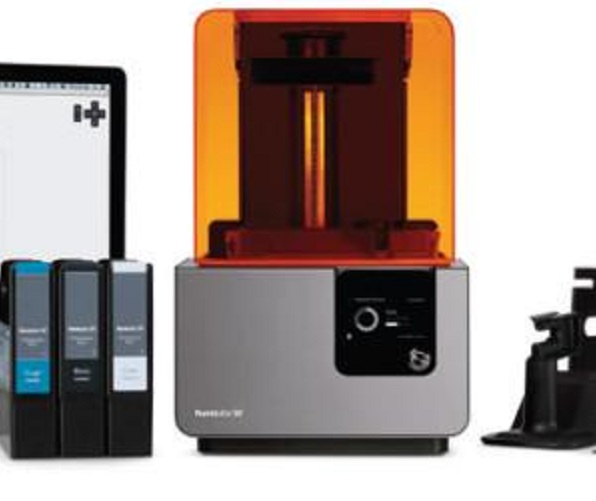
| Industrial Prototyping | SLA (high precision) | Formlabs Form 3+ | $3,000 – $5,000 |
| Healthcare Accessories | SLA (biocompatible materials) | Anycubic Photon Mono X2 | $500 – $1,000 |
| Replacement Parts | FDM (durable materials) | Prusa MK4 | $600 – $1,000 |
FDM printers work for most applications. SLA delivers smoother surfaces but costs more and requires more handling.
Essential Tools Beyond the Printer
Materials:
- Start with PLA for FDM (cheap, easy, biodegradable)
- Standard resin for SLA
- Add specialty materials as you grow—PETG for durability, TPU for flexibility, biocompatible resin for medical
Software:
- Tinkercad – Free, browser-based, perfect for beginners
- Blender – Free, powerful, steeper learning curve
- Fusion 360 – Professional CAD, free for hobbyists, paid for commercial use
- Cura – Free slicer that works with most printers
Post-processing:
- Sandpaper (various grits)
- Heat gun for smoothing
- UV curing station for resin prints
- Paint and sealants for finished products
Total post-processing investment: $50 – $200
How Do You Find Your First Customers?
You can print the most beautiful parts in the world. If nobody knows you exist, you make zero dollars.
Local Marketing That Works
Partner with local businesses.
Walk into a jewelry store. Show them a sample of what you can print—custom display stands, personalized gift items, prototype pieces for their designs. Offer a free sample to prove your quality.
Case study: A printer in Chicago partnered with five coffee shops to create custom mug sleeves. Each sleeve featured the shop's logo and customer names. Within three months, they were getting 10+ orders weekly from the shops themselves and their customers.
Attend local events.
Craft fairs. Startup expos. Maker faires. Rent a table. Set up a printer running live. Let people watch the magic happen.
Give away small samples—custom magnets, keychains, bottle openers. Collect email addresses. Follow up with everyone.
Online Marketing That Scales
Create a simple website.
Wix, WordPress, Squarespace—pick one and build a basic site. Showcase your best work. List your services. Make it easy for customers to request quotes.
High-quality photos matter. Show your prints from multiple angles. Include scale references so people understand size.
Leverage social media.
Instagram and TikTok are perfect for 3D printing. Post:
- Before/after shots of designs
- Time-lapse videos of prints
- Customer testimonials
- "How it's made" content
Case study: A UK printer grew their Instagram to 10,000 followers in six months by posting videos of custom cosplay parts. That audience generated 20+ weekly orders. They now run a full-time business from home.
Use hashtags: #3DPrintingBusiness #Custom3DPrints #3DPrintedJewelry (whatever fits your niche)
Join online marketplaces.
- Etsy – Perfect for custom consumer products
- Upwork – Great for prototyping services
- Fiverr – Quick gigs for design and printing
- eBay – Sell replacement parts directly
These platforms have built-in audiences. List your services and start getting orders while you build your own following.
How Do You Keep Customers Coming Back?
One-time orders are nice. Repeat customers build businesses.
Quality Control Matters
Test before you commit.
Print a small sample of every new design. Check for:
- Gaps or weak spots
- Warping or dimensional errors
- Surface quality issues
If the sample fails, adjust the design before printing the full order. This saves time, material, and customer frustration.
Set Clear Expectations
Tell customers:
- How long printing takes ("This part needs 24 hours")
- What materials you'll use and why
- Any limitations ("PLA isn't waterproof, so keep it indoors")
When people know what to expect, they're rarely disappointed.
Handle Problems Gracefully
Mistakes happen. Prints fail. Shipping damages parts.
When something goes wrong:
- Apologize sincerely
- Offer a solution (refund or reprint)
- Add something extra if appropriate
Case study: A Canadian 3D printing business had a customer complain about a cracked toy. They reprinted it for free and included a custom keychain as an apology. The customer left a 5-star review and referred three friends.
Turn problems into opportunities.
How Do You Scale When Orders Increase?
Success creates its own challenges. When you're drowning in orders, it's time to grow.
Add More Printers
One printer can only produce so much. Adding a second doubles your capacity.
Start with one. When you're consistently running it 24/7 and still can't keep up, buy another. Rinse and repeat.
Hire Help
Your time is valuable. If you're spending hours on customer service or post-processing, consider hiring.
- Upwork – Find freelancers for design work
- Fiverr – Quick help with specific tasks
- Local part-timers – Someone to handle shipping and finishing
Even 10 hours a week of help frees you to focus on growing the business.
Expand Your Niche
Once you dominate one area, add another.
Started with custom jewelry? Add custom phone cases. Your existing customers already trust you. Sell them more.
Mastered prototyping for automotive? Try aerospace or medical. The skills transfer. The markets are bigger.
What Does Yigu Technology Recommend for 3D Printing Businesses?
At Yigu Technology, we've worked with hundreds of businesses starting their 3D printing journey. Here's what we've learned:
Focus on problems, not printers. Customers don't care about your machine. They care about whether you can solve their problem. Talk about solutions, not technology.
Start simple, then specialize. Master one printer, one material, one customer type before expanding. Depth beats breadth every time.
Use technology to save time. Cloud-based slicing software, automated order tracking, customer management tools—these let you handle more orders with less effort.
Educate your customers. Most people don't understand 3D printing. Explain material differences, design considerations, and what's possible. Educated customers make better decisions and appreciate your expertise more.
Build relationships. 3D printing is still new enough that personal connections matter. Be helpful, be responsive, be human. That turns first-time buyers into lifelong clients.
Conclusion: Is a 3D Printing Business Worth Starting?
Yes—if you approach it right.
The market is growing. The barriers to entry are lower than ever. And there are countless problems waiting for someone with a printer and a brain to solve them.
But it's not magic. Success requires:
- Choosing a specific niche
- Understanding your customers deeply
- Delivering quality consistently
- Building relationships that last
Start small. Learn fast. Scale when ready.
The businesses that thrive won't be the ones with the most expensive printers. They'll be the ones who solve real problems for real people.
That could be you.
Frequently Asked Questions
Do I need technical experience to start a 3D printing business?
No. You can learn the basics in a few weeks through free YouTube tutorials and online courses. Start with simple projects like keychains before taking complex orders. Most skills come from doing, not studying.
How much time does a 3D printing business require?
Initially, expect 10-20 hours per week for printing, customer service, and marketing. As you automate and streamline, you can either reduce time or handle more orders. Many successful printers run their businesses part-time while keeping day jobs.
Is it legal to run a 3D printing business from home?
In most areas, yes. Check your local zoning laws—you may need a home occupation permit ($50-$200) if clients visit your home. Noise and fumes are minimal with proper ventilation, so neighbors rarely complain.
What profit margins can I expect?
Consumer products typically yield 30-50% margins. Industrial prototyping often hits 40-60%. Margins depend on your pricing, material costs, and order volume. Specialized work commands higher prices than commodity printing.
How do I handle rush orders?
Charge a premium. Many customers need parts urgently and will pay extra for speed. Just be realistic about what your printer can deliver—don't promise 24-hour turnaround on a 30-hour print.
Contact Yigu Technology for Custom Manufacturing
Ready to start your 3D printing business? Need help with equipment selection, material choices, or production advice? At Yigu Technology, we've helped countless entrepreneurs turn their 3D printing dreams into profitable realities.
From printer recommendations to production tips, we're here to help. Contact us today to discuss your plans. Let's build something successful together.