Introduction
If you manufacture cylindrical parts—shafts, bushings, valves, or connectors—you have likely encountered the term CNC turning center. But what exactly is this machine, and how does it differ from a standard lathe? At its core, a CNC turning center is an automated lathe controlled by computer instructions. It rotates a workpiece while cutting tools remove material to create precise cylindrical shapes. Unlike manual lathes, these machines execute complex operations with minimal human intervention, delivering consistent accuracy across hundreds or thousands of parts. This guide explains how turning centers work, the different types available, and how to choose the right one for your manufacturing needs.
How Does a CNC Turning Center Work?
The Basic Principle
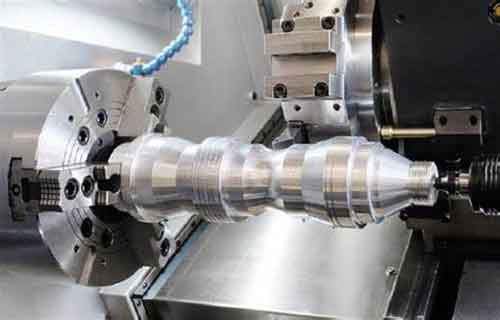
A CNC turning center operates on a simple concept: the workpiece rotates, and a stationary cutting tool shapes it. The computer numerical control (CNC) system directs every movement based on a programmed set of instructions called G-code.
The process follows these steps:
- The workpiece is clamped in the spindle chuck
- The spindle rotates at a programmed speed (RPM)
- Cutting tools mounted on a turret move along X and Z axes
- The tools remove material to achieve the desired shape and dimensions
Key Components
Spindle: The spindle holds and rotates the workpiece. Speeds typically range from a few hundred to 6,000 RPM or more, depending on the machine and application.
Tool turret: This rotating device holds multiple cutting tools—usually 8 to 24 tools. The turret indexes to bring the required tool into position automatically, eliminating manual tool changes during the cycle.
Control system: The computer that interprets G-code and coordinates all movements. Common control brands include Fanuc, Siemens, and Mitsubishi.
Guideways and ball screws: Precision components that move the tool turret along the axes with accuracy down to ±0.001 inches (±0.0254 mm) or better.
What Types of CNC Turning Centers Exist?
Horizontal Turning Centers
Horizontal turning centers are the most common configuration. The workpiece rotates on a horizontal axis, and tools approach from the side.
Best for:
- Cylindrical parts like shafts, gears, and bushings
- High-volume production runs
- General turning operations
Advantages:
- Excellent chip evacuation—chips fall away from the cutting zone
- Easy operator access for setup and part loading
- Wide range of available sizes and configurations
Example application: An automotive supplier uses horizontal turning centers to produce 5,000 transmission shafts per week, maintaining tolerances of ±0.02 mm across the entire production run.
Vertical Turning Centers
Vertical turning centers orient the workpiece with the spindle axis vertical. The part sits on a large chuck or table, similar to a potter’s wheel.
Best for:
- Large, heavy parts that are difficult to load horizontally
- Disc-shaped components like brake rotors, flanges, and gear blanks
- Parts requiring stable support during machining
Advantages:
- Gravity assists in holding heavy workpieces
- Better stability for large-diameter parts
- Reduced vibration compared to horizontal setups for certain geometries
Real-world use: A heavy equipment manufacturer machines 500 kg excavator swing bearings on vertical turning centers, achieving roundness within 0.01 mm despite the part’s size and weight.
Multi-Tasking Machines (MTMs)
Multi-tasking machines combine turning and milling capabilities in a single unit. They include rotating tools that can perform milling, drilling, and tapping operations without moving the workpiece to another machine.
Best for:
- Complex parts requiring both turning and milling features
- Components where multiple setups would introduce alignment errors
- Reducing overall production time
Advantages:
- Eliminates secondary operations and setups
- Improves accuracy by maintaining a single reference point
- Reduces work-in-progress inventory
Case example: An aerospace manufacturer reduced lead time for a complex housing from 3 weeks to 4 days by switching from separate turning and milling operations to a multi-tasking machine. Part accuracy improved because all features referenced the same setup.
Swiss-Type Turning Centers
Swiss-type turning centers, also known as sliding headstock lathes, are designed for small, intricate parts. The workpiece feeds through a guide bushing that supports it close to the cutting point.
Best for:
- Small-diameter parts (typically under 32 mm)
- Long, slender components that would deflect on standard lathes
- Medical implants, electronics connectors, and watch components
Advantages:
- Guide bushing minimizes deflection
- Achieves tolerances in the micron range (±0.005 mm)
- Handles length-to-diameter ratios exceeding 10:1
Industry application: A medical device manufacturer produces titanium bone screws on Swiss-type turning centers, holding thread profiles to ±0.008 mm—critical for proper fixation in orthopedic procedures.
How Do Different Types Compare?
| Type | Orientation | Typical Part Size | Key Strength | Common Industries |
|---|---|---|---|---|
| Horizontal | Horizontal | Small to large | High productivity | Automotive, general machining |
| Vertical | Vertical | Large, heavy | Stability for heavy parts | Heavy equipment, oil and gas |
| Multi-tasking | Varies | Small to large | Combines turning and milling | Aerospace, complex components |
| Swiss-type | Horizontal (sliding headstock) | Small, intricate | Precision on slender parts | Medical, electronics, watchmaking |
What Should You Consider When Choosing?
Define Your Part Requirements
Start with your parts. Ask yourself:
- What diameters and lengths will you machine?
- What materials do you use most often?
- What tolerances must you hold?
- Do your parts require secondary milling operations?
A shop machining stainless steel valve bodies with diameters up to 200 mm will need a different machine than one producing brass electrical connectors under 10 mm.
Evaluate Machine Specifications
Spindle power and speed:
- Higher horsepower handles tough materials like stainless steel and Inconel
- Higher RPM (8,000–10,000) suits small-diameter parts and finishing operations
Axis configuration:
- Basic turning requires X and Z axes
- Multi-tasking machines add Y-axis and live tooling for milling
- Some advanced models include B-axis for angled tool approaches
Tool capacity:
- More tools in the turret reduce setup time for complex parts
- Consider whether you need live tools (rotating tools for milling) or static tools only
Consider Your Budget
CNC turning centers range from $50,000 for basic models to $500,000+ for advanced multi-tasking machines. Factor in:
- Initial purchase price
- Installation and training costs
- Tooling and workholding investments
- Maintenance and service agreements
A lower-priced machine may cost more over time if it lacks the precision or reliability your application demands.
A Real-World Selection Example
A job shop producing custom hydraulic components faced a common dilemma. Their work included both small valve stems (12 mm diameter, 80 mm length) and larger piston rods (75 mm diameter, 300 mm length). They initially considered a single horizontal turning center to handle everything.
After analysis, they chose:
- One Swiss-type turning center for small-diameter stems requiring tight tolerances
- One horizontal turning center with a larger spindle bore for piston rods
The result: cycle times dropped by 35% on the Swiss machine compared to their old equipment, and setup time on the horizontal machine decreased by 50% because they no longer needed to reconfigure for small parts.
What Industries Rely on Turning Centers?
Automotive: Engine shafts, transmission gears, brake components, suspension parts
Aerospace: Landing gear components, engine mounts, hydraulic fittings, structural bushings
Medical: Surgical instruments, bone screws, implant components, dental tools
Oil and gas: Valve bodies, pipeline fittings, downhole tools, drill collars
General industrial: Shafts, pulleys, bearings, custom fasteners, pneumatic components
Conclusion
A CNC turning center is far more than an automated lathe. It is a precision manufacturing platform that transforms raw material into finished components with speed, accuracy, and consistency. Horizontal turning centers handle high-volume cylindrical parts efficiently. Vertical turning centers manage large, heavy workpieces with stability. Multi-tasking machines combine turning and milling to reduce setups and improve accuracy on complex parts. Swiss-type turning centers deliver micron-level precision on small, slender components.
Choosing the right machine requires understanding your parts, evaluating specifications honestly, and balancing initial cost against long-term capability. The right turning center becomes a competitive advantage—enabling you to produce better parts faster, with less waste and lower labor costs.
FAQs
What is the difference between a CNC lathe and a CNC turning center?
A CNC lathe typically performs basic turning operations with a limited number of tools. A CNC turning center includes more advanced features such as a tool turret with multiple tools, live tooling for milling operations, and often a Y-axis for off-center machining. Turning centers offer greater automation and versatility.
How accurate are CNC turning centers?
Standard CNC turning centers achieve tolerances of ±0.001 inches (±0.0254 mm) . High-precision machines, particularly Swiss-type turning centers, can achieve ±0.0002 inches (±0.005 mm) or better under optimal conditions.
Can a turning center perform milling operations?
Standard turning centers perform only turning operations. Multi-tasking machines (MTMs) include live tooling that allows milling, drilling, and tapping operations without removing the workpiece from the machine.
What is the typical tool capacity of a turning center?
Horizontal turning centers typically hold 8 to 24 tools in the turret. Swiss-type machines often hold 10 to 30 tools, depending on the configuration. Larger machines may offer 40 tools or more with tool magazines.
How do I choose between a horizontal and vertical turning center?
Choose horizontal for most cylindrical parts, especially in high-volume production. Choose vertical for large, heavy parts where gravity-assisted loading and stability are advantages. If your parts exceed 500 mm in diameter or weigh more than 500 kg, vertical orientation often makes sense.
Contact Yigu Technology for Custom Manufacturing
At Yigu Technology, we operate a diverse fleet of CNC turning centers—horizontal, vertical, multi-tasking, and Swiss-type—to match the right machine to your part requirements. Our engineering team analyzes your design, material, and volume to select the optimal turning process. We combine precision machining with in-process inspection to deliver components that meet your specifications consistently. Whether you need automotive shafts, medical implants, or complex aerospace components, we have the equipment and expertise to deliver. Contact us to discuss your turning project.