Introduction
You have probably heard of metal 3D printing. Maybe you saw a video of a laser melting powder into a perfect part. It looks like magic. But here is the real question: is it worth the money?
Most people think of 3D printing as plastic toys or cheap prototypes. Metal additive manufacturing is a different beast entirely. We are talking about machines that cost six figures. Materials that run hundreds of dollars per kilogram. And post-processing steps that can double your bill.
The truth? Metal 3D printing is not for every project. But for the right job, it beats CNC machining and casting in ways you cannot do any other way. The problem is that most buyers do not know where that line is.
This guide breaks it all down. We cover technologies, materials, design rules, real costs, and when it actually makes sense. By the end, you will know exactly if metal 3D printing fits your needs.
1. Metal 3D Printing Technologies Explained
Not all metal 3D printers work the same way. There are three main types. Each one suits different jobs.
1.1 Powder Bed Fusion (PBF/LPBF)
This is the most common method. A thin layer of metal powder gets spread across a build plate. Then a high-power laser melts it exactly where the part needs to be. The plate drops down. Another layer of powder goes on. The laser melts again. Repeat thousands of times.
Laser Powder Bed Fusion (LPBF) produces the highest quality parts. You get fine details and great mechanical strength. This is what aerospace and medical companies use most.
| Feature | LPBF |
|---|---|
| Surface finish | Good (Ra 5–15 µm) |
| Tolerance | ±0.1 mm |
| Build speed | Slow (cm³/hour) |
| Best for | Complex, high-value parts |
1.2 Binder Jetting
Here, a print head sprays a liquid binder onto metal powder. It glues the powder together layer by layer. The part comes out green (unfired). Then you put it in a furnace to sinter it. The metal particles fuse into a solid piece.
Binder jetting is faster and cheaper per part. But the parts are slightly porous. You often need infiltration or HIP (Hot Isostatic Pressing) to reach full density.
| Feature | Binder Jetting |
|---|---|
| Surface finish | Rough (needs machining) |
| Tolerance | ±0.3 mm |
| Build speed | Fast (10x LPBF) |
| Best for | High-volume, lower-cost parts |
1.3 Directed Energy Deposition (DED)
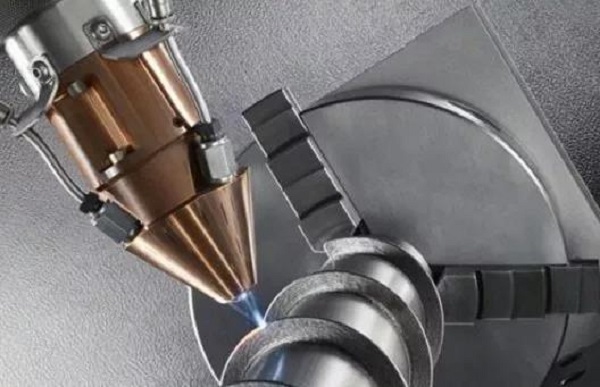
DED blows metal powder or wire into a focused laser or electron beam. The metal melts as it hits the surface. It is like welding, but controlled by a robot.
This method shines for large parts and repair work. You can add material to an existing turbine blade. You can build a wing rib that is 2 meters long. LPBF cannot do that.
| Feature | DED |
|---|---|
| Build volume | Very large |
| Resolution | Lower than LPBF |
| Best for | Repairs, large structures |
2. Material Selection Guide
Picking the right metal is half the battle. Each alloy has different strengths, costs, and use cases.
2.1 Titanium (Ti6Al4V)
This is the king of aerospace and medical implants. Ti6Al4V is strong, light, and biocompatible. Your body will not reject it. That is why hip replacements and spinal cages use this alloy.
- Density: 4.43 g/cm³ (45% lighter than steel)
- Tensile strength: 900–1170 MPa
- Cost: 150–300/kg for powder
Real case: A spinal implant company switched from CNC machining to LPBF titanium printing. They cut lead time from 6 weeks to 10 days. They also added internal lattice structures that promoted bone growth. The result? Faster surgeries and better patient outcomes.
2.2 Aluminum (AlSi10Mg)
If you need lightweight parts, aluminum is your go-to. AlSi10Mg is the most printed aluminum alloy. It flows well and resists cracking.
- Density: 2.67 g/cm³
- Tensile strength: 290–340 MPa
- Cost: 50–100/kg for powder
Automotive companies love this material. Brackets, heat exchangers, and housing parts all benefit from the weight savings.
2.3 Stainless Steel (316L, 17-4 PH)
316L resists corrosion. It is the choice for marine, food, and chemical applications. 17-4 PH is harder and stronger. It works well for tooling and structural parts.
| Alloy | Corrosion Resistance | Strength | Typical Use |
|---|---|---|---|
| 316L | Excellent | Moderate | Medical, marine |
| 17-4 PH | Good | Very High | Tooling, aerospace |
- Cost: 40–80/kg for powder
2.4 Inconel (718, 625)
Inconel handles extreme heat. Jet engines, rocket nozzles, and gas turbines all use it. It keeps its strength at temperatures above 700°C.
- Tensile strength: 1000–1400 MPa
- Cost: 200–500/kg for powder (yes, that expensive)
If your part sees fire or exhaust, Inconel is not optional. It is a requirement.
3. Design for Metal Additive Manufacturing (DfAM)
You cannot just take a CAD file and hit print. Metal 3D printing has its own design rules. Ignore them, and your part will warp, crack, or fail.
3.1 Avoiding Warping With Supports
Metal shrinks as it cools. This creates residual stress. If the stress builds up unevenly, your part bends or cracks.
The fix? Use asymmetric support placement. Put more supports on the side that cools faster. This balances the stress. Think of it like holding a glass while it dries. You keep it steady so it does not crack.
3.2 Minimum Wall Thickness Rules
| Parameter | Minimum Value |
|---|---|
| Wall thickness | 0.4–0.8 mm |
| Hole diameter | 0.5–1.0 mm |
| Bridge length | < 10 mm (no support) |
| Overhang angle | < 45° (needs support) |
Going thinner than these values risks incomplete melting or powder trapping inside the part.
3.3 Lattice Structures for Weight Savings
Here is where metal 3D printing truly shines. You can fill a solid block with a honeycomb lattice. The part stays strong but weighs 40–60% less.
CNC cannot make internal lattices. Casting cannot either. Only additive manufacturing can do this.
Example: A drone company replaced a solid aluminum bracket with a lattice version. They saved 35% weight. The bracket passed the same load test. No other method could have done this.
4. Cost Breakdown: Machine, Material & Labor
Let us talk money. This is what everyone really wants to know.
4.1 Industrial Printer Prices
| Machine Type | Price Range | Example Brands |
|---|---|---|
| Desktop LPBF | 100k–250k | EOS M100, SLM Solutions 125 |
| Mid-size LPBF | 250k–600k | EOS M290, SLM 280 |
| Large LPBF | 600k–1M+ | EOS M400, Concept Laser XLine 2000R |
| Binder Jetting | 300k–800k | Desktop Metal Studio, ExOne |
| DED Systems | 200k–500k | Optomec, DMG MORI LASERTEC |
A production-grade LPBF machine costs 300,000to1,000,000+. That is before you buy powder, gas, or hire operators.
4.2 Metal Powder Cost Per Kilogram
| Material | Powder Cost ($/kg) |
|---|---|
| Stainless Steel 316L | 40–80 |
| Aluminum AlSi10Mg | 50–100 |
| Titanium Ti6Al4V | 150–300 |
| Inconel 718 | 200–500 |
| Copper (pure) | 100–200 |
Powder is not cheap. And you waste some of it. Supports use powder too. Recycled powder degrades after 5–10 cycles. So factor in 10–20% material waste.
4.3 Post-Processing Expenses
This is the hidden cost that surprises everyone.
| Post-Process Step | Cost Impact | Why It Matters |
|---|---|---|
| Heat treatment (stress relief) | 10–20% of part cost | Removes residual stress |
| Support removal (wire EDM) | 50–200/hour | Cuts supports off without damage |
| CNC machining (critical surfaces) | 100–500/hour | Tight tolerances need machining |
| Surface finishing (polishing) | 20–100/hour | Aerospace parts need Ra < 3 µm |
| HIP (Hot Isostatic Pressing) | 500–2000/part | Eliminates internal porosity |
Real example: A customer printed a titanium aerospace bracket. The print cost was 800.Butheattreatment,EDMsupportremoval,andCNCfinishingaddedanother600. The total was $1,400. Always budget 50–100% extra for post-processing.
5. When Metal 3D Printing Beats Traditional Methods
So when does it make financial sense? Here are the three scenarios where metal 3D printing wins.
5.1 Complex Internal Channels
CNC machines cut from the outside. They cannot reach inside a solid block. Metal 3D printing builds from the bottom up. You can create curved cooling channels inside a mold or turbine blade.
Case study: A cooling channel for an injection mold used to take 8 weeks to machine. With LPBF, it took 3 days. The mold ran 22% cooler. Cycle time dropped by 15%. That saved the company $40,000 per year per mold.
5.2 Low-Volume Production (10–500 Units)
| Volume | Best Method | Why |
|---|---|---|
| 1–10 units | Metal 3D printing | No tooling cost |
| 10–500 units | Metal 3D printing | Still no tooling, fast turnaround |
| 500–10,000 units | CNC or casting | Tooling cost spreads out |
| 10,000+ units | Casting or forging | Cheapest per unit |
If you need 50 parts, do not make a $50,000 mold. Print them instead. You save months and thousands of dollars.
5.3 Part Consolidation
This is the biggest ROI driver. Instead of welding 10 parts together, print one part that does the same job.
Famous example: GE Aviation consolidated a fuel nozzle from 20 welded parts into 1 printed part. The new nozzle was 25% lighter and 5x more durable. GE has since printed over 100,000 of these nozzles.
| Metric | 20-Part Assembly | 1-Part Print |
|---|---|---|
| Weight | 100% | 75% |
| Failure points | 20 welds | 0 welds |
| Lead time | 6 weeks | 2 weeks |
| Cost per unit | $1,500 | $1,200 |
6. Common Failures & How to Avoid Them
Even experts make mistakes. Here are the top three failures and how to stop them.
6.1 Residual Stress Cracking
What happens: The part cracks during or after printing. The metal cools too fast. Stress builds up and splits the part.
How to avoid it:
- Use preheated build plates (200–500°C for titanium)
- Design with symmetric geometry when possible
- Always do stress-relief heat treatment after printing
6.2 Poor Powder Recoating
What happens: The powder spreader does not lay a smooth layer. You get uneven layers. The laser melts wrong spots. The part has defects.
How to avoid it:
- Use high-quality spherical powder (not atomized irregular shapes)
- Keep the build chamber dry and clean
- Monitor recoater blade wear and replace it often
6.3 Oxidation During Printing
What happens: Oxygen gets into the build chamber. The metal oxidizes. The part becomes brittle.
How to avoid it:
- Maintain argon or nitrogen atmosphere (O₂ < 100 ppm)
- Check gas purity before every build
- Use sealed build chambers with proper filtration
| Failure | Root Cause | Prevention |
|---|---|---|
| Cracking | Residual stress | Preheating + heat treatment |
| Porosity | Bad recoating | Quality powder + maintenance |
| Brittleness | Oxidation | Argon atmosphere + gas monitoring |
Conclusion
So, is metal 3D printing worth the cost? The answer depends on your part.
If you need a simple bracket in stainless steel, CNC is cheaper and faster. Do not print it.
But if you need a complex titanium implant, a lightweight lattice bracket, or a consolidated aerospace part, metal 3D printing is not just worth it. It is the only option.
The real value shows up in three areas:
- Complex geometry that no other method can make
- Low-volume production where tooling costs kill your budget
- Part consolidation that reduces weight, failure points, and assembly time
The cost is high. But for the right application, the total cost of ownership is lower. And the performance is better. That is why aerospace, medical, and automotive leaders are printing metal parts at scale right now.
FAQ
How much does a metal 3D printed part cost?
A simple steel part runs 200–800. A complex titanium part can hit 2,000–10,000+. Always include post-processing in your quote.
What metals can you 3D print?
Titanium, aluminum, stainless steel, Inconel, cobalt chrome, copper, and tool steel. Each has different costs and properties.
Is metal 3D printing stronger than CNC?
Yes, for many alloys. LPBF parts can match or exceed wrought material strength. But you need proper heat treatment and HIP for best results.
How long does metal 3D printing take?
A small part takes 4–12 hours. A large part can take 3–5 days. Add 1–3 days for post-processing.
Can you 3D print metal at home?
Desktop metal printers exist (under $100k). But they use bound metal. You still need a furnace and debinding station. It is not as simple as a plastic printer.
What is the cheapest metal to 3D print?
Stainless steel 316L. Powder costs 40–80/kg. It is the most affordable option for prototyping and functional parts.
Contact Yigu Technology for Custom Manufacturing
Need a metal 3D printed part but do not know where to start? Yigu Technology specializes in custom metal additive manufacturing. We handle design, printing, and post-processing all in one place.
📞 Get a free quote today — we respond within 24 hours.
Whether it is titanium implants, aluminum prototypes, or Inconel turbine parts, we have the machines, materials, and expertise to deliver. Let us turn your complex design into a real metal part.