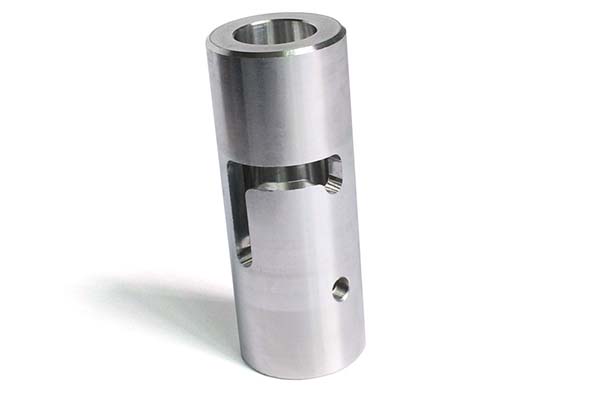
If you need a strong, lightweight aluminum alloy that can be stamped into durable components, you face a common dilemma. Many strong alloys crack during complex bends. More formable ones lack the strength for heavy loads. Metal Stamping 6061 (Mg-Si Alloy) offers a solution. This heat-treatable aluminum-magnesium-silicon alloy combines impressive strength with workability. However, stamping it requires careful technique to avoid cracking and galling. This guide covers 6061’s properties, stamping processes, applications, and proven solutions to common challenges.
What Makes 6061 Aluminum Unique?
Composition and Mechanical Properties
6061’s performance comes from its precise alloy makeup. It consists of 95.8–98.6% aluminum, 0.4–0.8% silicon, 0.8–1.2% magnesium, and trace amounts of copper and chromium.
| Temper | Tensile Strength (MPa) | Elongation | Best For |
|---|---|---|---|
| 6061-O (Annealed) | 110 | 25% | Complex forming, deep draws |
| 6061-T4 (Solution heat-treated) | 240 | 16% | Moderate forming with some strength |
| 6061-T6 (Aged) | 310 | 12% | Simple shapes with maximum strength |
Hardness: 6061-T6 reaches 95 HB (Brinell), while 6061-O is softer at 30 HB.
Heat Treatability: Unlike non-heat-treatable alloys like 5052, 6061 can be strengthened after stamping through solution annealing and aging.
Corrosion Resistance: Good for atmospheric conditions, though not as strong as 5052 in marine environments.
How Do You Stamp 6061 Aluminum?
Matching Process to Temper
Stamping 6061 requires a strategic approach. The temper you choose dictates the process.
Progressive Die Stamping
For high-volume parts like automotive brackets, progressive dies shape the material step-by-step. Include annealing stations every 2–3 steps to counteract work hardening. 6061 hardens quickly during cold working and can become brittle without annealing.
Deep Drawing
Deep drawing 6061 is possible but limited compared to softer alloys. Aim for draw ratios of 1.5:1 to 2:1. Use slow press speeds—10–15 strokes per minute—to prevent tearing. Apply heavy-duty lubricants with extreme pressure additives.
Sheet Metal Stamping
Start with properly conditioned sheets: clean, flat, and free of scratches. Use precision blanking to ensure consistent material thickness. 6061 is less forgiving of unevenness than pure aluminum.
Choosing the Right Temper
- 6061-O: More formable but weaker. Use for complex bends and deep draws.
- 6061-T6: Maximum strength but requires gentler handling. Use for simple shapes or stamp after annealing.
Where Is Stamped 6061 Aluminum Used?
Critical Applications Across Industries
6061’s strength and versatility make it a top choice for demanding applications.
| Industry | Application | Why 6061 Works |
|---|---|---|
| Aerospace | Structural brackets, wing ribs, landing gear parts | High strength-to-weight ratio; heat-treatable |
| Automotive | Suspension components, engine mounts, frame reinforcements | Durability and impact resistance |
| Electronics | Enclosures, housings for industrial equipment | Lightweight yet strong; protects internal components |
| Thermal Management | Heat sinks for LED fixtures and power supplies | Thermal conductivity of 167 W/m·K |
| Consumer Goods | Bicycle frames, sporting equipment | Balances strength, weight, and formability |
Each application leverages 6061’s unique balance of strength, formability, and corrosion resistance.
What Challenges Arise in Stamping 6061?
Common Problems and Proven Solutions
Stamping 6061 comes with unique hurdles. Here is how to address them.
Cracking
Most common in T6 temper during tight bends.
- Solution: Use 6061-O for complex forms. For T6 parts, anneal before forming. Ensure punch and die radii are at least 3× material thickness to reduce stress concentration.
Galling
6061’s silicon content increases the risk of material transfer to tooling.
- Solution: Use polished dies (Ra ≤ 0.4 μm) . Apply chlorinated lubricants to create a barrier between the alloy and tooling.
Springback
6061 exhibits significant springback—5–7 degrees in T6 temper.
- Solution: Over-bend by 2–3 degrees. Use pressure pads to hold the material firmly during bending.
Work Hardening
6061 hardens rapidly during forming, leading to brittleness.
- Solution: Annealing 6061 before stamping: Heat T6 parts to 343°C (650°F) for 2–3 hours, then air-cool. This restores ductility for multiple forming steps.
What Tooling and Equipment Work Best?
Dies, Presses, and Design Considerations
The right tools are essential for stamping 6061 successfully.
Die Materials
Use carbide or D2 tool steel dies. These resist wear from 6061’s hardness. Coat dies with titanium nitride (TiN) to further reduce friction and extend tool life.
Press Selection
- Hydraulic presses: Preferred for 6061. Their variable speed and force control reduce the risk of overloading the material.
- Mechanical presses with servo drives: Offer precise control for high-volume runs.
Progressive Die Design
- Include generous clearance—10–12% of material thickness—to reduce tool stress.
- Add stripper plates to prevent material from sticking to punches.
CNC Stamping
CNC-controlled presses ensure consistent force application. This is critical for maintaining tight tolerances of ±0.01 mm in aerospace and automotive components.
Conclusion
6061 aluminum offers a strong balance of strength and formability for stamped components. Its tensile strength ranges from 110 MPa (O temper) to 310 MPa (T6 temper) , while elongation ranges from 25% down to 12% . The choice between 6061-O and 6061-T6 is a trade-off between formability and final strength. Successful stamping requires annealing to counteract work hardening, polished dies to prevent galling, and springback compensation. Hydraulic presses with slow speeds work best for complex forms. With proper process control, stamped 6061 parts deliver reliable performance in aerospace, automotive, electronics, and thermal management applications.
FAQ
Can 6061 be stamped into thin-walled parts?
Yes, but wall thickness should be at least 0.5 mm to avoid tearing. Use 6061-O for thin parts, and apply slow press speeds with ample lubrication. For very thin walls, consider progressive dies with frequent annealing stations.
How does 6061 compare to 5052 for outdoor applications?
5052 offers better corrosion resistance, especially in marine or saltwater environments. 6061 is preferable for outdoor structural parts where higher strength is required, such as frames and supports.
What is the maximum thickness for stamping 6061?
6061 is practical for sheets up to 6 mm thick. For thicker material—6–10 mm—you need heavy-duty presses. Pre-heating to 120–150°C can improve formability for thicker gauges.
Why does 6061 crack during stamping?
Cracking usually occurs with 6061-T6 during tight bends or deep draws. The T6 temper is strong but less ductile. Switch to 6061-O for complex forms, or anneal T6 parts before forming. Also ensure die radii are at least 3× material thickness.
What lubricants work best for stamping 6061?
Use synthetic or semi-synthetic lubricants with a high viscosity index. For deep drawing, choose chlorinated lubricants or those with extreme pressure additives. These create a barrier between the alloy and tooling, reducing galling and friction.
Contact Yigu Technology for Custom Manufacturing
Stamping 6061 aluminum requires the right temper selection, tooling, and process control. At Yigu Technology, we specialize in custom metal stamping of 6061 for aerospace, automotive, and industrial clients. We tailor processes to your needs—using 6061-O for complex parts and T6 for high-strength components—with precision tooling and annealing steps to prevent cracking.
Our quality control includes tensile testing and dimensional checks to ensure parts meet your exact strength and tolerance requirements.
Contact Yigu Technology today to discuss your 6061 stamping project.