If you manufacture components for marine or offshore environments, you face one relentless enemy: saltwater. Many stainless steels fail here. Even SUS304, a reliable choice in mild conditions, succumbs to pitting and rust when exposed to chlorides in seawater. This is where Metal Stamping SUS316 (Marine Grade) becomes essential. Engineered with molybdenum, this alloy resists corrosion far longer than standard stainless steel. In this guide, we cover its material properties, stamping techniques, applications, and quality specifications to help you build components that last.
What Makes SUS316 Ideal for Saltwater?
A Closer Look at Its Alloy Composition
SUS316 is an austenitic stainless steel specifically designed for aggressive environments. Its performance comes from a balanced mix of elements.
| Element | Content | Function |
|---|---|---|
| Chromium | 16–18% | Forms a self-healing oxide layer that protects against corrosion. |
| Nickel | 10–14% | Stabilizes the austenitic structure, keeps the material non-magnetic, and improves ductility. |
| Molybdenum | 2–3% | The key ingredient for saltwater resistance. It creates a dense oxide film that resists pitting in chloride-rich environments. |
Mechanical and Chemical Strengths
- Tensile Strength: 580–750 MPa
- Yield Strength: 205 MPa
- Corrosion Resistance: Outperforms SUS304 by 5–10 times in salt spray tests.
- Chemical Resistance: Withstands exposure to sulfuric acid, brines, and industrial chemicals.
These properties make SUS316 the standard for parts that must endure seawater, industrial chemicals, and harsh operational stresses.
How Do You Stamp SUS316 Effectively?
Key Techniques for Marine-Grade Precision
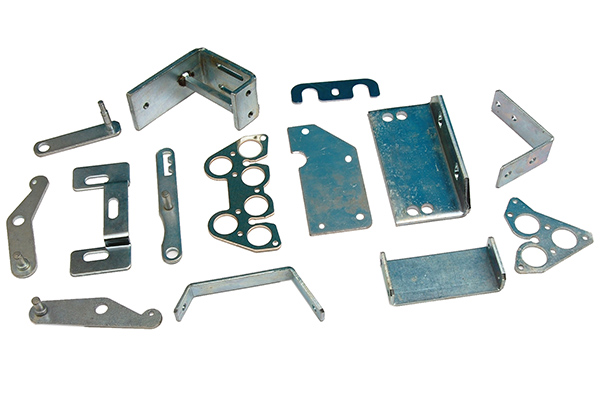
Stamping SUS316 requires adjustments to avoid work hardening and surface damage. The alloy is slightly harder than SUS304, so tooling and processes must be carefully controlled.
Precision Stamping
Use CNC-machined dies with polished surfaces (Ra ≤ 0.8 μm). This ensures smooth material flow and prevents galling, where metal sticks to the die.
Tooling Design
Choose carbide tooling to resist wear from SUS316’s abrasiveness. Increase punch-die clearance to 12–15% of material thickness. This reduces friction and minimizes heat buildup, which can harm the protective oxide layer.
Press Machinery
Use heavy-duty hydraulic presses with variable speed controls. Slow ram speeds—10–15 strokes per minute during deep drawing—prevent excessive work hardening and preserve ductility.
Forming Techniques
- Bending: Account for springback of 3–4 degrees, slightly more than SUS304. Over-bend and use bottoming dies to achieve precise angles.
- Deep Drawing: Apply high-performance lubricants like chlorinated or synthetic oils. Limit draw ratios to 2.5:1 to avoid thinning and weakening, especially for parts like underwater housings.
Surface Finish
Post-stamping treatments improve corrosion resistance. Electropolishing (Ra ≤ 0.05 μm) removes micro-cracks and enhances the uniformity of the oxide layer.
Where Is SUS316 Used in Marine Environments?
Critical Applications
SUS316’s unique properties make it the material of choice for components exposed to seawater and salt spray.
- Shipbuilding: Hull fittings, propeller shafts, valve components
- Offshore Structures: Oil rig platforms, subsea pipelines, wind turbine foundations
- Underwater Equipment: Dive gear, sonar housings, submersible components
- Marine Hardware: Cleats, winches, anchor components
In each application, SUS316’s resistance to pitting and biofouling translates to longer service life and reduced maintenance costs.
What Specifications Ensure Quality?
Standards and Testing
Adhering to strict specifications is critical for marine-grade components.
| Standard | Purpose |
|---|---|
| ASTM A240/A240M | Defines chemical composition and mechanical properties for consistent quality. |
| UNS S31600 | Standard designation verifying alloy makeup. |
| ASTM B117 | Salt spray testing for 1,000+ hours to validate corrosion resistance. |
Testing Requirements
- Tensile Tests: Confirm strength.
- Bend Tests: Validate ductility.
- Intergranular Corrosion Testing: Per ASTM A262 Practice C to check for sensitization.
- Ultrasonic Testing: Detects internal flaws in thick components.
- 100% Visual Inspections: Ensure no surface defects.
Conclusion
Metal stamping SUS316 is the right choice when your components must survive saltwater, chemicals, and harsh conditions. The alloy’s molybdenum content gives it superior pitting resistance—outlasting SUS304 by 5 to 10 times in corrosive environments. Successful stamping requires carbide tooling, slow ram speeds, proper lubrication, and post-stamping finishes like electropolishing. By following ASTM standards and rigorous testing protocols, you ensure that your marine-grade components deliver long-term reliability and low maintenance costs.
FAQ
How does SUS316 compare to SUS304 in marine applications?
SUS316 outperforms SUS304 significantly. The molybdenum in SUS316 resists pitting and crevice corrosion in saltwater. In salt spray tests, SUS316 lasts 5–10 times longer than SUS304. For continuous seawater exposure, SUS316 is the clear choice.
Can SUS316 be welded after stamping?
Yes, but with precautions. Use low-heat welding techniques to avoid chromium carbide precipitation, which reduces corrosion resistance. Post-weld annealing helps restore properties. Use ER316 filler metal for compatibility.
What surface finishes are best for SUS316 marine components?
Electropolished finishes (Ra ≤ 0.05 μm) offer the highest corrosion resistance by removing micro-cracks and smoothing surface imperfections. For less critical applications, matte (2B) or brushed (No. 4) finishes work well.
Why is molybdenum important in SUS316?
Molybdenum creates a dense, stable oxide film that resists pitting in chloride-rich environments like seawater. Without it, stainless steel is vulnerable to localized corrosion that can lead to premature failure.
What industries use stamped SUS316 parts?
Marine and offshore industries are the primary users. Applications include shipbuilding, oil and gas platforms, underwater equipment, and coastal infrastructure. SUS316 is also used in chemical processing plants where corrosion resistance is critical.
Contact Yigu Technology for Custom Manufacturing
Stamping SUS316 for marine environments requires precision, the right tooling, and rigorous quality control. At Yigu Technology, we specialize in custom metal stamping for marine-grade components. We optimize tooling and press parameters to preserve SUS316’s corrosion-resistant properties during stamping—from precision blanking to complex deep drawing.
Our quality process includes material certification, salt spray testing, and dimensional checks. We ensure every part meets ASTM standards and your exact requirements for reliability in the harshest marine environments.
Contact Yigu Technology today to discuss your SUS316 stamping project.